
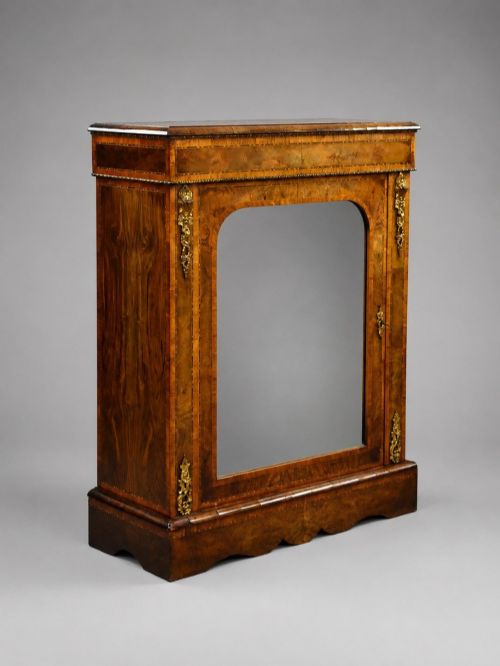
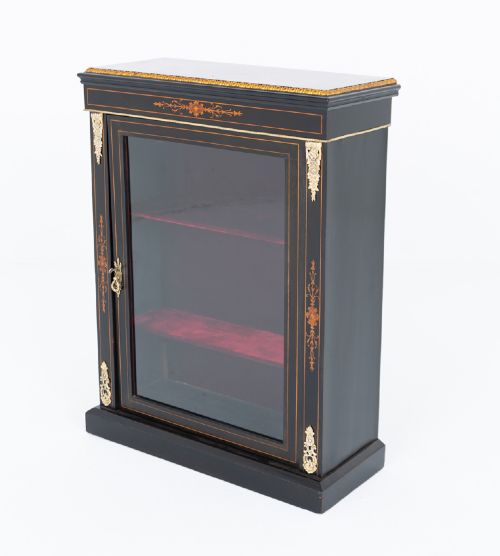


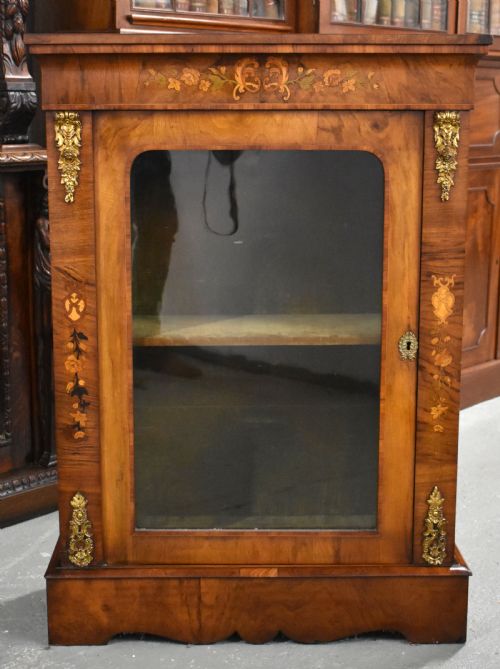

Single Door Music Cabinet
These single door music cabinet pieces bring compact, timber-rich storage to a room, offering structured space for sheet music and papers behind a single timber panel.
Single Door Music Cabinet
A single door music cabinet provides upright storage housed in a compact timber frame, designed to hold folios and scores neatly in domestic interiors. These pieces appear across Victorian, Edwardian, and 19th-century periods, utilising forms that range from simple filing setups to decorative side pieces.
The versions most commonly met on this page include Victorian burr walnut and mahogany examples, alongside Edwardian inlaid pieces and oak filing variations. They function as functional side furniture while displaying the rich wood grains and marquetry typical of their respective eras.
How they were made
Cabinet makers utilised dense hardwoods such as mahogany, walnut, and oak as the structural carcase for these pieces, often selecting burr walnut veneers for striking surface patterns. Workshops applied boxwood marquetry and ebonisation to embellish the timber exteriors.
Metal fittings in brass and ormolu secure the single doors and drawers, while glass panels sometimes feature in related display forms. Construction relies on traditional joinery methods suited to upright, panelled furniture.
Listings span the Victorian and Edwardian periods, featuring timbers such as burr walnut, mahogany, and oak alongside brass and boxwood details.
What varies in quality
The standard of timber selection largely dictates quality, moving from plain oak utility builds up to highly figured burr walnut and flame mahogany veneers. Rich grain patterns and complex boxwood marquetry elevate a piece visually.
Maker attribution and refined decorative hardware, such as finely cast ormolu or detailed brass mounts, separate standard workshop items from superior examples. The crispness of the inlay and the depth of the polish determine the overall finish.
Keeble London
The Single Door Music Cabinet Glossary
- Marquetry
- Decorative patterns formed by fitting together thin veneers of wood and other materials onto a structural base. Boxwood is frequently used for light-coloured contrasting details.
- Ormolu
- Gilded bronze mounts and decorative elements applied to furniture. This technique adds metallic contrast to dark timber surfaces.
- Pier cabinet
- A low cabinet designed to stand against a wall pier between windows. These pieces often feature glass doors and marquetry decoration.
Single Door Music Cabinet: Frequently Asked Questions
What is a single door music cabinet used for?
These cabinets were originally manufactured to store sheet music, folios, and musical scores in 19th-century and early 20th-century parlours. The internal compartment holds papers upright and organised.
Today, they function well as compact side tables or bedside units in modern homes while maintaining their traditional character.
How do I date a single door music cabinet?
Dating relies on identifying the primary timbers, decorative styles, and construction methods associated with specific periods. Victorian pieces frequently feature burr walnut and marquetry, while Edwardian examples often show lighter inlaid mahogany.
Later filing variants from the 1920s utilise plain oak with utilitarian internal drawer systems rather than decorative wood veneers.
What wood was used for these cabinets?
Cabinet makers utilised a range of domestic and exotic timbers depending on the period and desired finish. Walnut, burr walnut, flame mahogany, and oak form the primary structural and decorative carcases.
Inlays commonly incorporate boxwood to create sharp floral or geometric contrasts against the darker background timber.
Are these cabinets suitable for small rooms?
Their upright, compact footprint makes these cabinets ideal for narrower wall spaces where floor area is limited. The single door design ensures the swing radius remains small compared to double-door furniture.
They offer useful enclosed storage without overwhelming the proportions of a smaller interior space.