


Wooden Mechanical Music Box
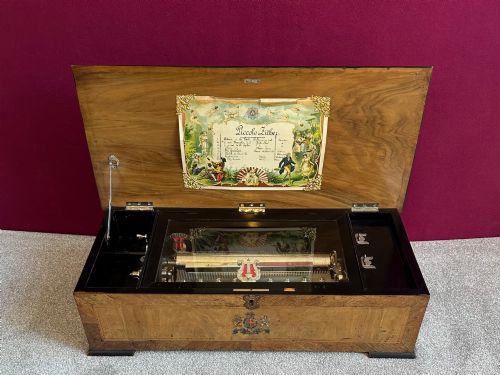
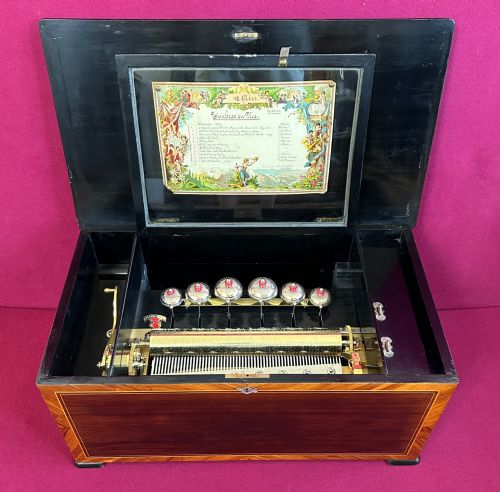
A wooden mechanical music box brings movement, melody, and craftsmanship together, offering intricate brass pins and steel combs housed in rich wooden cases.
Wooden Mechanical Music Box
When you search for a wooden mechanical music box, you encounter pieces primarily originating from the Victorian era alongside Edwardian examples. The selection spans the nineteenth century, including specific dates such as 1860, 1875, 1880, 1890, and 1900, with occasional eighteenth-century attributions.
The objects themselves take the form of tabletop music boxes, cylinder boxes, and even an inlaid musical chair. Swiss manufacture dominates the record, often featuring multiple airs and sometimes incorporating visible bells.
Most items you meet on this page are housed in wooden cases designed to resonate sound and display decorative skill. They range from compact tabletop versions to large, heavy tabletop machines.
How they were made
The construction relies on timber for the cabinetry, utilising woods such as rosewood, walnut, burr walnut, and ebonised wood, often embellished with marquetry inlay. These cases enclose the acoustic mechanism while providing structural stability and decorative presence.
Inside the case, the musical mechanism employs brass and steel. A rotating cylinder set with pins plucks the tuned teeth of a steel comb to produce specific musical airs.
One extraordinary listing repurposes the musical mechanism inside a marquetry inlaid chair.
What varies in quality
Quality reveals itself in the complexity and execution of the musical arrangement, denoted by the number of airs played and the inclusion of mechanical additions like bells. Greater ambition in the cylinder pinning and comb tuning elevates the acoustic output.
Cabinetry skill also distinguishes pieces, particularly through the precision of marquetry inlay and the choice of burl or figured veneers on walnut and rosewood. The robustness of the case construction ensures proper resonance and protects the internal works.
Langdorff And Fils·B A Bremond·Nicole Freres
The Wooden Mechanical Music Box Glossary
- Cylinder
- The rotating brass barrel set with pins that dictate the notes played by the comb. Each pin strikes a specific steel tooth as the cylinder turns.
- Comb
- The tuned steel plate with multiple teeth that vibrate to produce the musical notes when plucked by the cylinder pins.
- Air
- A distinct tune or musical piece that the mechanical box is pinned to play. Cylinder boxes often feature multiple airs played in sequence.
- Marquetry
- The art of applying pieces of veneer to a structure to form decorative patterns. This technique frequently ornaments the wooden lids of the boxes.
- Symphonium
- A large table top disc playing mechanical music machine. These later variants use metal discs rather than pinned cylinders.
Wooden Mechanical Music Box: Frequently Asked Questions
How do cylinder music boxes work?
A wound spring powers a brass cylinder populated with tiny metal pins arranged in precise patterns. As the cylinder rotates, these pins pluck the tuned teeth of a steel comb to generate melodies.
Different sections of the cylinder correspond to different tunes, allowing the box to cycle through a set programme of musical airs.
What is an air on a music box?
An air refers to an individual musical tune or movement contained within the repertoire of the box. Mechanisms are often described by how many airs they can play before repeating.
More complex movements incorporate eight, ten, or twelve distinct airs, requiring longer cylinders or shifting mechanisms.
How should I care for a wooden music box?
Keep the wooden case away from direct sunlight, extreme temperature shifts, and high humidity to protect the veneers and internal wooden components. Dust the exterior gently with a dry cloth and avoid harsh polishes.
Wind the mechanism carefully without over-tightening the spring, and let the current tune finish playing before attempting any adjustments.
How can I tell the age of a music box?
Dating relies on mechanical developments, case styles, and maker marks stamped onto the brass bedplate or paper tune sheets inside the lid. Victorian and Edwardian examples often display specific styling cues in their marquetry and wood choices.
Serial numbers and maker signatures can also be cross-referenced with historical records of Swiss and British workshops active during the nineteenth century.