
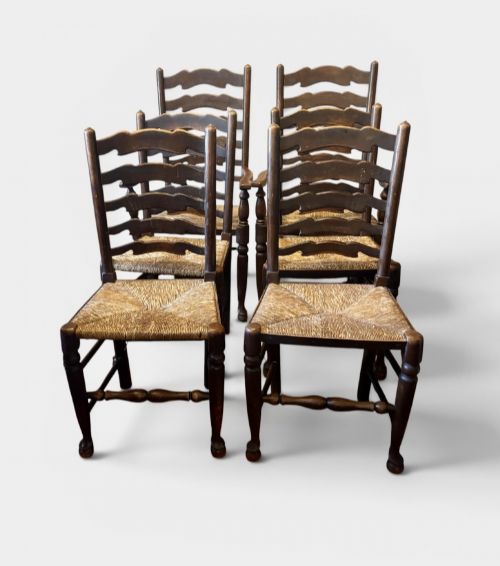


Wooden Ladderback Chairs
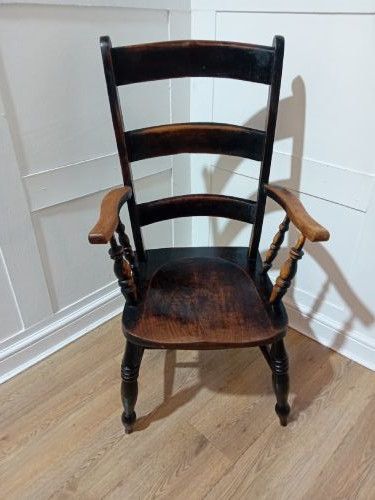
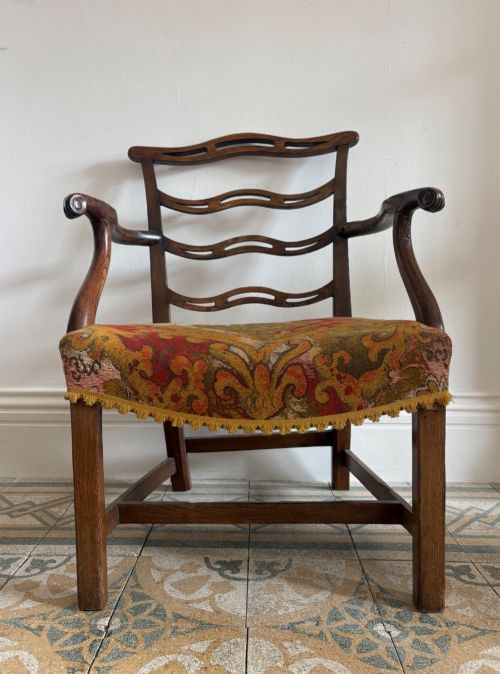
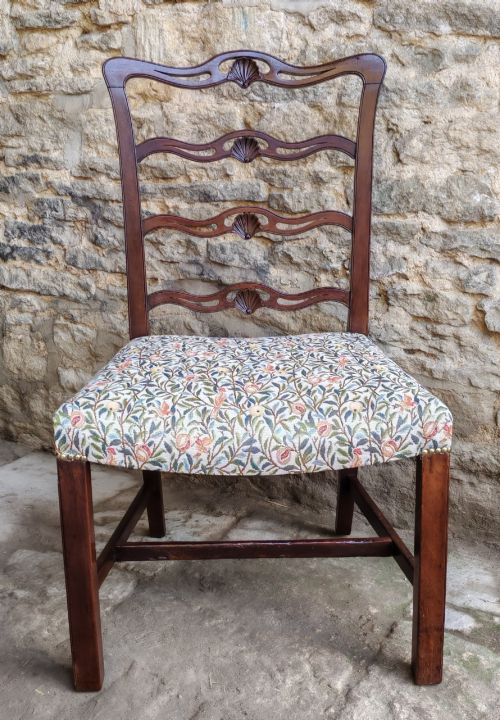
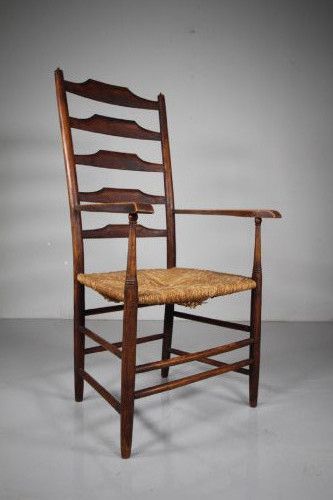
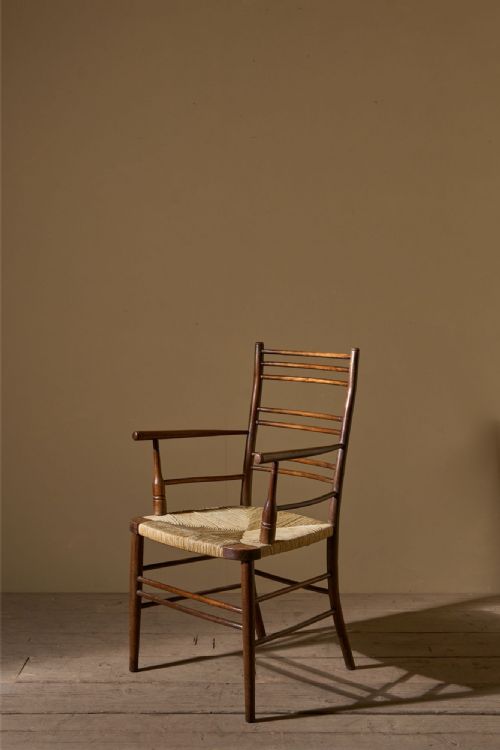
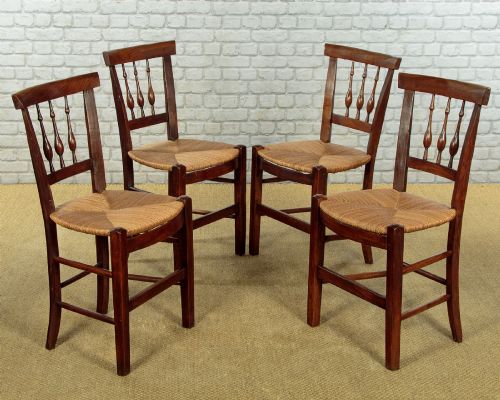
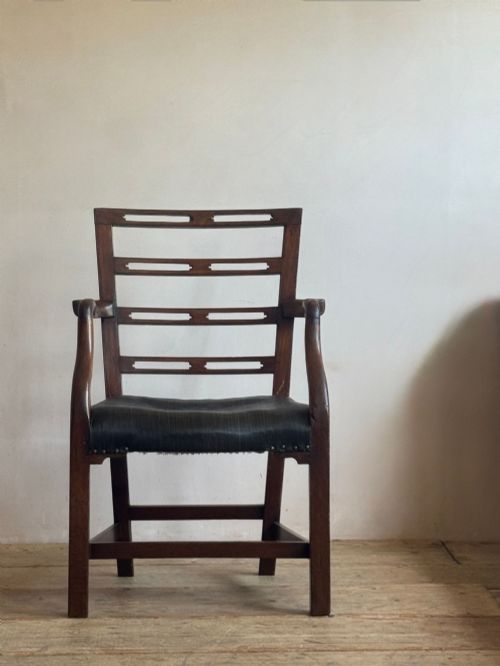
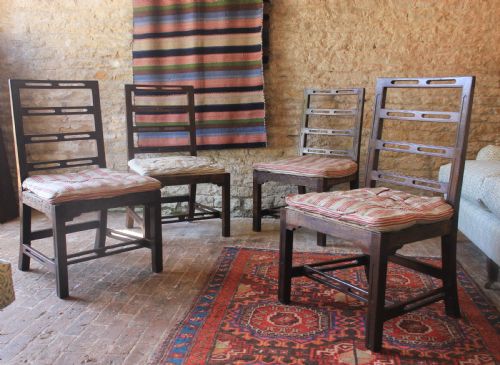
These wooden ladderback chairs offer sturdy vernacular seating built with horizontal slats, bringing honest country craftsmanship to domestic interiors.
Wooden Ladderback Chairs
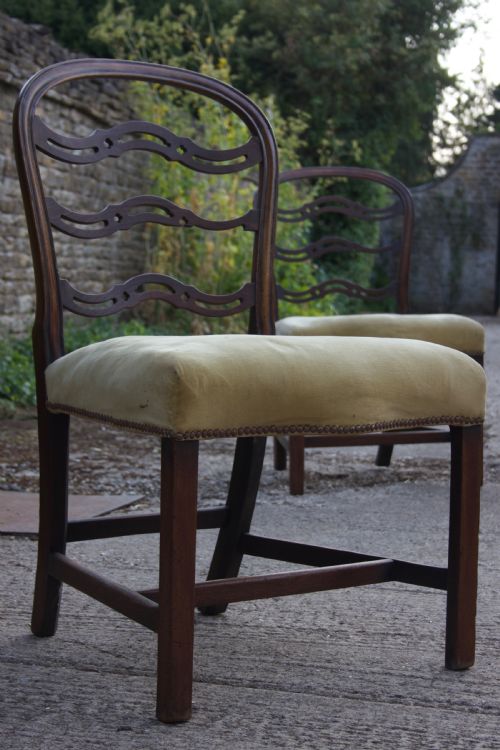
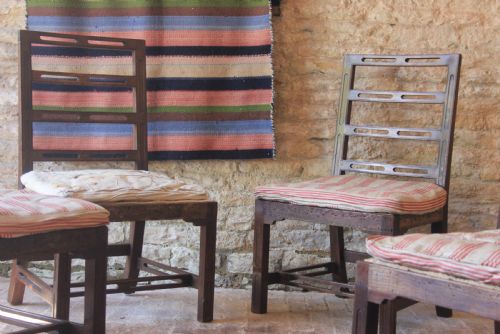
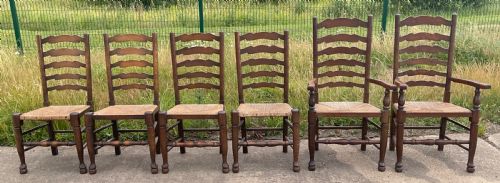
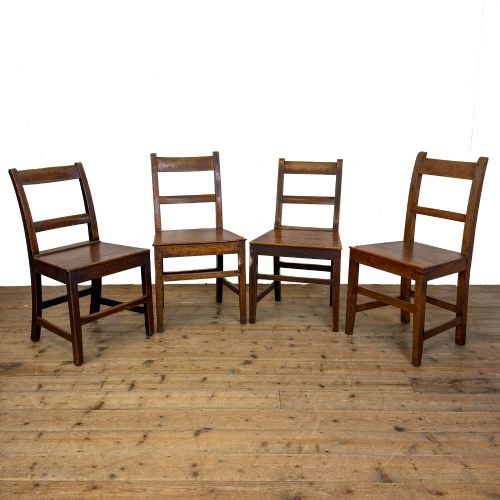
Wooden ladderback chairs combine functional vernacular design with horizontal back rails, originating in domestic and rural settings across multiple centuries. These chairs appear in forms ranging from single side chairs to sets of dining chairs, armchairs, rocking chairs, and high chairs. Buyers encountering this selection will find examples spanning from the eighteenth century through the twentieth century, reflecting regional English, Welsh, Irish, and continental traditions.
Makers often shaped these pieces using local hardwoods and softwoods, frequently pairing wooden frames with woven seating materials. Common configurations include sets intended for dining tables as well as individual open armchairs, rocking chairs, and desk chairs. The structural variety extends to specific regional types such as Cheshire ash chairs, Dales chairs, and Thames Valley designs, alongside Arts and Crafts interpretations.
Assessing quality and character
Quality rests in the integrity of the timber, the tightness of the joinery, and the preservation of original surfaces. Chairs retaining untouched patination or early painted finishes stand apart from heavily altered examples.
The precision of the turned spindles and the symmetry of the horizontal slats indicate the maker's skill. Furthermore, uniform sets demonstrate greater consistency in design and material selection than harlequin groupings assembled later.
One tiny child's rocking chair sits quietly among the full-sized settees and armchairs, waiting for a very small person.
Philip Clissett·Dicon Nance St Ives Studio
The Wooden Ladderback Chairs Glossary
- Ladderback
- A chair style defined by horizontal slats rising between two upright rear posts. This structural arrangement provides back support while keeping the construction lightweight.
- Rush seat
- A seating surface woven from natural marsh grasses twisted into cords. This traditional material yields a flexible, durable texture common on country vernacular chairs.
- Vernacular
- Objects designed by local craftsmen for practical use rather than following strict academic architectural rules. These regional pieces reflect domestic utility and available materials.
- Harlequin set
- A group of chairs assembled to form a matched dining set despite individual minor variations in age or design. Such groups share general proportions and timber types.
- Spindle
- A cylindrical turned wooden rod used as a structural or decorative component in chair backs and legs. Craftsmen shaped these elements on a lathe.
- Patina
- The surface sheen and colour developed by wood and finish over decades of handling and exposure to light. This natural ageing indicates genuine age.
Wooden Ladderback Chairs: Frequently Asked Questions
How do I date a wooden ladderback chair?
Dating relies on examining tool marks, timber selection, construction methods, and wear patterns on the feet and stretchers. Earlier pieces often display hand-split timbers and irregular turning.
Later nineteenth and twentieth-century examples incorporate more uniform machine turning and standardised joinery. Comparing the slat profile and arm shape to regional styles helps narrow the period of origin.
Are rush seats durable for daily use?
Rush seats made from natural twisted grasses offer surprising resilience and flexibility under normal domestic seating conditions. Regular care keeps the plant fibres supple and prevents premature snapping.
Owners should avoid placing these chairs in damp environments, as moisture weakens the dried marsh grass. Professional re-rushing can restore damaged seating while maintaining the historical integrity of the frame.
What is a harlequin set of chairs?
A harlequin set consists of individual chairs that share similar height, timber, and ladderback design but were not originally manufactured together as a single batch. Country dining sets were frequently assembled this way by gathering matching vernacular chairs over time.
These sets offer a cohesive appearance around a dining table while displaying subtle individual variations in turning and grain. This practice reflects historical domestic life where dining seating accumulated gradually.
How should I care for antique wood finishes?
Maintenance requires dusting with a soft, dry cloth and applying occasional quality beeswax to nourish dry timber. Avoid silicone-based polishes that create buildup and attract dust.
Keeping chairs away from direct heat sources and strong sunlight protects the wood from splitting and preserves the original patina. Gentle handling ensures the historical surface remains stable for future generations.