

Victorian Elm Kitchen Chairs
Victorian elm kitchen chairs combine sturdy domestic utility with regional vernacular charm, offering lasting seating for contemporary dining spaces.
Victorian Elm Kitchen Chairs
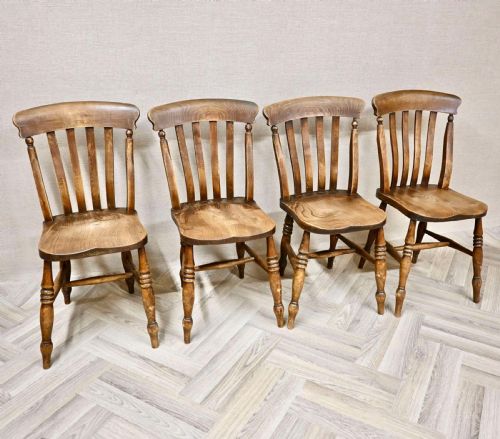
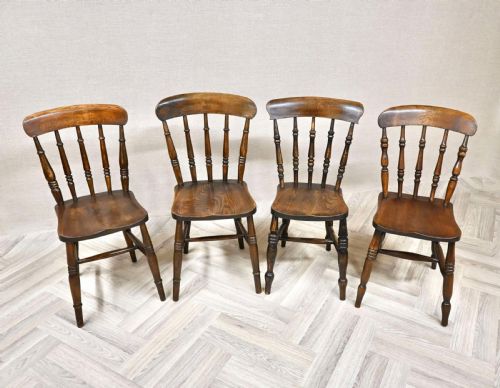
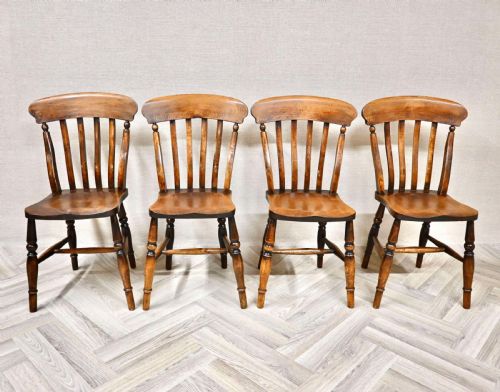
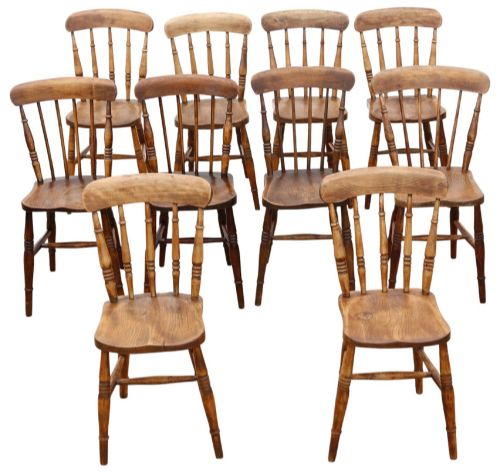
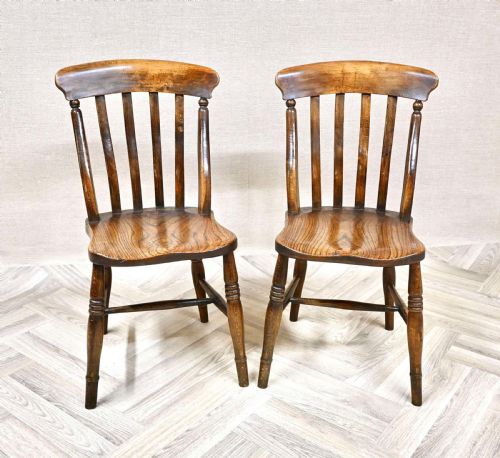
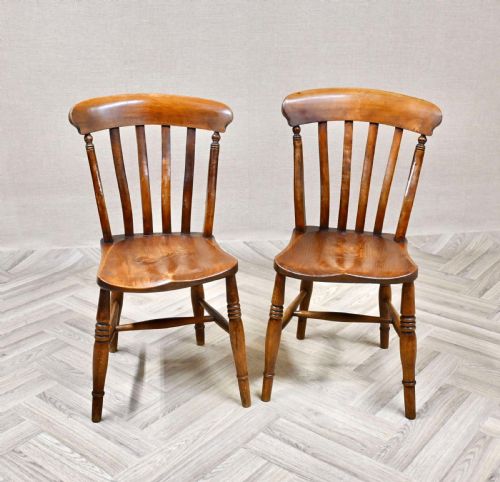
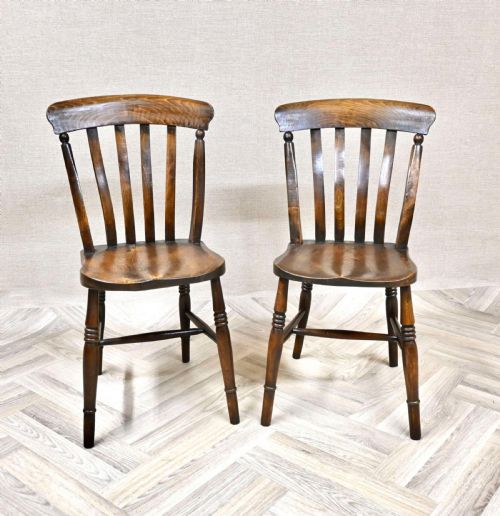
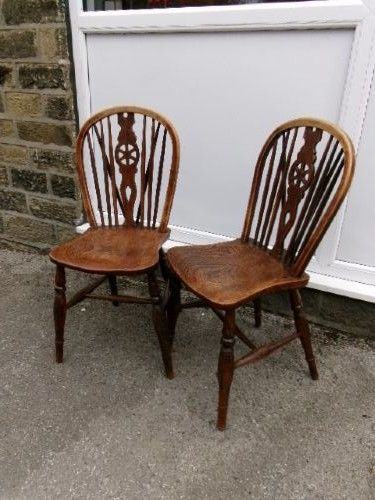
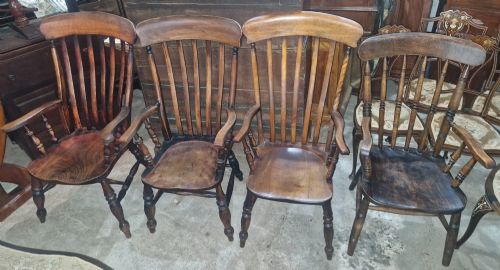
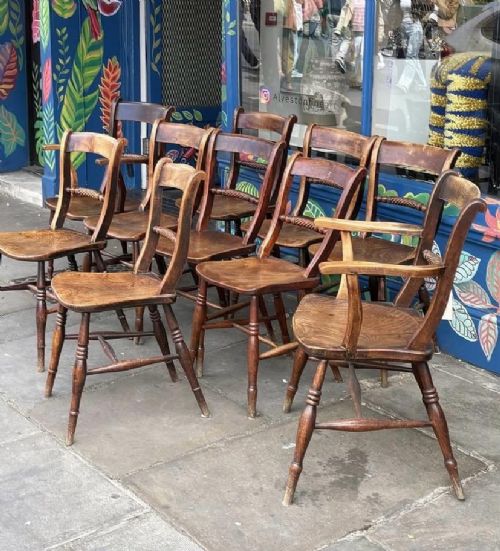
Victorian elm kitchen chairs encompass robust wooden seating produced during the nineteenth and early twentieth centuries for domestic domestic utility. Buyers encounter various regional interpretations, including Windsor forms, stick backs, and lath backs.
Origins trace through English country workshops and regional centres such as the Thames Valley, reflecting practical rural traditions. These chairs served demanding everyday roles in farmhouses and cottages before entering the antique market.
How they were made
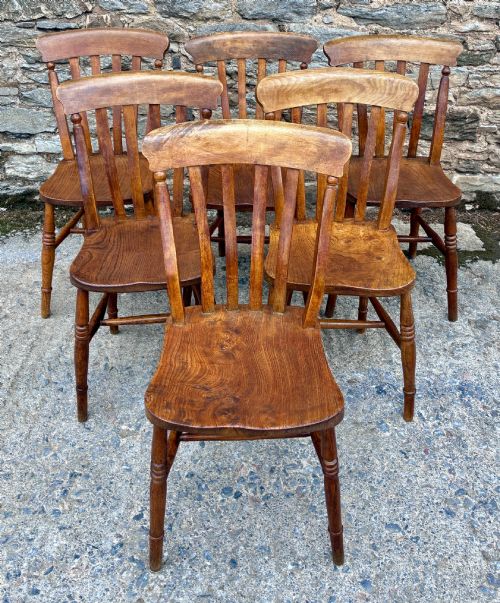
Maker-joiners utilised solid elm for contoured saddle seats because the interlocking grain resisted splitting under heavy daily use. Turning lathes shaped spindles and legs from straight-grained ash or beech, while steam bending formed continuous hoops and bow backs.
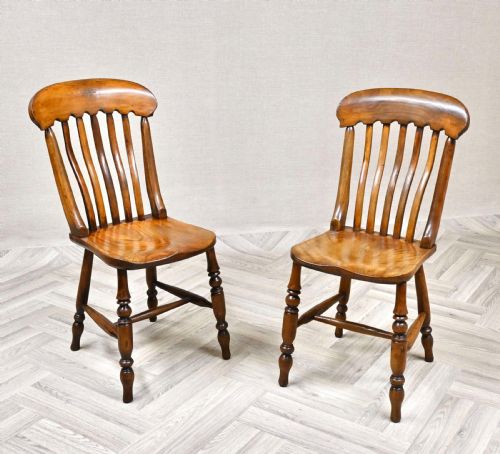
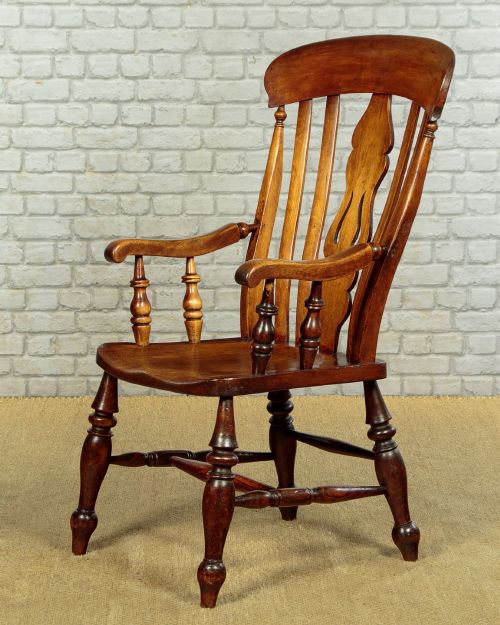
Traditional construction methods relied on wedged mortise and tenon joints to secure uprights directly into the thick wooden seat plank. Additional structural stability came from double stretchers fitted between the legs.
Listings feature nineteenth-century seating combining solid elm seats with ash, beech, and occasional yew components.
What varies in quality
Quality differences emerge in the depth of the saddle shaping on the elm seat and the visual harmony of the turned components. Matching sets display consistent spindle profiles and uniform timber selection across every chair.
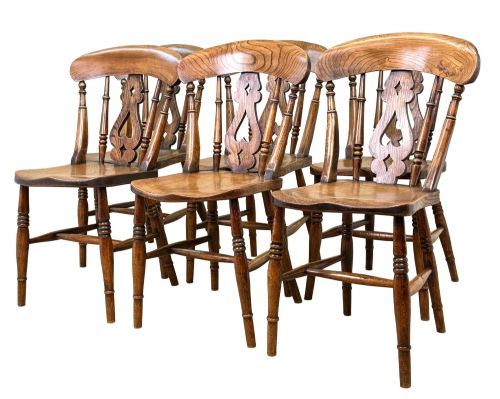
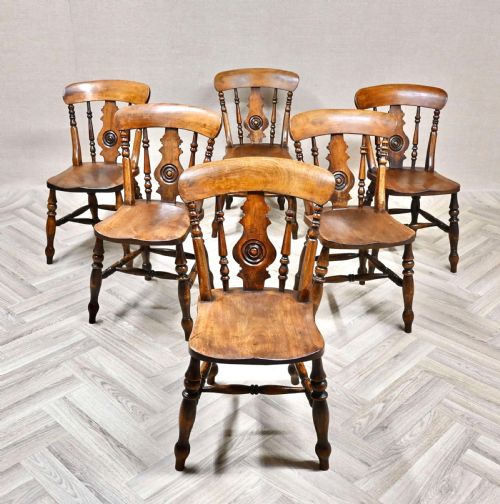
Subtle distinctions lie in the complexity of the back splats, such as carved wheel motifs, multiple commercial spindles, or Gothic arch details. The integrity of the original joints and the presence of minimal timber shrinkage determine the structural merit of surviving examples.
The Victorian Elm Kitchen Chairs Glossary
- Elm
- A dense, highly figured hardwood with interlocked grain that prevents splitting, utilised extensively for solid chair seats.
- Windsor
- A traditional chair construction featuring turned legs and spindles tenoned directly into a solid wooden seat plank.
- Harlequin set
- A collection of individual chairs sharing a similar vernacular style and timber palette, gathered together as a matching dining group.
- Lath back
- A chair variation featuring a horizontal wooden slat or lath across the upper backrest instead of vertical spindles.
- Stretcher
- A horizontal wooden rod connecting the legs of a chair to provide structural rigidity and frame support.
Victorian Elm Kitchen Chairs: Frequently Asked Questions
How do I care for antique elm seats?
Maintain stable indoor humidity levels to prevent the thick elm timber planks from drying out or splitting.
Apply a traditional beeswax polish occasionally to nourish the wood surface and preserve the historic patina.
Can I mix these chairs with modern tables?
The organic wood tones and traditional vernacular forms complement contemporary dining tables by adding textural contrast.
Standard nineteenth-century seat heights fit comfortably beneath modern table clearances for daily dining use.
What defines a Thames Valley chair?
Regional makers along the Thames Valley produced distinctive Windsor forms characterised by yew or elm wood and refined turning.
These pieces often display characteristic pierced splats and sculpted arm bows reflecting local artisan traditions.
Why do some sets include mixed chairs?
Country households accumulated utilitarian seating gradually, resulting in harlequin sets of related regional designs.
Such groupings share common materials like elm and beech while exhibiting slight variations in spindle count or back height.