





Wooden Jewellery Case
A wooden jewellery case secures personal valuables behind polished hardwood and brass.
Wooden Jewellery Case
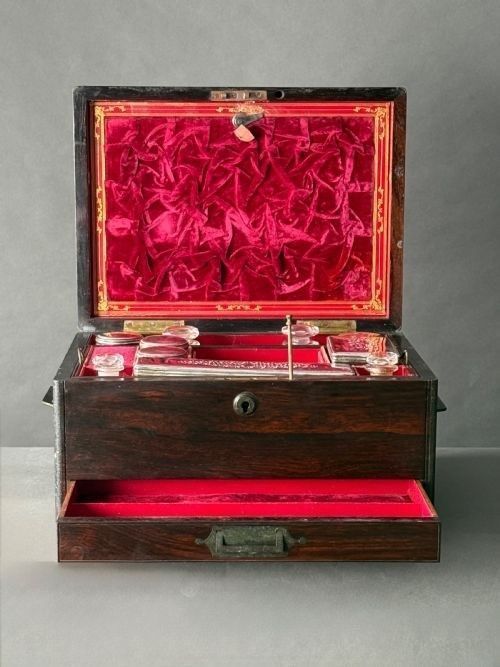
A wooden jewellery case serves as a secure portable repository for personal valuables, trinkets, and grooming implements. When searching for a wooden jewellery case, buyers encounter items designated variously as vanity boxes, dressing cases, and keepsake boxes originating predominantly from the Victorian and Georgian eras.
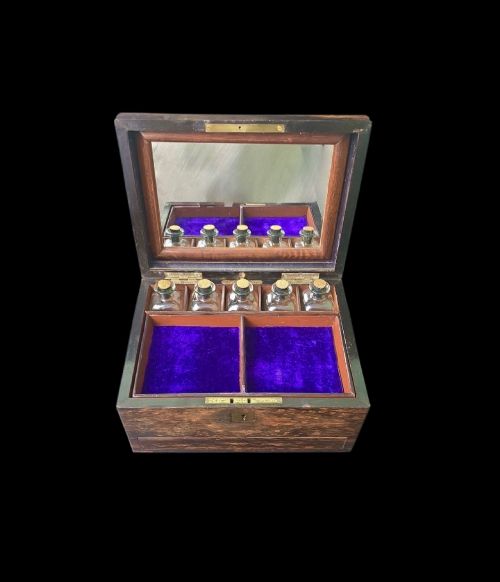
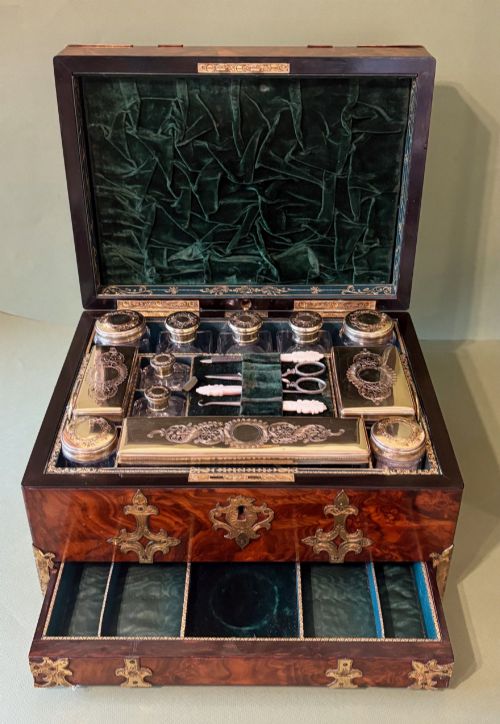
The surviving pieces on this page span the nineteenth century, encompassing Regency specimens alongside later Victorian examples in burr walnut and coromandel. These objects combine utilitarian storage with decorative presence, often featuring internal compartments, mirrors, and fitted trays tailored for specific personal items.
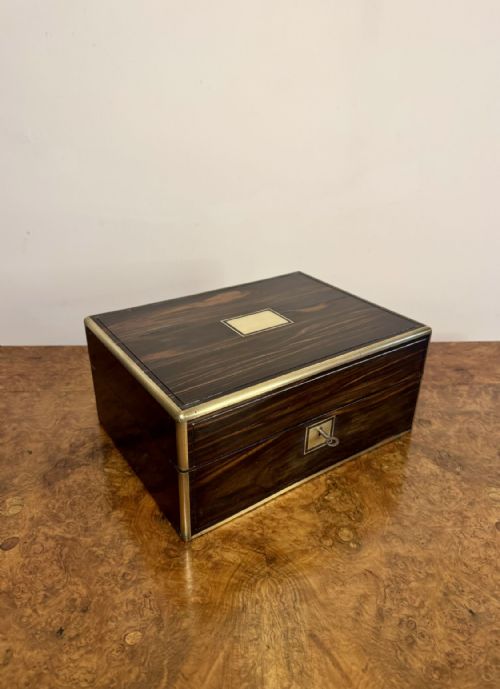
Forms range from compact table boxes to substantial travelling cases equipped with brass banding, lockable mechanisms, and glass or silver components. Buyers are most likely to meet rosewood, walnut, and coromandel constructions dating from the middle to late nineteenth century.
Materials and Construction
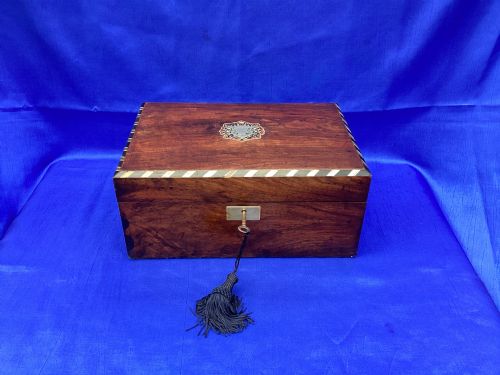
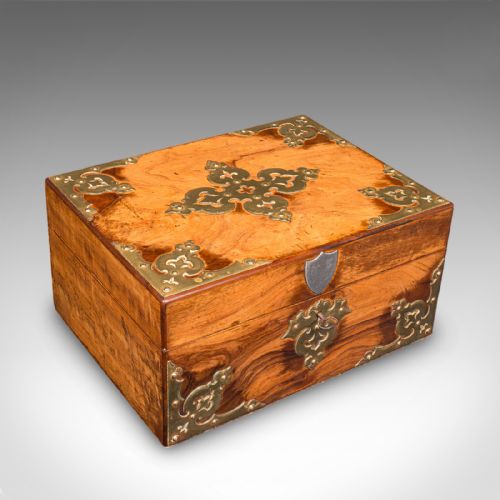
Cabinet makers utilised dense hardwoods such as rosewood, coromandel, and burr walnut over solid timber carcases, often applying figured veneers to achieve striking surface grain patterns. Brass featured prominently as structural banding, corner mounts, lock plates, and campaign handles designed to withstand travel.
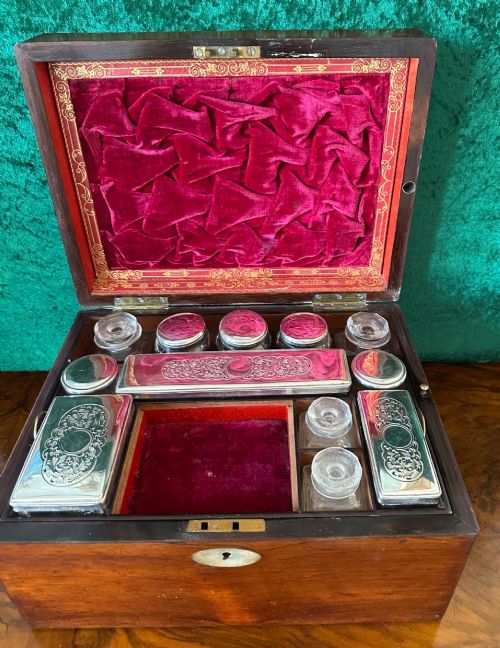
Interiors required precise joinery to create removable trays, secret drawers, and dedicated slots for glass bottles or razors, lined traditionally with velvet or silk. Inlays of mother-of-pearl or contrasting light woods further embellished the surfaces of workboxes and dressing cases.
Wooden Jewellery Case Retail Price Guide 2026
Typical asking prices for wooden jewellery case among the pieces listed under this phrase on Sellingantiques today, from the lower quarter to the upper quarter. They describe what is for sale here now, not the wider market.
Listings feature exotic hardwoods including coromandel, rosewood, and burr walnut across Victorian and Georgian periods.
Distinctions in Quality
Quality rests upon the selection of timber veneers, the integrity of the internal fittings, and the precision of the brass hardware. Superior examples display symmetrical burr walnut or figured coromandel grain that wraps continuously across the lid and sides.
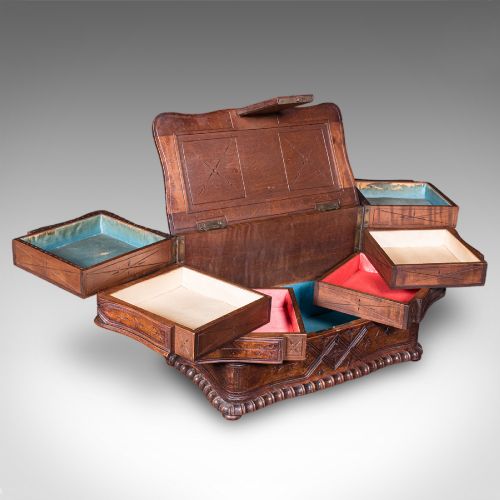
Makers who supplied London establishments integrated complex mechanisms, such as swing-out trays and secret spring-released drawers, executed with tight tolerances. The presence of original maker signatures on lock plates or fitted mirrors distinguishes workshop production from standard commercial output.
H Mitchell·Parkins and Grotto
The Wooden Jewellery Case Glossary
- Coromandel
- A dense, heavily figured southeast Asian timber prized for its dark brown colour and striking black stripes. It was frequently utilised for high-end nineteenth-century vanity boxes.
- Burr Walnut
- Wood harvested from the knotted growths on walnut trees, yielding intricate swirling grain patterns. Cabinet makers sliced this timber into veneers to ornament the lids of dressing cases.
- Dressing Box
- A portable container fitted with compartments for cosmetics, brushes, and jewellery. Many versions include a built-in mirror and concealed storage drawers.
- Brass Banding
- Strip metal inlaid into the edges and corners of boxes to reinforce the wooden structure against impact. This technique also provides a sharp visual contrast to dark hardwoods.
Wooden Jewellery Case: Frequently Asked Questions
How do I date a wooden jewellery case?
Dating relies on combining the stylistic clues of the exterior woods, lock mechanisms, and internal lining configurations. Victorian pieces often display machine-cut screws and velvet linings, whereas Georgian examples show hand-cut joinery and simpler interior layouts.
The presence of brass corner banding and specific hardware markers like working lever locks helps narrow down the decade of manufacture. Comparing the secondary timbers inside the drawers provides further confirmation of the period.
What is the difference between a vanity box and a dressing case?
A vanity box generally focuses on storage for smaller personal trinkets, rings, and keepsakes. A dressing case typically incorporates spaces for glass scent bottles, razors, and grooming tools alongside jewellery compartments.
Larger dressing cases often double as writing slopes or travelling boxes intended for extended journeys. Both types utilise fitted trays and mirrors to maximise utility within a compact wooden carcase.
Why do some boxes have secret drawers?
Secret drawers provided nineteenth-century travellers and homeowners a secure place to store high-value currency, confidential letters, or sensitive jewellery. Makers concealed these compartments behind removable false panels or beneath bottom trays.
Accessing them often requires releasing a hidden wooden spring or sliding a divider in a specific sequence. This clever joinery demonstrates the high skill level of the original cabinet maker.