

Wooden Indian Coffer
A wooden indian coffer brings substantial storage and distinct regional character into a room.
Wooden Indian Coffer
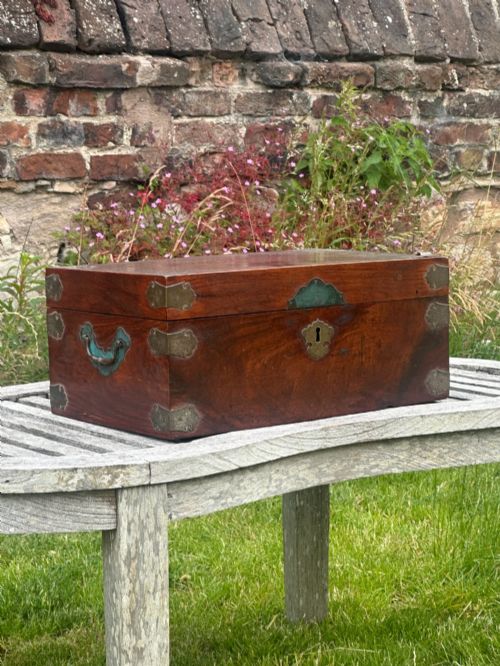
When you search for a wooden indian coffer, you are looking at substantial storage vessels built across the nineteenth and early twentieth centuries. These pieces encompass campaign trunks, blanket boxes, dowry chests, and merchants' chests hailing from trade routes and colonial outposts.
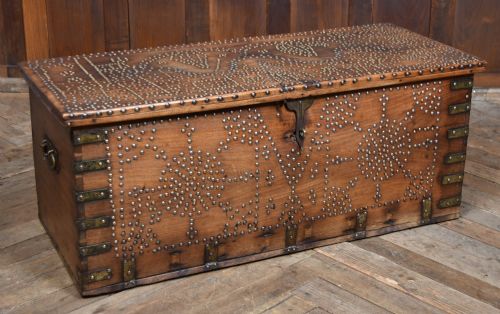
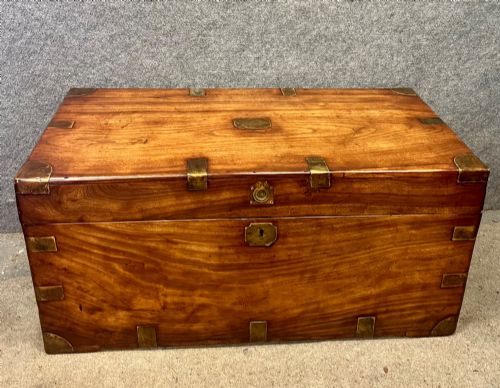
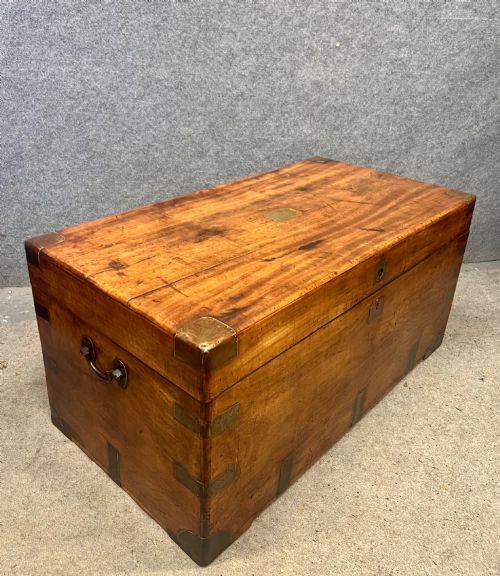
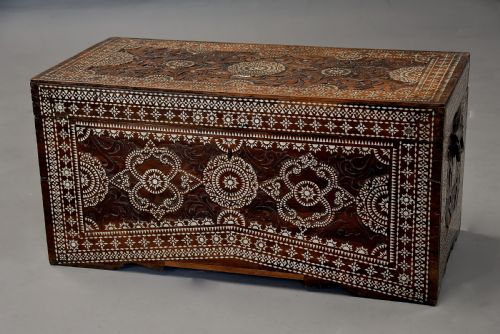
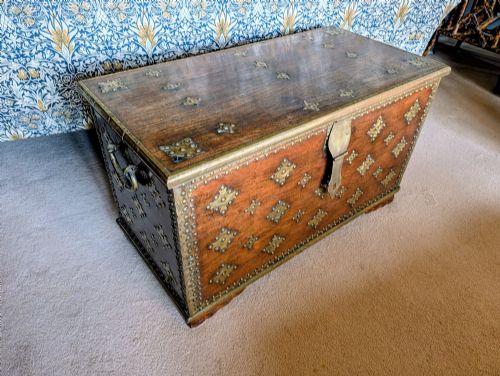
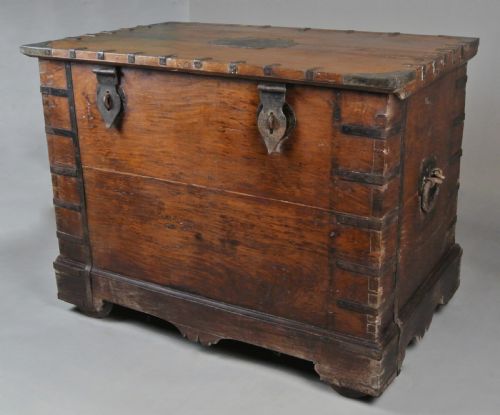
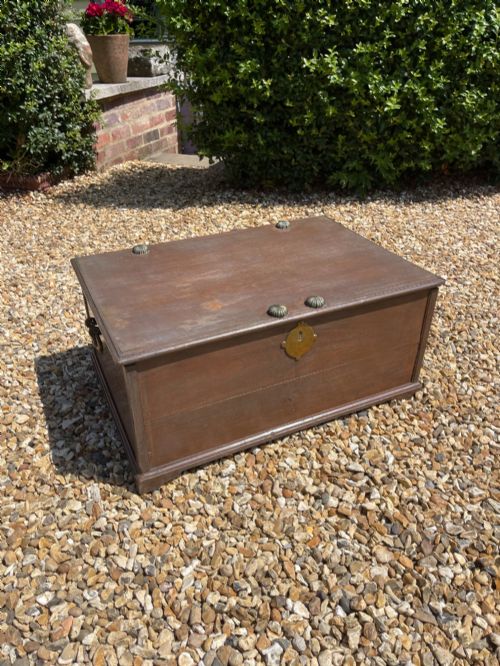
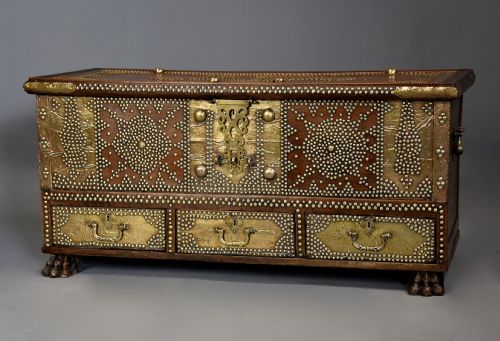
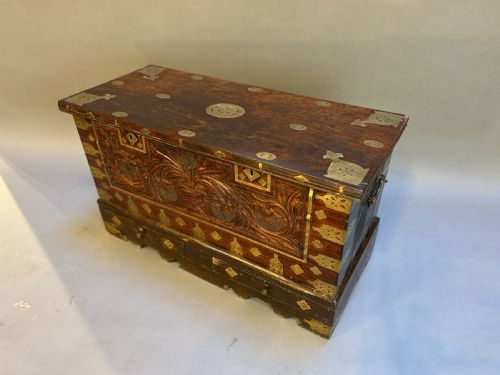
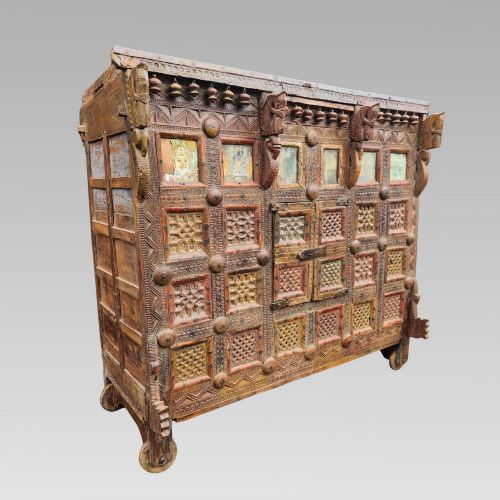
The most common examples on this page are padouk, teak, and camphor wood trunks, often bound in brass or iron. They range from utilitarian military containers to heavily carved dowry cabinets and brass-studded trader chests.
Origins span across India, Ceylon, Burma, and Zanzibar, reflecting the movement of goods and British military presence abroad during the Victorian era and earlier.
How they were made
Cabinetmakers utilised dense exotic hardwoods such as teak, padouk, camphor wood, and satinwood to withstand tropical climates and heavy travel. These timbers resist warping and insect damage naturally.
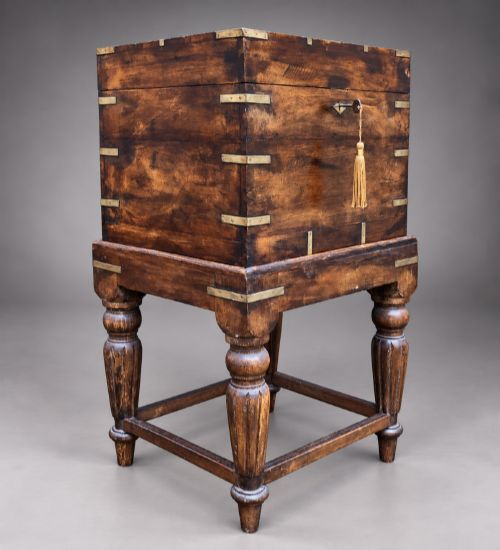
Construction frequently incorporates heavy brass straps, corner brackets, and iron banding to reinforce the joints for long journeys by sea and land. Studwork and occasional mother of pearl inlay add decorative detail to the functional hardware.
Camphor wood chests release a distinct aromatic scent when opened, acting as a natural wardrobe freshener for centuries.
What varies in quality
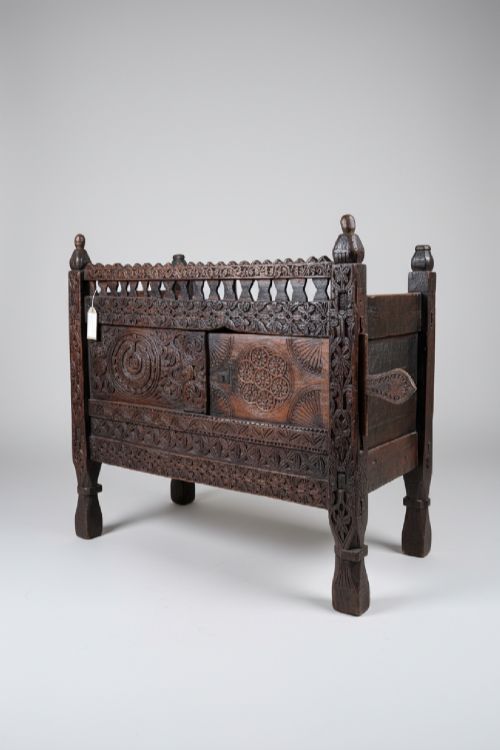
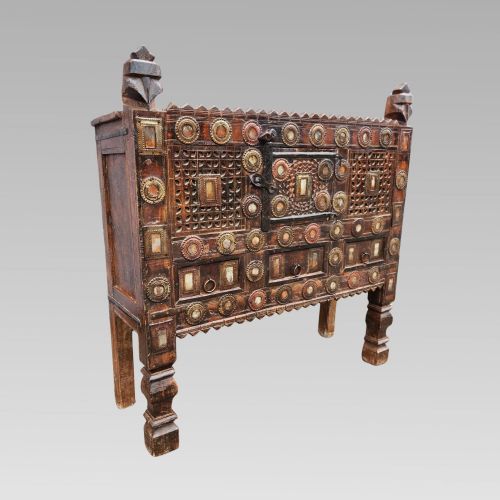
Quality rests upon the choice of timber and the complexity of the brass or iron work. Plain utilitarian campaign boxes contrast with highly decorative carved damchiya chests and intricate inlaid pieces.
The integrity of the original hardware, hinges, and locks alters the desirability of a trunk. Pieces retaining their fitted interior compartments or original carrying handles command greater interest from collectors.
The Wooden Indian Coffer Glossary
- Campaign trunk
- A portable chest built in sections with recessed brass handles for military officers on active service abroad. These chests were designed to withstand rough transport on horseback or ship.
- Zanzibar chest
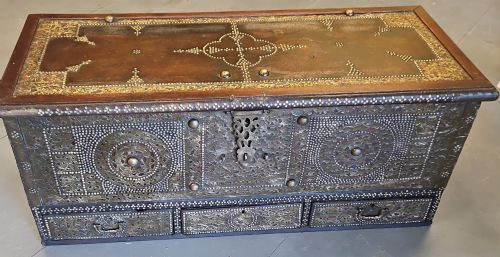
- A heavy timber storage box characterised by brass studding, elaborate strapwork, and a central locking drawer. Merchants traded these vessels widely across East African and Indian ports.
- Damchiya
- An Indian dowry chest or storage cabinet featuring deep hand-carved panels and traditional geometric motifs. Families used these to hold household linens and ceremonial garments.
- Cellarette
- A lockable container designed specifically to hold wine bottles and decanters securely. They often sit on low stands and appear inside dining rooms.
- Padouk
- A heavy, durable reddish-brown timber sourced from tropical regions. Cabinetmakers favoured it for its rich colour and resistance to wear.
Wooden Indian Coffer: Frequently Asked Questions
What is a wooden indian coffer used for today?
These chests serve primarily as coffee tables, blanket boxes, and heavy storage furniture in modern homes. Their flat lids and robust construction make them practical surfaces alongside deep internal capacity.
Placing one in a living room or bedroom provides concealed storage for linens and books while adding historical weight to the interior.
How do I care for camphor wood and teak chests?
Maintain the wood by applying natural wax sparingly to preserve the grain and prevent the timber from drying out. Avoid placing these chests near direct heat sources or in overly dry environments.
Camphor wood naturally repels insects, so interior linings require little maintenance beyond occasional gentle dusting with a dry cloth.
How do I tell a campaign trunk apart from a trader chest?
Campaign trunks typically feature flush-mounted brass handles and sectional construction intended for easy transport by military personnel. Their exterior hardware prioritises function and portability above dense decoration.
Trader chests and Zanzibar boxes rely heavily on brass studwork, elaborate corner plates, and complex locking mechanisms designed for stationary mercantile use.
Where were these trunks manufactured?
Workshop origins vary across the Indian subcontinent, Ceylon, Burma, and coastal East African trading hubs like Zanzibar. British colonial influence shaped many designs, blending local woodworking techniques with European tastes.
Regional preferences determined whether a chest received carved panels, brass straps, or plain polished hardwood surfaces.