



Carved Teak Storage Cabinet
These carved teak storage cabinet pieces bring rich texture and heritage into a room, offering robust utility wrapped in intricate hand-carved artistry.
Carved Teak Storage Cabinet
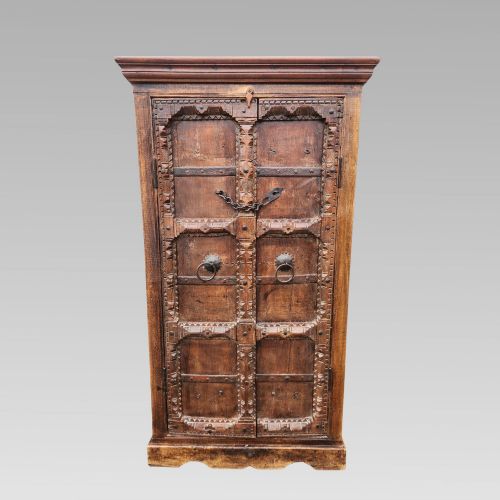
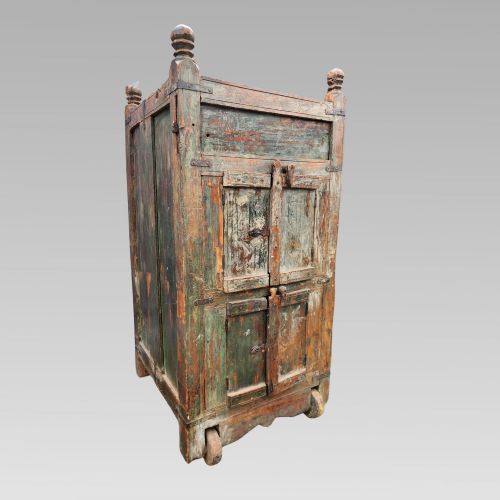
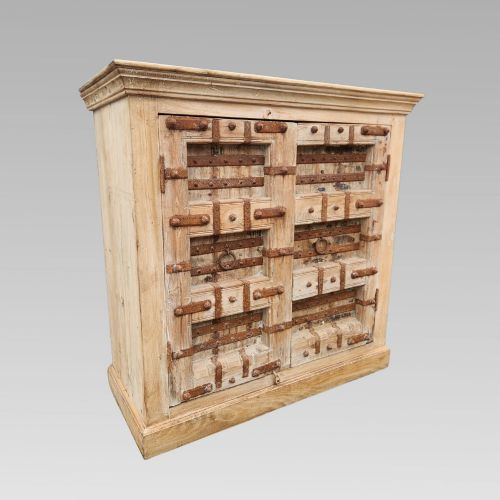
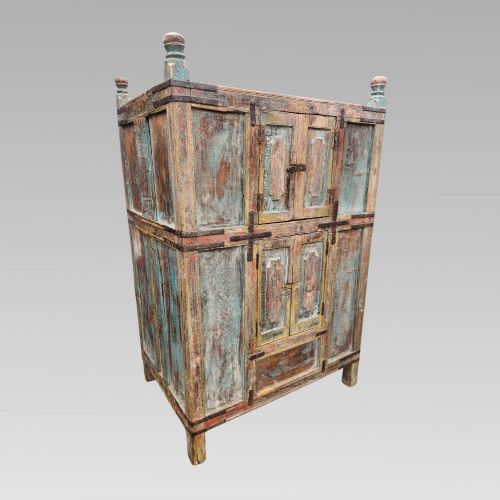
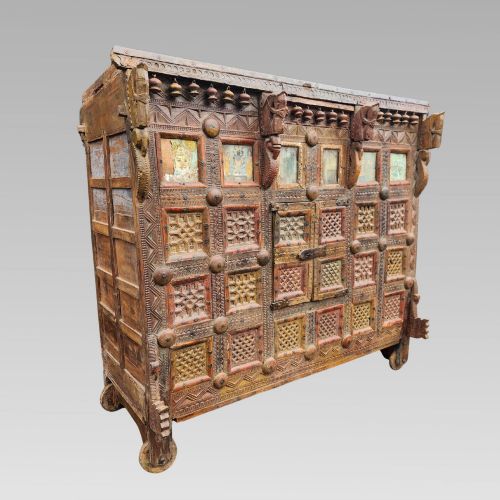
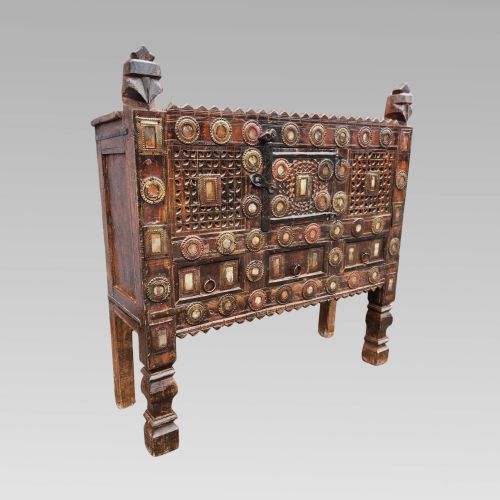
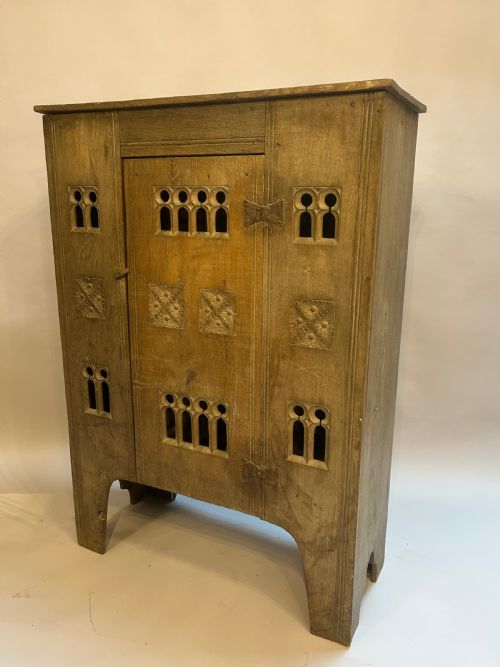
A carved teak storage cabinet brings together utilitarian function and traditional artistry, predominantly originating from Indian provincial workshops and Anglo-Indian colonial contexts. These pieces manifest in various forms on this page, including tall cupboards, almirahs, damchiya dowry chests, sideboards, corner cabinets, and specimen chests dating from the nineteenth century through the 1930s.
The aesthetic bridges several distinct styles, drawing upon traditional Indian carving, Anglo-Indian colonial design, Indian folk art, and Victorian influences. Buyers encounter everything from robust reclaimed teak wardrobes and statement almirah cabinets to specialised veranda gin cabinets and cedar-lined drawer chests made from alternative hardwoods like chestnut.
How they were made
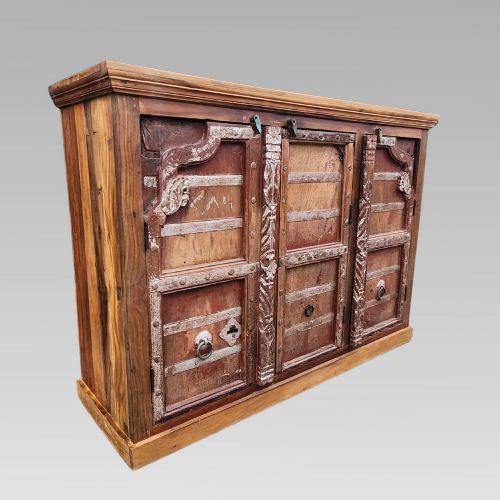
Construction relies heavily on durable timbers, principally teak alongside hardwood, chestnut, and cedar. Artisans utilise reclaimed wood and traditional joinery to build these substantial cupboards and chests, incorporating secondary elements of iron, brass, glass, and paint to finish doors and compartments.
Surface work defines the category, featuring extensive hand-carving applied across panels, doors, and lintels. Structural hardware often includes visible iron and brass fittings that secure heavy timber doors and drawers.
Carved Teak Storage Cabinet Retail Price Guide 2026
Typical asking prices for carved teak storage cabinet among the pieces listed under this phrase on Sellingantiques today, from the lower quarter to the upper quarter. They describe what is for sale here now, not the wider market.
Materials across these listings span teak, hardwood, chestnut, and cedar, augmented by brass and iron hardware.
What varies in quality
The depth, crispness, and complexity of the hand-carving separate standard utility pieces from exceptional statement furniture. Finer examples display meticulous relief work across the teak panels and cohesive integration of traditional motifs.
The integrity of the timber and the preservation of original structural elements, such as brass and iron hardware, dictate the overall standard. Pieces utilising solid reclaimed teak and cedar internal linings command attention for their material authenticity and robust construction.
The Carved Teak Storage Cabinet Glossary
- Almirah
- A freestanding cupboard or wardrobe used for storage. These traditional Indian cabinets often feature heavy panel doors and intricate carvings.
- Damchiya
- A traditional low dowry chest or storage cabinet from India. They typically incorporate deep hand-carved decoration and sturdy wooden frames.
- Anglo-Indian
- A design style blending British furniture forms with traditional Indian craftsmanship and materials. This fusion produces distinctive colonial cabinetry.
- Reclaimed teak
- Seasoned timber salvaged from older structures and repurposed for new furniture. This material provides stability and dense grain patterns.
Carved Teak Storage Cabinet: Frequently Asked Questions
Where do these cabinets originate?
The pieces originate primarily from Indian provincial workshops, alongside Anglo-Indian colonial environments and nineteenth-century Ceylon. They reflect regional traditions through local carving styles and specific domestic forms.
Maker traditions span traditional Indian folk art and Victorian influences, resulting in diverse functional items like almirahs and dowry chests.
What woods are used in these cabinets?
Construction centres on teak, often reclaimed from older buildings to provide a dense and durable structure. Other examples incorporate alternative hardwoods, chestnut, and cedar for internal linings.
Additional materials like iron, brass, glass, and paint appear as structural hardware and decorative accents on doors and storage compartments.
How were damchiya chests used?
Damchiya chests served as traditional dowry storage cabinets in Indian households, designed to hold textiles and valuables safely. Their robust wooden construction protected contents from humidity and pests.
Over time, these heavy chests transitioned into decorative statement furniture while retaining their original compartment layouts.
How do I date a nineteenth-century cabinet?
Dating relies on observable construction methods, material usage, and stylistic markers recorded across the Victorian and nineteenth-century periods. Examination of the timber, hardware integration, and carving techniques helps place the piece within its era.
Comparative analysis with documented almirahs and colonial sideboards provides further context for the production decade.