
Wooden Hallway Coat Rack
These wooden hallway coat rack examples combine practical storage with period joinery, bringing traditional utility and character to entrance spaces.
Wooden Hallway Coat Rack
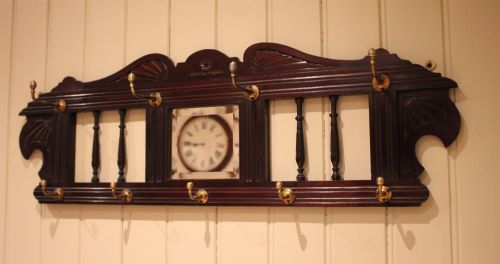
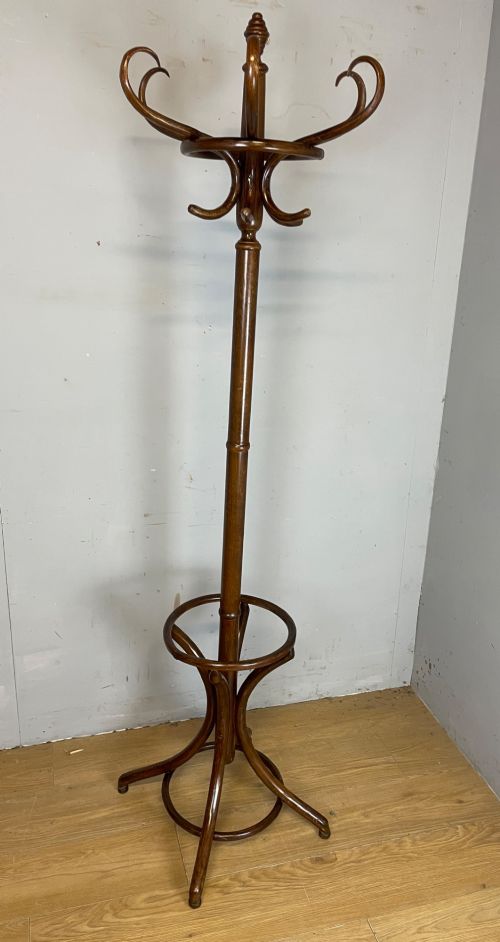
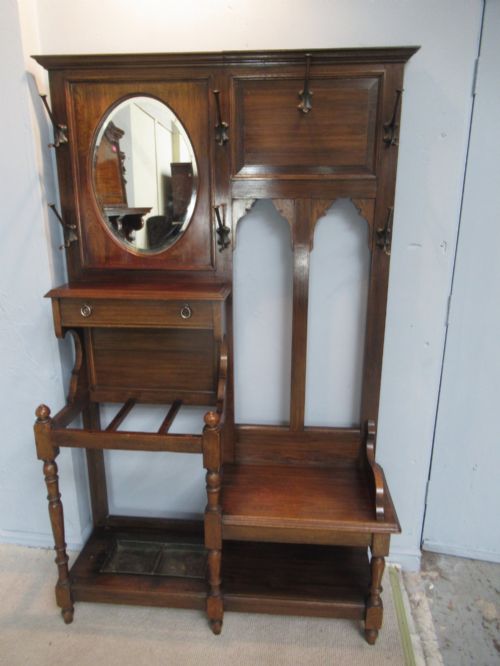
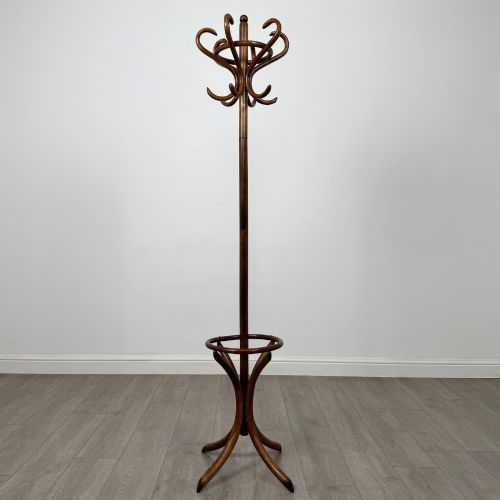
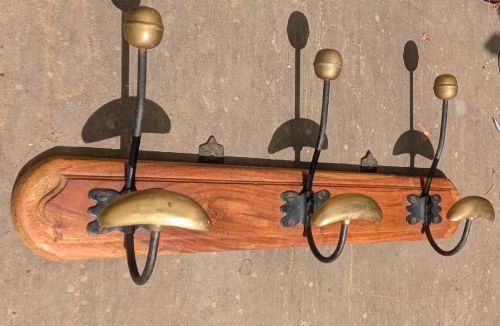
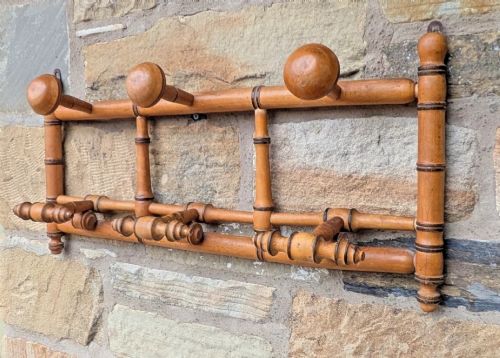
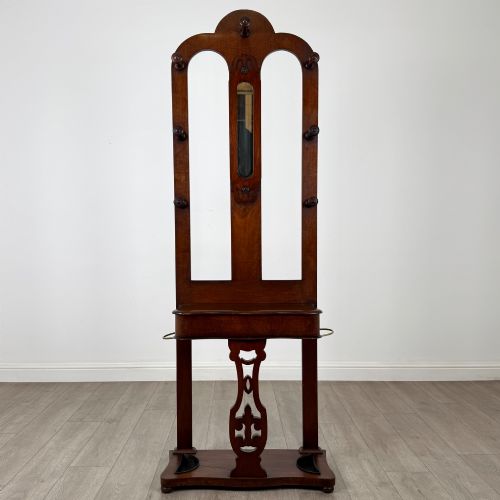
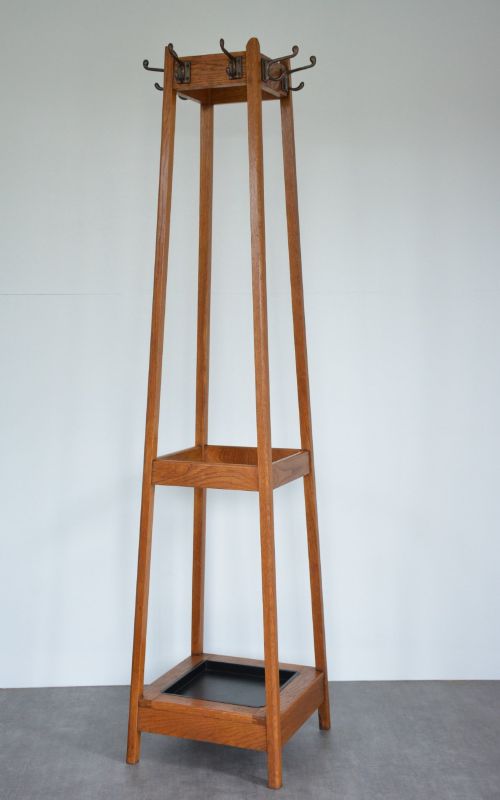
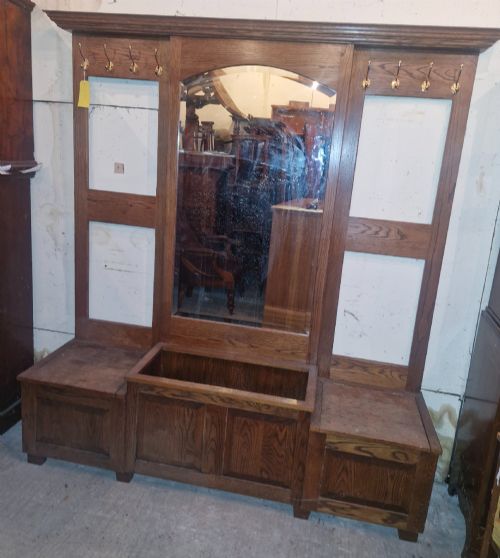
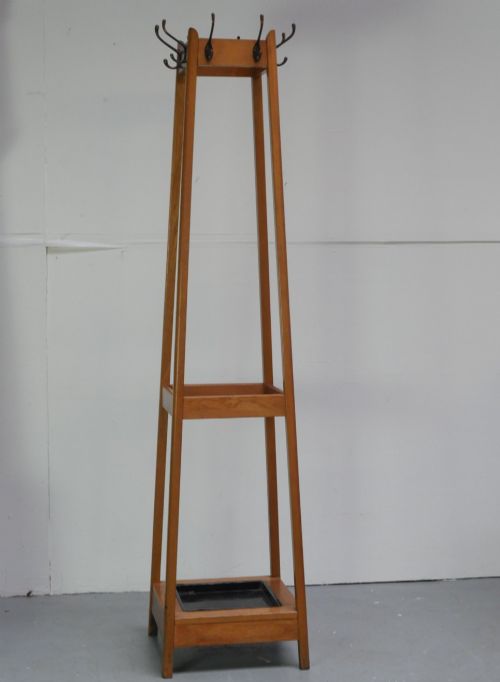
A wooden hallway coat rack serves as an essential entryway furnishing, taking the form of wall-mounted backboards with hooks or freestanding hall stands incorporating umbrella holders and mirrors. The selection spans the nineteenth century through the early twentieth century, encompassing Victorian, Edwardian, and Arts and Crafts designs.
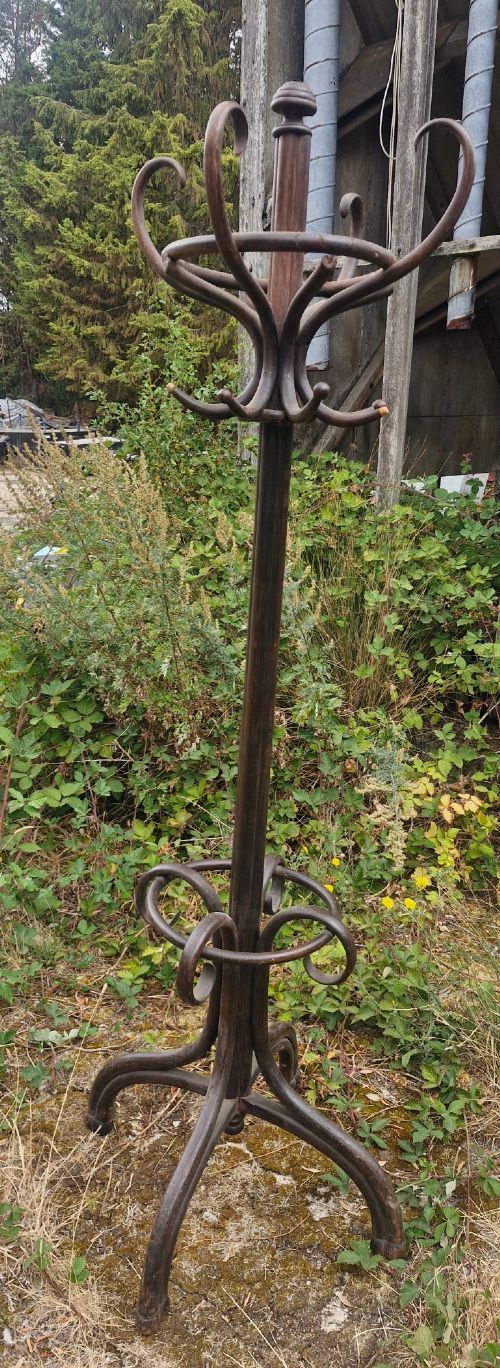
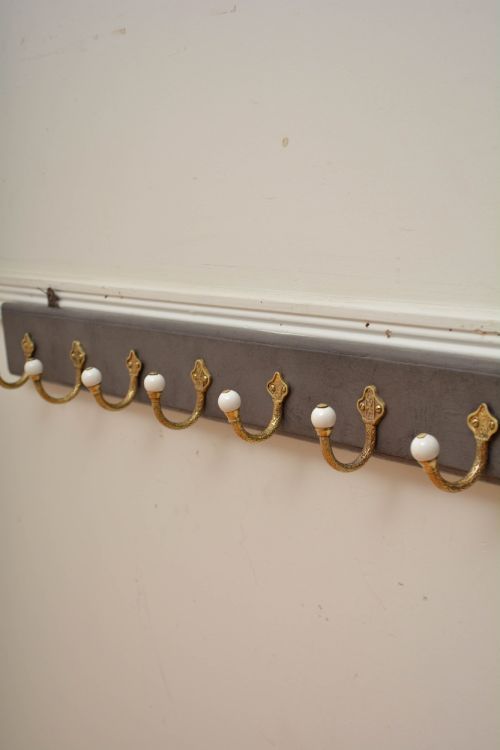
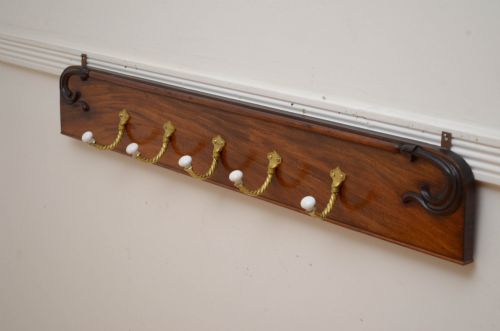
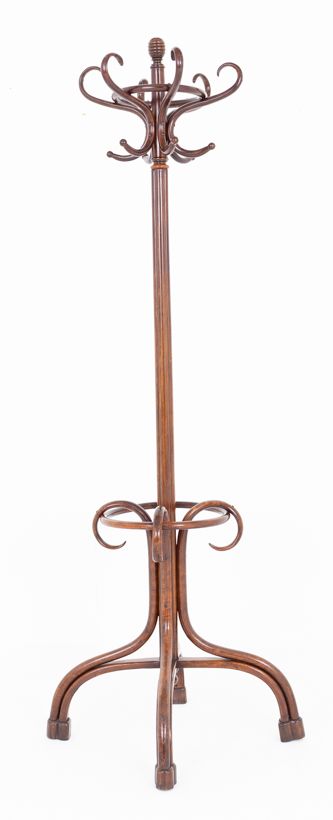
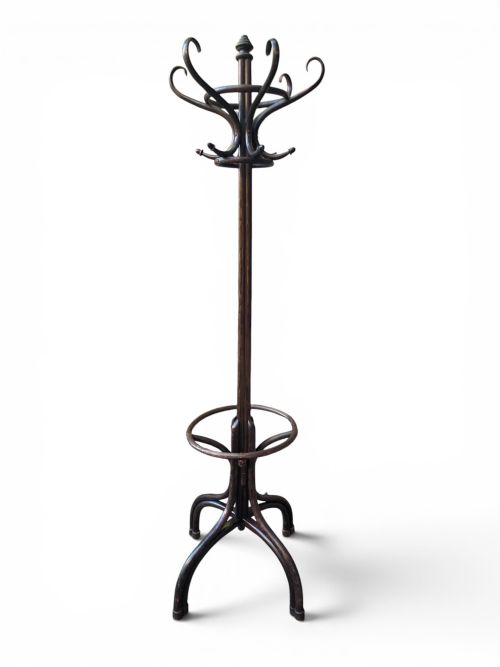
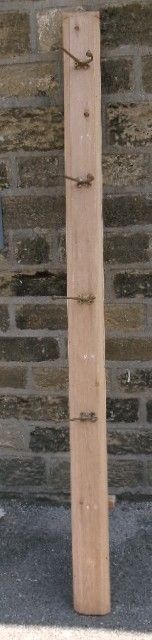
Freestanding beech bentwood versions frequently appear, alongside substantial oak and mahogany hall stands that integrate seating and drip trays. Wall-mounted variations utilise pine or mahogany backboards fitted with brass, ceramic, or cast iron hooks.
Makers and designers such as Thonet, Jas Shoolbred, and Astrola contributed distinct interpretations, ranging from steam-bent organic curves to solid oak architectural frames.
Materials and Construction
Construction relies heavily on timbers such as oak, mahogany, walnut, beech, and pine, selected for their durability in domestic entryways. Bentwood pieces utilise steam-bent beech to create flowing, curved structural elements.
Functional hardware integrates cast brass, porcelain, and ceramic hooks, often accompanied by metal drip trays for umbrellas. Joinery methods range from traditional mortise and tenon frames in oak hall stands to steam-bent assembly in Thonet style items.
Many freestanding designs feature integrated drip trays, acknowledging the British climate's persistent drizzle.
Assessing Build and Finish
Quality depends on the selection of solid timber versus veneered surfaces, alongside the integrity of the original joints and applied finishes. Superior examples display robust construction in structural members and retain their original matching brass or ceramic hardware.
The sophistication of decorative carving, particularly in Arts and Crafts or Art Nouveau pieces, separates standard utility items from finer workshop productions.
Thonet·Jas Shoolbred·Astrola
The Wooden Hallway Coat Rack Glossary
- Bentwood
- Wood that has been heated with steam and bent into curved shapes. This technique defines the lightweight yet sturdy hat and coat stands produced by makers like Thonet.
- Hall Stand
- A multi-functional entryway furniture piece. These typically combine a central mirror, coat hooks, umbrella holders, and sometimes a bench seat with a drip tray.
- Backboard
- A flat wooden plank mounted to the wall that supports a series of hooks. These form the basis of wall-hung coat racks.
- Drip Tray
- A metal pan positioned at the base of a stand to catch water from wet umbrellas and walking sticks.
- Arts and Crafts
- A design movement prioritising traditional craftsmanship and simple forms. Pieces from this style often feature hand-worked oak and exposed joinery.
Wooden Hallway Coat Rack: Frequently Asked Questions
How do I choose the right coat rack size?
Measure your available wall space or floor area before selecting a piece. Wall-mounted racks suit narrow corridors, while freestanding hall stands require adequate clearance for doors and foot traffic.
Consider whether you need integrated umbrella storage or a mirror, which influences the overall footprint of the furniture.
Are these coat racks suitable for daily use?
Period wooden hallway coat rack pieces are constructed from durable timbers like oak and beech, making them well-suited for everyday outerwear.
Ensure wall-mounted versions are anchored securely into studs or masonry to support heavier winter coats and bags safely.
How do I care for antique wood and brass?
Dust wooden surfaces regularly with a soft cloth and apply a quality beeswax periodically to maintain the finish. Avoid placing damp items directly onto unsealed wood.
Clean brass hooks gently with a dry cloth to preserve their aged patina rather than using harsh chemical polishes.
How can I tell Victorian pieces apart from Edwardian ones?
Victorian items frequently feature darker timbers like mahogany and heavier, more ornate carvings or cast iron hardware. They often reflect formal aesthetic traditions.
Edwardian designs tend to favour lighter oak, simpler geometric lines, and brighter brass or ceramic fittings, aligning with the shift towards airier hallway spaces.