
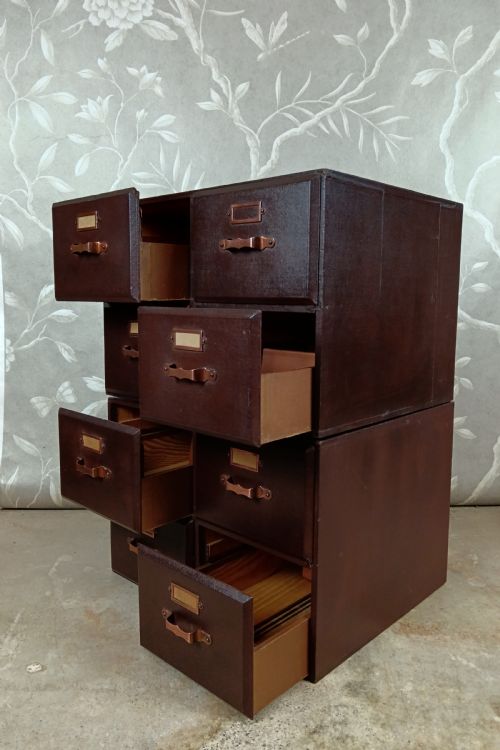


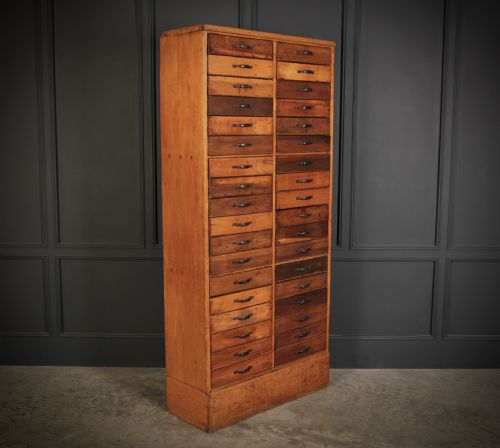
Wooden Haberdashery Unit
A wooden haberdashery unit offers dense, modular storage with glazed or panelled drawer fronts that suit modern working spaces.
Wooden Haberdashery Unit
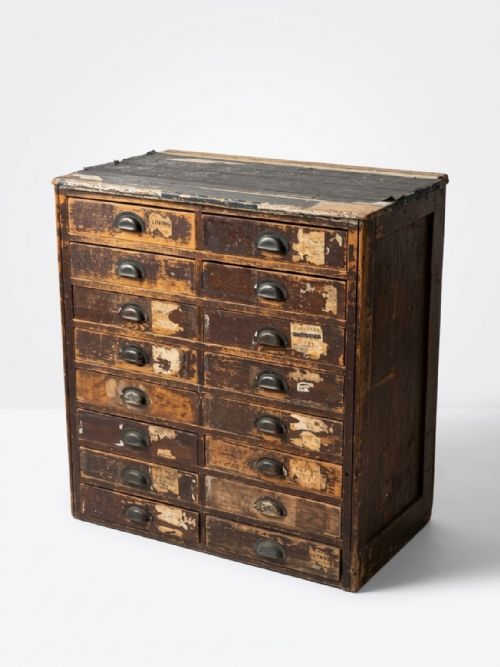
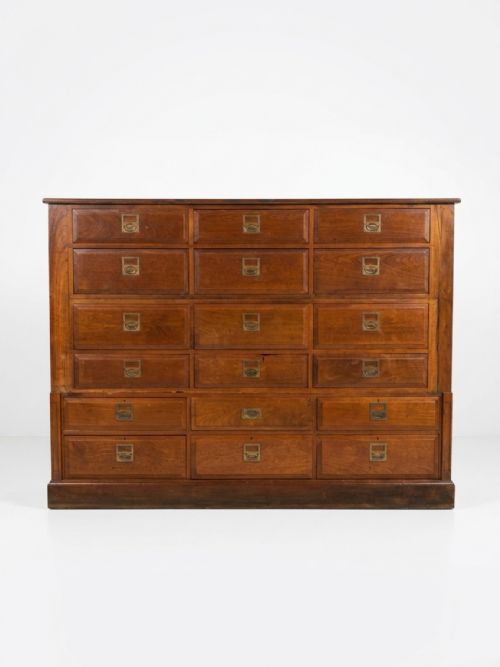
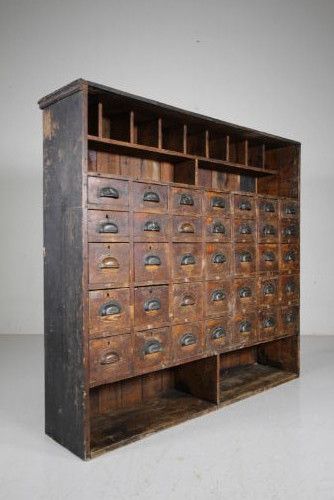
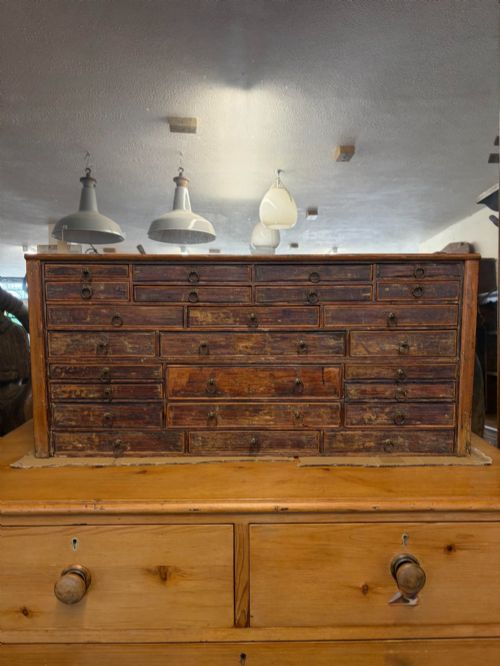
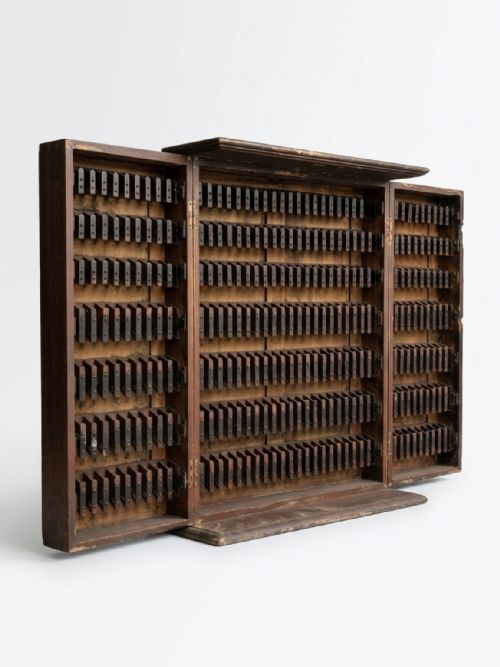
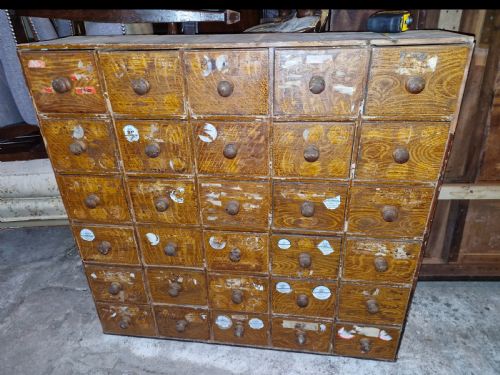
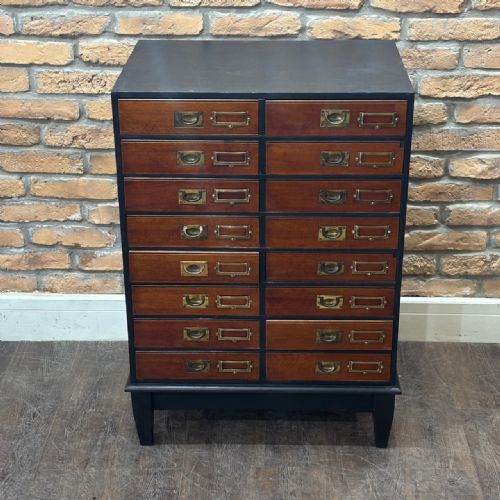
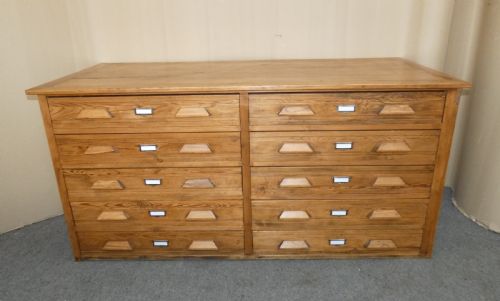
A wooden haberdashery unit encompasses multi-drawer banks, chemist shop fittings, and drapers' chests originating from commercial and institutional spaces. These pieces span the nineteenth century into the 1930s, incorporating Victorian, Edwardian, and industrial styles designed for efficient sorting.
How they were made
Makers utilised sturdy timbers such as mahogany, pine, oak, and walnut to withstand heavy commercial use, frequently pairing them with brass handles, iron fittings, and glass elements. These materials provided the structural integrity needed for banks of numerous small drawers and display counters.
Construction techniques focused on utility and durability, resulting in modular forms like filing cabinets and apothecary chests designed for daily handling. Structural framing often relied on dense hardwoods, whilst secondary woods formed internal partitions and drawer linings.
Listings feature pieces spanning the nineteenth century through the 1930s, incorporating pine, mahogany, oak, walnut, and fruitwood alongside brass and iron hardware.
What varies in quality
The distinction between tiers of quality rests on the selection of timber and the complexity of the internal configuration. Dense hardwoods like mahogany and walnut command higher regard than stained deal or basic pine, reflecting the original cost and intended setting of the cabinet.
Hardware choice and joinery execution also separate utilitarian pieces from more refined commercial showpieces. Brass framing, intact glass panels, and specialised mechanisms such as patent letter files elevate the structural sophistication of a chest.
Luxmore's of Ilfracombe·Saml. Elliott & Sons
The Wooden Haberdashery Unit Glossary
- Bank of drawers
- A large cabinetry structure containing many small drawers arranged in a grid, built for retail or office sorting. These units form the backbone of commercial antique storage.
- Haberdashery cabinet
- A specialised storage chest originally used in drapers' shops to hold ribbons, threads, and small garments. They frequently feature glass-fronted drawers for stock visibility.
- Stained deal
- Pine or fir timber treated with a coloured wash to imitate a more costly hardwood. It represents a practical, economical choice in nineteenth-century workshop construction.
- Graduated drawers
- A vertical stack of drawers decreasing in depth from bottom to top. This arrangement provides structural stability and visual balance to shop chests.
- Patent letter file
- An office storage apparatus featuring specialised internal mechanisms for sorting documents. These mechanical systems represent late nineteenth-century administrative innovation.
Wooden Haberdashery Unit: Frequently Asked Questions
How were wooden haberdashery units originally used?
These units served in shops, offices, and station sorting rooms to organise small merchandise, tickets, and documents efficiently. Shop assistants used the multi-drawer format to keep disparate stock sorted and visible to customers.
In administrative settings, similar banks of drawers housed correspondence and library cards. Their modular design allowed businesses to scale storage as paper records and inventory grew.
What woods were used for these cabinets?
Cabinetmakers utilised dense timbers like mahogany, walnut, and oak for visible retail surfaces and finer shop fittings. These hardwoods provided both aesthetic presence and resilience against heavy commercial handling.
Utility pieces and regional workshop items often employed pine, fruitwood, or stained deal. Secondary softwoods were typically selected for internal framing and drawer construction to keep manufacturing costs practical.
How do I date a multi-drawer cabinet?
Dating relies on observing construction methods, timber choices, and stylistic markers such as Victorian proportions or 1930s industrial streamlining. Patent stamps and maker labels, when present, provide precise chronological anchors.
Hardware styles also offer clues, transitioning from heavy brass-framed pulls on nineteenth-century pieces to simpler metal fittings on later utility units. Examining the internal drawer linings reveals the hand or machine work characteristic of specific decades.
How do I incorporate one into a modern interior?
A multi-drawer chest functions effectively as a sideboard, a kitchen island base, or an entryway sorting station. The numerous compartments offer practical organisation for contemporary studio or office spaces.
Placing a large bank of drawers against a neutral wall allows the timber grain and patination to become a focal point. Their commercial heritage brings distinct character and grounded utility to domestic rooms.