



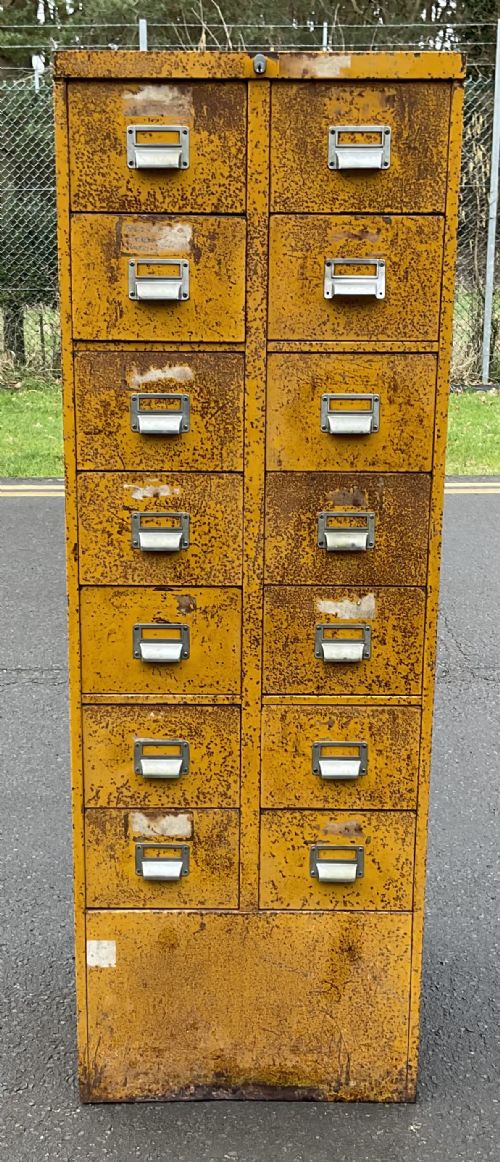


Vintage Workshop Drawers
Vintage workshop drawers bring hardworking utility into modern interiors, offering heavy-duty storage formed from robust timber and metal.
Vintage Workshop Drawers
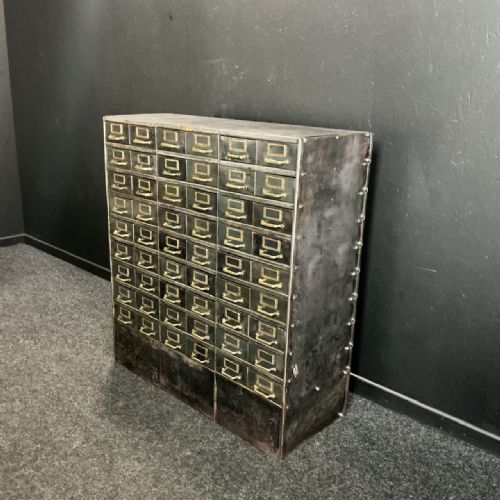
Vintage workshop drawers are utilitarian storage units designed for trades, commerce, and industrial use during the nineteenth and twentieth centuries. Buyers searching for vintage workshop drawers encounter banks of drawers, filing cabinets, and small chest formats intended for jewellers, carpenters, ironmongers, and watchmakers.
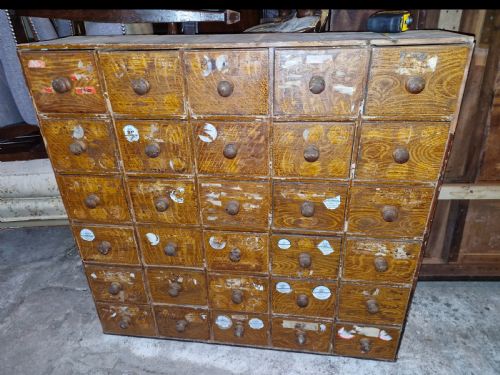
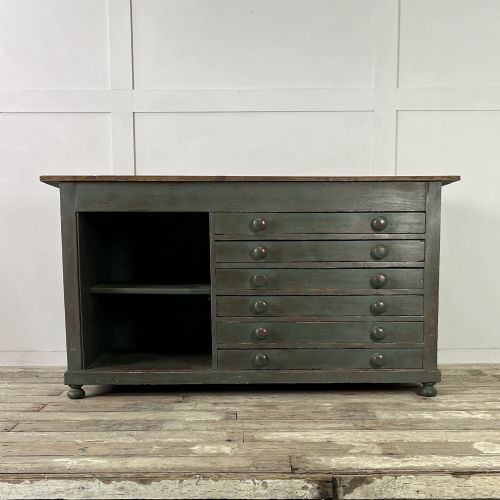
The most common examples on this page date from the Victorian and Edwardian eras through to the 1930s, built in pine, mahogany, and heavy metals. These pieces range from tall banks with numerous small compartments to broad chests and spice cabinets carrying the marks of daily trade.
How they were made
Makers constructed these sturdy pieces using durable timbers such as pine and mahogany for frames and drawer carcasses, often pairing them with brass pulls, iron handles, and steel framing. Many surfaces retain layers of old paint or natural wood grains developed through decades of manual handling.
Joinery focused entirely on strength and endurance, utilising solid boards, robust drawer runners, and metal hardware designed to withstand heavy daily use in workshops and stores.
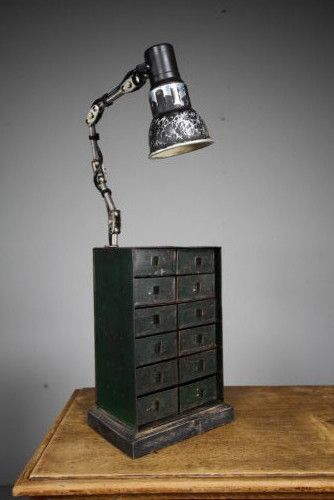
One exceptional Edwardian chest even comes equipped with its own original light fitting, ready for late-night assembly work.
What varies in quality
Quality in vintage workshop drawers rests on the integrity of the original construction, the density of the timber, and the retention of authentic hardware such as brass pulls and iron brackets. Pieces built for specialised trades like watchmaking or jewellery work often display finer joinery and more numerous, tightly fitted compartments than general utility chests.
The condition of the surfaces also defines value, distinguishing between pieces with undisturbed original paint or honest patination and those that have undergone unsympathetic restoration or modern alterations.
The Vintage Workshop Drawers Glossary
- Bank of drawers
- A multi-drawer cabinet designed to hold a large volume of small components, tools, or documents.
- Ironmongers
- Tradespeople who dealt in iron and hardware goods, requiring specialised cabinetry to sort diverse stock.
- Patina
- The surface sheen and colour acquired by wood and metal through age, handling, and wear.
- Utility
- A design approach focused strictly on practical function and durability rather than ornamental detail.
Vintage Workshop Drawers: Frequently Asked Questions
How were workshop drawers used originally?
These cabinets served in trade and commerce to sort small tools, watch parts, jewellery components, and hardware in busy workshops and stores.
Craftsmen relied on numerous shallow compartments to keep specialised items organised and immediately accessible during daily labour.
How do I fit them into a home?
Vintage workshop drawers function well as standalone storage in kitchens, studies, and hallways, providing deep capacity for modern domestic items.
Their robust timber and metal surfaces introduce tactile texture and historical character to contemporary interior schemes.
How do I tell Victorian pieces apart?
Victorian workshop pieces generally display heavier timber framing, hand-cut joinery details, and darker wood tones like mahogany or matured pine.
Later Edwardian and 1930s examples often incorporate more metal elements, industrial finishes, and standardised hardware.
Are all these pieces from Britain?
The selection includes both British pieces from the Victorian and Edwardian eras alongside continental examples, notably from France.
French industrial pieces often feature distinct iron frameworks and lighter timber contrasts compared to their British counterparts.