

Four Drawer Cabinet
These four drawer cabinet pieces range from compact bedside chests to tall filing units, offering practical storage with period character.
Four Drawer Cabinet
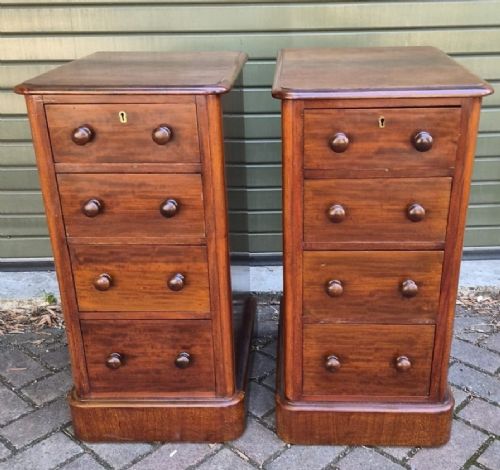
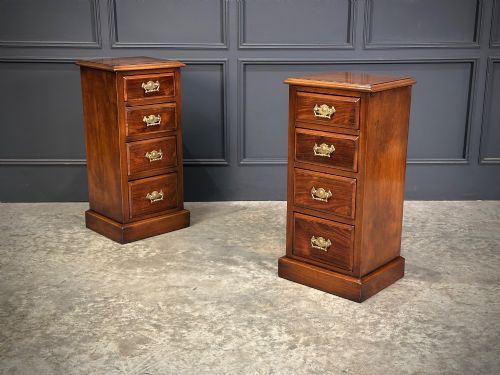
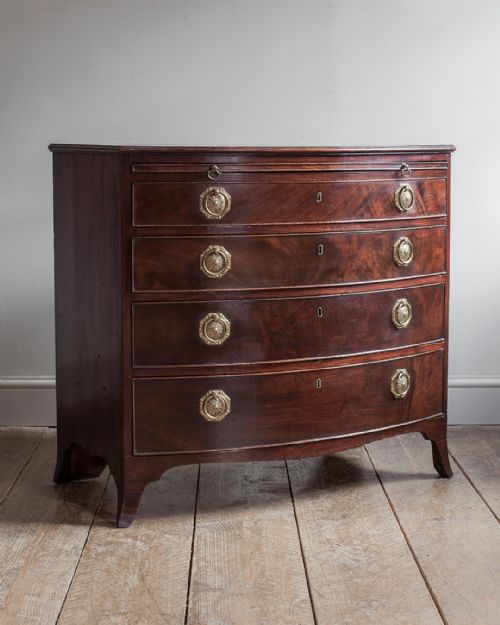
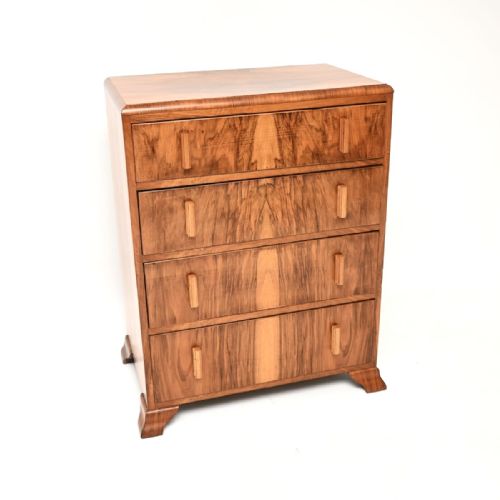
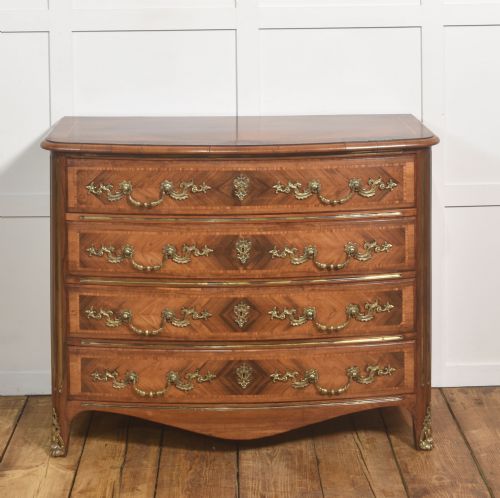
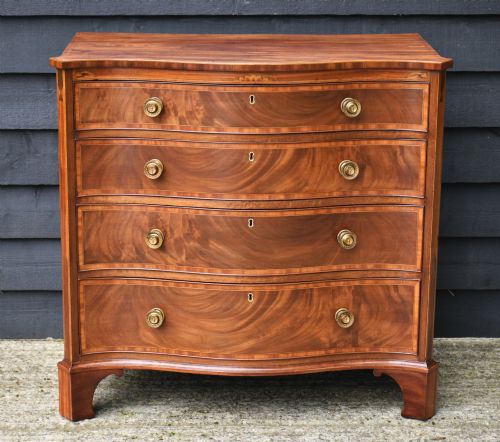
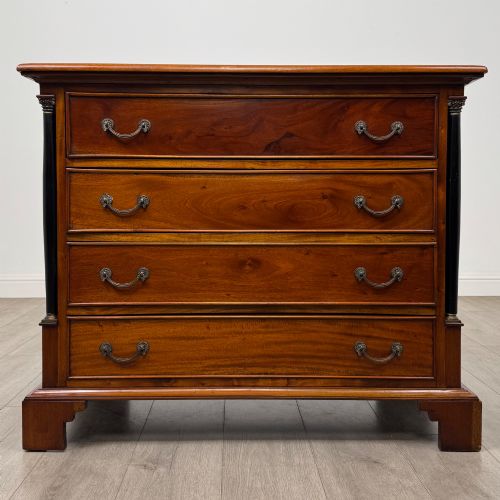
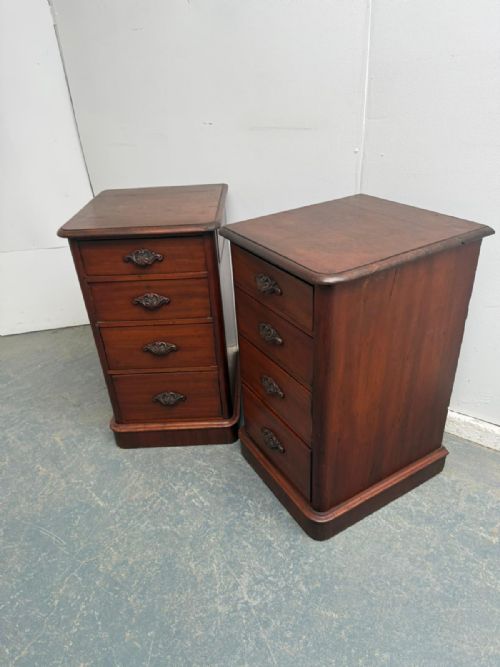
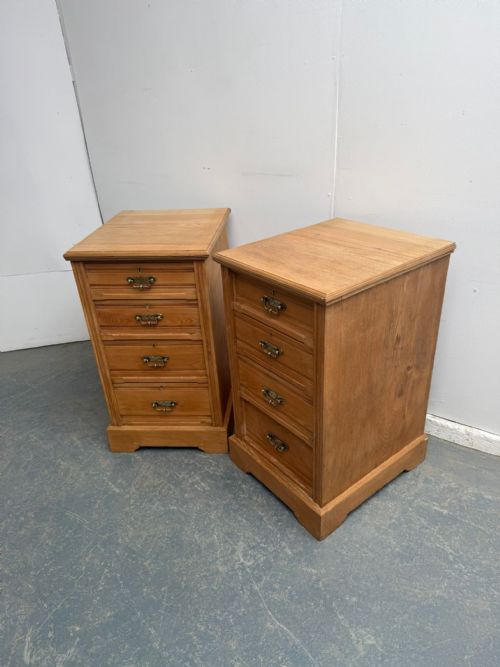
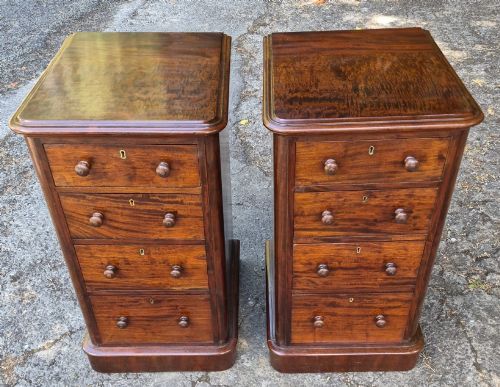
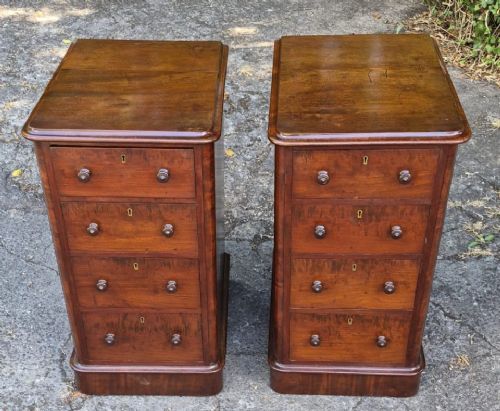
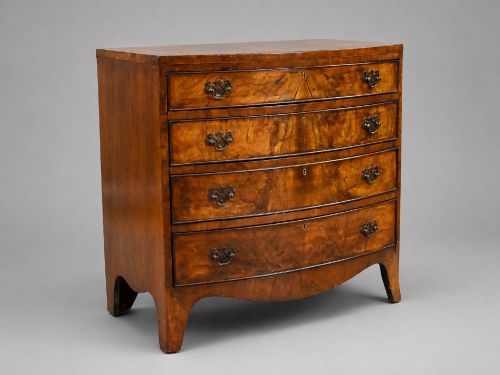
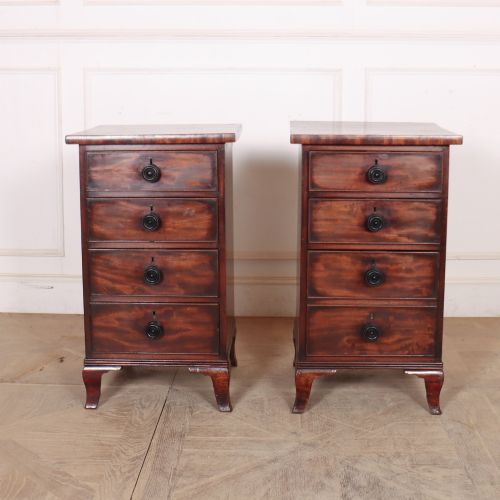
A four drawer cabinet covers a diverse group of storage furniture, appearing frequently as chests of drawers, bedside cabinets, lockers, and specialist filing pieces. The selection includes substantial Georgian and Victorian timber chests alongside compact bedside versions and utilitarian oak filing units.
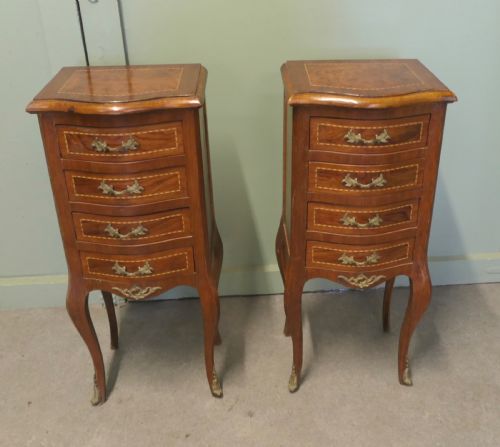
Makers and manufacturers utilised various regional styles, yielding everything from French Louis XV style marquetry commodes to Swedish birch chests and English mahogany pieces. Buyers encounter both domestic bedroom furniture and office filing apparatus sharing the same fundamental vertical drawer configuration.
Materials and Construction
Cabinet makers relied heavily on solid hardwoods and selected veneers, with mahogany, walnut, and oak forming the primary structural timbers across most periods. Secondary woods such as pine appear internally, whilst specialist examples incorporate brass handles, glass panels, and intricate wood inlay.
Construction methods follow traditional joinery appropriate to each era, ranging from hand-cut dovetails on early examples to functional mechanical systems on later filing cabinets. Surfaces receive wax finishes, French polish, or limed treatments depending on the prevailing style.
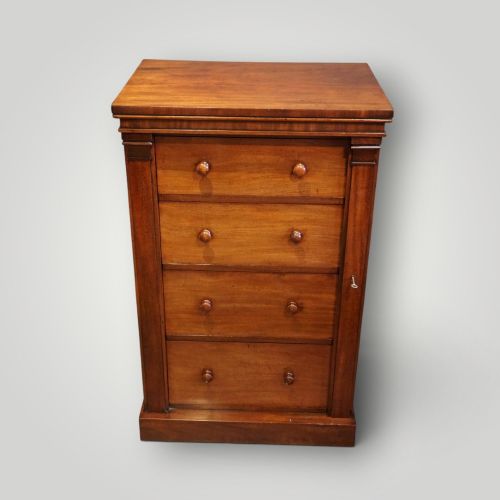
Secret side locking bars on tall Wellington chests keep morning routines secure from inquisitive household members.
Judging Build and Material
Quality separates through the selection of timber figures, such as figured walnut or burr elm veneers, and the crispness of carved details like blind fretwork. Superior pieces display precise joinery, well-fitted drawers, and matched grain patterns across the front elevation.
Hardware choice and interior execution distinguish finer examples from standard utility items, with heavier brass mounts and secondary drawer linings indicating more ambitious workshop production.
Yawman Erbe·Campbell King·Kenrick Jefferson
The Four Drawer Cabinet Glossary
- Marquetry
- Decorative veneer work arranged in pictorial or geometric patterns. Craftsmen apply thin slices of varied wood to create surface ornamentation.
- Serpentine
- A curved front shape featuring a convex centre flanked by concave sides. This undulating profile requires skilled carpentry.
- Blind fretwork
- Carved ornamentation applied to a solid background without piercing right through. It frequently adorns furniture cornices.
- Wellington chest
- A tall, narrow chest of drawers secured by a hinged vertical locking bar on one side. It typically contains multiple shallow drawers.
- Commode
- A decorative low chest of drawers or cabinet originating in France. These pieces often feature elaborate mounts and serpentine fronts.
Four Drawer Cabinet: Frequently Asked Questions
How do I date a four drawer cabinet?
Dating relies on identifying timber choices, construction methods like dovetailing, and characteristic hardware styles. Georgian and Victorian pieces show distinct shifts in decorative motifs and proportions compared to later office filing units.
Examining secondary timbers inside the drawers also helps narrow down the period of manufacture.
Where were these cabinets used originally?
Bedside versions served in bedrooms for personal items, while larger chests accommodated clothing in domestic chambers. Filing and music cabinets functioned in offices or studies for paperwork and sheet storage.
Specialised collectors cabinets housed specimens or small objects in libraries.
What is the difference between a chest and a filing cabinet?
Standard chests of drawers feature domestic timber construction like mahogany or walnut intended for household storage. Filing variants are typically utilitarian oak office pieces built for suspended paper records.
Filing styles often incorporate specific label holders and heavy-duty drawer mechanisms.
How should I care for waxed wood surfaces?
Apply traditional beeswax periodically using a soft cloth to nourish the timber and maintain a gentle sheen. Avoid placing wooden furniture near direct heat sources or strong sunlight.
Regular dusting with a dry cloth prevents accumulation without moisture damage.