



Tabletop Pine Drawers
These tabletop pine drawers offer compact, practical storage with a distinct historic character suited for organising small collections and desk spaces.
Tabletop Pine Drawers
Tabletop pine drawers encompass a practical variety of small-scale storage forms, including miniature chests, specimen cabinets, spice cupboards, and filing units designed for domestic or workspace utility. When searching for tabletop pine drawers, buyers frequently encounter pieces originating from the nineteenth and early twentieth centuries, spanning Georgian, Victorian, and industrial utility styles.
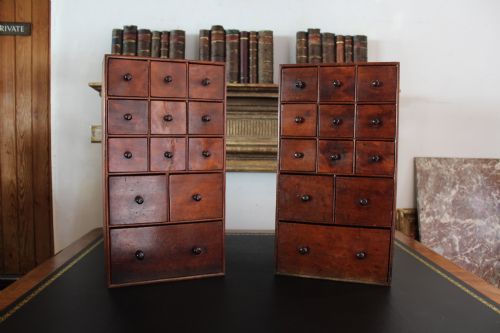
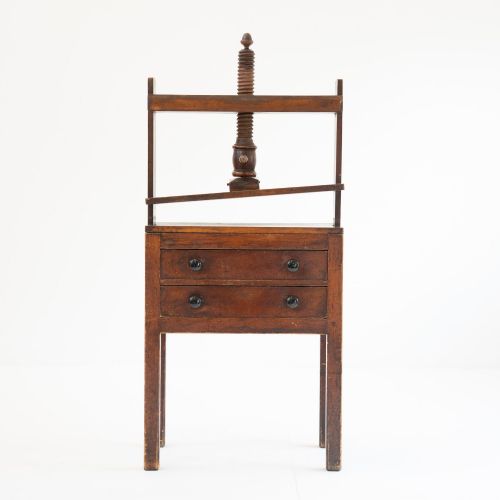
The selection ranges from simple country workshop pieces in stained deal or painted pine to more formal country house linen presses and apothecary cabinets incorporating mahogany elements, brass pulls, and iron details. These items serve modern interiors well as desk organisers or desktop display units, holding small items while bringing a tangible sense of past trade and domestic life into a room.
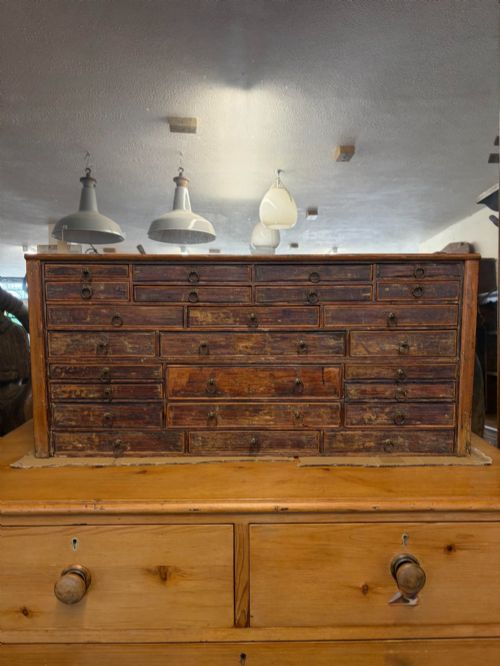
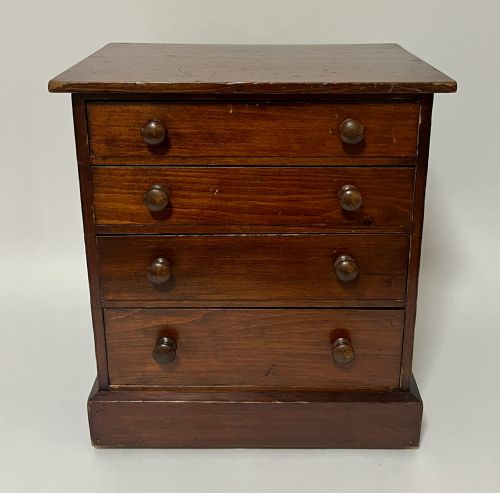
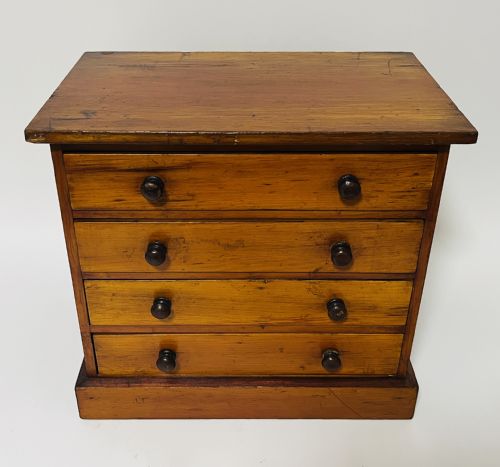
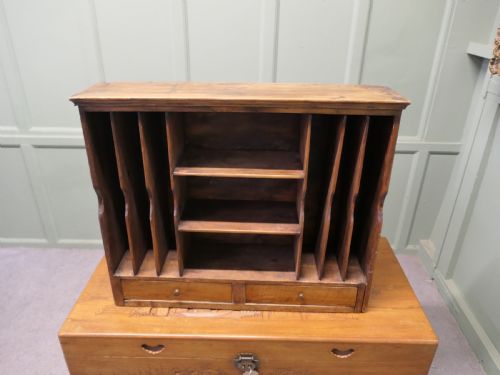
Smaller formats often take the form of miniature chests of drawers mirroring full-sized furniture designs, or banks of multiple small drawers once used in post offices and surgeries. Such items reflect the specific sorting and filing needs of past trades, repurposed today for contemporary stationery, craft supplies, or small collections.
How they were made
Construction relies primarily on solid pine and stained deal, frequently paired with secondary woods like mahogany and fitted with brass or iron hardware for handles, label holders, and hinges. Carpenters and cabinetmakers utilised standard dovetailed joints for drawer construction and simple butt or rebated joints for carcases, ensuring durability for daily sorting tasks.
Surfaces show varied finishes according to original use and later maintenance, including plain scrubbed pine, applied dark stains, and traditional paint finishes. Hardware elements such as cast iron pulls and brass campaign-style handles provide functional contrast to the softer softwood bodies.
Listings feature pieces spanning the Georgian, Victorian, and Edwardian periods, constructed primarily from pine, stained deal, and mahogany with brass and iron fittings.
What varies in quality
Quality in these small cabinets and chests depends largely on the integrity of the timber selection, the crispness of the joinery, and the retention of original hardware such as brass pulls and iron labels. Finely made examples show tight dovetailing in the drawer boxes and smooth running action within the carcase, whereas utilitarian workshop pieces may display simpler lap joints and heavier industrial wear.
The degree of original surface preservation also distinguishes pieces, with untouched painted finishes or clean aged deal holding greater appeal than heavily altered or stripped surfaces. Interior configuration plays a role, as specialised banks of drawers with numerous tiny compartments demand more intricate carpentry than basic single-drawer boxes.
Luxmore's of Ilfracombe·Johnston’s of London
The Tabletop Pine Drawers Glossary
- Deal
- Fir or pine timber commonly used in British furniture and architectural joinery during the eighteenth and nineteenth centuries. It provides a stable, light softwood base for stained or painted finishes.
- Specimen cabinet
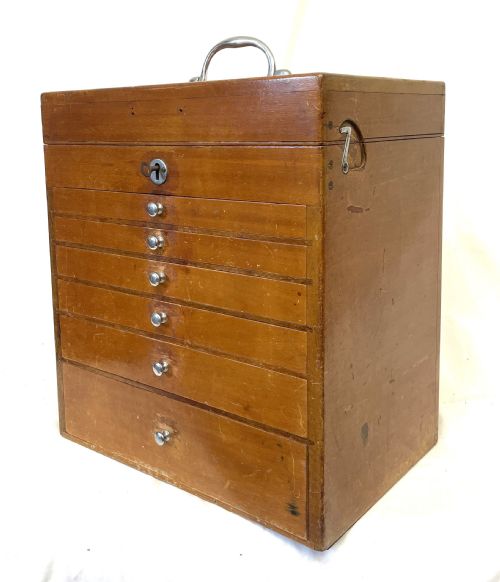
- A small set of shallow drawers designed to hold natural history collections such as insects, minerals, or botanical samples. These pieces feature tight-fitting drawers to protect delicate contents.
- Apothecary chest
- A set of small drawers or compartments originally used by chemists and doctors to store medicines and ingredients. They often retain multiple small brass pulls and fitted interior partitions.
- Miniature furniture
- Scale models of standard furniture forms, occasionally made by apprentices to demonstrate skill or produced for dollhouses and desktop storage. They replicate full-sized construction techniques on a reduced scale.
- Stained deal
- Softwood treated with a dark colour wash or dye to imitate more expensive hardwoods such as mahogany or walnut. This finish was widely used in commercial and domestic settings to achieve a formal appearance economically.
Tabletop Pine Drawers: Frequently Asked Questions
What were tabletop pine drawers originally used for?
These small sets of drawers served a multitude of administrative and domestic purposes, from sorting post and dispensing medicines to housing botanical specimens and keeping spices close to hand. Tradespeople, post offices, and collectors relied on them to keep small components organised and accessible on a desk or counter.
Over time, many found their way into domestic studies and country houses where compact storage was required for letters, sewing equipment, or small valuables.
How do I date a pine tabletop cabinet?
Dating relies on examining construction methods, timber preparation, and the style of the hardware attached to the piece. Hand-cut dovetails, older cut nails, and patinated brass or iron pulls typically point towards nineteenth-century or earlier Georgian origins.
Later Victorian, Edwardian, and 1920s examples often display more uniform machine-sawn components, simpler stained finishes, or specific industrial labels that tie them to commercial offices and surgeries.
Are these drawers suitable for daily use?
Solid pine and deal construction makes these cabinets robust enough for contemporary desktop use, provided the drawers slide smoothly and the joints remain stable. They function well for holding stationery, craft items, or small collections without requiring special structural changes.
Placing them away from direct heat sources helps prevent the softwood from drying out and keeps the drawers operating correctly.
What is the difference between a specimen cabinet and a chest of drawers?
Specimen cabinets generally feature many shallow drawers specifically engineered to protect small objects like coins, shells, or insects from dust and light. Miniature chests of drawers follow the proportions of full-sized bedroom furniture with deeper drawers intended for linen or miscellaneous items.
The internal layout is the main indicator, with specimen units prioritising numerous narrow tiers over deep storage space.