



Industrial Storage Drawers
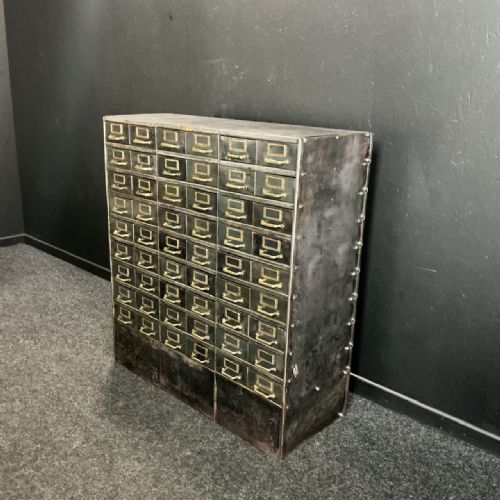
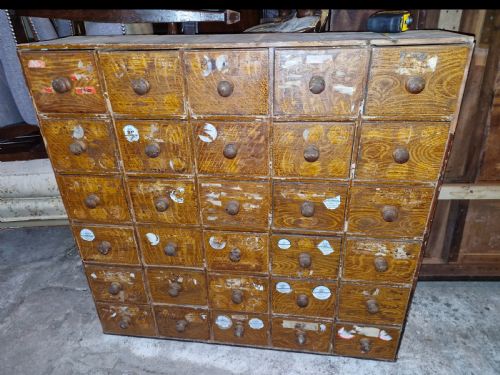
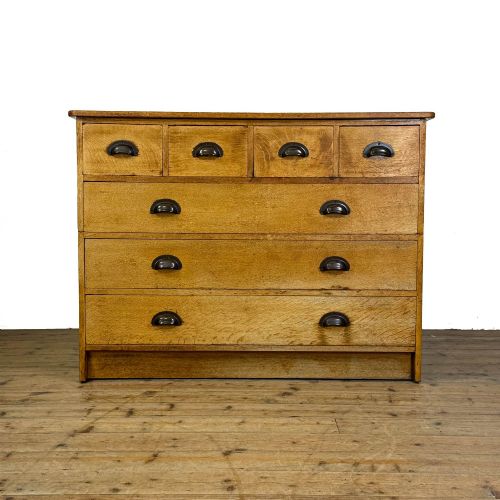
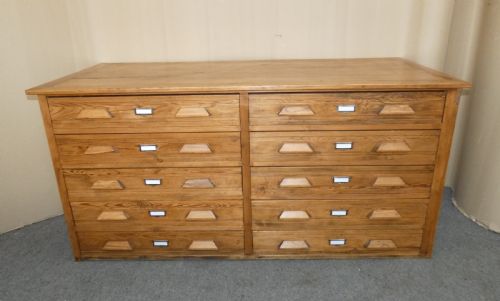
Industrial storage drawers are utilitarian banks, chests, and filing units built for workshops, chemists, and drapers that bring robust functional capacity into a room.
Industrial Storage Drawers
When searching for industrial storage drawers, buyers encounter substantial banks of multiple drawers, plan chests, and tall filing units originating from the nineteenth and early twentieth centuries. These pieces emerge primarily from commercial, workshop, and retail contexts including chemists, drapers, and ironmongers.
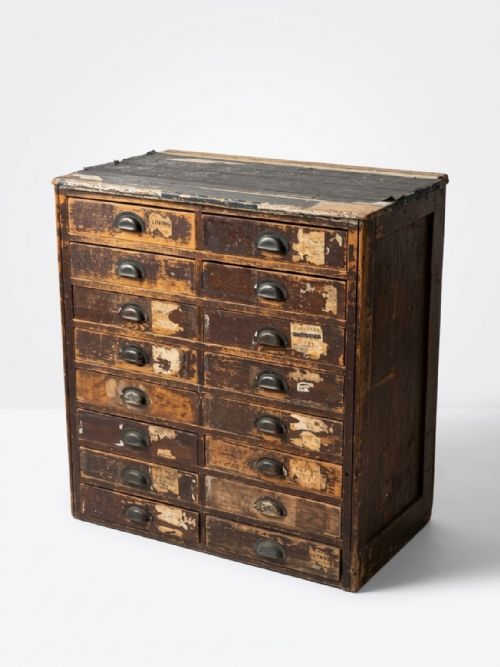
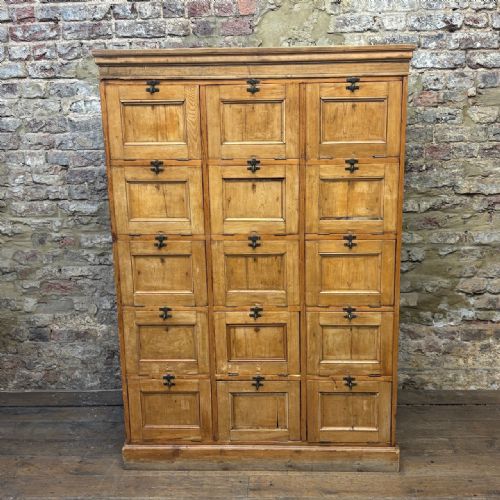
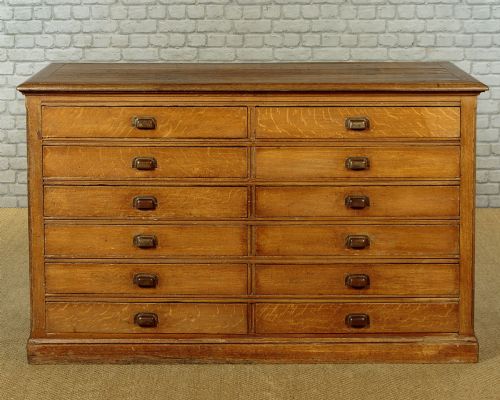
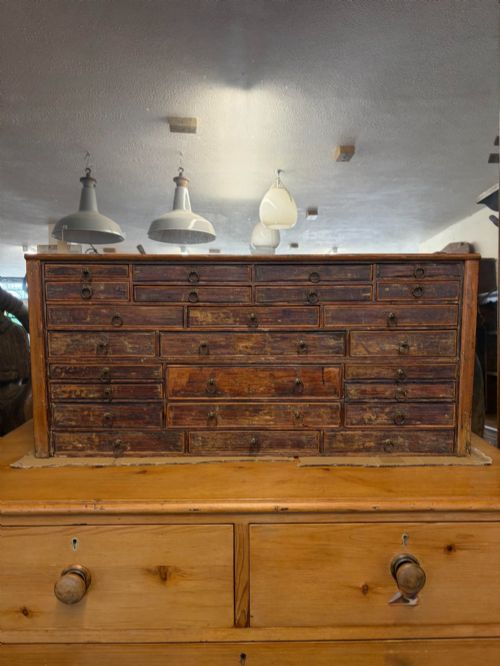
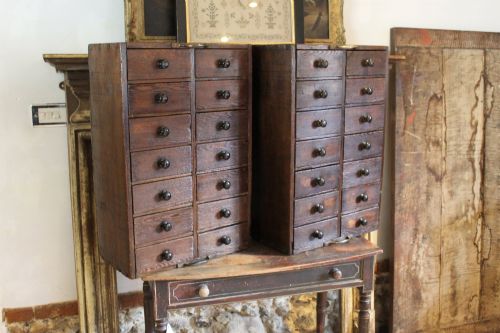
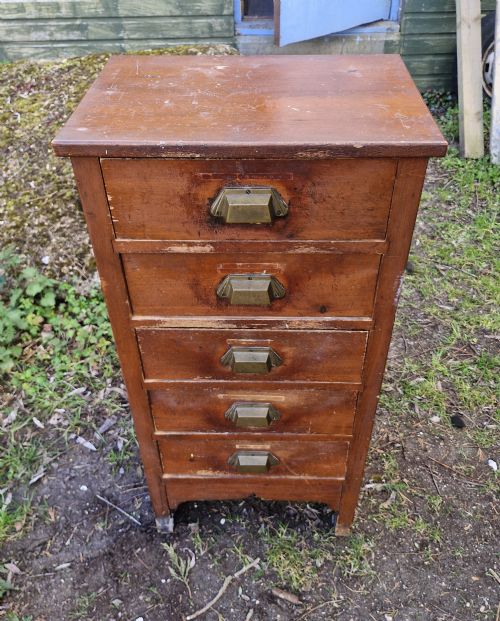
The versions met most frequently on this page include multi-drawer banks in pine, oak, and mahogany, alongside specialised items like haberdashery chests and watchmakers cabinets. Forms range from compact office cabinets to extensive modular blocks designed for heavy daily use.
Periods represented stretch from Victorian and Edwardian eras through the 1920s and 1930s, capturing the transition from traditional trade workshops to mechanized industrial utility. Construction reflects this practical heritage through durable timbers and robust metal fittings.
Materials and construction
Makers utilised sturdy domestic and imported timbers such as pine, oak, mahogany, fruitwood, and pitch pine to construct heavy-duty carcases and dovetailed drawer boxes. Metal elements including iron, steel, and brass appear routinely in structural brackets, handles, and patent locking mechanisms.
Joinery prioritized resilience under commercial pressure, employing solid framing and deep internal divisions to sustain frequent opening and heavy contents. Surfaces range from scrubbed natural wood to painted finishes like light green, shaped by decades of workshop or retail service.
Listings feature industrial storage drawers spanning the 19th century through the 1930s, constructed from pine, oak, mahogany, iron, and steel.
Judging the quality
The upper tier of these pieces displays superior timber selection, such as figured mahogany or clean quarter-sawn oak, coupled with fine dovetail joints and original hardware like period brass pulls. Substantial drawer capacity combined with smooth operational movement separates well-engineered workshop fixtures from standard utility grade builds.
Original provenance and intact specialised internal fittings, such as patent letter files or numbered haberdashery compartments, elevate an example above anonymous utility alternatives. The integrity of the original carcase and unaltered drawer configurations dictate the standing of any industrial storage unit.
Luxmore's of Ilfracombe·D Napier & Sons
The Industrial Storage Drawers Glossary
- Plan chest
- A wide, shallow multi-drawer cabinet originally designed for storing architectural drawings and maps. These units offer expansive top surfaces and shallow internal depths.
- Haberdashers drawers
- A tall chest featuring numerous small glass-fronted or wooden drawers designed for retailing ribbons, buttons, and sewing notions. They are prized for their repetitive modular rhythm.
- Chemist shop fitting
- Specialised cabinetry built specifically for apothecary and pharmacy interiors, typically incorporating small drawers for herbs, powders, and remedies. They often retain original handwritten paper labels.
- Drapers chest
- A wide retail storage unit created for cloth merchants to display and store textiles. These pieces combine deep lower compartments with numerous smaller upper drawers.
- Patent letter file
- A specialised filing system featuring mechanical spring-loaded clamps or vertical indexing dividers to organise correspondence securely. Amberg's system is a notable example.
Industrial Storage Drawers: Frequently Asked Questions
What rooms suit industrial storage drawers best?
These versatile units anchor kitchens, home offices, and living spaces by offering exceptional organizational capacity combined with strong visual presence.
Their deep drawers easily swallow modern clutter while the wooden or metal surfaces introduce authentic historical character to contemporary interiors.
How do I care for old pine or oak drawers?
Maintain the timber by applying natural beeswax sparingly to nourish dry grain and protect historic painted or scrubbed surfaces from moisture.
Avoid placing these cabinets near direct heat sources to prevent timber shrinkage and ensure the heavy drawers continue to run smoothly.
How can I tell a Victorian bank of drawers apart from a 1930s one?
Victorian and nineteenth-century pieces typically exhibit hand-cut dovetailing, traditional timber knobs or heavy brass pulls, and deeper carcase mouldings. Later 1930s examples often incorporate standardised steel hardware, flush-fronted drawers, and a sleeker industrial utility aesthetic.
Examining the internal drawer construction and timber preparation usually reveals the manufacturing era.
Were these units made for domestic use originally?
Most of these pieces served commercial, institutional, or trade purposes in workshops, offices, drapery shops, and chemists rather than private homes. Their robust construction was engineered to withstand the rigorous demands of daily commercial enterprise.
Over time, collectors recognised their functional utility and aesthetic appeal for domestic spaces.