

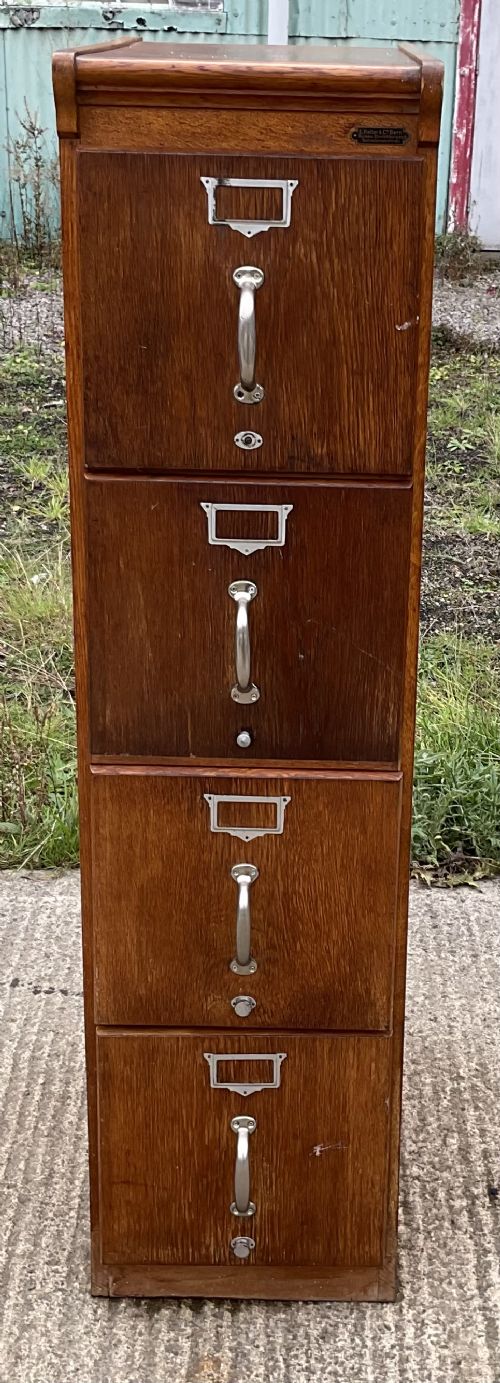
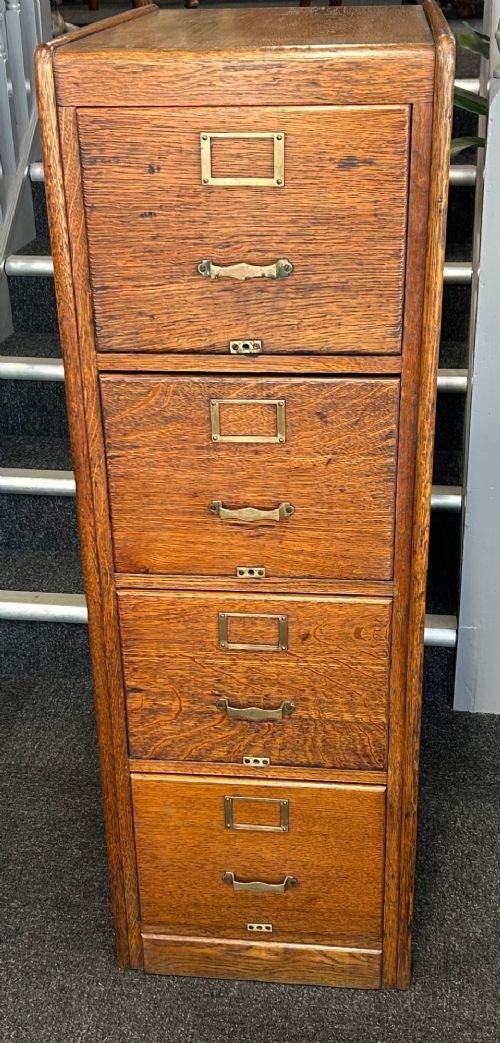
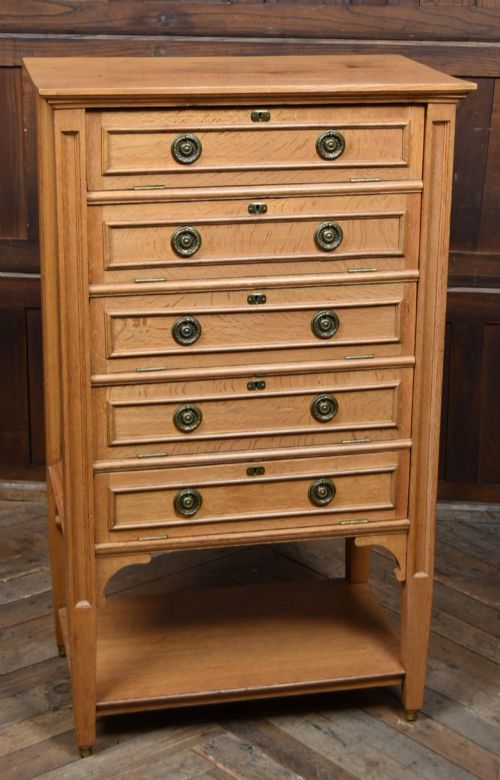
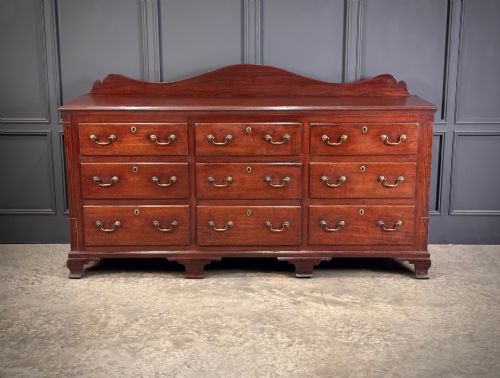

Wooden Filing Drawers
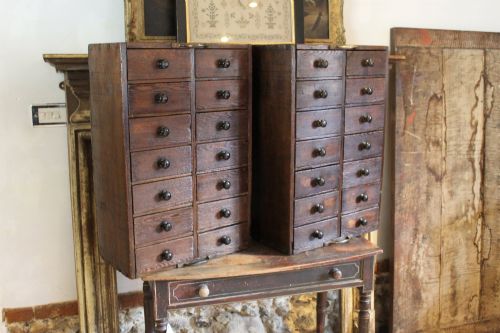
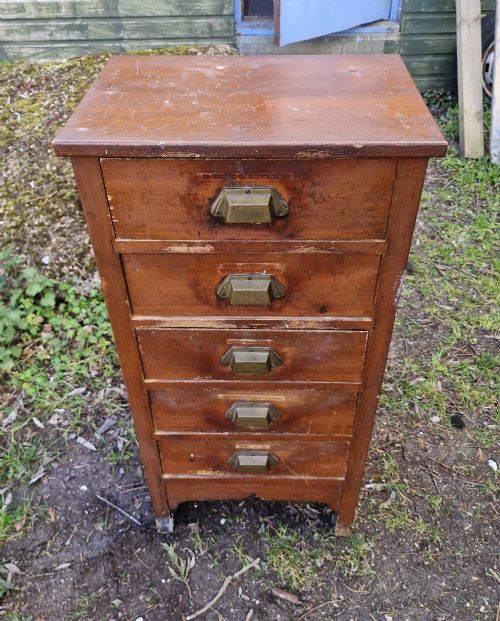
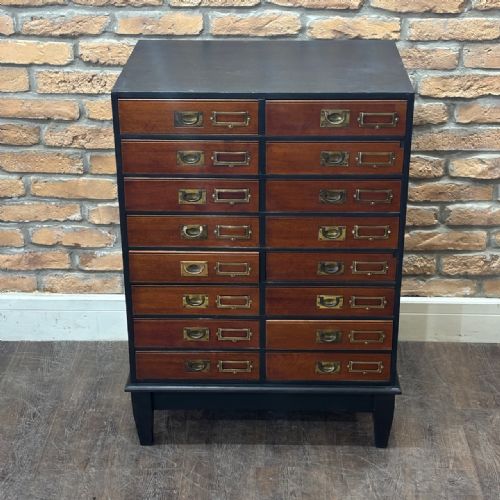
Wooden filing drawers organise correspondence and paperwork while bringing dense timber grain and period utility into a room.
Wooden Filing Drawers
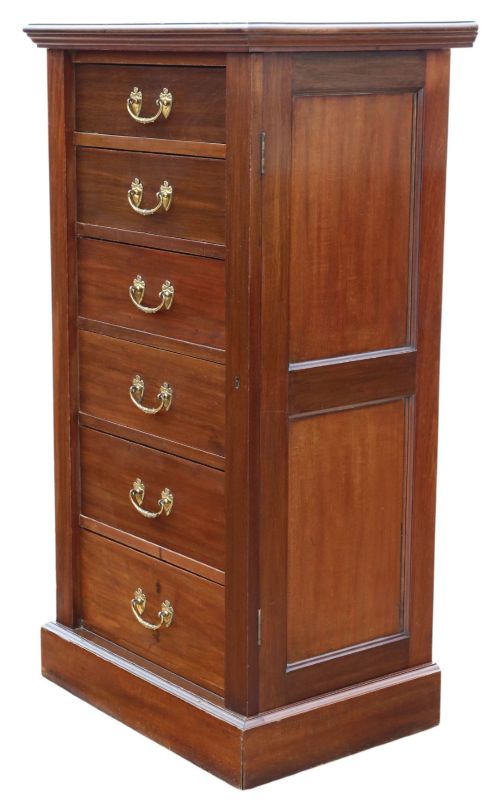
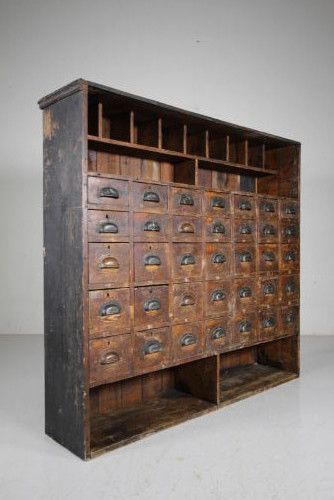
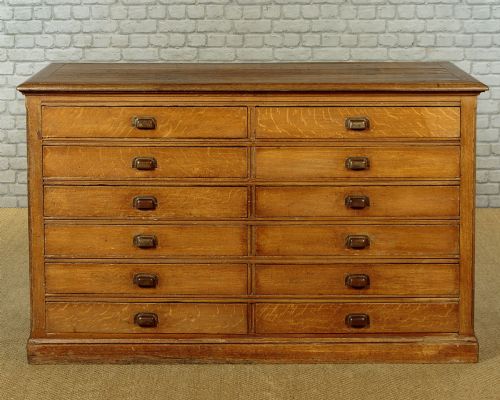
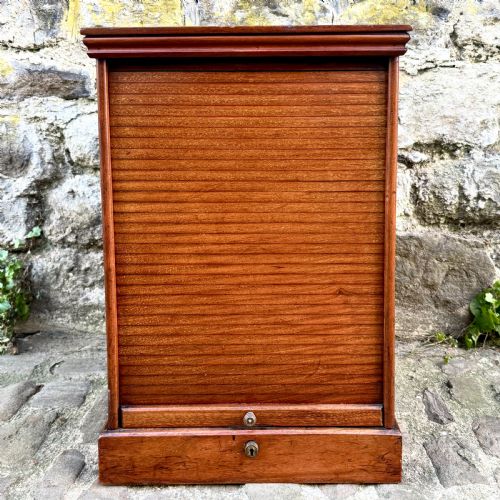
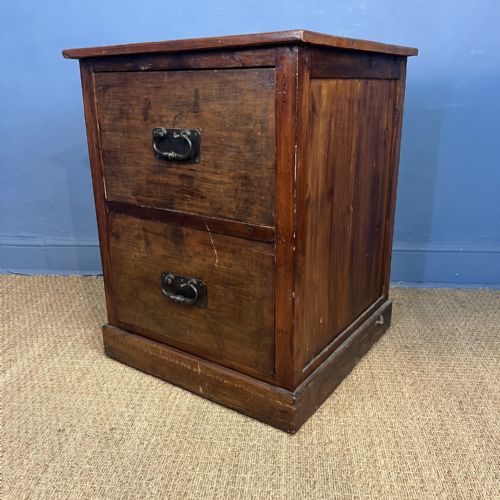
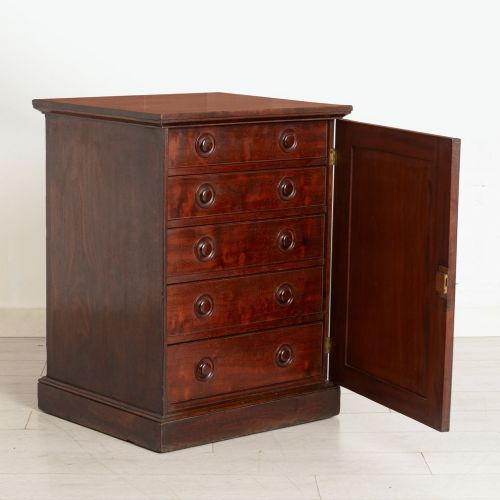
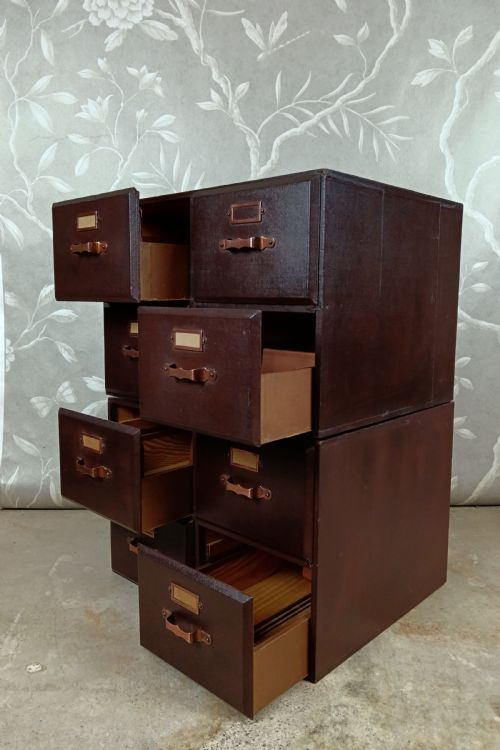
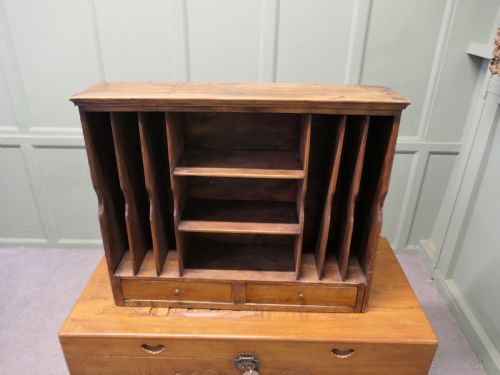
Wooden filing drawers appear in forms ranging from compact table-top card sets to large banks of drawers, tall Wellington chests, tambour front cabinets, and extensive plan chests. Buyers seeking wooden filing drawers will frequently encounter pieces originating from the Victorian, Edwardian, and early twentieth-century periods.
The objects serve primarily practical functions, developed for offices, libraries, workshops, and music rooms to sort papers, letters, and sheet music. Construction often includes multiple graduated drawers, patent letter mechanisms, or tambour shutters designed to conceal documents securely.
Materials and construction
Cabinet makers utilised robust timbers such as oak, mahogany, walnut, pine, teak, and rosewood, frequently pairing solid carcases with matching veneers and internal softwood framing. Grain selection and timber matching dictate the visual weight of each cabinet.
Hardware forms an integral part of the construction, employing cast brass handles, label holders, and specialised patent locking systems. Joinery methods reflect the commercial and domestic demands of the nineteenth and early twentieth centuries.
Wooden Filing Drawers Retail Price Guide 2026
Typical asking prices for wooden filing drawers among the pieces listed under this phrase on Sellingantiques today, from the lower quarter to the upper quarter. They describe what is for sale here now, not the wider market.
Object forms include Wellington chests, tambour front cabinets, library card files, and multi-drawer workshop banks.
Distinctions in quality
Quality rests upon the selection of timber figures, such as figured walnut or dense oak, and the precision of the drawer dovetails and runner mechanisms. Superior examples maintain original polished surfaces and complete, matching brass hardware.
The integration of mechanical elements, including functioning tambour doors and patent letter filing systems, separates standard utility furniture from finer, architect-designed or branded workshop productions.
Maple and Co·D Napier and Sons
The Wooden Filing Drawers Glossary
- Tambour front
- A sliding shutter formed of narrow vertical strips of wood glued to a canvas backing, allowing it to curve around a track and conceal the drawers within.
- Wellington chest
- A tall, narrow chest of drawers secured by a locking side flap that hinges down over the drawer edges and fastens with a key.
- Plan chest
- A wide, shallow multi-drawer cabinet originally designed by architects and mapmakers to store large sheets of paper flat without folding.
- Bank of drawers
- A large cabinet comprising numerous uniform drawers intended for intensive sorting in commercial, postal, or institutional settings.
- Graduated drawers
- A series of drawers arranged vertically in decreasing depth from bottom to top, balancing visual proportions.
Wooden Filing Drawers: Frequently Asked Questions
How do I date a wooden filing cabinet?
Dating relies upon examining construction methods, timber choices, and hardware styles. Dovetails cut by hand typically indicate nineteenth-century or earlier origins, while mechanical patent labels often pinpoint the exact decade.
Industrial models from the early twentieth century display standardised steel or brass fittings alongside simpler oak or pine carcases designed for busy offices.
Can I use these cabinets for modern paper?
Many historical filing drawers accommodate modern stationery if the internal depth and width match standard paper sizes. Card index boxes and smaller letter drawers suit modern desk organisation.
Larger plan chests and multi-drawer banks easily hold contemporary art prints, documents, and creative materials flat within their shallow bays.
How do I care for antique wood finishes?
Maintain timber surfaces by applying quality beeswax periodically to nourish the grain and protect against dry atmospheric conditions. Avoid placing cabinets near direct heat sources or strong sunlight.
Clean brass handles and label holders gently with a dry cloth to preserve their natural patina without stripping the age from the metal.
What is a tambour front on a cabinet?
A tambour front consists of thin wooden slats fastened to a flexible fabric backing that runs along grooved tracks. This mechanism slides smoothly around a corner to enclose the filing drawers.
Cabinet makers utilised this clever design in offices to save space where swinging doors would prove impractical in narrow walkways.