


Wooden Embroidery Box
These wooden embroidery box pieces combine practical sewing storage with fine period craftsmanship, offering a charming focal point for any room.
Wooden Embroidery Box
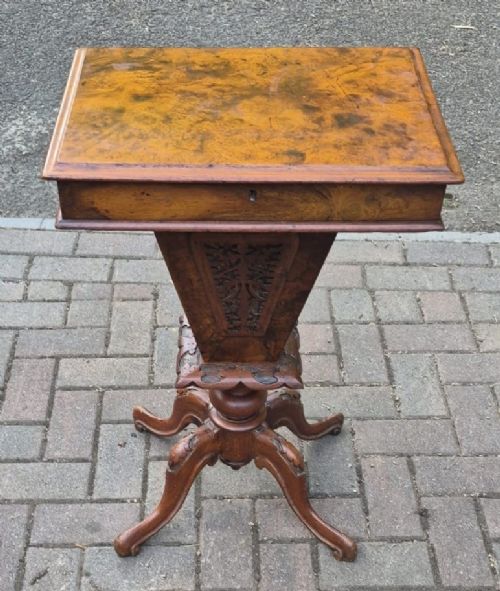
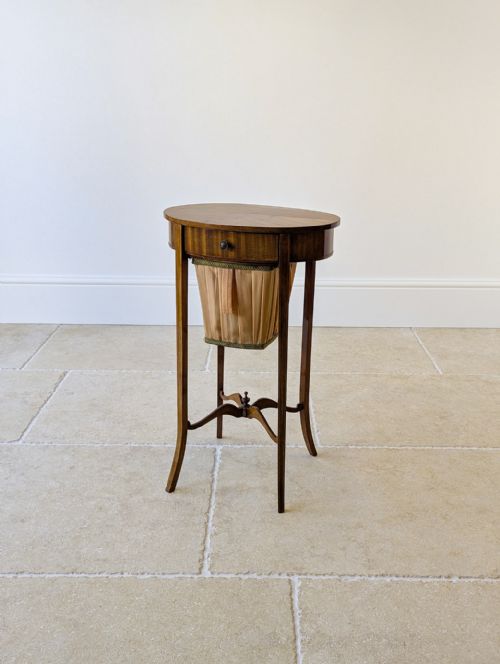
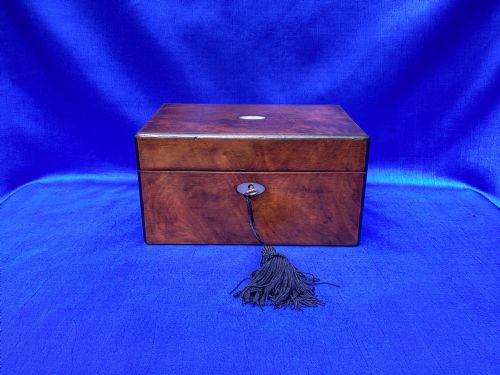
A wooden embroidery box serves as a functional container for needlework implements, threads, and small textiles. The items found on this page span several distinct eras, including Regency, Victorian, and Edwardian periods.
The materials and styles reflect the prevailing tastes of the nineteenth and early twentieth centuries. Walnut, rosewood, and mahogany dominate the selection, often complemented by intricate wood inlay or fabric linings.
How they were made
Cabinet makers utilised dense hardwoods such as mahogany, walnut, and rosewood to construct the primary carcase and legs of each sewing box or table. Burr walnut veneers and detailed wood inlay provided decorative surface contrast.
Internal compartments often incorporated bone fittings and specialised fabric sections to organise needles and thread neatly. Brass hinges, locks, and handles completed the construction of portable caskets and larger work tables.
Current listings feature items from the Regency, Victorian, and Edwardian periods constructed in walnut, rosewood, mahogany, and brass.
What varies in quality
The refinement of the timber selection and the precision of the wood inlay largely distinguish finer examples from simpler utilitarian items. Burr walnut veneers and elaborate Tunbridge Ware decoration indicate higher tiers of craftsmanship.
The complexity of the interior fittings, including fitted bone components and preserved fabric linings, determines the overall sophistication of the piece. Robust joinery and well-preserved brass hardware further separate standard items from exceptional ones.
The Wooden Embroidery Box Glossary
- Work Table
- A freestanding table incorporating a compartment or bag for storing sewing materials and needlework. These items combined domestic utility with formal parlour furniture.
- Tunbridge Ware
- A distinct type of woodworking featuring microscopic mosaic patterns made from naturally coloured woods. Craftsmen applied these geometric motifs to decorative box lids.
- Sarcophagus Shaped
- A box design featuring a sloping lid and a stepped, flared base reminiscent of ancient stone coffins. This silhouette was particularly popular during the Regency and Victorian periods.
- Satin Walnut
- A timber derived from the heartwood of the American sweetgum tree, valued for its warm tone and distinctive grain. It appeared frequently in Edwardian furniture production.
Wooden Embroidery Box: Frequently Asked Questions
What is a wooden embroidery box?
A wooden embroidery box is a container built to hold sewing tools, threads, and unfinished needlework projects.
These pieces range from small tabletop caskets to larger freestanding tables utilised in nineteenth-century homes.
How were these boxes used?
Victorian and Edwardian households relied on these items to keep sewing implements organised and accessible in the parlour.
Portable boxes travelled easily between rooms, while work tables remained stationed beside chairs for daily needlecraft.
How do I identify a Victorian piece?
Victorian items often feature dense timbers like burr walnut or rosewood, sometimes decorated with elaborate inlay.
Cabinet makers during this reign also produced distinctive sarcophagus shapes and Tunbridge Ware surface patterns.
What materials should I expect?
The listings feature solid woods and veneers including mahogany, walnut, rosewood, and satin walnut.
Interiors frequently incorporate bone components, brass hardware, and original fabric linings to secure small tools.