






Fitted Sewing Box
A fitted sewing box holds the meticulous small tools of needlework inside compartments of burr walnut, rosewood or tortoiseshell.

Fitted Sewing Box
A fitted sewing box is a portable chest or freestanding work table designed to organise threads, needles and implements within compartmentalised interiors. These items emerge from the Georgian, Regency and Victorian eras, extending into Edwardian examples and later haberdashery cases.
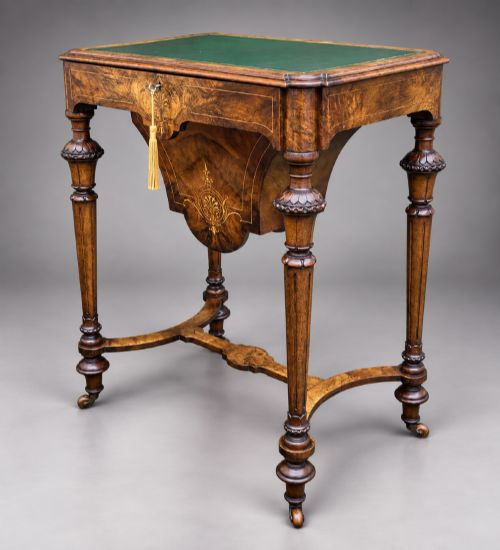
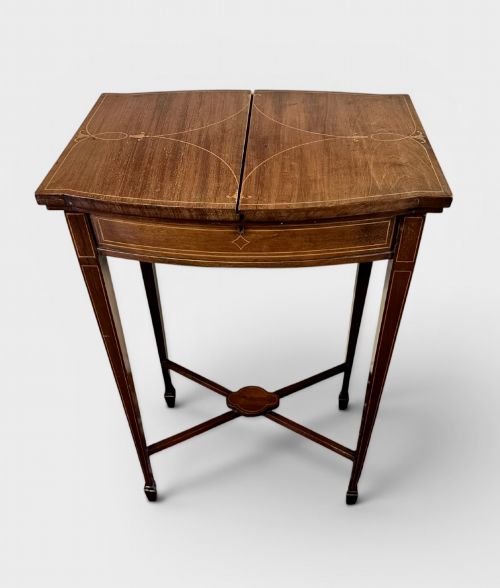
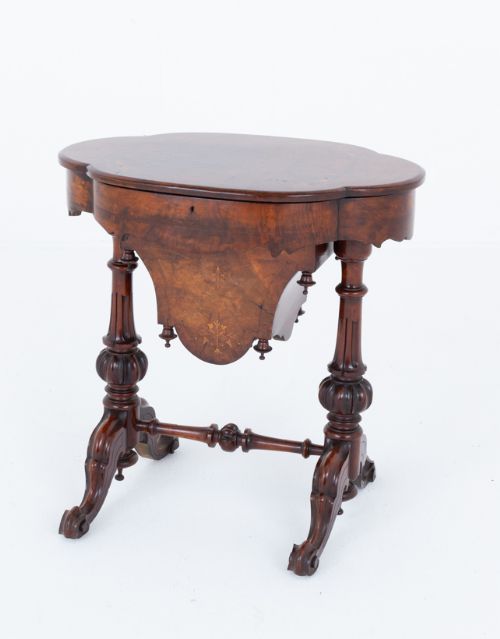
The objects take two primary physical forms on this page: tabletop boxes meant for boudoirs and substantial work tables incorporating sewing bags or cradles beneath. Buyers encounter portable boxes lined in velvet alongside larger freestanding tables with fitted interiors.
Origins span English workshops, French ateliers, Chinese export houses and Anglo-Indian makers. Burr walnut and rosewood dominate the portable box category, while work tables often utilise walnut, mahogany or coromandel.
What varies in quality
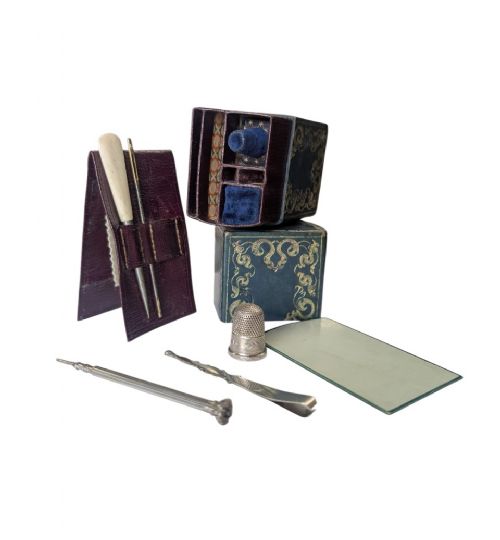
Quality rests upon the completeness of the internal fittings and the retention of original sewing tools such as bodkins, reels and thimbles. Boxes that retain their complete suite of bone, silver or glass accessories sit above those with empty trays.
The precision of the exterior parquetry, marquetry or Tunbridge ware mosaic defines the tier of craftsmanship. Superior examples display tight grain alignment in burr walnut and coromandel, crisp inlay work and fully functioning locks with matching keys.
Edwards·Chadwick’s Sewing Cottons
The Fitted Sewing Box Glossary
- Etui
- A small ornamental case for holding needles, cosmetics, or other articles. These portable containers often appear in silver or specialised materials.
- Tunbridge Ware
- Woodworking characterised by mosaic designs made from thousands of tiny triangles of naturally coloured woods. This technique creates detailed pictorial scenes on box lids.
- Haberdashery
- Small items used in sewing, such as buttons, hooks, and threads. Display cases and cabinets for these goods reflect commercial origins.
- Marquetry
- Decorative veneer applied to furniture in geometrical patterns or pictorial scenes. Craftsmen utilise various contrasting timbers to achieve the design.
- Necesseire
- A small case containing accessories for sewing or personal grooming. These portable fittings are lined in velvet or silk.
Fitted Sewing Box: Frequently Asked Questions
What is inside a fitted sewing box?
A fitted sewing box typically contains a lift-out tray with carved compartments for spools, thimbles, bodkins and small scissors. Many retain original glass jars, bone implements and ivory measuring tools.
Beneath the main tray, deeper storage spaces hold scraps of fabric, patterns and larger threads. Some examples preserve their original working locks and key sets.
How do I date a sewing box?
Dating relies upon timber choices, construction techniques and stylistic markers from the Georgian, Regency and Victorian periods. Regency and early 19th-century boxes often feature sarcophagus shapes and brass paw feet.
Mid-Victorian examples frequently showcase burr walnut veneers, mother-of-pearl inlay and Tunbridge ware decoration. Edwardian versions tend to display lighter inlaid mahogany or satinwood frames.
What is the difference between a work table and a box?
A sewing box is a portable tabletop chest designed to be carried from room to room by a handle or lid. A work table is a freestanding piece of furniture incorporating legs and a fixed or drop-in bag.
Work tables double as occasional or lamp tables while concealing sewing compartments within the tabletop. Both forms maintain compartmentalised internal trays for needlework.
How should I care for tortoiseshell?
Tortoiseshell requires protection from direct sunlight and dramatic shifts in humidity to prevent warping or cracking. Dust the surface gently with a soft, dry microfibre cloth.
Avoid liquid cleaners, alcohol or abrasive polishes on organic materials like tortoiseshell and ivory. Conditioning oils should be used sparingly and only if the material shows signs of dryness.