


Fitted Wooden Vanity Case
A fitted wooden vanity case combines clever internal compartments and fine timbers to keep personal effects orderly during travel.

Fitted Wooden Vanity Case
When someone searches for a fitted wooden vanity case, they are looking at portable compartments designed for cosmetics, jewellery, and grooming tools. These portable chests span periods from the Georgian and Regency eras through the Victorian decades and into the Art Deco twentieth century.
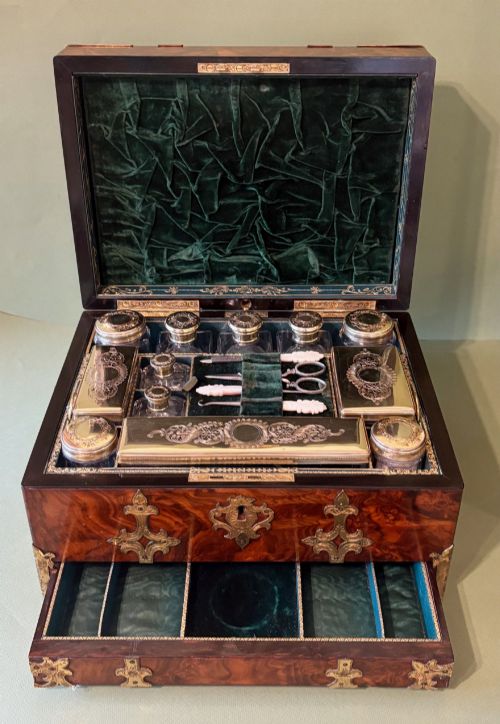
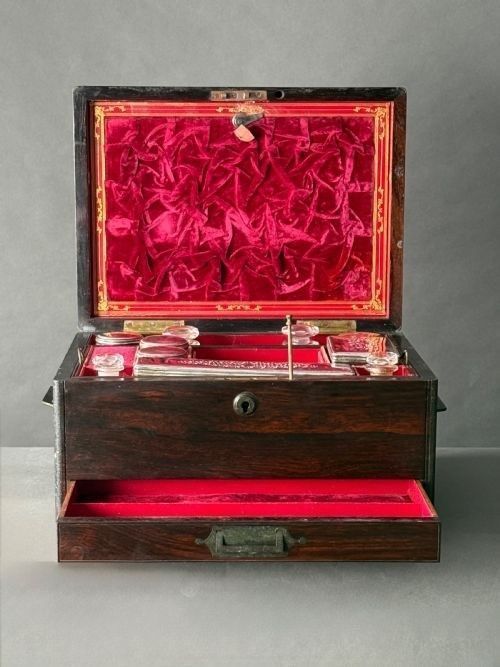
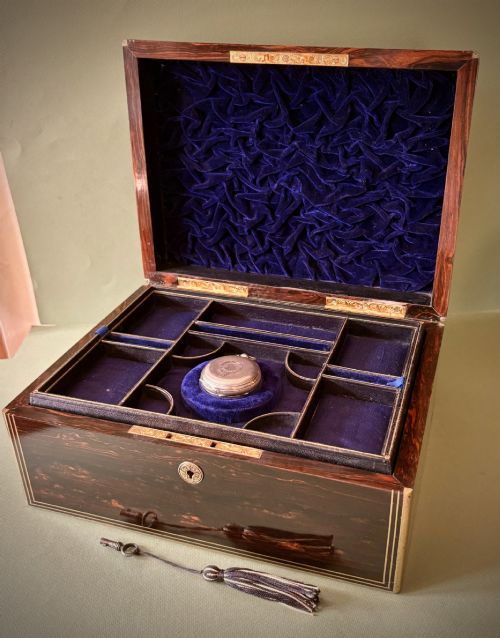
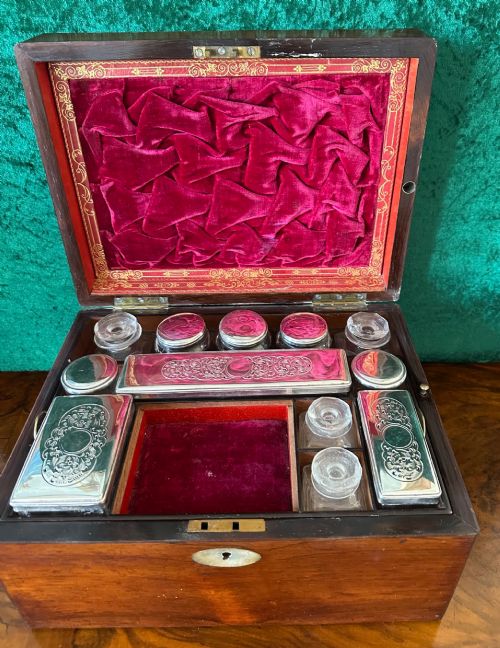
The most common examples on this page are Victorian dressing and jewellery boxes made from richly grained hardwoods. They house compartmentalised trays, glass bottles, and sometimes silver lids inside a secure carcass.
Materials and construction
Cabinet makers built these boxes using dense timbers such as rosewood, walnut, burr walnut, and coromandel, often applying precise brass inlay or corner mounts for strength. Interiors frequently feature linings of velvet alongside fitted glass containers and occasionally silver elements.
Lids and trays integrate mirrors, swing-out compartments, and secret spring-loaded drawers that demonstrate advanced nineteenth-century carpentry. Working locks and brass escutcheons secured the contents during carriage by coach or train.
Judging quality
Quality rests upon the selection of timber figure, such as the swirling grain of burr walnut or coromandel, matched with precise joinery. The complexity of the interior fitments, including the presence of original glass bottles with silver tops and functioning locks, separates standard boxes from finer examples.
Maker marks stamped onto the lock plates or leather interiors denote workshops of higher repute, elevating the standing of a piece.
H Mitchell·Parkins and Grotto·Edwards·JH Browne
The Fitted Wooden Vanity Case Glossary
- Coromandel
- A heavy, durable wood from Southeast Asia featuring dark brown colouring with dramatic contrasting stripes. It was favoured by high-end Victorian cabinet makers for luxury dressing boxes.
- Escutcheon
- A flat plate of brass surrounding a keyhole that protects the surrounding wood from wear. On these cases, they often double as decorative geometric inlay.
- Burr walnut
- Wood taken from a growth on a walnut tree that produces intricate, swirling grain patterns. It is sliced into veneers to cover the exterior surfaces of finer Victorian boxes.
- Hongmu
- A traditional Chinese term denoting dense, dark hardwoods used for furniture and travelling boxes. Pieces in this material display a deep natural lustre without heavy stain.
Fitted Wooden Vanity Case: Frequently Asked Questions
What goes inside a fitted wooden vanity case?
These boxes contain fitted sections for glass bottles, small jars, jewellery trays, and grooming implements. Many incorporate mirrors set into the lid and hidden drawers.
They served travellers who needed an organised dressing station away from home.
How do I date a wooden vanity case?
Dating relies on timber choices, brass hardware styles, and maker signatures stamped on locks or interior leather. Regency and early nineteenth-century examples often feature cleaner geometric lines, while later Victorian boxes embrace elaborate burr veneers and complex internal mechanism trays.
Working keys and original paper trade labels also help narrow the decade of manufacture.
Were these boxes used by men or women?
While many survive as ladies travelling dressing cases for cosmetics and jewels, others accommodate gentleman's grooming gear. Examples include razor sets and multi-compartment chests designed for daily personal maintenance.
Interiors were tailored to the specific accoutrements of the original owner.
How should I care for a coromandel or rosewood box?
Protect the timber by keeping the case away from direct sunlight and sudden humidity changes that cause wood to split. Periodic light dusting and occasional application of appropriate wax preserve the polish.
Care must be taken with old velvet linings to avoid moisture.