




Wooden Drop Leaf Desk
A wooden drop leaf desk provides a versatile writing surface that folds away neatly when floor space is at a premium.
Wooden Drop Leaf Desk
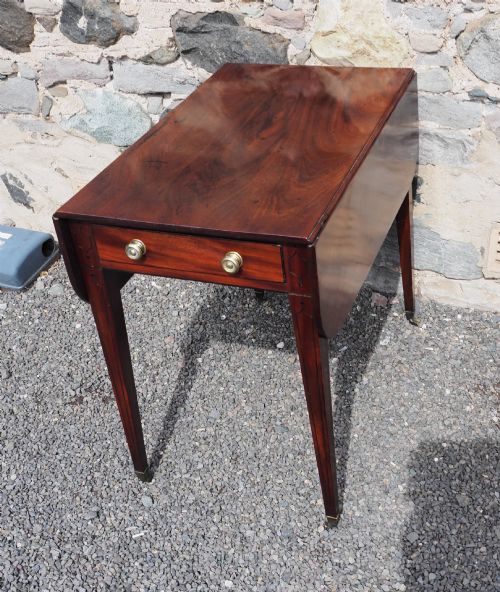
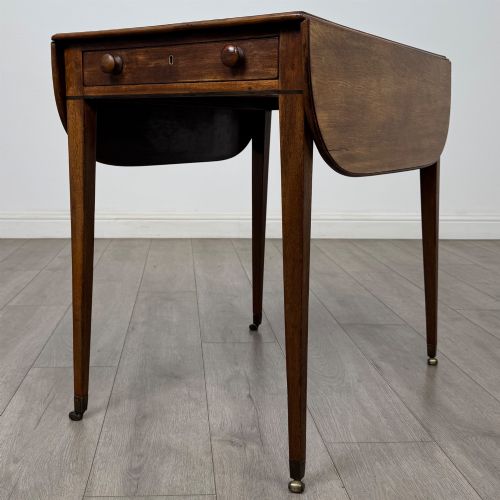
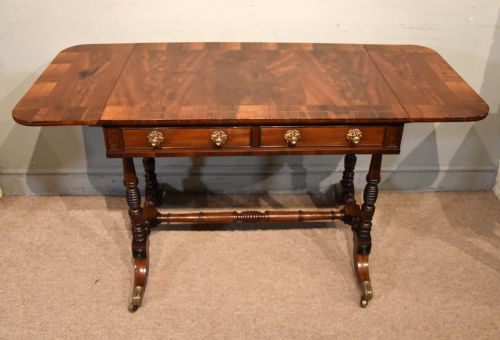
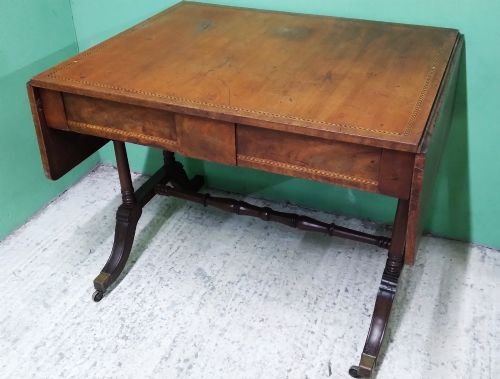
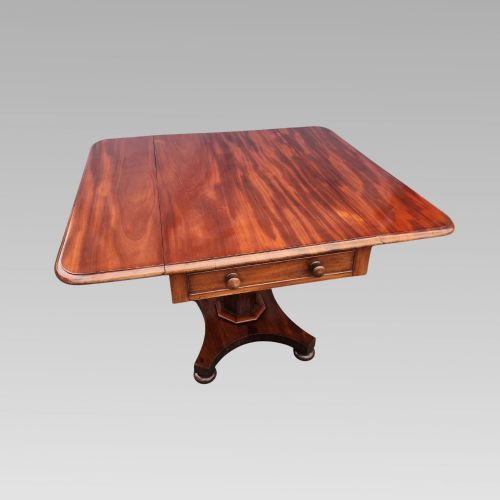
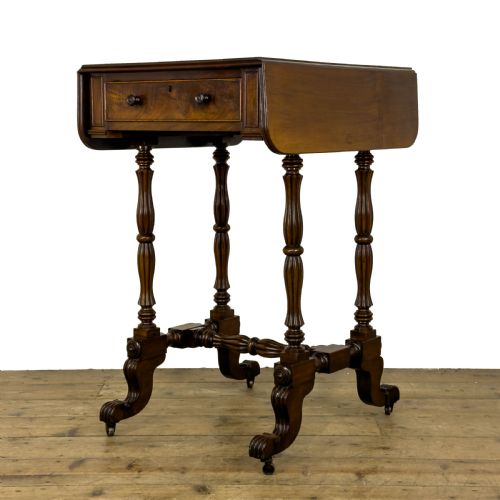
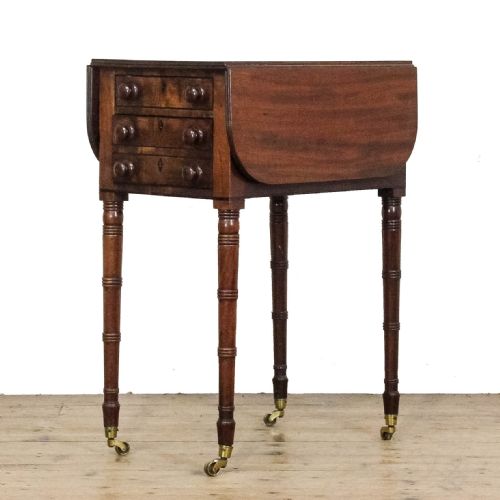
A wooden drop leaf desk typically appears in the form of a Pembroke table, sofa table, or work table equipped with hinged leaves. These pieces span periods from the eighteenth century through the Georgian, Regency, and Victorian eras up to the Edwardian period.
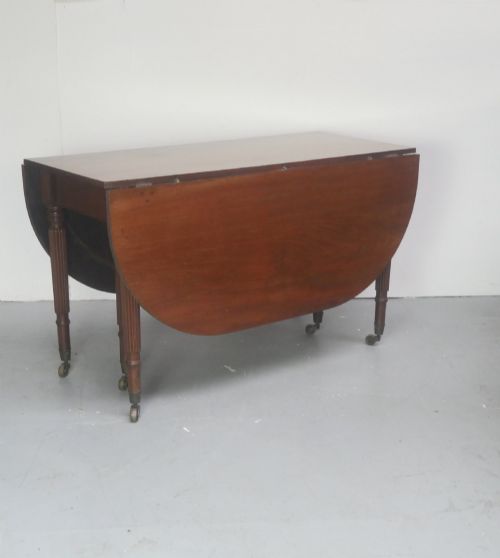
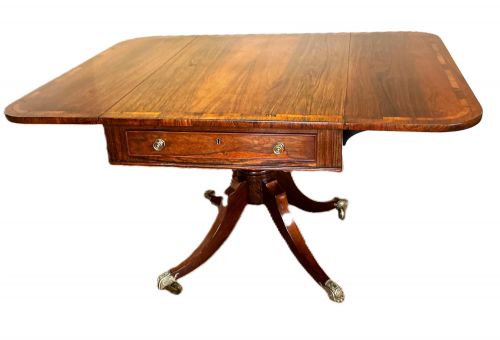
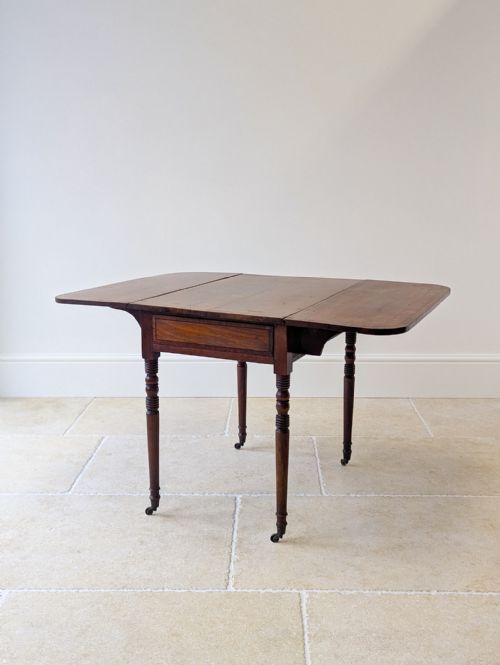
The most common version met on this page is the Pembroke table, featuring two folding flaps supported by pivoting brackets or rule joints. Alongside these, sofa tables and drop leaf dining tables provide alternative surfaces designed for domestic use.
Origins trace back to English and British workshops, utilising timber forms typical of eighteenth and nineteenth century cabinet making. Buyers encounter diverse structural formats ranging from breakfast tables to library desks.
Markers of Excellence
The selection of timber grain dictates much of the visual merit, with highly figured flame mahogany and crisp satinwood inlay marking superior execution. The depth of colour and patination achieved through age separate standard utilitarian furniture from exceptional cabinet work.
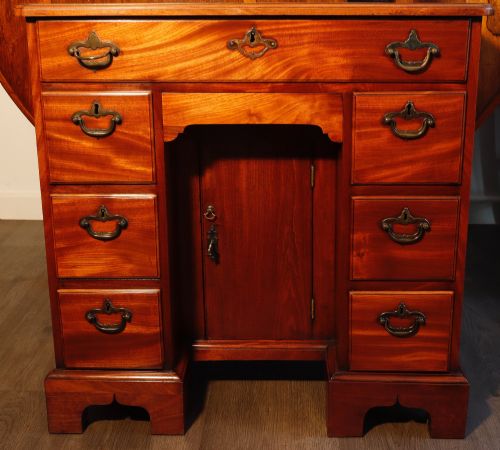
Structural integrity depends on the smoothness of the drop leaf mechanism, the tightness of the joinery, and the retention of original brass fittings. Subtle details such as finely turned pedestals or hand-carved stretchers indicate the maker's investment of time.
Form variations include Pembroke tables, sofa tables, and gateleg dining tables utilising satinwood and pine.
The Wooden Drop Leaf Desk Glossary
- Pembroke table
- A small rectangular table with two hinged drop leaves on opposing sides, frequently fitted with a single drawer. This form gained popularity during the eighteenth century for breakfast and light writing tasks.
- Sofa table
- A long, narrow table traditionally placed in front of a sofa, featuring drop leaves at the short ends and often double drawers. Regency examples frequently incorporate elegant trestle supports.
- Rule joint
- A moulding technique used on drop leaf tables where a concave edge meets a convex knuckle, hiding the gap between the tabletop and the folding flap. This joint provides a clean line when the leaves are raised.
- Flame mahogany
- A veneer cut from the fork of a mahogany tree where the grain pattern resembles flickering flames. Cabinet makers prized this figure for its decorative impact on tabletops and drawer fronts.
Wooden Drop Leaf Desk: Frequently Asked Questions
How do I identify a Regency drop leaf table?
Regency drop leaf tables typically display characteristic architectural details such as pedestal bases, brass paw feet, and reeded legs. The timber selection often highlights dark mahogany or figured veneers.
These pieces date from the early nineteenth century and reflect classical revival design influences. Examining the construction of the drawer linings and the brass hardware helps confirm the period.
Where should I place a sofa table at home?
A sofa table sits naturally behind a sofa, against a hallway wall, or as a slim freestanding writing desk in a study. The drop leaves allow the surface area to adjust depending on the available room.
Because these tables are finished on all sides, they work well floating in the middle of a room rather than pushed strictly against a wall. Their narrow profile suits transitional spaces and entrance halls.
How do I care for antique mahogany furniture?
Protect antique mahogany from direct sunlight and extreme temperature fluctuations to prevent the timber and veneer from splitting. Regular dusting with a soft, dry cloth preserves the polished surface.
Avoid silicone-based sprays and excess moisture, opting instead for traditional beeswax applied sparingly. Gentle maintenance safeguards the original patination developed over centuries.