




Wooden Dough Trough
A wooden dough trough brings honest texture into a room, serving as a tactile piece of practical kitchen history.
Wooden Dough Trough
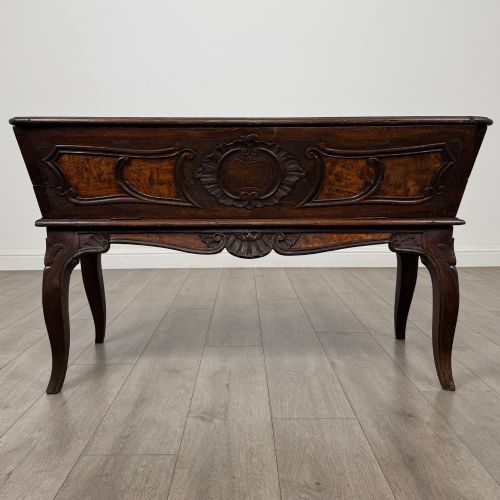
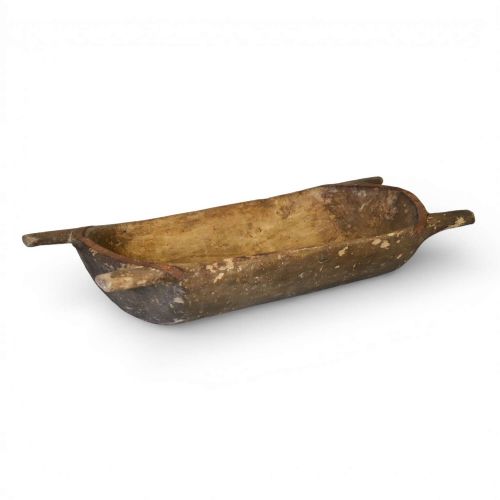
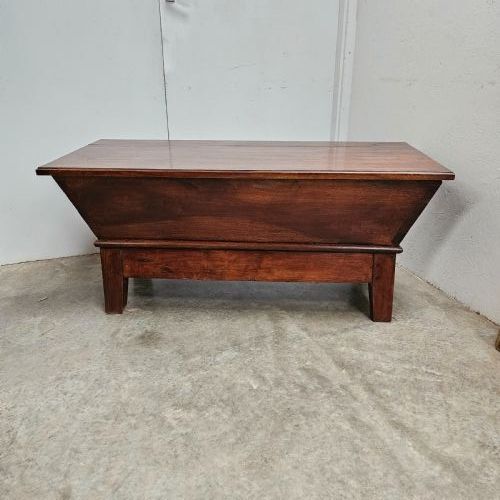
A wooden dough trough is a functional vessel designed for rising and kneading bread, appearing here in regional forms spanning the eighteenth century to the early twentieth century. These items manifest as deep bins, kneading bowls, and lidded coffers, reflecting domestic use across domestic workshops.
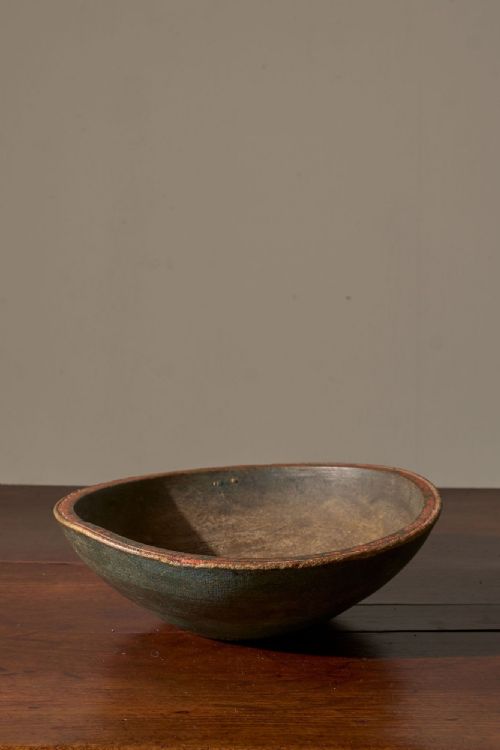
The most common examples on this page are French and Swedish dough bins alongside carved dairy and kneading bowls. They emerge in forms ranging from provincial walnut cupboards to rustic pine and elm troughs, carrying the marks of daily food preparation.
The styles associated with these pieces encompass French provincial, Swedish country, and Victorian rustic farmhouse traditions. Each object bears the structural traits dictated by rural utility, from pegged joints to heavy dug-out timber walls.
How they were made
These items rely on solid timber construction, utilising native hardwoods and softwoods such as walnut, pine, elm, and sycamore wood. Craftsmen selected planks for their density and stability, often hollowing out a single log or joining heavy boards to withstand rigorous kneading.
Surface treatments range from plain hand-polished wood to remnants of old paint and metal hardware. The making involves traditional carpentry and carved hollowing, leaving tool marks that record the manual labour of the rural artisan.
Periods represented reach from the eighteenth century through Victorian farmhouse eras to early nineteen-hundreds rustic production.
What varies in quality
The quality of a wooden dough trough rests in the integrity of its timber and the depth of its surface character. Pieces that retain their original structural mass without extensive replacement parts stand apart from heavily restored examples.
A rich, undisturbed patina elevates an object, showing decades of handling and use rather than modern intervention. The balance of proportions and the honesty of the tool marks distinguish superior provincial pieces from standard utility wares.
The Wooden Dough Trough Glossary
- Dough bin
- A deep wooden container with sloping sides used for mixing and proving bread dough. These containers often sat on dedicated frames or served double duty as cupboards.
- Patina
- The surface sheen and colour developed through years of handling, waxing, and cleaning. This gradual transformation marks genuine age and use.
- Sycamore wood
- A dense, light-coloured hardwood frequently chosen for dairy and kitchen vessels because it resists splitting and imparts no taste to food. It takes on a warm tone over time.
- Coffer
- A heavy wooden chest or box with a lid, sometimes adapted for proving dough or storing dry goods. These secure trunks feature robust construction suitable for farmhouse storage.
- Dug-out bowl
- A vessel carved from a single solid block of wood rather than assembled from staves or planks. This method provides immense structural strength.
Wooden Dough Trough: Frequently Asked Questions
How were dough troughs used?
Bakers used these wooden vessels to hold flour, mix ingredients, and let yeast dough rise in a stable environment.
The deep sides and heavy timber kept the temperature consistent during the proving process.
How do I clean a wooden dough trough?
Maintain the wood by wiping it gently with a dry or barely damp cloth, avoiding harsh detergents.
Applying occasional natural wax helps preserve the dry surface and protects the historic timber from drying out.
Are these troughs waterproof?
Most antique dough troughs and bowls are not fully waterproof due to shrinkage and age in the wood.
They suit dry display or holding objects better than containing liquids for long periods.
How do I date an old dough trough?
Dating relies on observing tool marks, timber species, construction methods, and the wear patterns on the base.
Hand-dug surfaces and early iron or wooden fixings often point towards eighteenth or nineteenth-century origins.