
Wooden Dining Room Server
A wooden dining room server anchors the room with substantial timber and practical storage, offering surfaces for service and drawers for linen.
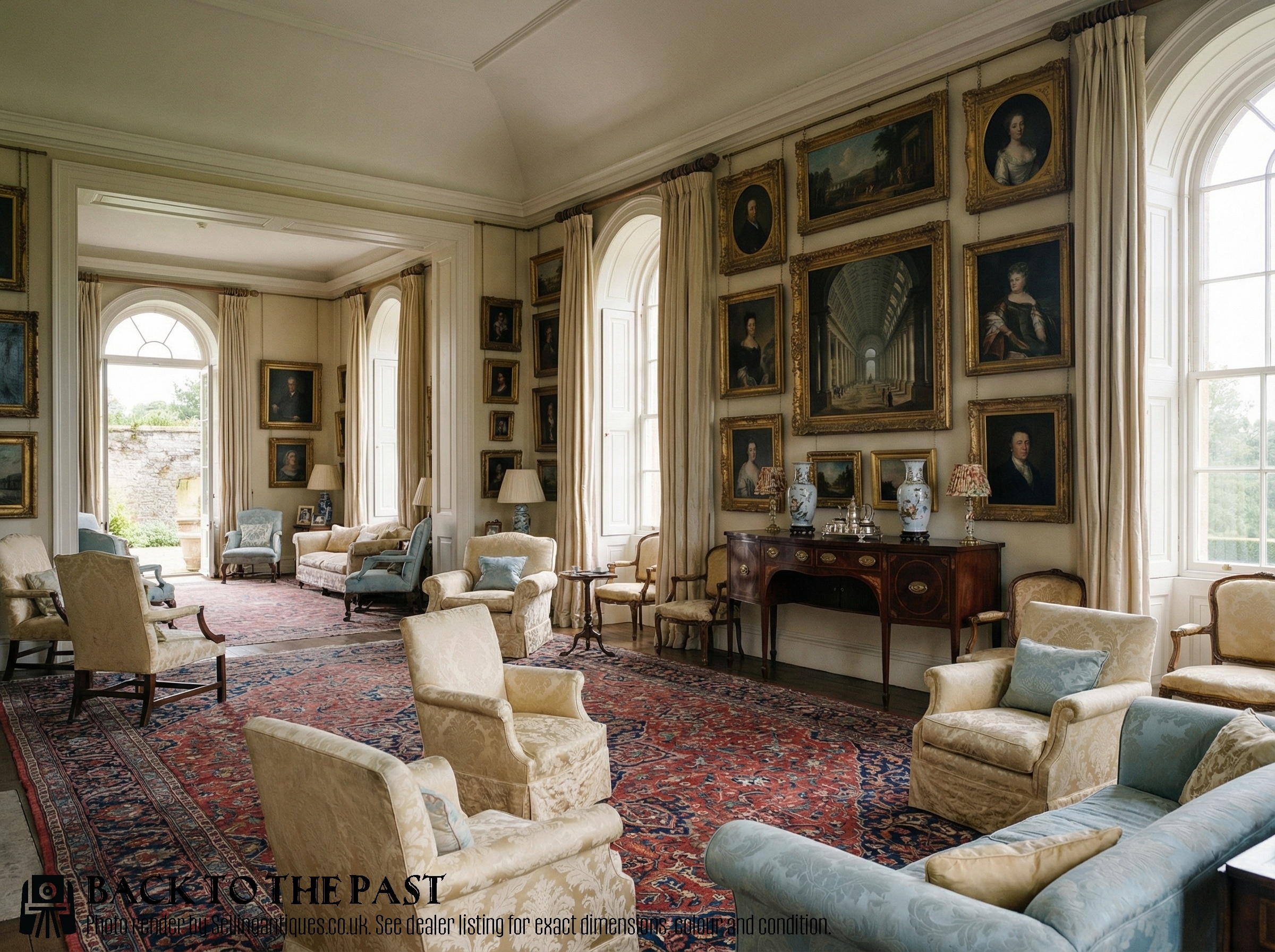
Wooden Dining Room Server
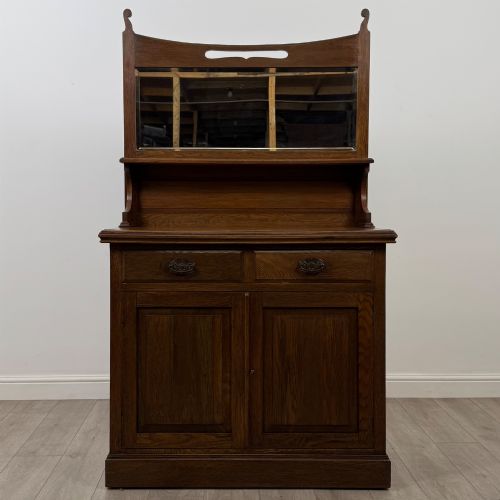
A wooden dining room server encompasses large sideboards, servers, buffets, chiffoniers, and credenzas designed to hold dining ware and serve food. The selections span the 18th century, Georgian period, 19th century, Victorian era, and Edwardian period.
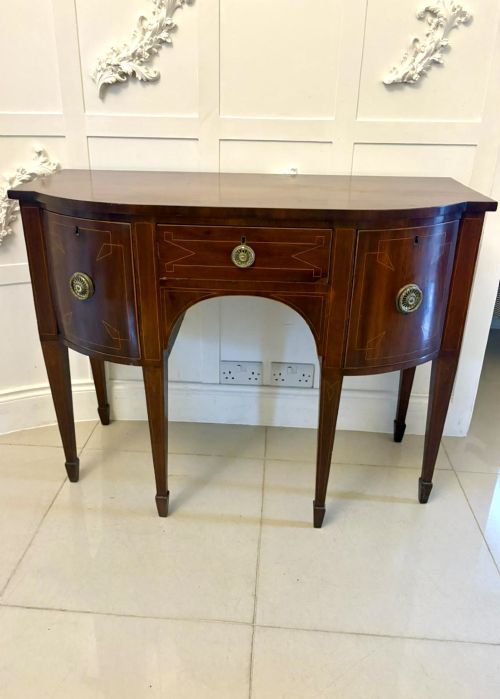
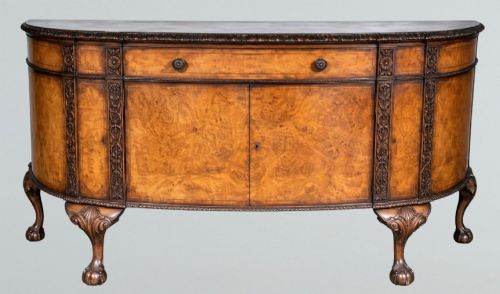
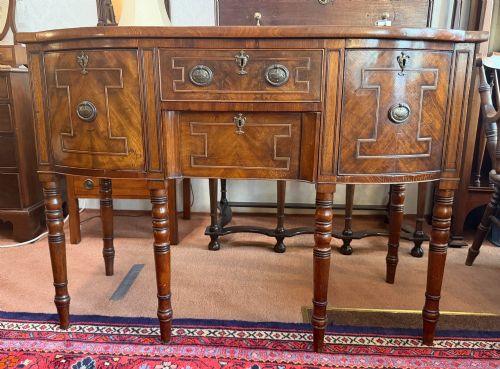
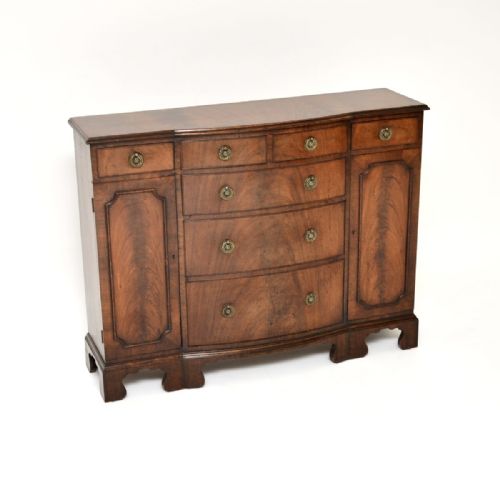
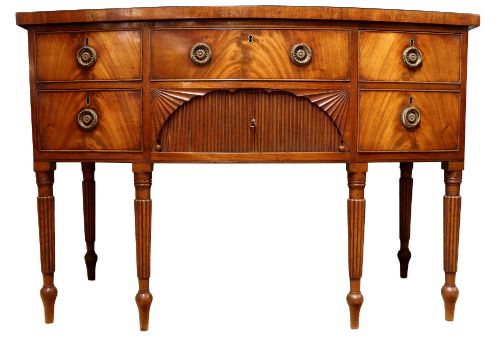
Buyers frequently encounter mahogany pieces featuring bow-fronts, breakfronts, or inlaid boxwood lines alongside oak and walnut constructions. Regional workshops and named designers produced these server variants to meet the demands of formal dining rooms.
Materials and construction
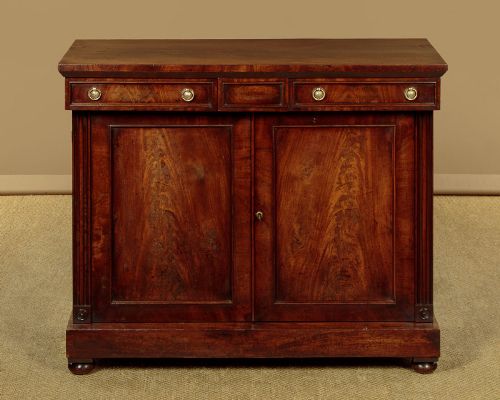
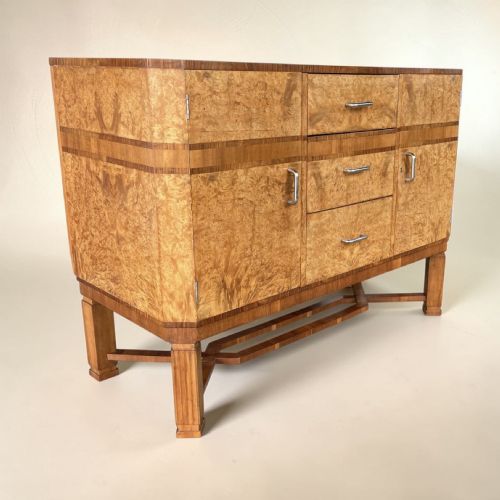
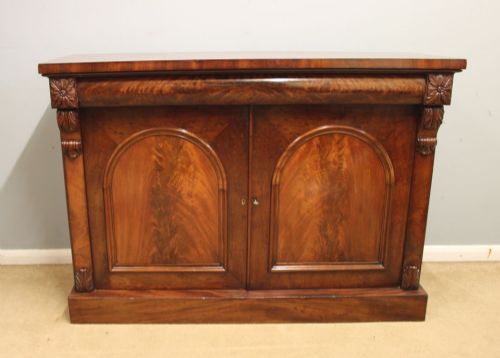
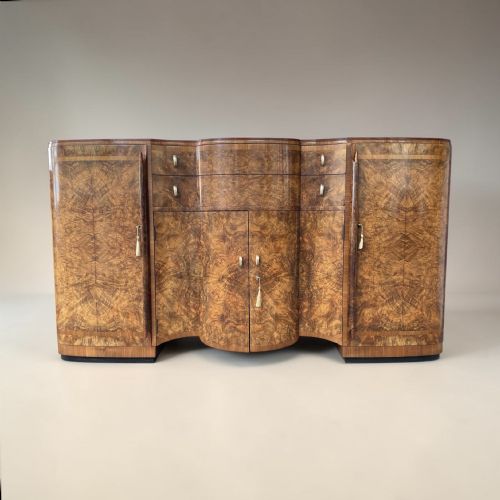
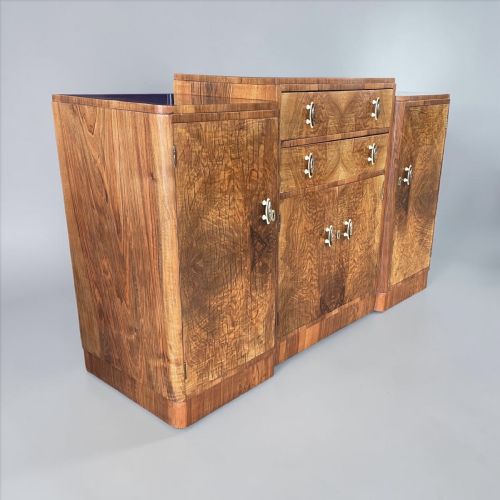
Cabinet makers utilised solid timber alongside flame mahogany veneer and burr walnut to create striking front surfaces on these dining room servers. Boxwood stringing and brass handles frequently accent the primary woods.
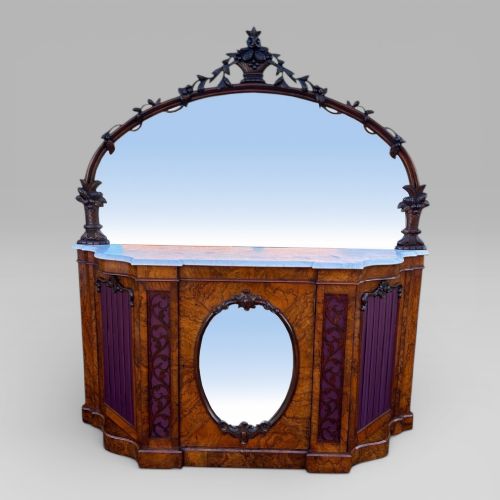
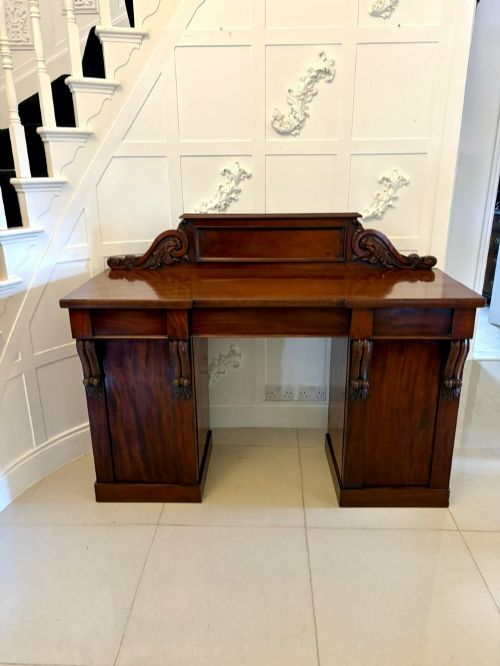
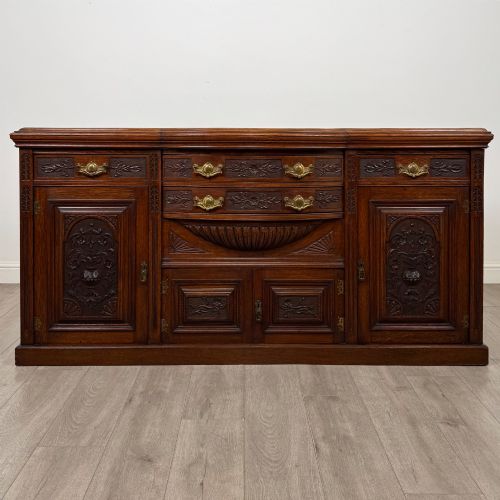
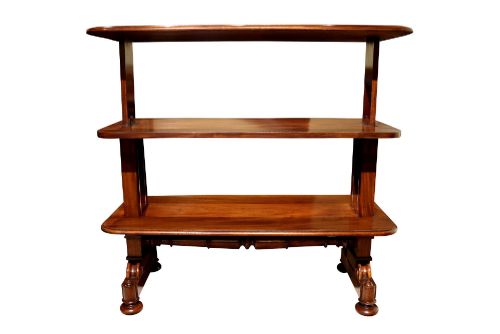
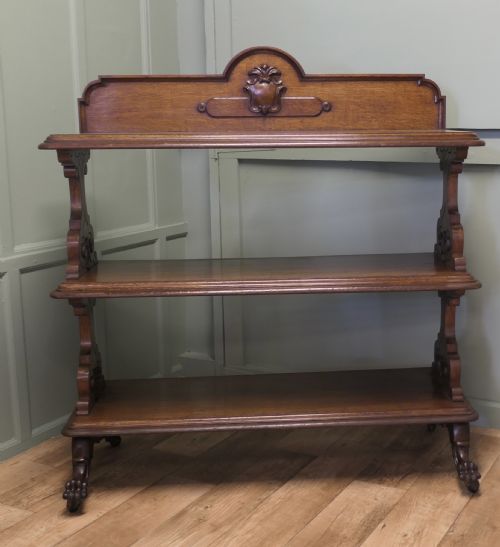
Carved structural details, marble tops, and tiered shelving systems appear across Victorian and William IV examples, demonstrating advanced joinery and turning techniques.
The listings feature mahogany, oak, walnut, and brass, spanning the Georgian, Victorian, and Edwardian eras.
Judging execution and timber
Quality rests upon the selection of figured mahogany or burr walnut veneers, where symmetrical grain patterns elevate the visual impact of the front elevation. Lesser pieces rely on plain timber boards with minimal decorative banding.
The crispness of hand-carved mouldings and the integration of fine boxwood inlay distinguish superior workshop output from standard production items.
Maurice Adams·M. D. Miller & Sons
The Wooden Dining Room Server Glossary
- Bow-front
- A convex curved cabinet front popular in Georgian and Edwardian furniture design. This shape softens the room's geometry while increasing internal storage depth.
- Chiffonier
- A compact sideboard featuring a lower enclosed cupboard beneath a tier of drawers or open shelving. These pieces suit smaller dining spaces.
- Serpentine
- A front profile curving outward in the centre and inward at the sides. This rhythmic line demands high skill in veneer matching.
- Boxwood
- A dense, pale timber used extensively for fine inlay lines and stringing on mahogany furniture. It provides sharp contrast against darker woods.
- Credenza
- A low dining room cabinet incorporating doors and sometimes a mirror back. Victorian iterations often paired these with marble tops.
Wooden Dining Room Server: Frequently Asked Questions
What is a wooden dining room server used for?
These pieces serve as practical storage units for tableware, cutlery sets, and linens while providing a flat upper surface for food presentation during meals.
They anchor the dining room layout and function as focal furniture items that display timber grain and period ornamentation.
How do I distinguish Georgian from Victorian servers?
Georgian pieces typically display restrained proportions, linear stringing, and tapered legs following neoclassical design principles. In contrast, Victorian servers feature heavier carvings, darker oak or walnut timbers, and occasionally marble inserts.
Victorian variations also introduce mirror backs and tiered superstructure elements that do not appear on earlier 18th-century tables.
Where should I place a sideboard in my dining room?
Position the server against a primary wall where it remains easily accessible from the dining table during service. Ensure adequate clearance for cabinet doors and drawer pulls to operate fully.
Allow enough surrounding space to appreciate the timber grain and decorative inlay work without crowding seating areas.
What woods were used for these servers?
Mahogany remains the dominant timber across the listings, frequently enhanced by flame mahogany veneer and boxwood inlay. Oak and walnut also appear prominently, particularly in Victorian and Edwardian examples.
Specialist pieces incorporate burr walnut figures and pollard oak sections to create decorative contrast on drawer fronts and doors.