


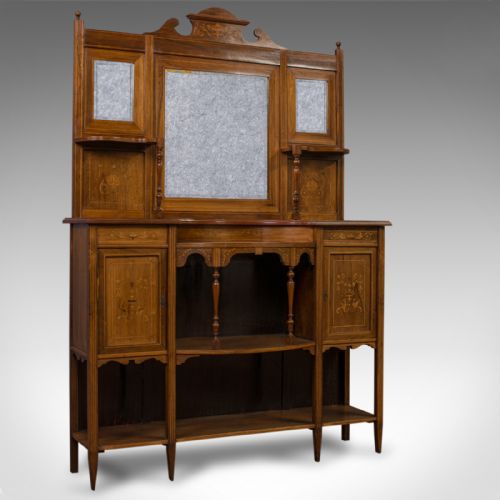
Inlaid Timber Credenza
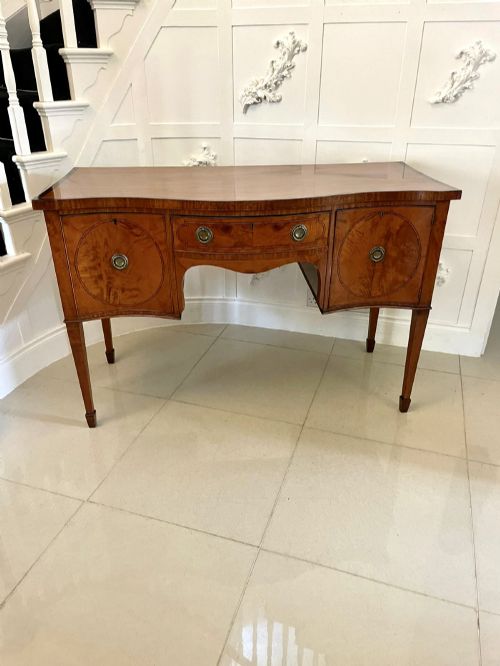
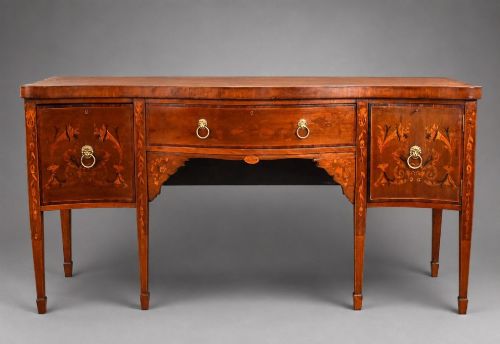
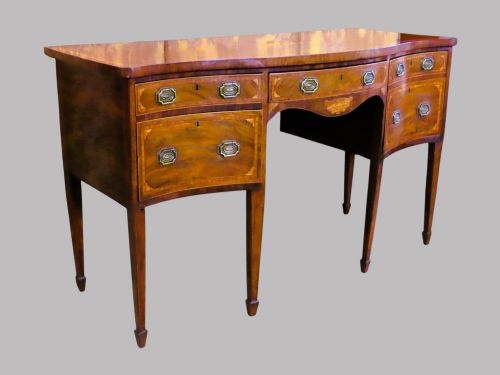
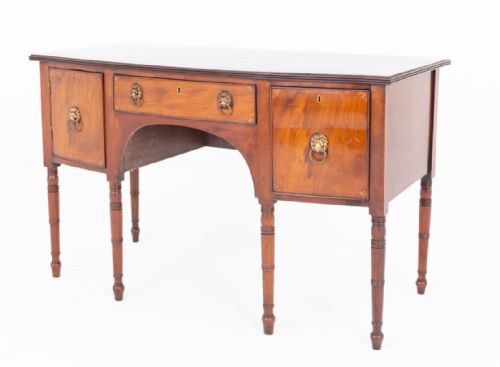
An inlaid timber credenza brings a refined focal point to a dining room or hall, offering substantial storage with meticulous surface ornamentation.
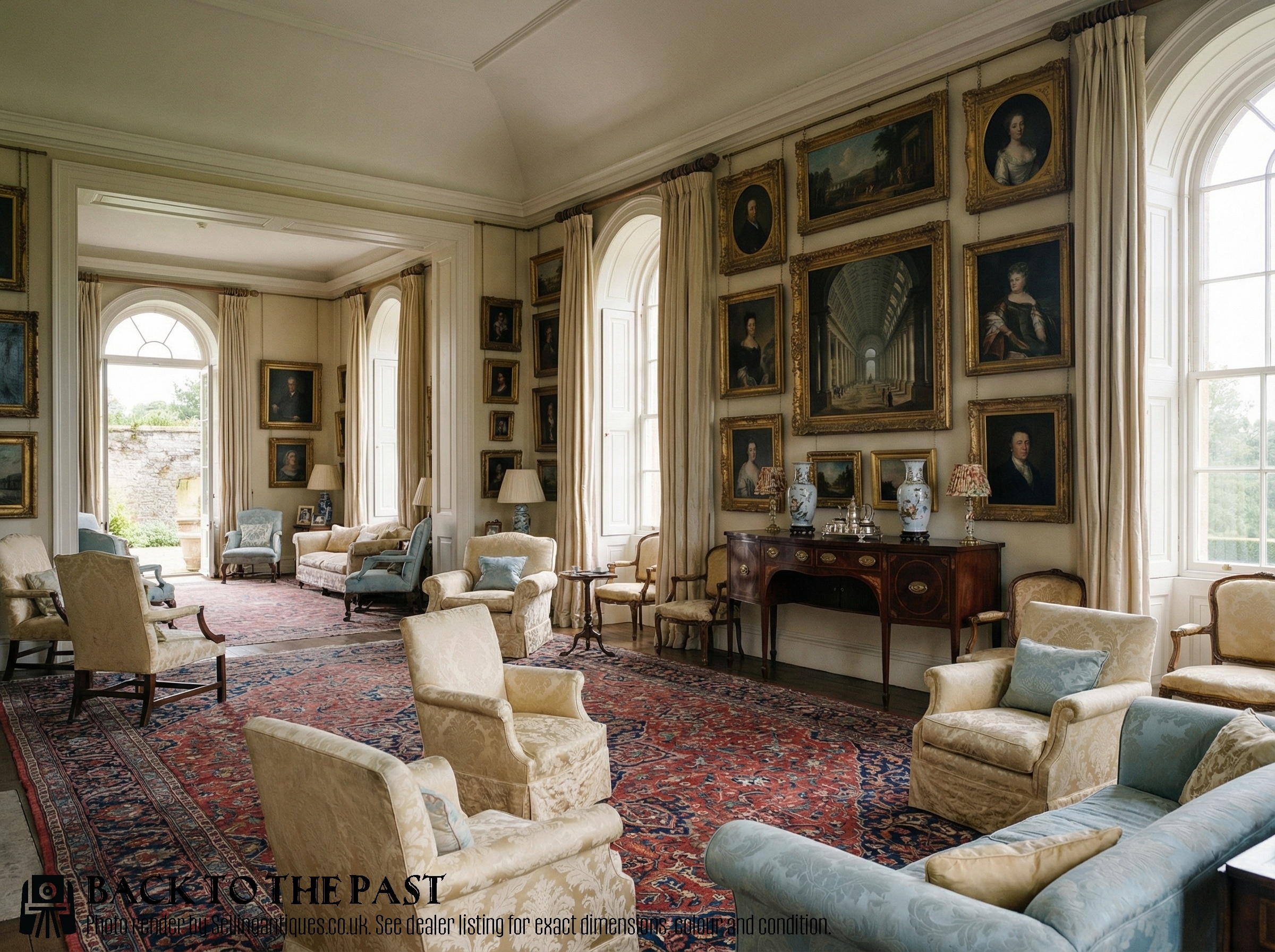
Inlaid Timber Credenza
When searching for an inlaid timber credenza, buyers encounter sophisticated storage furniture encompassing sideboards, side cabinets, commodes, washstands, and serving tables. These pieces originate predominantly from the Georgian, Victorian, and Edwardian eras, alongside items designated from the eighteenth and nineteenth centuries.
The selections on this page showcase distinct stylistic lineages, ranging from George III and Regency designs to Sheraton Revival and French Napoleon III influences. Cabinets and sideboards with serpentine or bowfront shapes appear frequently, demonstrating the curved cabinetry favoured by period makers.
Most examples rely on classical proportions and rich cabinet-making traditions, functioning equally well as statement side tables or practical dining room storage. Buyers will find that these items span several decades of British craftsmanship, each carrying the architectural signatures of its specific period.
Assessing craftsmanship and finish
Quality in these pieces rests upon the precision of the cabinetwork, particularly where serpentine or bowfront curves demand exact wood-shaping. Superior examples exhibit seamless integration of the inlay work, where boxwood and contrasting veneers sit perfectly flush with the primary timber.
The choice of secondary materials, such as the inclusion of fine marble tops or cast brass mounts, distinguishes standard utility furniture from high-status salon and dining room pieces. Furthermore, the selection of figured timbers like burr elm and satinwood indicates a higher level of expenditure during the original production.
The furniture styles span Georgian, Regency, Sheraton Revival, and French Napoleon III designs across multiple centuries.
Gillows
The Inlaid Timber Credenza Glossary
- Serpentine
- A furniture front characterised by a wavy shape, curving outward in the centre and inward at the sides. This configuration requires advanced carpentry skills to execute properly.
- Marquetry
- The art and craft of applying pieces of veneer to a structure to form decorative designs and pictures. Artisans utilise various coloured woods to achieve tonal depth.
- Bowfront
- A convex, outward-curving cabinet front that gained widespread popularity during the Georgian and Regency periods. It softens the room's geometry while maximising interior storage space.
- Demi-lune
- A half-moon shape commonly applied to the design of commodes and side tables. This profile allows pieces to sit flush against a wall while presenting a curved front.
- Satinwood
- A durable, lustrous timber native to India and Ceylon, prized for its golden-yellow sheen. It served as a primary veneer or stringing material in neoclassical furniture.
Inlaid Timber Credenza: Frequently Asked Questions
What periods do these pieces date from?
The pieces span several centuries, with particular representation from the Georgian and Victorian eras. Makers also produced notable variations during the Edwardian period.
Buyers will encounter items labelled from the eighteenth century up to nineteen hundred, reflecting evolving tastes in domestic British interior design.
How were these cabinets used originally?
Households utilised these versatile furnishings primarily in dining rooms to store silverware, linens, and serving dishes. Surface tops provided practical space for displaying food or decorative objects during gatherings.
Alternative forms such as washstands and commodes served bedrooms and private chambers, fulfilling specific personal hygiene and storage needs.
Where should I place a credenza at home?
These pieces suit dining rooms where they function as traditional sideboards for serving and storage. They also anchor entrance halls or living rooms as striking decorative console surfaces.
When positioning a piece, consider the room's traffic flow and ensure the curved or projecting drawer fronts have adequate clearance.