
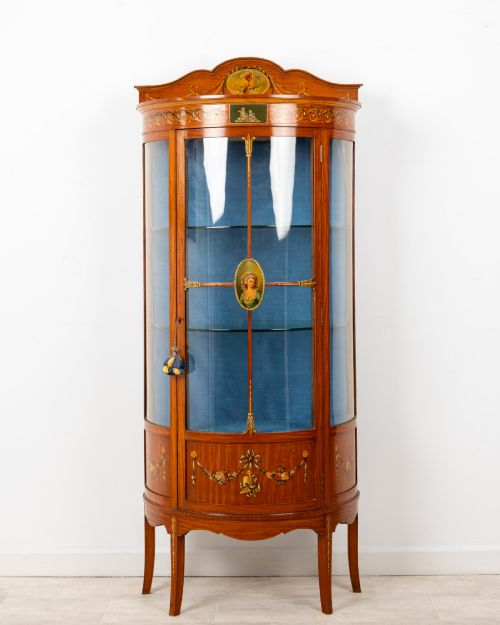
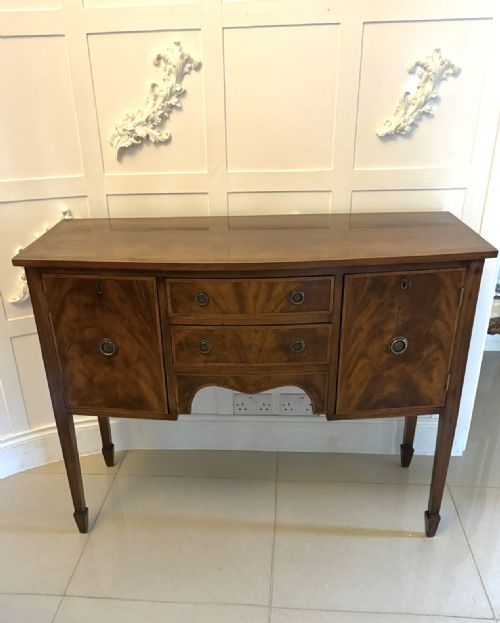
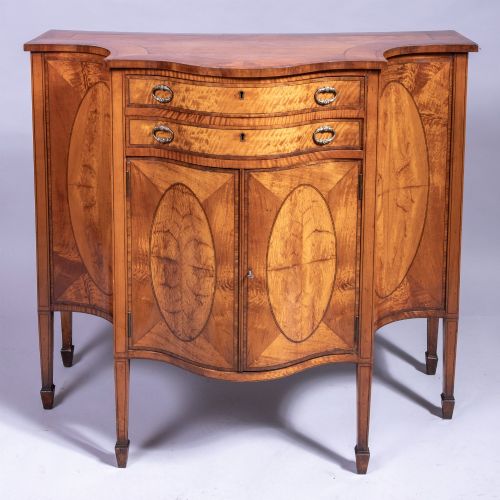
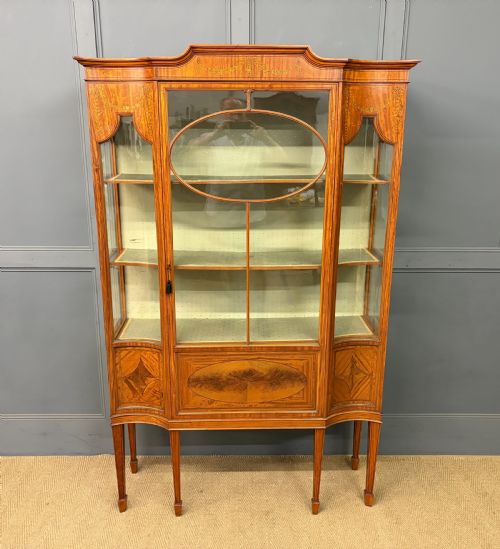
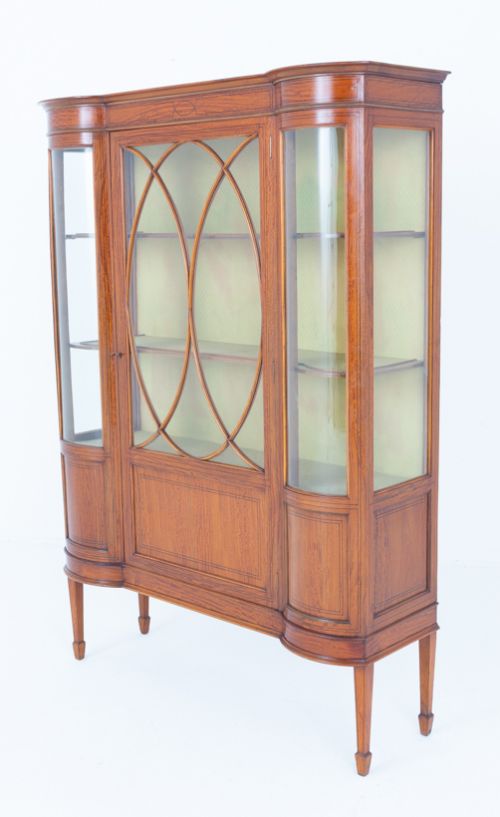


Sheraton Bow Front Cabinet
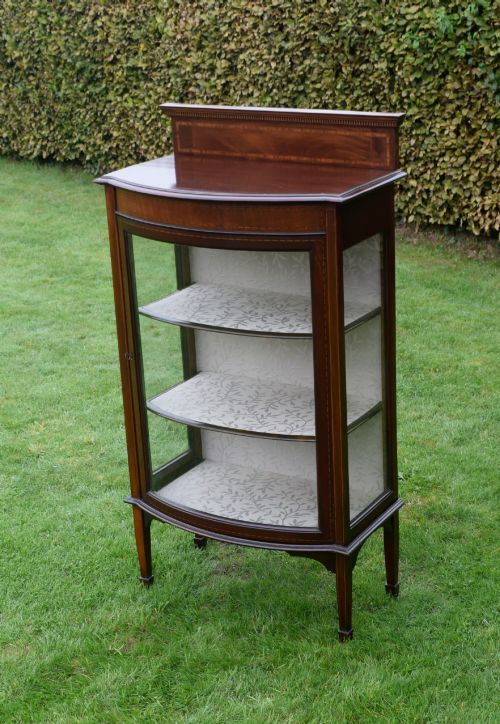
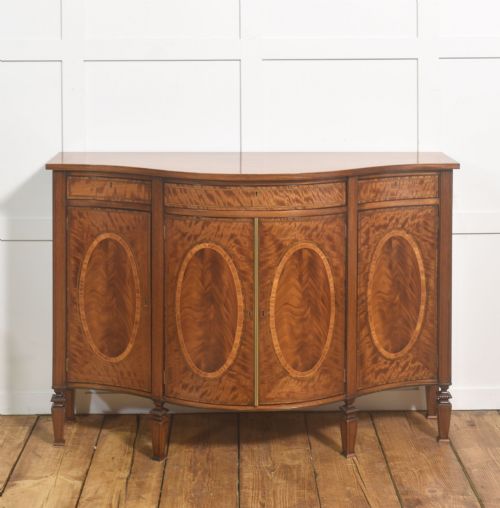
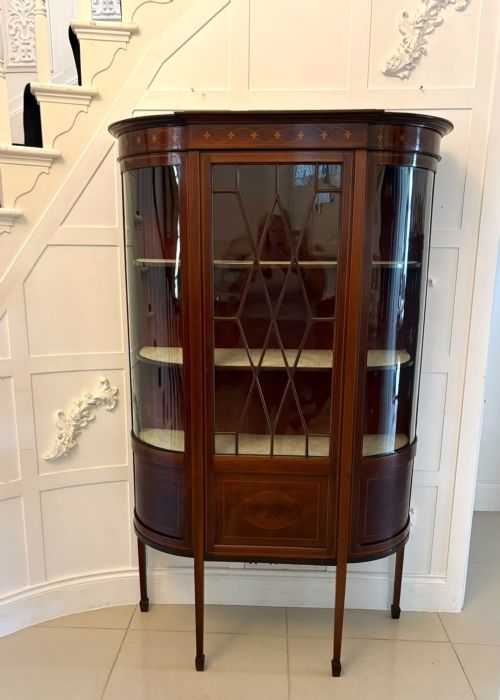
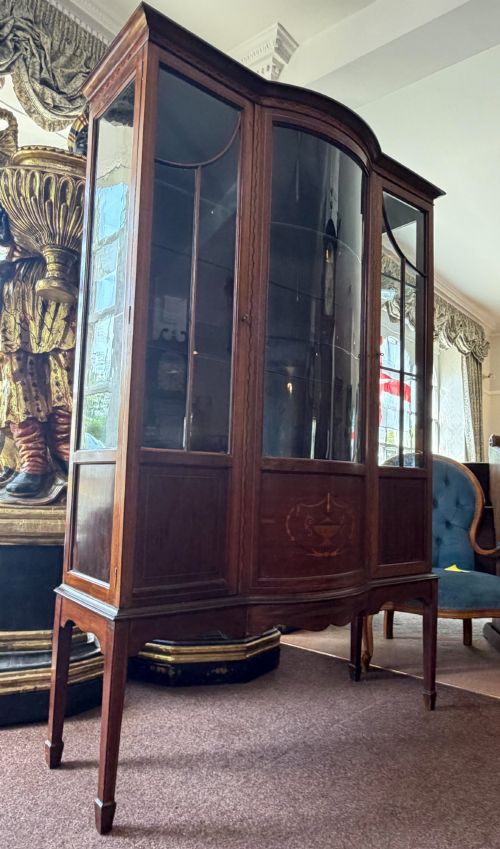
A sheraton bow front cabinet brings curved timber lines and delicate inlay into a room, offering both display space and practical storage.
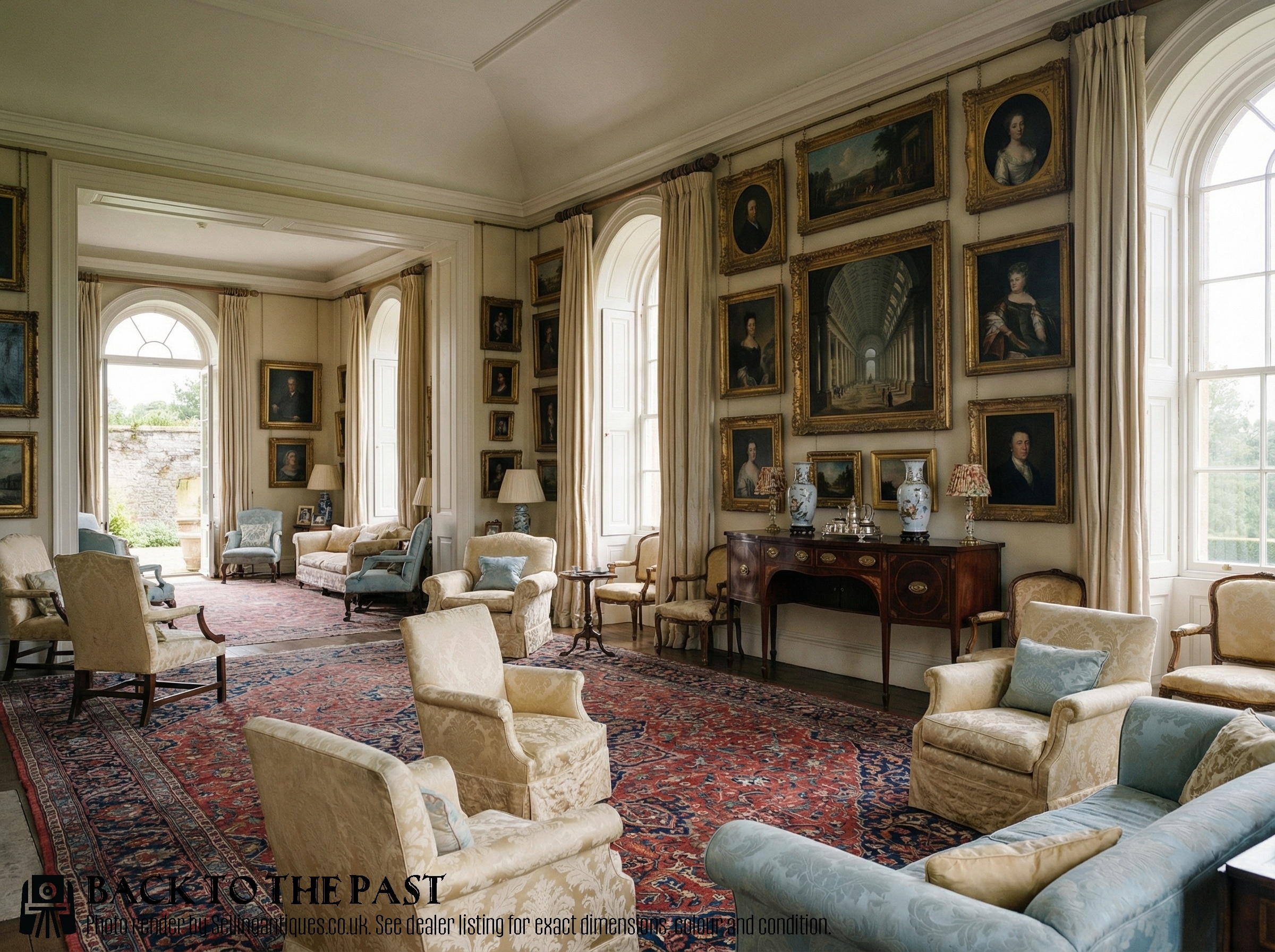
Sheraton Bow Front Cabinet
A sheraton bow front cabinet brings together the graceful curved silhouette and classical ornamentation typical of the style. Buyers searching for a sheraton bow front cabinet will find pieces spanning the Georgian period, the Victorian era, and the Edwardian Sheraton Revival.
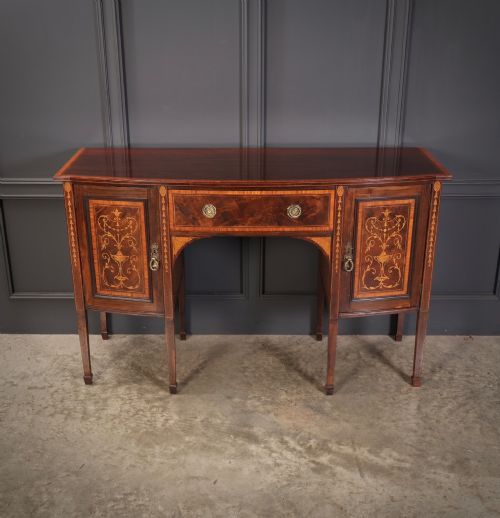
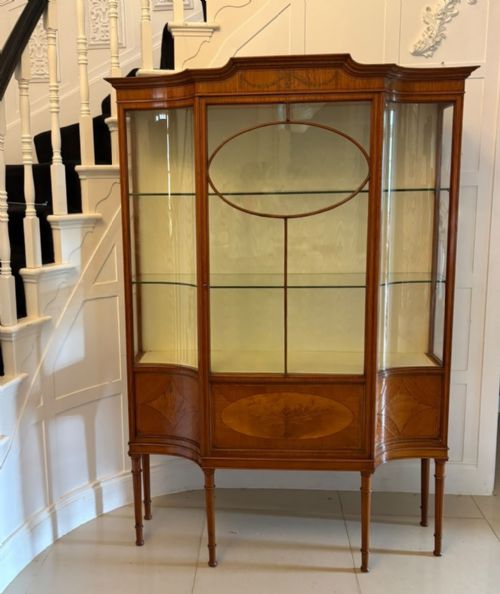
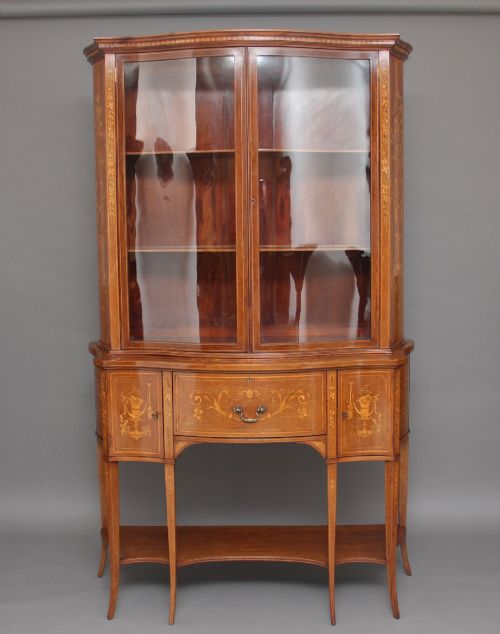
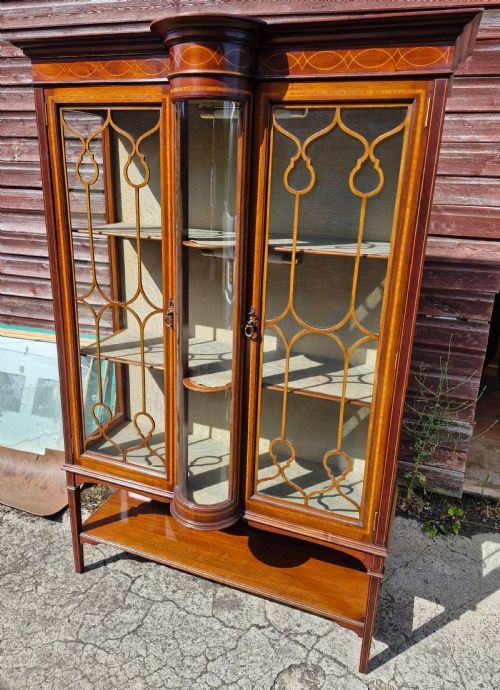
The form appears most frequently in sideboards, side cabinets, and display cabinets with prominent curved fronts. These pieces combine functional storage with decorative display surfaces, often featuring glazed doors or fitted shelving.
Origins range from authentic Georgian workshops to later revival periods in the nineteenth and twentieth centuries. The Edwardian era generated a significant volume of satinwood and mahogany revival pieces.
Materials and construction
Cabinetmakers relied primarily on mahogany and satinwood as foundational timbers, often utilising flame mahogany veneer to create rich surface movement. Boxwood and fruitwood provided the contrasting tones necessary for intricate stringing and floral motifs.
Decorative detailing depended heavily on precision inlay and marquetry work, supplemented by painted panels in certain Edwardian examples. Brass hardware and glass panes completed the construction of display-oriented pieces.
Listings feature mahogany, satinwood, and flame mahogany veneer, alongside Edwardian Sheraton Revival and Georgian periods.
Judging the craftsmanship
Quality rests upon the precision of the curved joinery and the finesse of the inlay work. Pieces displaying crisp contrast in the satinwood and boxwood inlay stand apart from simpler iterations.
The selection of timber grain, particularly in flame mahogany veneers, dictates the visual depth of the facade. Refinement in painted details and the integration of original glass and brass elements further distinguish finer examples.
Maple and Co·Edwards and Roberts
The Sheraton Bow Front Cabinet Glossary
- Bow front
- A convex curved cabinet facade that projects outward in a smooth sweep. This shape softens room geometry and increases interior depth.
- Inlay
- Contrasting timber pieces set into recesses of a primary wood to form patterns. Boxwood and fruitwood frequently serve this decorative function.
- Marquetry
- Elaborate veneer patterns forming pictorial or abstract designs across the surface. This technique requires considerable skill to execute on curved timber.
- Satinwood
- A pale, lustrous timber native to the tropics, prized for its golden sheen. It defines the aesthetic of many Sheraton Revival pieces.
- Vitrine
- A glass-fronted cabinet designed for displaying porcelain and small objects. These pieces often feature delicate framing and glazed side panels.
Sheraton Bow Front Cabinet: Frequently Asked Questions
What is a sheraton bow front cabinet?
A sheraton bow front cabinet is a piece of furniture featuring a convex curved front and classical decorative motifs inspired by eighteenth-century designs. These cabinets encompass sideboards, display units, and side cabinets produced across multiple eras.
They combine curved timber construction with decorative inlay techniques such as satinwood and boxwood stringing. The form prioritises both visual elegance and functional storage capacity.
How do I date my cabinet?
Dating relies on identifying the primary timbers, construction methods, and stylistic revival markers present in the piece. Georgian originals differ substantially in internal construction from Edwardian Sheraton Revival interpretations.
Examining the type of veneer, secondary woods used in the carcase, and the style of inlay helps narrow the period of manufacture. Revival pieces often display lighter satinwood grounds and specific Edwardian manufacturing traits.
Where should I place a bow front cabinet?
A bow front cabinet suits dining rooms, living spaces, or hallways where its curved silhouette can be appreciated without obstructing movement. Display models benefit from placement near light sources to illuminate interior shelving.
Sideboard and side cabinet variants function well against flat walls, where the convex curve softens the surrounding angles of the room. Adequate clearance allows the doors to open fully without restriction.
Are these cabinets used for storage?
These cabinets serve both display and storage purposes depending on the specific internal layout. Sideboards and linen presses provide enclosed compartments for tableware and textiles.
Display cabinets and vitrines utilise glass doors and shelves primarily for exhibiting ceramics, books, or decorative objects. Combination pieces offer enclosed lower cupboards alongside upper display shelving.