



Regency Inlaid Server
A regency inlaid server brings classic proportions and fine timber work into a dining room or hallway.
Regency Inlaid Server
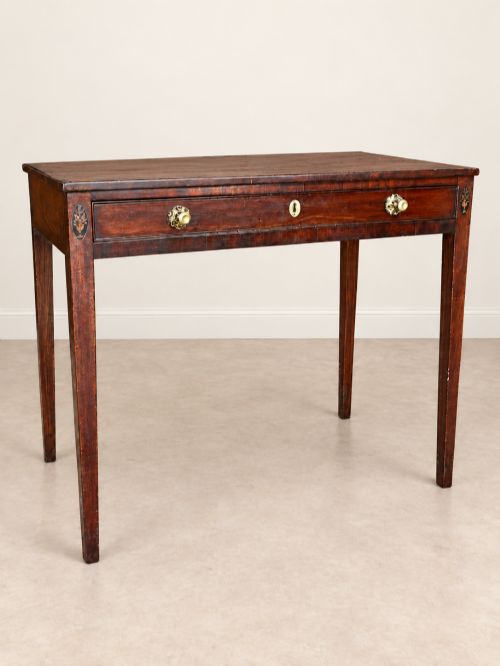
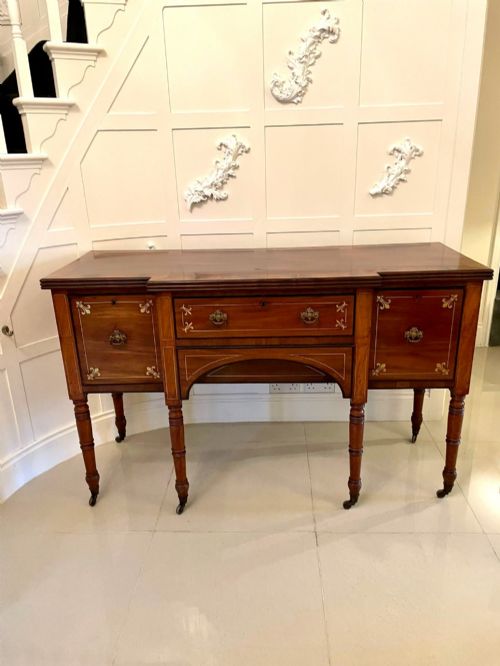
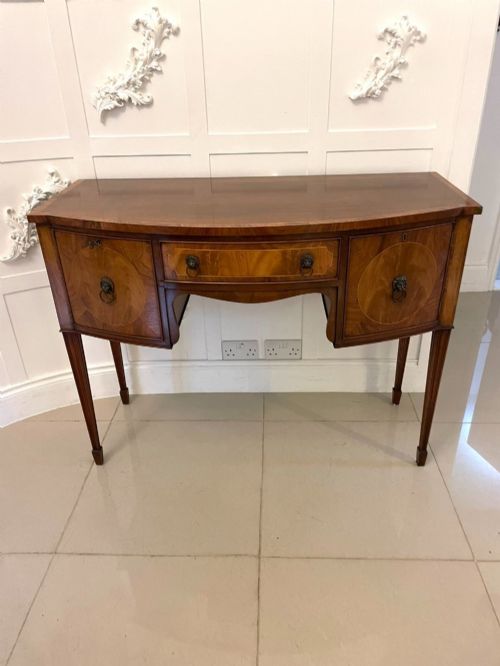
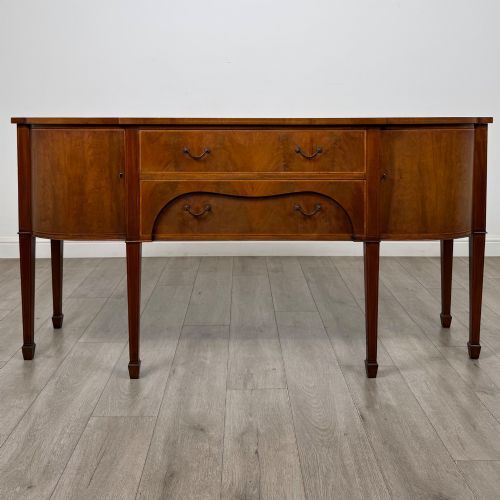
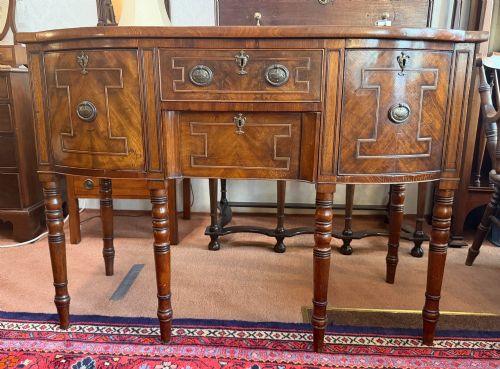
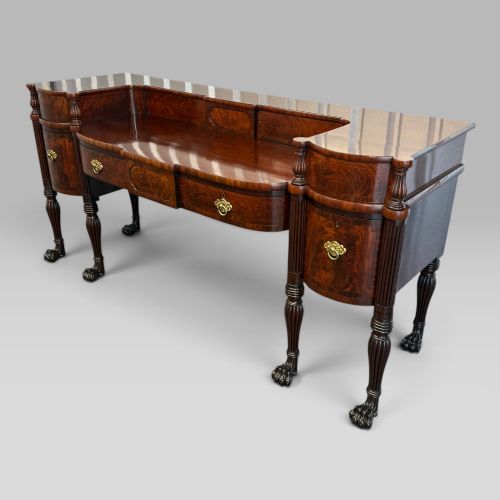
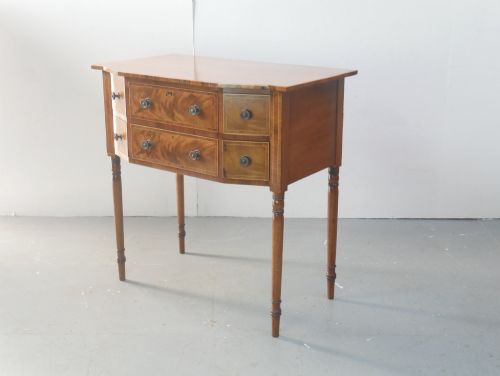
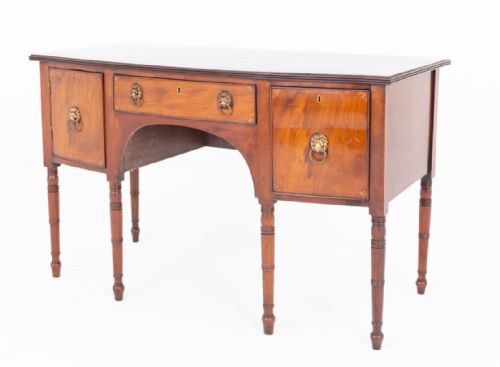
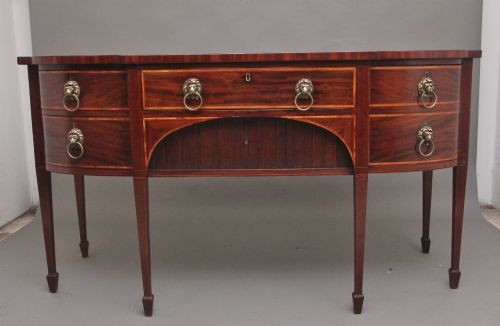
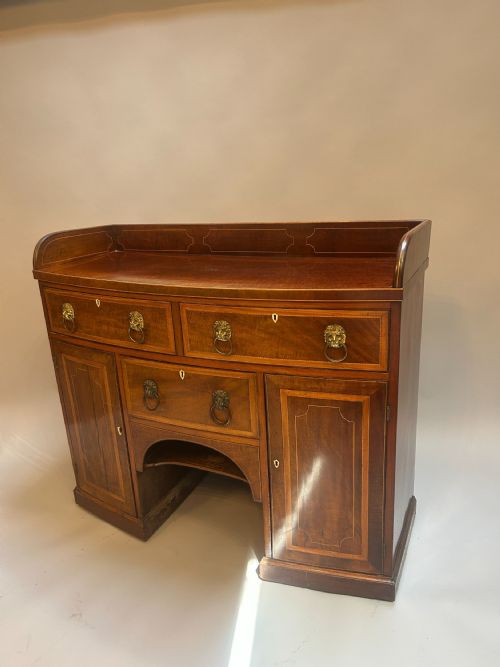
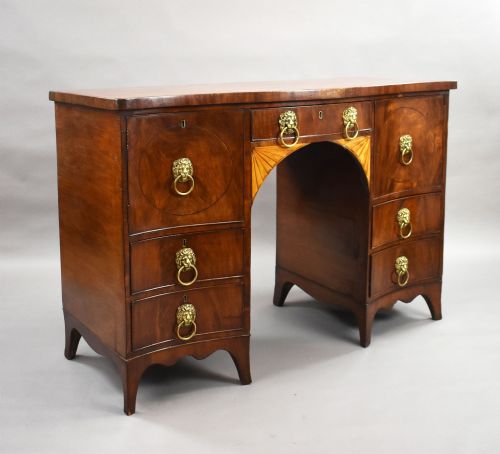
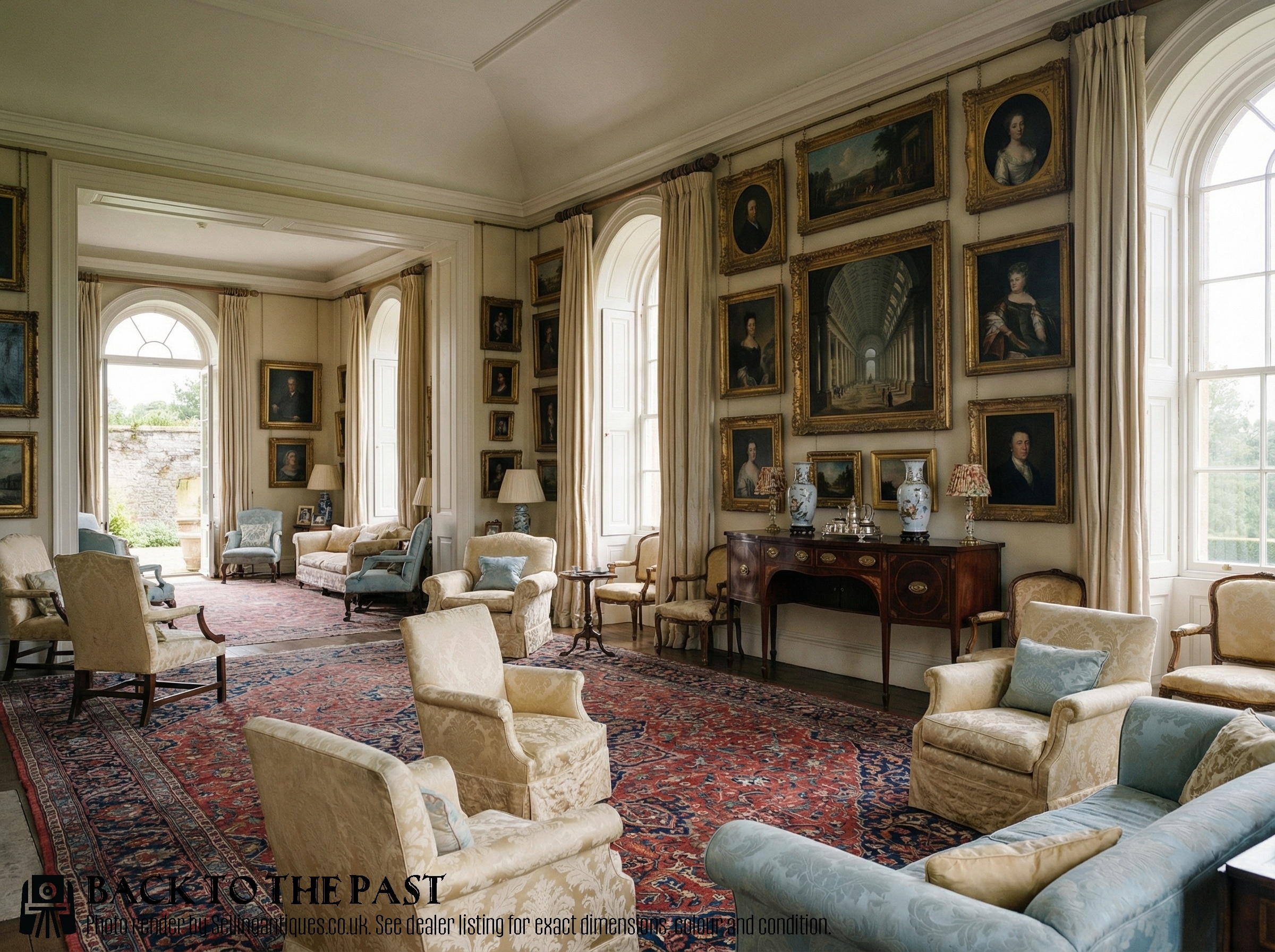
A regency inlaid server is typically encountered as a mahogany sideboard, credenza, or serving table originating from the Regency, Georgian, or 19th Century periods. These dining room and hallway pieces often feature bow-front or breakfront shapes designed to fit against a wall while offering practical surface and storage space.
The selection ranges from compact bow-front examples to larger pedestal and breakfront forms. Alongside classic sideboards, buyers will find related side cabinets, chiffoniers, and console tables sharing the same period aesthetic.
Materials and construction
Cabinet makers relied heavily on solid mahogany and flame mahogany veneers, frequently supported by oak for internal linings and drawer construction. The rich grain of the primary timber provided a dark, warm ground for decorative enrichment.
Surface detail was achieved through meticulous wood inlay, using contrasting species such as boxwood, ebony, and satinwood to create stringing and geometric motifs. Brass inlays and mounts were also applied to breakfront and chiffonier forms for added visual contrast.
Listings span the Regency, Georgian, and Victorian periods, showcasing mahogany, flame mahogany, pollard oak, and rosewood alongside brass and wood inlay.
Distinguishing quality in period pieces
Quality rests in the selection of the mahogany veneers and the precision of the contrasting inlay work. Superior examples display carefully matched flame grain and crisp, tight stringing rather than coarse or painted substitutes.
Structural refinement also defines the better pieces, seen in well-figured timber, original brass or lion paw feet, and clean secondary woods like oak within the drawers.
The Regency Inlaid Server Glossary
- Bow-front
- A convex curved cabinet front that swells outward in the centre. This shape became popular during the Georgian and Regency eras to soften the look of dining room furniture.
- Stringing
- A narrow strip of contrasting wood inlay used to outline drawers, tops, and panels. It creates a delicate linear border against the darker mahogany background.
- Breakfront
- A piece of furniture where the central section projects forward from the flanking outer sections. This architectural arrangement adds depth and formal presence to larger sideboards.
- Pedestal sideboard
- A form featuring distinct side pedestals flanking a lower central section, often associated with grander dining rooms. These substantial pieces provide significant storage capacity.
- Chiffonier
- A low cabinet equipped with shelves or drawers, sometimes fitted with mirrored backs or brass inlay. It serves as a smaller side storage unit for a parlour or dining space.
Regency Inlaid Server: Frequently Asked Questions
What is a regency inlaid server used for?
These pieces function primarily as serving surfaces and storage units in dining rooms, hallways, and drawing rooms. They provide space for holding dishes, cutlery, or decorative items during gatherings.
Historically, they supported formal dining rituals by holding food and silver before service. Today, they serve a similar practical role while anchoring the room's interior design.
How do I identify a Regency period piece?
Look for characteristic architectural proportions, classical motifs, and specific timber choices such as mahogany and flame mahogany. Period pieces from the early nineteenth century often incorporate fine boxwood or ebony stringing.
Examine the secondary timbers like oak inside the drawers and check for construction methods consistent with the period. Stylistic cues like lion paw feet and brass inlay point directly to Regency taste.
What is the difference between a sideboard and a server?
The terms are often used interchangeably to describe dining room furniture designed for serving food and storing tableware. Traditionally, servers might be slightly smaller or take the form of console and side tables.
On this page, the listings encompass various formats including bow-front sideboards, pedestal sideboards, and serving consoles. Each shares the same fundamental purpose of surface utility and timber craftsmanship.
How do I care for antique mahogany furniture?
Keep the wood away from direct sunlight and heat sources to prevent the mahogany and its delicate inlay from drying out. Consistent indoor humidity helps protect the structure and veneer.
Apply a traditional wax polish occasionally to maintain the lustre of the timber. Avoid using harsh chemical cleaners that can damage the polish and underlying wood.