
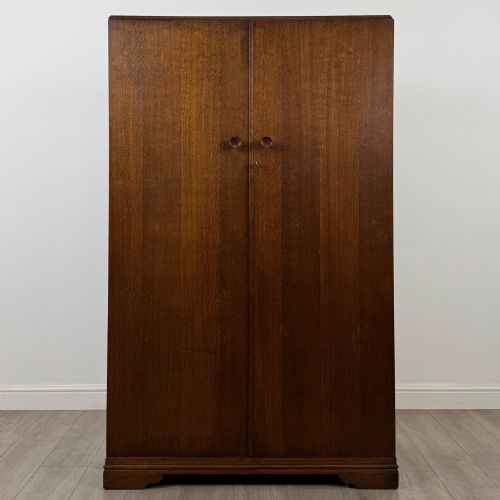
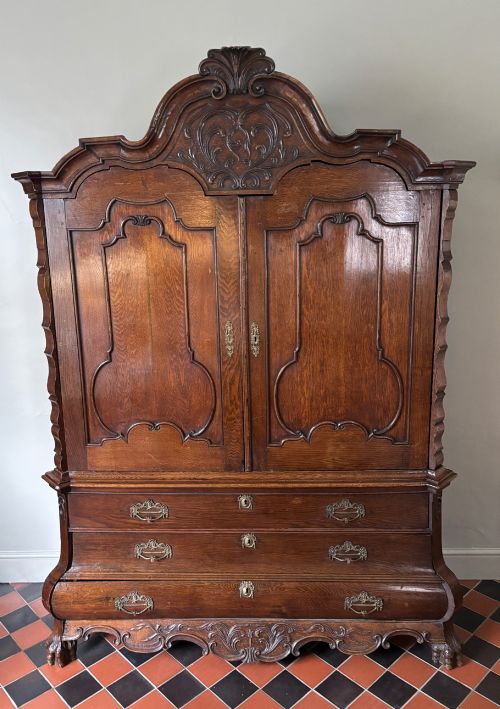
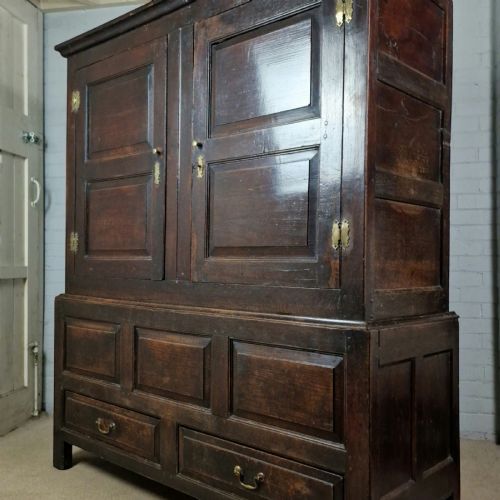
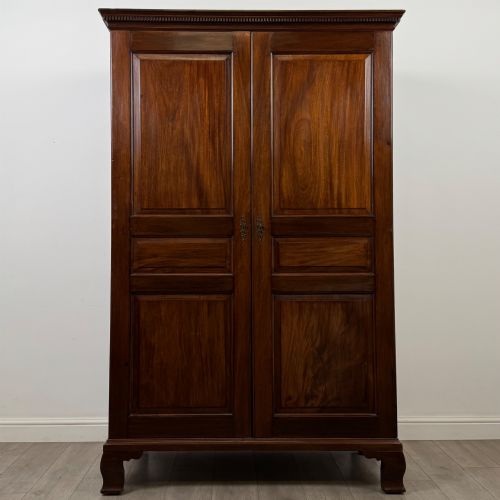
Wooden Clothes Armoire
When you seek a wooden clothes armoire, you find tall case furniture designed to hold garments, ranging from Georgian presses to Edwardian compactums.
Wooden Clothes Armoire
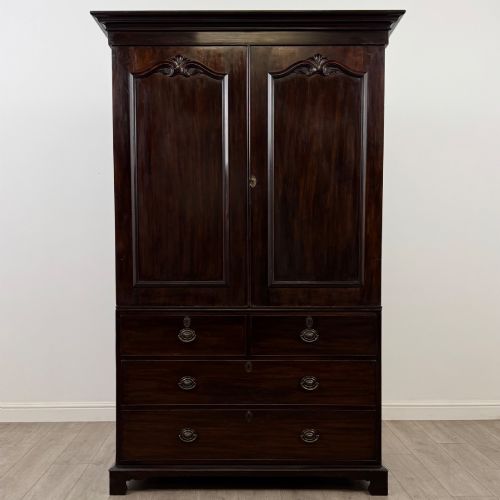
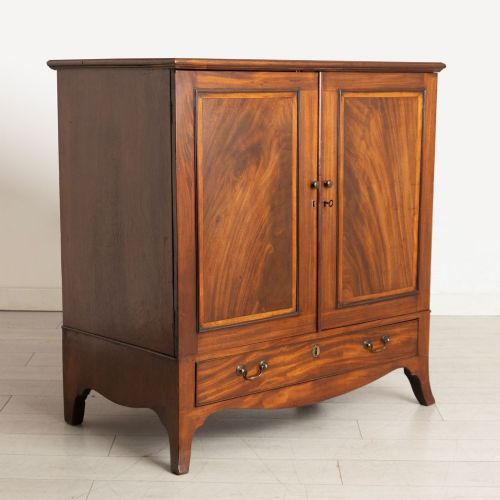
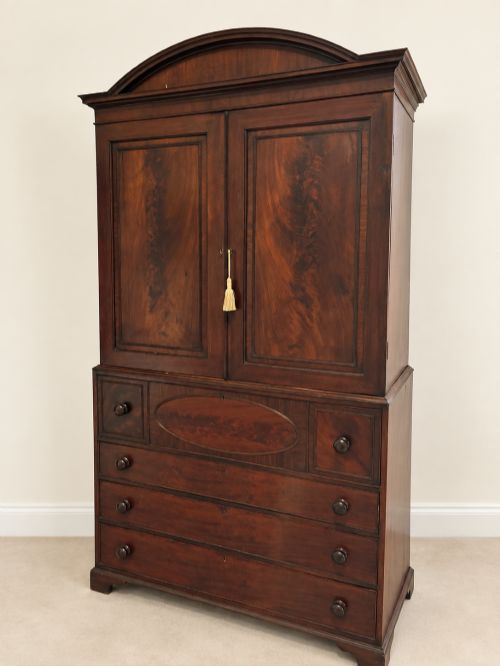
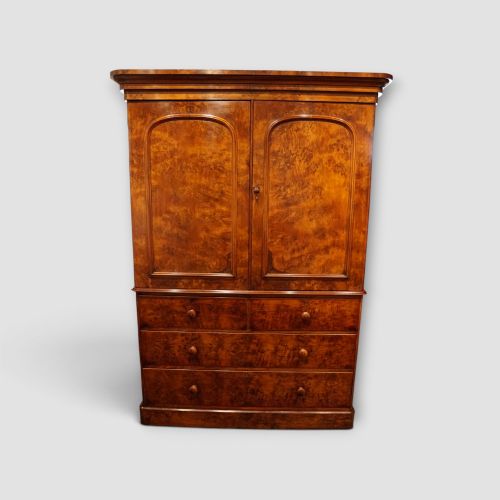
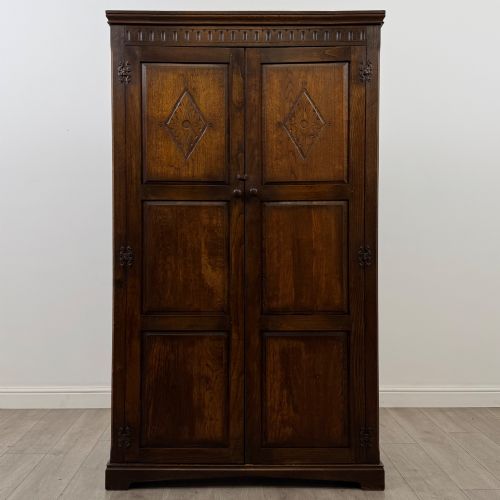
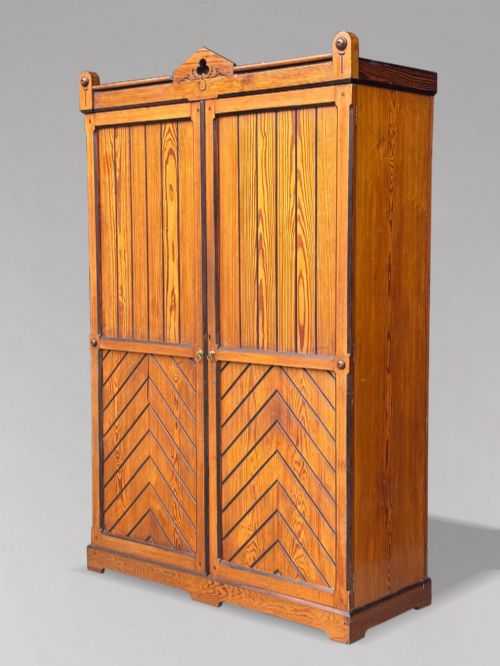
A wooden clothes armoire serves as a large storage cabinet for garments and linens, appearing across various historical periods including Georgian, Victorian, and Edwardian eras. These pieces take the form of double or triple wardrobes, compactums, and linen presses equipped with internal hanging space and drawers.
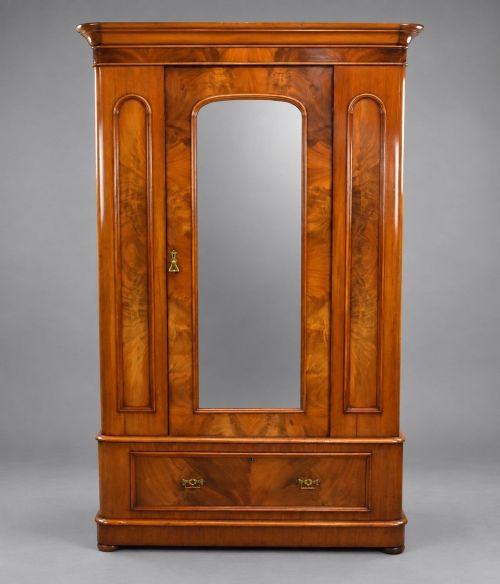
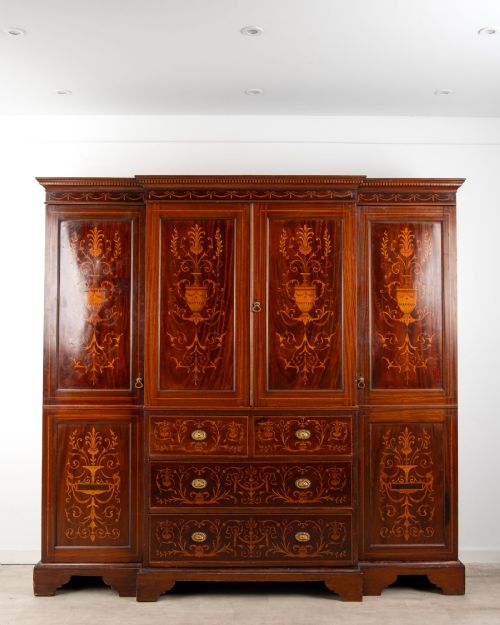
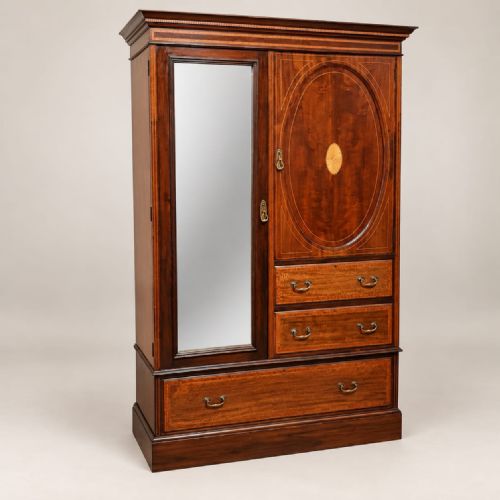
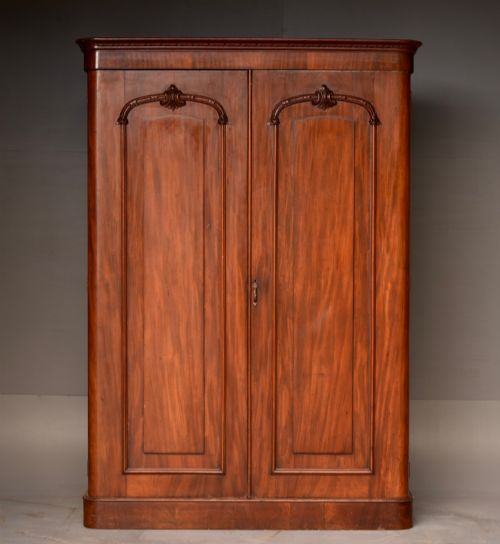
The most common examples on this page date from the Victorian and Edwardian periods, often constructed in mahogany, walnut, or pine. Buyers encounter both simple two-door bedroom cupboards and elaborate breakfront designs featuring mirrored doors and inlaid satinwood details.
How they were made
Cabinetmakers built these large wardrobes using timbers such as mahogany, oak, walnut, ash, and pine, frequently applying decorative veneers like burr walnut or flame mahogany to principal surfaces. Solid wood construction forms the structural carcasses, whilst secondary timbers line internal shelving and drawers.
Joinery techniques include panelled doors, dovetailed drawer construction, and decorative inlay work using satinwood or marquetry. Hardware incorporates brass handles and key escutcheons, alongside mirrored glass panels inserted into doors during the later Victorian and Edwardian phases.
Materials recorded across the inventory include mahogany, pine, walnut, oak, satinwood, ash, brass, glass, and iron.
What varies in quality
The selection of timber grain and veneer figure dictates much of the visual distinction between pieces, with highly figured flame mahogany or burr walnut occupying the upper tier of craftsmanship. Finer examples display meticulous marquetry, crisp carved ornamentation, and balanced proportions across large breakfront or compactum facades.
Internal configuration and original cabinetry fittings also determine distinction, as fitted linen slides, integrated drawer units, and well-preserved brass hardware elevate a piece. Structural integrity relies upon sound original joinery and stable timber movement across large doors and side panels.
maples & co·S & H Jewell
The Wooden Clothes Armoire Glossary
- Compactum
- A large wardrobe combining hanging space, shelves, and multiple internal drawers within a single fitted carcass. This multi-functional design became particularly popular during the Edwardian period.
- Linen Press
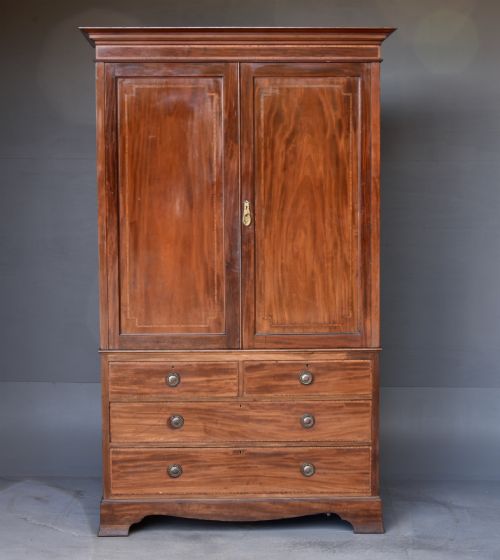
- A tall storage piece comprising upper sliding trays enclosed by doors, positioned above a chest of base drawers. Georgian and Victorian examples frequently housed folded textiles rather than hanging garments.
- Breakfront
- A cabinet facade where the central section projects forward from the flanking outer wings. This architectural arrangement creates depth and visual balance on large wardrobes.
- Scumble
- A translucent paint glaze applied over a base coat to simulate natural wood grain or figure. This decorative technique appears on pine furniture to mimic more costly timbers.
- Marquetry
- Inlaid patterns assembled from various coloured wood veneers to create pictorial or geometric surface decoration. Cabinetmakers utilised this technique on Georgian and later revival pieces.
Wooden Clothes Armoire: Frequently Asked Questions
How do I fit a tall wardrobe in a modern room?
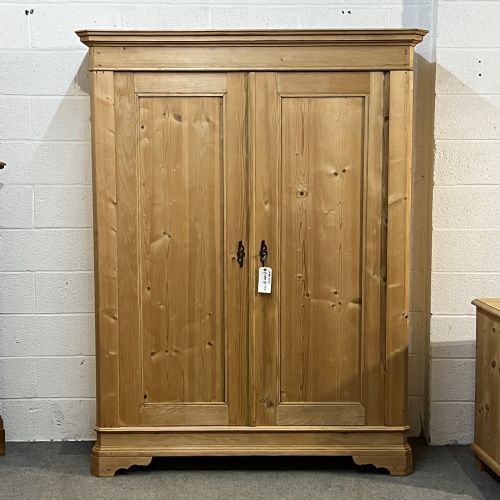
Many larger examples, particularly pine pieces, utilise knockdown construction designed for dismantling during transport and reassembly in position. Measure your ceiling height carefully before selecting triple wardrobes or breakfront compactums.
Ensure wall clearance accommodates opening doors, especially on mirrored designs or models with deep projecting cornices. Professional delivery services often manage the assembly process upon arrival.
What is the difference between an armoire and a wardrobe?
In British cabinet-making traditions, these terms often describe large storage furniture used for hanging clothes and linens interchangeably. Historically, armoires originated as continental European cupboards, whilst wardrobes evolved through Georgian and Victorian English workshops.
Both forms provide substantial vertical storage capacity enclosed by single, double, or triple doors. Regional naming conventions and revival styles heavily influence which term manufacturers and dealers apply.
Can I add hanging rails to an old linen press?
Linen presses were originally built with internal sliding wooden trays designed for folded garments rather than modern coat hangers. Converting the upper section requires careful installation of a brass or wooden rail without damaging internal linings.
Consider the internal depth of the cabinet before making alterations, as older pieces can be shallower than contemporary coat hangers require. Many owners retain original sliding trays for folded knitwear and accessories.
How do I identify an Edwardian piece?
Edwardian wardrobes frequently display lighter timbers such as satinwood inlay, mahogany, and inlaid ash, reflecting the decorative tastes of the early twentieth century. Common characteristics include mirrored door panels, crisp satinwood stringing, and crown cornices.
Construction methods during this era often involved factory production alongside traditional cabinet workshops, producing sturdy double and triple configurations. Maker stamps or retailer labels inside drawer boxes occasionally confirm specific dates.