
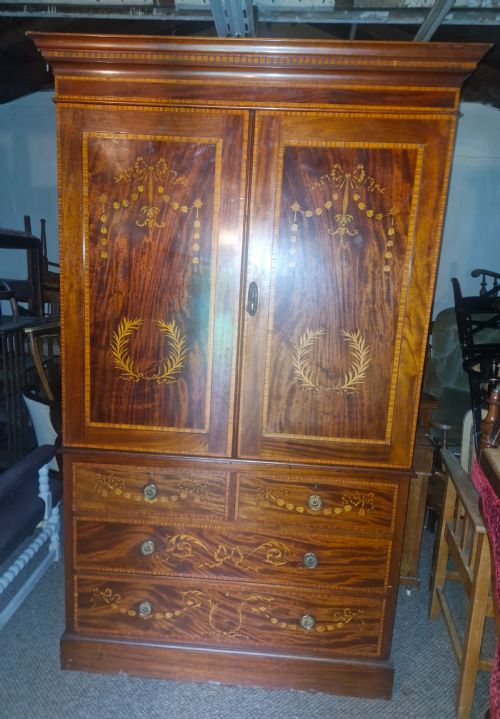


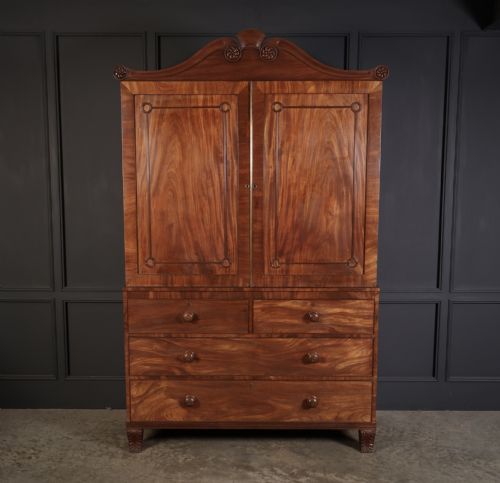


Two Section Linen Press
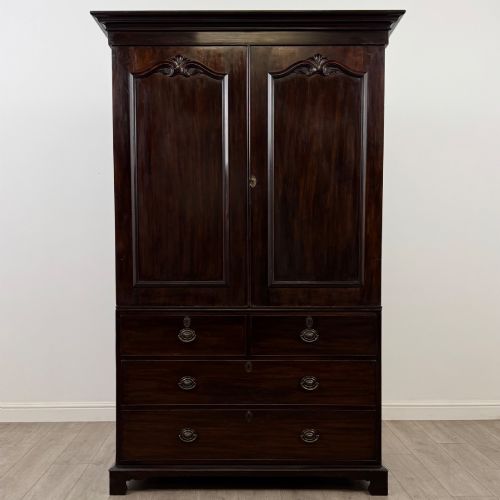
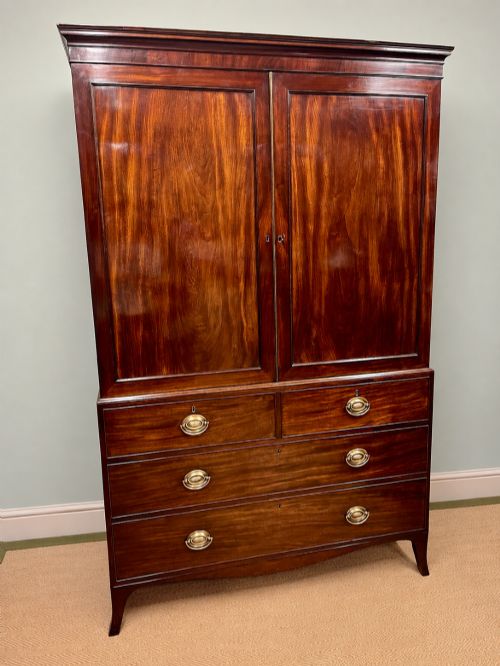
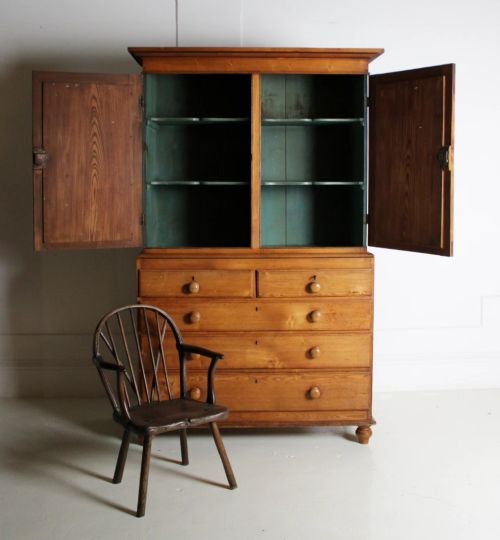
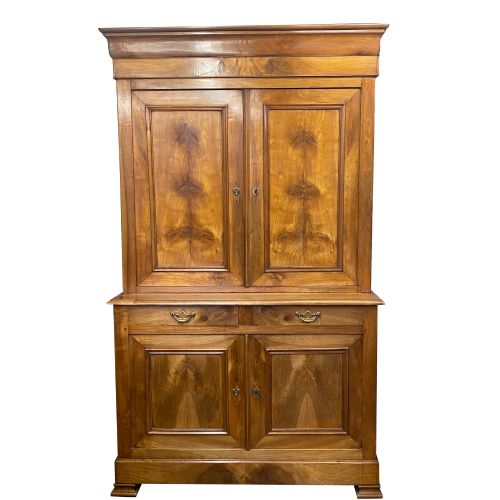
A two section linen press is a substantial storage piece built to hold household linens, and the ones seen here span various classical timbers.
Two Section Linen Press
When you search for a two section linen press, you encounter large storage furniture divided into an upper cupboard and a lower chest of drawers. The pieces on this page span the 18th century, the Regency era, the Victorian period, and the Edwardian years.
The most common formats you meet here are made from mahogany, oak, and ash, taking Georgian, Regency, and Victorian country styles. These dual-part designs separate for transport before being reassembled in the bedroom or landing.
Makers and workshops across Britain and France produced these cabinets to organise household textiles before modern wardrobes became universal. They stand as robust architectural statements in any traditional interior scheme.
How they were made
Makers built these presses using solid timbers like oak, ash, and cherry wood, alongside mahogany with flame veneer and rosewood crossbanding. Cabinets often feature brass hardware such as campaign handles or escutcheons.
Joinery methods involved sturdy carcase construction where the upper section housing sliding trays or shelves sits securely upon a base fitted with graduated drawers. Inlaid details and painted finishes appear across various regional workshops.
Some press cupboards retain traces of dried lavender tucked behind the sliding trays from past centuries.
What varies in quality
The distinction between standard utility cupboards and finer examples lies in the selection of timbers and the precision of the cabinetwork. Fine pieces display figured veneers, delicate crossbanding, and well-proportioned cornices.
Internal arrangements also set pieces apart, moving from simple painted shelving to banks of original sliding trays framed in secondary timbers. The crispness of inlaid decoration and the retention of original brass fittings indicate higher workshop standards.
Druce & Co.·Whytock & Reid of Edinburgh
The Two Section Linen Press Glossary
- Crossbanding
- A strip of veneer applied perpendicularly to the grain of the primary surface, often seen framing drawer fronts or doors. This technique creates a decorative border that highlights the central timber.
- Flame mahogany veneer
- A highly figured slice of mahogany timber displaying a distinct flickering pattern resembling flames. Cabinetmakers applied this to prominent surfaces to catch the light.
- Housekeeper cupboard
- An alternative regional term for a large storage press used to house household linens and provisions. These units typically combine upper doors with lower drawer banks.
- Sliding trays
- Internal pull-out shelves housed within the upper section of a press, historically used for folding linens flat. They slide on wooden runners rather than operating as standard drawers.
- Campaign cabinet
- Modular furniture constructed in sections with recessed brass fittings for ease of military transport. These pieces dismantle cleanly for travel.
Two Section Linen Press: Frequently Asked Questions
What is a two section linen press used for?
These cabinets served primarily to store household linens, folded textiles, and garments in bedrooms or landing spaces. The upper section traditionally held sliding trays to keep flat items organised.
The lower drawer base provided additional space for bulkier clothing and household items, keeping everything protected from dust.
How do I separate the two sections?
Two section linen presses are constructed as modular units where the upper cupboard simply lifts off the lower chest base. They rely on gravity and dowels or battens to keep the upper carcase aligned.
Lifting the top section requires at least two people due to the heavy solid timber and veneer construction.
How do I date a mahogany linen press?
Dating relies on observing structural proportions, timber choice, and decorative details like bracket feet or plinth bases. Earlier Georgian pieces often show denser mahogany and fine crossbanding.
Later Victorian and Edwardian examples introduce machine-sawn elements, different internal configurations, and varied brass hardware styles.
Are these presses difficult to place in modern rooms?
Their tall, deep proportions mean they require substantial wall space and high ceilings to sit comfortably within a modern room. The two-part construction simplifies moving them through doorways compared to single-piece wardrobes.
They function well in large bedrooms, dressing rooms, or hallways as focal storage furniture.