
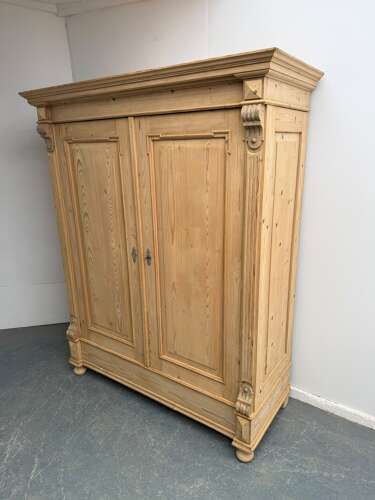
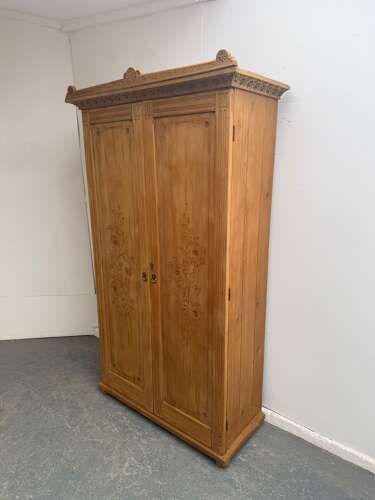
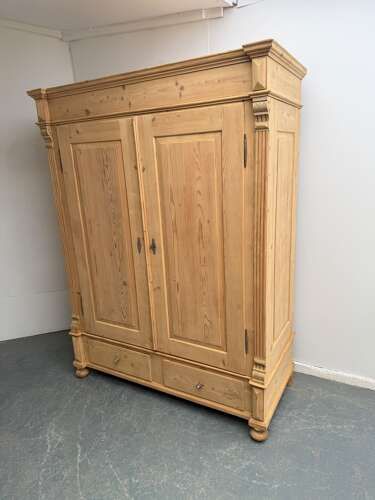
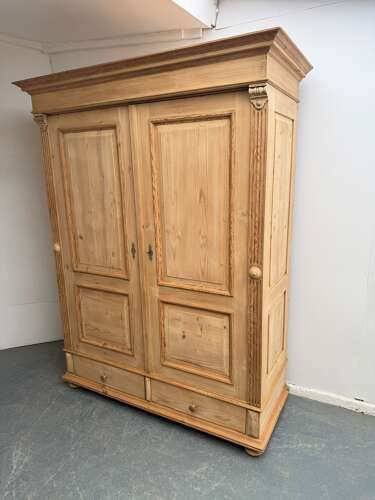
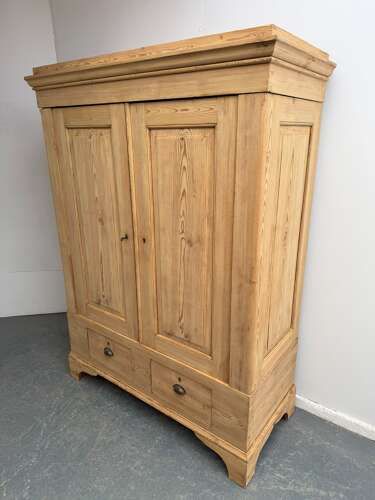
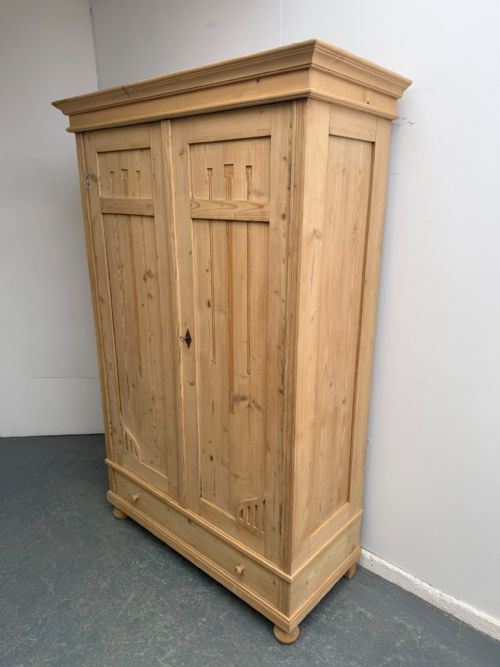
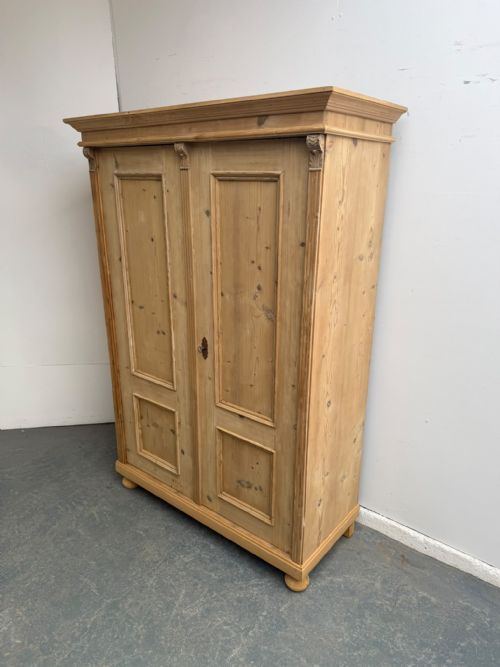
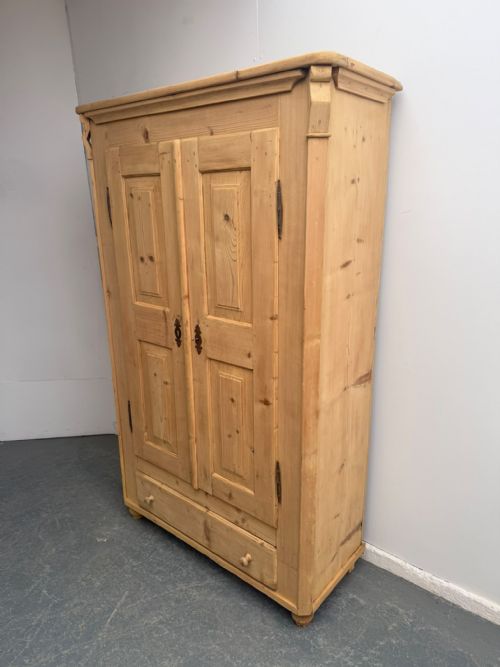
Rustic Pine Clothes Cupboard
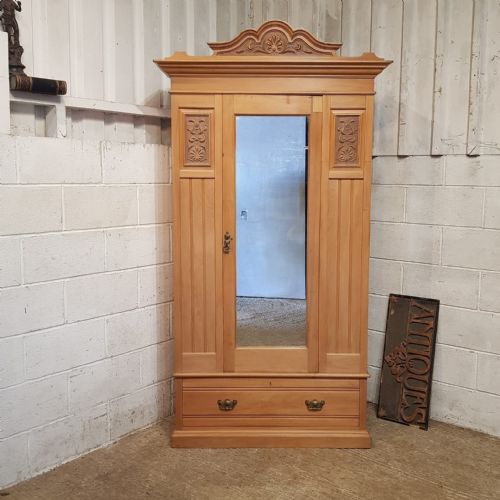
A rustic pine clothes cupboard offers practical hanging space with honest timber character, spanning periods from the eighteenth century to the twentieth.
Rustic Pine Clothes Cupboard
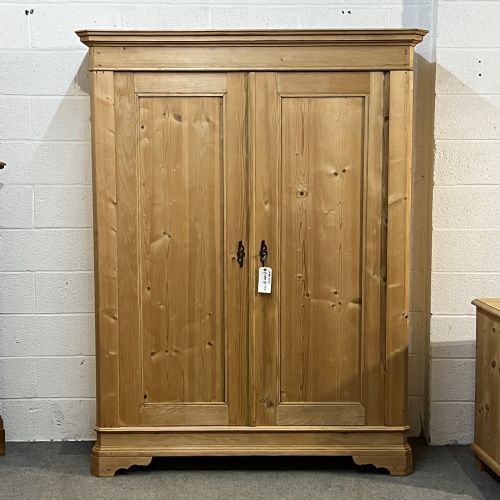
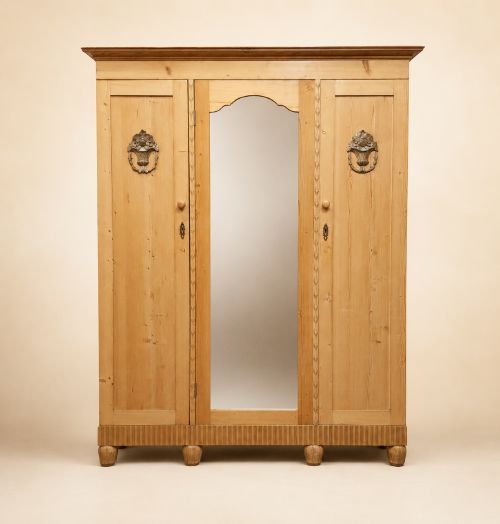
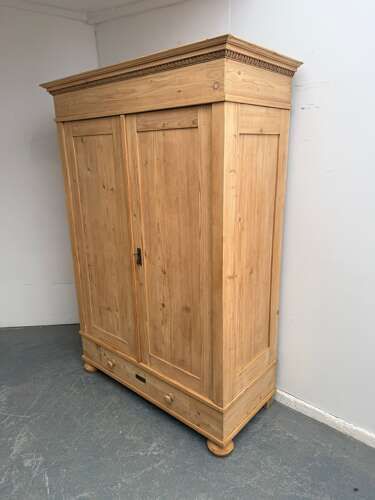
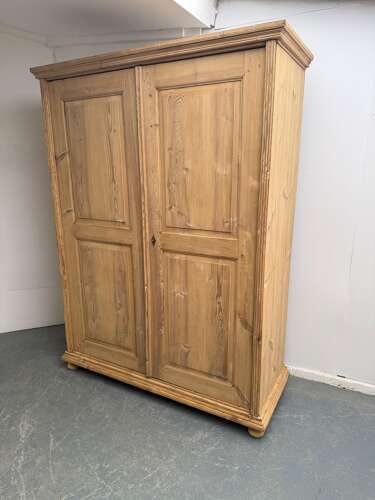
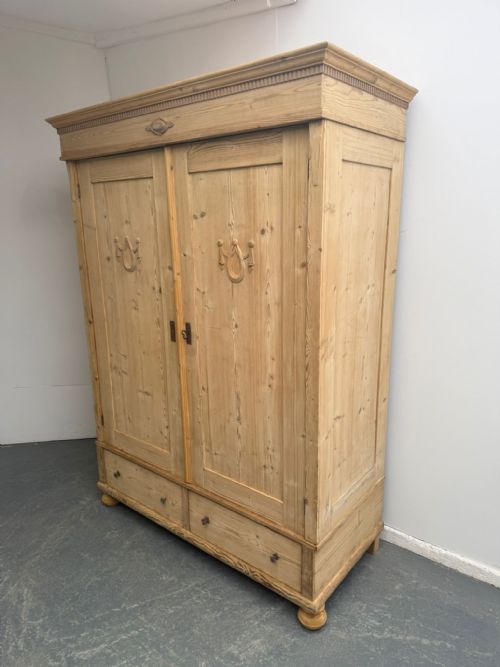
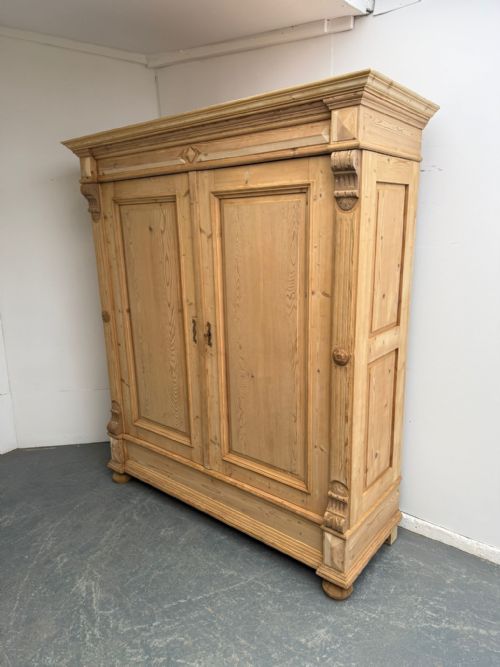
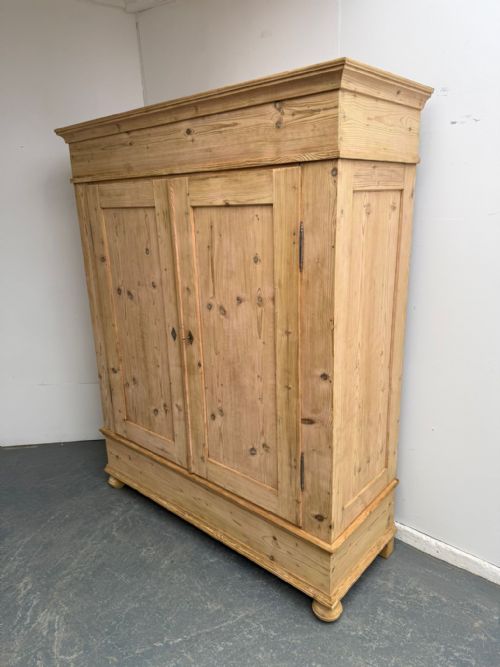
A rustic pine clothes cupboard provides substantial storage through tall single, double, or triple door formats designed for household garments. These pieces emerge primarily from the Victorian and Georgian eras, alongside Edwardian and early twentieth century examples.
Buyers encounter versatile forms ranging from large knockdown wardrobes that dismantle for transport to compact one-piece hall cupboards and corner units. Many pieces feature interior shelving or bottom drawers alongside hanging space, reflecting domestic storage needs across British and European workshops.
Construction and materials
Carpenters built these wardrobes predominantly using solid pine, supplemented by iron hinges, brass fittings, and ceramic details on handles or hooks. Surfaces frequently display historic paint layers or wax finishes that protect the timber while highlighting the natural grain.
Many larger Victorian and Georgian examples utilise knockdown construction with pegged joints, allowing the heavy frames to be assembled in rooms without permanent fixing. Simpler pieces employ one-piece panelled frames, occasionally decorated with modest carved details characteristic of the Arts and Crafts style.
Rustic Pine Clothes Cupboard Retail Price Guide 2026
Typical asking prices for rustic pine clothes cupboard among the pieces listed under this phrase on Sellingantiques today, from the lower quarter to the upper quarter. They describe what is for sale here now, not the wider market.
A tiny number of wardrobes still carry the phantom aroma of nineteenth-century beeswax and old wool.
Quality variations in pine furniture
Quality separates through the proportion and structural integrity of the timber, particularly how well the panelled doors and moulded cornices retain their alignment over centuries. Pieces with original hardware, intact feet, and smooth-operating knockdown joints command greater appreciation from collectors.
The finish also dictates character, as wardrobes retaining early painted surfaces or properly nourished waxed pine demonstrate superior preservation compared to heavily altered or stripped alternatives.
The Rustic Pine Clothes Cupboard Glossary
- Knockdown wardrobe
- A large piece of furniture constructed to dismantle into sections for ease of movement between rooms. This method relies on wooden pegs and wedge joints rather than permanent glue.
- Hall wardrobe
- A narrower or lower variant designed originally for entranceways or smaller chambers. These often accommodate coats and everyday garments rather than full seasonal wardrobes.
- Linen cupboard
- A specialised storage unit featuring interior shelves rather than hanging space, traditionally utilised for household textiles and bedding. They share the robust pine construction of larger clothes cupboards.
- Armoire
- A large European wardrobe with deep proportions and panelled doors. Northern European examples frequently display distinct painted finishes or moulded cornices.
- Waxed pine
- A timber treatment where melted wax is rubbed into the grain to seal the wood and impart a soft sheen. This finish highlights knots and natural colour variations in older pine.
Rustic Pine Clothes Cupboard: Frequently Asked Questions
How do I fit a knockdown wardrobe?
Knockdown wardrobes dismantle into separate panels, cornices, and bases that slot together using internal wooden pegs or metal brackets. Assembly requires two people to align the heavy sides and secure the top cornice.
Ensure the floor is level before slotting the panels into the base, as uneven ground prevents the doors from hanging straight and closing evenly against the frame.
Are these wardrobes suitable for modern hangers?
Many older pine wardrobes possess shallower internal depths than contemporary closets because historical garments required less hanging clearance. Modern wooden or thick plastic hangers may prevent the doors from closing fully.
Replacing the internal hanging rail with a front-facing or pull-out rail often resolves clearance issues while preserving the original interior depth of the cupboard.
Should I wax or paint my cupboard?
Selecting a finish depends on the existing surface history recorded on the timber, whether bare pine, old wax, or historic layers of paint. Many Victorian and Georgian examples survived in raw states intended for future decoration.
Applying a traditional beeswax nourishes dry pine and deepens the amber tone, while breathable mineral paints preserve timber that previously held decorative colour schemes.
How do I distinguish Georgian from Victorian pine?
Georgian pine furniture generally exhibits hand-planed surfaces, pegged joinery, and simpler moulded cornices designed for domestic utility. Proportions often tend towards lower heights or deeper panelled doors.
Victorian pieces frequently introduce machine-sawn elements, taller proportions, and more elaborate mouldings, alongside the widespread adoption of knockdown frames for large multi-door wardrobes.