




Wooden Champagne Bucket
A wooden champagne bucket is a stately table vessel of mahogany, oak, or walnut, built to hold ice and keep bottles chilled in style.
Wooden Champagne Bucket
A wooden champagne bucket stands as a sturdy and practical vessel designed for cooling wine and champagne at the dining table. When searching for a wooden champagne bucket, buyers encounter vessels spanning the Georgian, Victorian, and Edwardian eras.
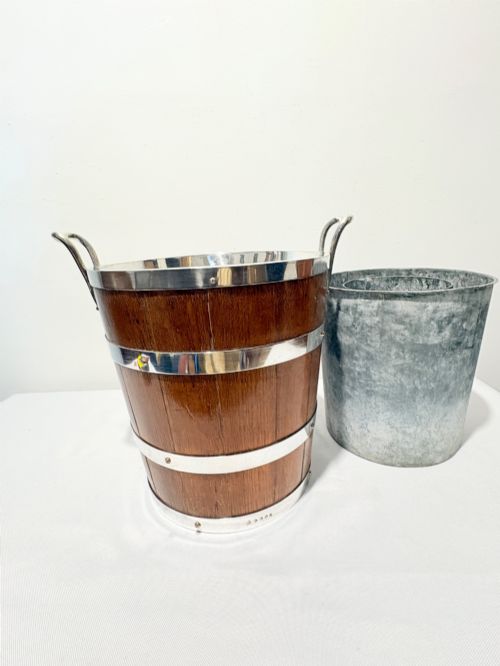
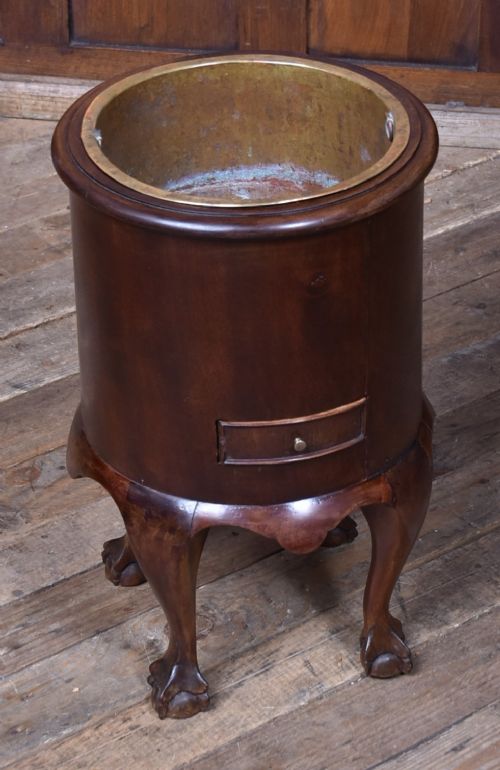
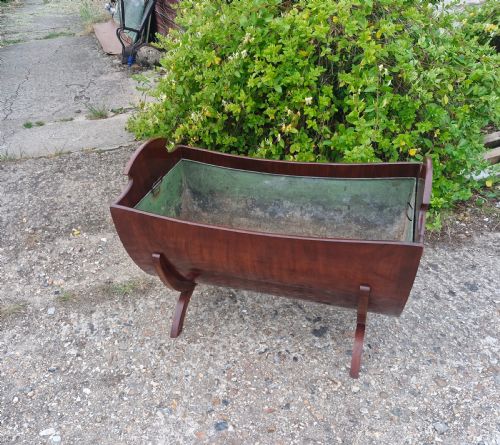
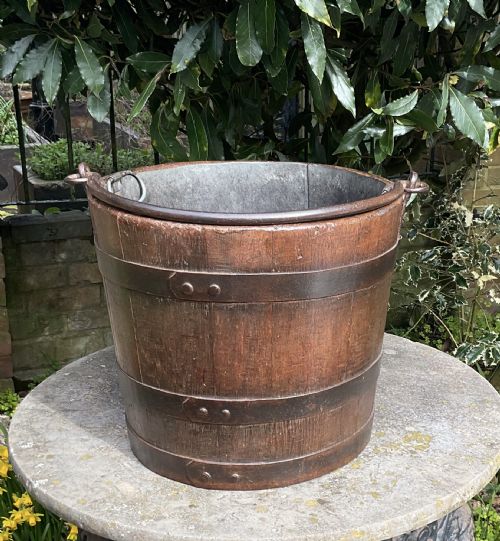
The selections on this page encompass various forms, including coopered staves, brass-bound oval coolers, and mounted presentation bowls. Many examples originate from British workshops, alongside occasional French provincial pieces fashioned in walnut.
Makers often constructed these pieces to double as log baskets, jardiniere planters, or oyster buckets. Mahogany and oak dominate the selection, frequently fitted with metal, zinc, or ceramic liners to hold ice securely.
How they were made
Traditional coopers constructed the bodies of these buckets using curved wooden staves of mahogany, oak, or walnut, bound together by tight metal bands. Brass fittings, handles, and hoops provide structural reinforcement and a polished contrast to the dark timber.
Makers integrated internal linings of zinc, silver plate, or creamware ceramics to protect the wood from moisture and ice melt. Exterior surfaces received hand-polished finishes that highlighted the natural grain and rich patina of the mature wood.
Materials span mahogany, oak, walnut, brass, zinc, silver plate, iron, and ceramic liners across multiple centuries.
What varies in quality
Quality rests primarily in the grade of timber selected, the tightness of the cooperage, and the preservation of the original metal or ceramic liner. Pieces featuring heavy brass banding and well-figured mahogany show superior craftsmanship compared to simpler utility items.
The integrity of the staves and the presence of period-correct mounts define the distinction between standard vessels and exceptional examples. Original linings and unblemished wood surfaces elevate the standing of a piece within its historical period.
The Wooden Champagne Bucket Glossary
- Coopered
- Method of construction using shaped wooden staves bound together with metal hoops to form a watertight vessel. This technique creates the curved profile seen on traditional buckets and barrels.
- Cellarette
- A lockable container used for storing wine bottles near the dining table. These large wooden vessels often double as wine coolers in period settings.
- Jardiniere
- An ornamental pot or stand designed to hold plants and flowers. Many large wooden buckets serve this secondary purpose when not utilised for wine.
- Creamware
- A fine-grained earthenware with a pale yellowish-white glaze developed in the eighteenth century. Liners made from this material appear inside select ice buckets.
- Patina
- The deep gloss and surface character developed on wood over centuries of handling and polishing. This quality indicates age and careful maintenance.
Wooden Champagne Bucket: Frequently Asked Questions
How do I clean a wooden champagne bucket?
Wipe the interior liner carefully after use and dry it thoroughly to protect any metal or ceramic surfaces. Treat the exterior wood only with appropriate furniture wax to preserve the finish.
Avoid submerging the wooden staves in water, as excessive moisture can weaken the cooperage and damage the antique timber over time.
Were these buckets originally used for champagne?
Many period vessels served generally for wine, ice, or oysters rather than specifically for modern champagne service. Coopers built these sturdy containers to handle ice and bottles at the dining table.
Later adaptations and similar forms often cross over between wine coolers, presentation bowls, and decorative planters.
Can I use an antique bucket for modern parties?
These vessels remain functional provided the internal liner is watertight and secure. Placing ice and bottles inside a protected liner prevents moisture from reaching the ancient wood.
Careful handling ensures that a Georgian or Victorian piece can continue its original purpose in a contemporary setting.
How do I distinguish Georgian from Victorian pieces?
Georgian examples often display restrained classical proportions, fine mahogany, and precise brass binding typical of the eighteenth century. Victorian pieces tend to show heavier construction and broader utilitarian designs.
Examining the timber grain, construction methods, and hardware style helps clarify the period of origin.