




Coopered Oak Bucket
A coopered oak bucket is a vessel built from curved wooden staves bound by metal hoops, prized for holding wine, fuel, or umbrellas.
Coopered Oak Bucket
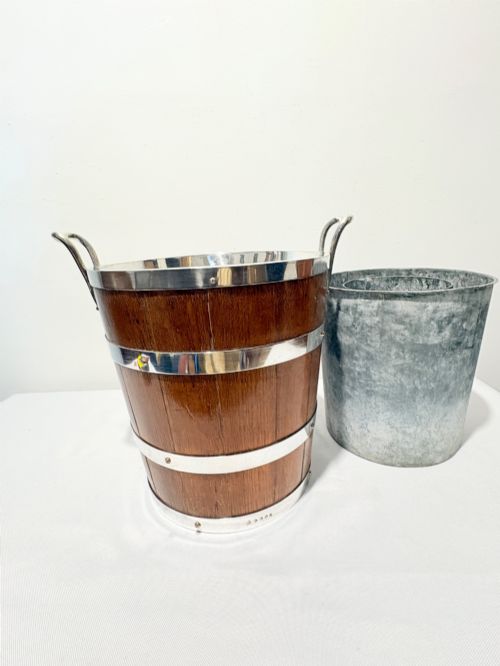
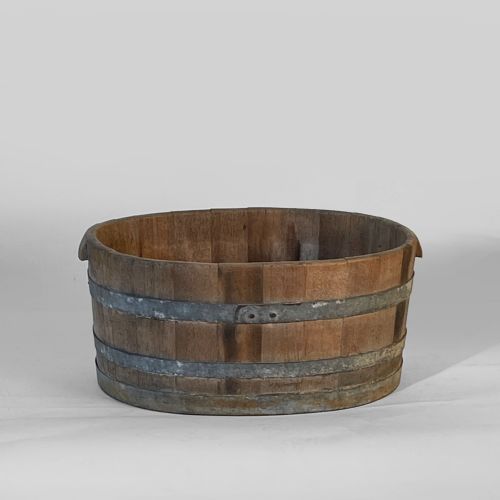
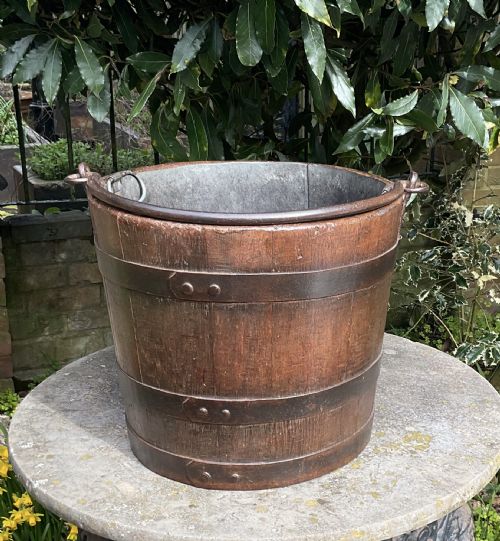
A coopered oak bucket is constructed using traditional barrel-making techniques where individual wooden staves fit tightly together to form a watertight or sturdy round vessel. These pieces appear in numerous functional forms across domestic interiors, including wine coolers, umbrella stands, coal bins, and peat buckets.
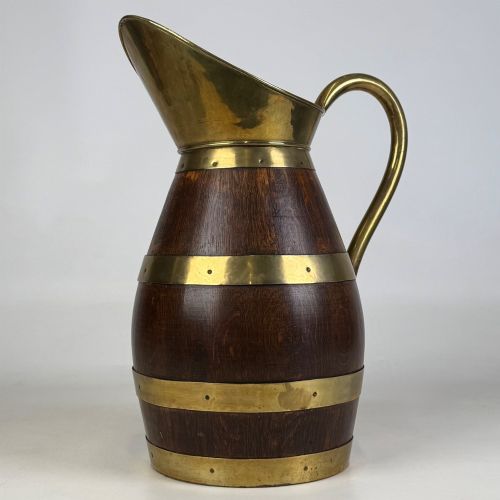
The examples available range from Victorian and Edwardian household accessories to earlier nineteenth-century utility vessels. Common iterations on this page include brass-bound umbrella stands, metal-lined champagne coolers, and fireside log bins made from solid oak.
Originating as practical items for farmhouses, country houses, and sculleries, these vessels now serve as decorative storage items or planters. Their survival relies upon the inherent strength of oak and the durability of their original metal bands.
How they were made
Makers shaped individual oak staves with bevelled edges so they formed a tight, tapering cylinder when assembled around a solid base. Hoop-makers then forged and fitted metal bands - typically brass, iron, or copper - around the wood while hot so that the metal contracted to hold the staves under firm tension.
Many internal uses required additional protection against moisture or contents, leading makers to fit removable metal liners, zinc inserts, or ceramic creamware bowls. Handles, swing bails, and umbrella loops were secured with metal pins or riveted directly through the wooden staves and reinforcing bands.
Some nineteenth-century bucket bottoms bear subtle cooper's bench marks, carved initials left by the craftsman to identify his own handiwork in the workshop.
What varies in quality
Quality in a coopered oak bucket rests upon the precision of the stave joints and the structural integrity of the timber. Tighter grain in the oak and heavier gauge brass or iron banding indicate a superior workshop origin.
The presence of original fitted interiors, such as ceramic creamware liners or matching metal inserts, elevates the historical completeness of a piece. Finer examples also retain their original patination on the wood alongside crisp, hand-forged or turned metal mounts rather than later replacements.
Lister and Co
The Coopered Oak Bucket Glossary
- Coopered
- Built from curved wooden staves joined edge-to-edge to form a rounded vessel. This ancient woodworking method creates naturally strong cylinders without relying on modern adhesives.
- Stave
- An individual vertical strip of oak shaped with bevelled edges. These pieces form the curved body of the bucket.
- Hoop
- A metal band of brass, iron, or copper encircling the staves to keep them tight. These rings provide both structural tension and decorative contrast against the wood.
- Jardiniere
- An ornamental pot or stand designed to hold growing plants. These decorative vessels often feature waterproof liners to protect the timber.
- Peat bucket
- A deep container traditionally used beside the hearth to hold dried peat fuel. They frequently include sturdy drop handles for carrying heavy loads.
Coopered Oak Bucket: Frequently Asked Questions
What were coopered oak buckets originally used for?
These vessels served diverse domestic chores ranging from holding coal and peat by the hearth to cooling wine and champagne at the dining table. Larger examples acted as washing tubs or dairy vessels on country estates.
Over time, many of these utilitarian containers transitioned into hallway umbrella stands or decorative plant holders as central heating replaced open fires.
Are these buckets completely waterproof?
While original wine coolers and dairy tubs were designed to hold liquids, older wooden staves can dry out and allow minor seepage over time. Many surviving examples rely on integrated metal linings or ceramic inserts to contain moisture safely.
Check whether a specific listing retains its original zinc or ceramic liner if you intend to use it for fresh flowers or cooling drinks.
How can I tell the age of a coopered bucket?
Dating relies upon examining the construction methods, the type of metal used for the bands, and the overall wear patterns on the oak. Hand-forged iron or heavy cast brass bands often point towards nineteenth-century origins, while Edwardian pieces may display lighter fixings.
Design styles also shift from utilitarian country workshop pieces to more decorative domestic items produced around nineteen hundred.