

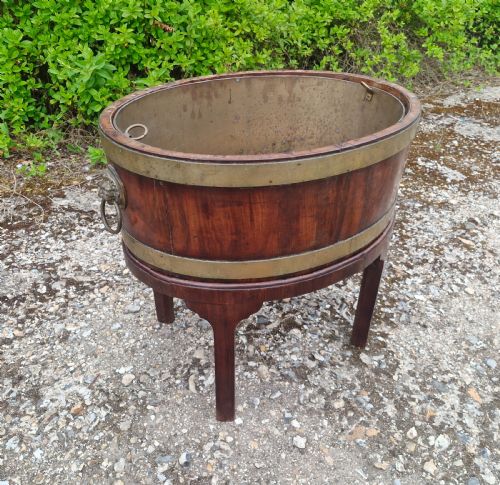


Brass Bound Plant Stand
These brass bound plant stand pieces bring refined timber and structural metalwork together to anchor a room.
Brass Bound Plant Stand
A brass bound plant stand takes the form of a coopered vessel raised on legs or a supportive frame to hold greenery or floral displays. You will frequently encounter mahogany and oak constructions spanning periods from the eighteenth century through to the twentieth century.
The functional heritage of these objects often lies in wine coolers and cellarettes adapted for botanical use, alongside purpose-built jardiniere stands and planters. Georgian and Edwardian examples sit alongside Arts and Crafts interpretations and Dutch styles to offer considerable variety in silhouette.
Makers such as Lister and Co contributed to the Edwardian iteration of these stands, whilst earlier George III and Late Georgian pieces demonstrate more formal timber selection. The resulting inventory ranges from elliptical buckets to round coopered barrels mounted on dedicated stands.
How they were made
Construction relies on traditional cooperage techniques, wherein individual wooden staves of mahogany or oak are shaped and fitted together to form a watertight or robust container. Metal bands, predominantly brass, are heated and fitted tightly around the circumference to hold the wooden staves under permanent tension.
Additional strength and drainage are occasionally managed through the inclusion of internal metal linings such as zinc, protecting the surrounding timber from moisture. Stands and bases are joined using traditional cabinetmaking methods appropriate to the period, from George III tripod or framed supports to Edwardian pedestal designs.
Brass Bound Plant Stand Retail Price Guide 2026
Typical asking prices for brass bound plant stand among the pieces listed under this phrase on Sellingantiques today, from the lower quarter to the upper quarter. They describe what is for sale here now, not the wider market.
Many a stately dining room cellarette quietly retired from holding claret to spend its golden years supporting an industrious fern.
What varies in quality
The distinction between tiers of quality rests heavily on the selection of timber and the precision of the cooperage work. Finely figured mahogany or quarter-sawn oak with tight, seamless stave joints represents the higher end of craftsmanship.
Quality also declares itself in the weight and fastening of the brass bands and any associated carrying handles or feet. Heavier gauge brass secured with appropriate fixings elevates a piece beyond simpler decorative iterations produced in later decades.
Lister and Co
The Brass Bound Plant Stand Glossary
- Coopered
- Constructed from curved staves of wood joined edge to edge and bound with metal hoops, much like a traditional barrel.
- Jardiniere
- An ornamental pot or stand designed to hold growing plants or flowers indoors.
- Cellarette
- A lockable container used originally for storing bottles of wine, frequently repurposed as a planter due to its similar watertight stave construction.
- Quarter-sawn
- A method of timber cutting where logs are quartered lengthwise to produce a stable board with a distinctive ray figure, common in quality oak pieces.
Brass Bound Plant Stand: Frequently Asked Questions
What is a brass bound plant stand?
A brass bound plant stand is a wooden container strengthened with metal hoops and elevated on a stand, designed to display indoor greenery. These pieces often adapt traditional coopered barrel forms.
They bridge the gap between utilitarian vessels and formal furniture, drawing upon centuries of cabinetmaking traditions.
Were these always used for plants?
Many examples began life as wine coolers or cellarettes before being repurposed to hold potted plants and floral arrangements. Their watertight stave construction made them ideal for containing damp earth and water.
By the Edwardian period, manufacturers were building similar coopered vessels specifically for botanical display.
How do I date a plant stand?
Dating relies on examining the timber species, the style of the base or stand, and the construction methods used in the staves and brasswork. Georgian and George III pieces exhibit formal mahogany framing, whilst Edwardian and Arts and Crafts examples often feature oak.
Changes in proportion and decorative motifs help distinguish eighteenth-century pieces from twentieth-century revivals.
How do I care for the wood and brass?
Maintenance involves keeping the timber nourished with appropriate wax and ensuring that moisture from plants does not sit directly on unlined wooden bases. Using a suitable inner pot prevents water damage to the internal staves.
Brass bands can be left with a natural aged patina or gently polished depending on personal preference.