
Wooden Canterbury Rack
A wooden canterbury rack keeps sheet music, newspapers and journals orderly in a sitting room, bringing practical elegance from the Georgian, Regency and Victorian eras.
Wooden Canterbury Rack
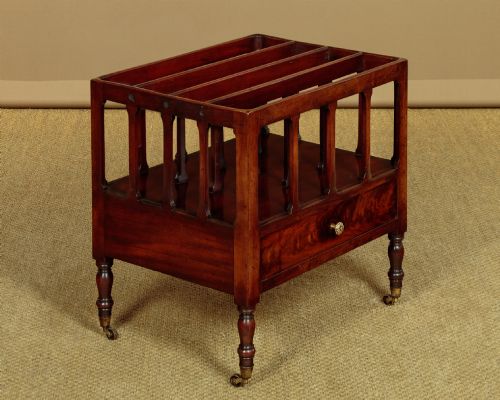
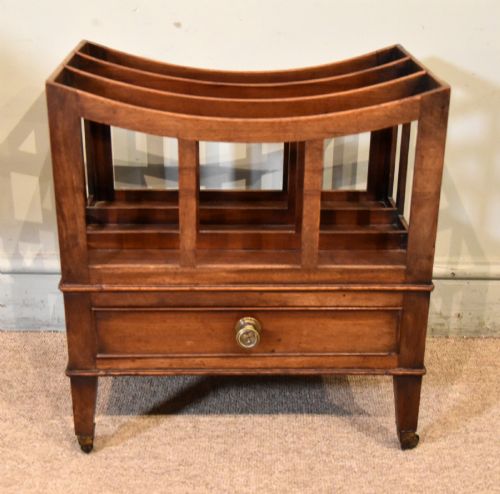
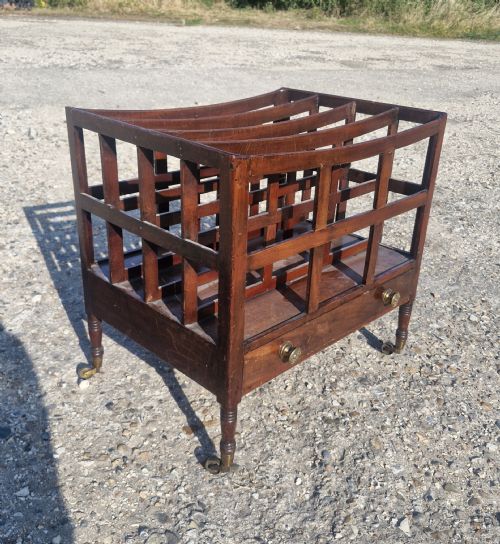
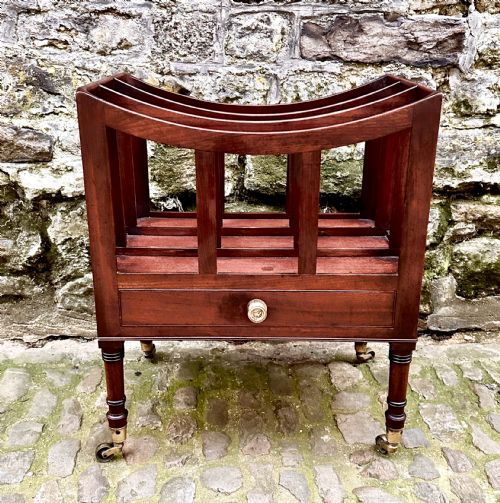
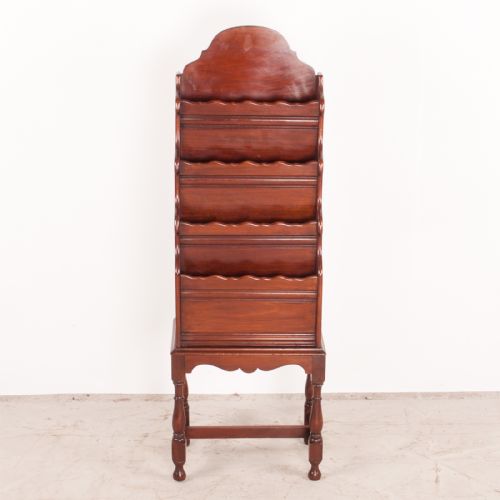
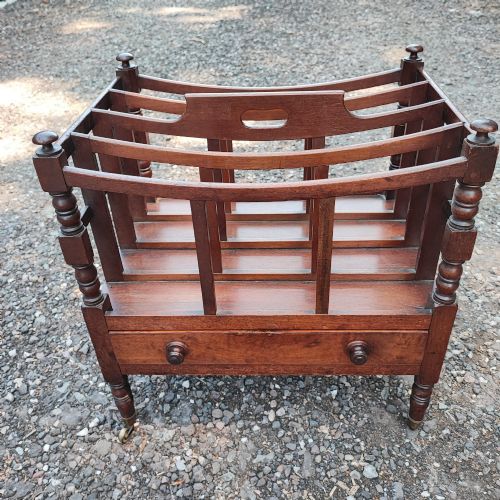
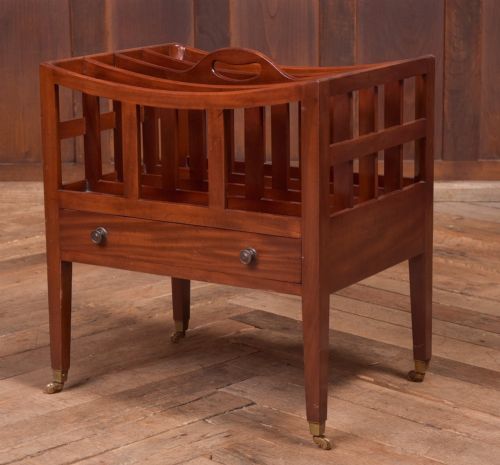
When you search for a wooden canterbury rack, you are looking at low, compartmented stands designed originally to hold sheet music and folios near a piano or fireplace. On this page, the pieces you meet most often date from the Georgian, Regency and Victorian periods, alongside Edwardian and later variations.
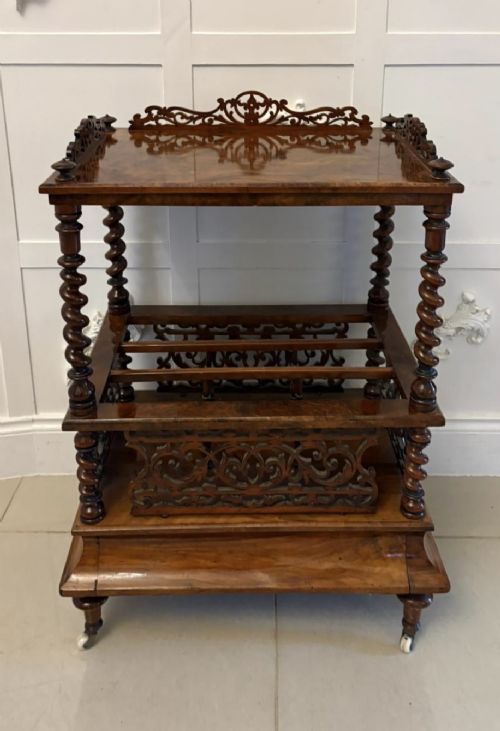
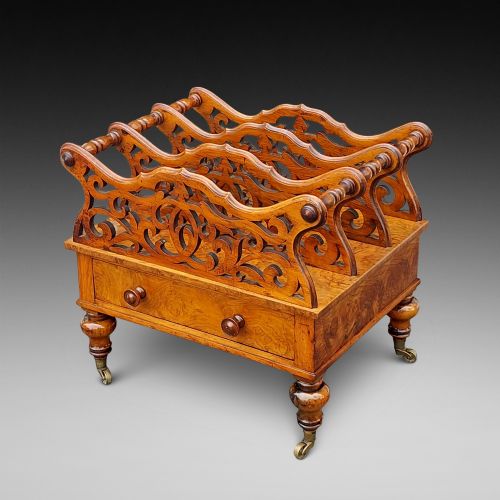
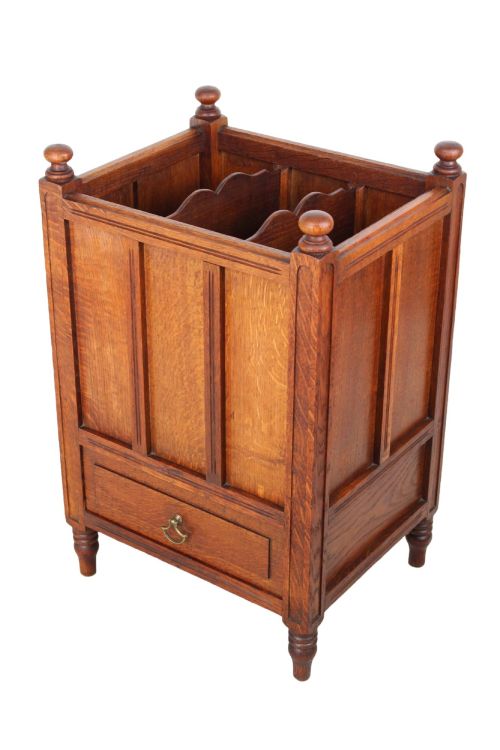
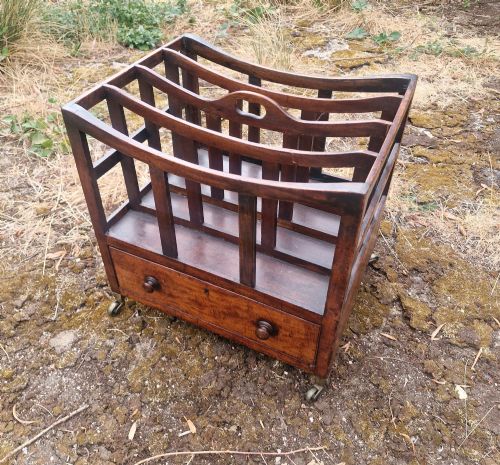
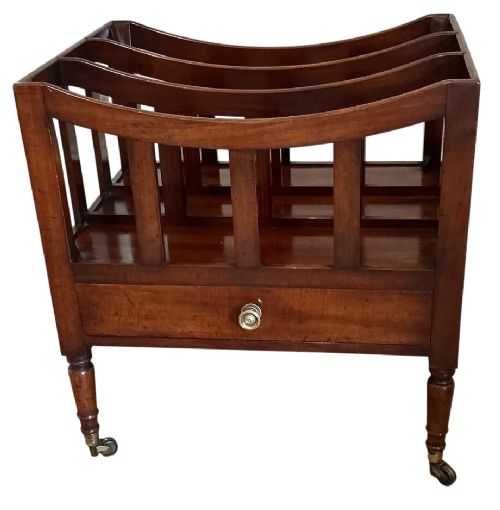
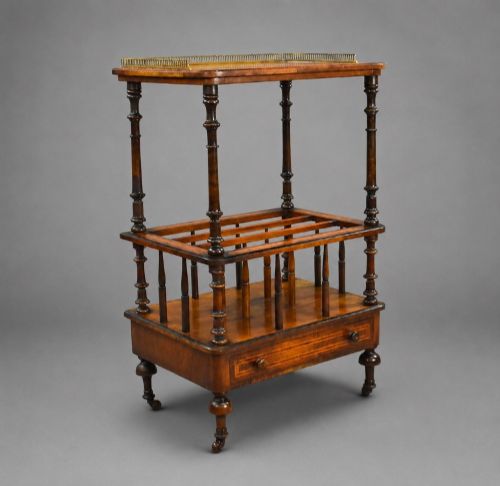
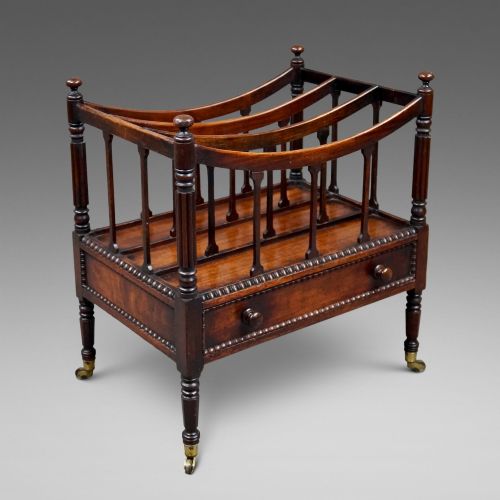
The standard form comprises three or four vertical divisions above a low plinth, frequently supported on turned legs fitted with castors. Many incorporate a single drawer beneath the slatted dividers, whilst others take the form of combined magazine racks and occasional tables or small whatnots.
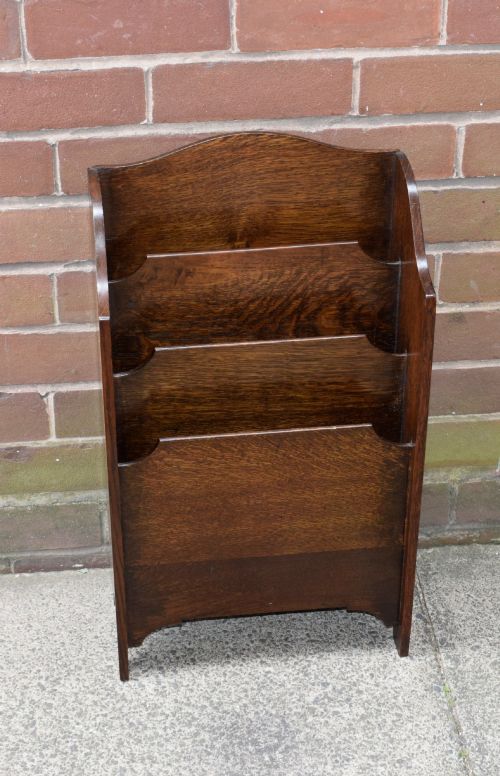
Makers produced these stands to serve domestic reading habits, and surviving examples demonstrate considerable variety in scale. You will encounter neat three-tier racks alongside larger boat-shaped designs intended for heavy folios and newspapers.
Distinctions in quality
Quality rests upon the selection of timber and the crispness of the joinery rather than ornamentation alone. Superior examples display carefully matched grain patterns across the primary surfaces and solid dividers that remain rigid within the frame.
Refinement shows in the turning of the legs and spindles, the careful dovetailing of any lower drawers, and the integration of original brass castors. Lesser pieces tend toward heavier, simpler construction with plain native timbers and minimal detailing.
Listings feature mahogany, walnut, burr walnut, rosewood and oak across Georgian, Regency, Victorian and Edwardian periods.
The Wooden Canterbury Rack Glossary
- Canterbury
- A low stand with upright divisions used originally for holding sheet music and folios. The name derives from the Archbishop of Canterbury, who is said to have commissioned the first such piece.
- Regency
- A style spanning the early nineteenth century defined by classical restraint and clean architectural lines. Pieces from this period frequently employ mahogany or rosewood with delicate brass mounts.
- Burr walnut
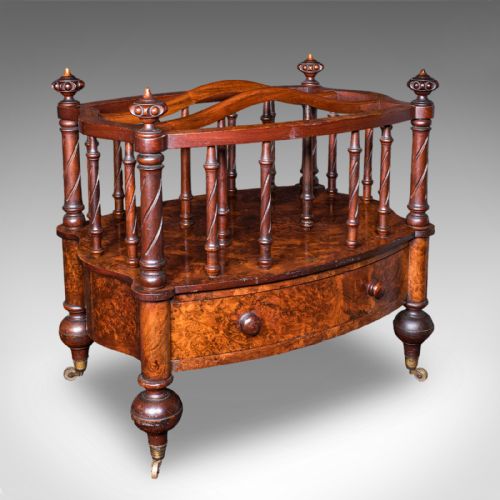
- A highly figured wood veneer taken from the wart-like growths on walnut trees. Cabinetmakers utilised its swirling patterns on Victorian occasional tables and media stands.
- Whatnot
- A piece of open shelving standing on legs, used for displaying or storing small items. Combinations of this form with a canterbury appear in nineteenth-century drawing rooms.
- Castor
- A small wheel mounted in a swivel housing fixed to the base of furniture legs. They allowed heavy stands to be repositioned easily across nineteenth-century floor coverings.
Wooden Canterbury Rack: Frequently Asked Questions
What were wooden canterbury racks used for?
These stands were built to hold sheet music, folios and unbound publications close to instruments in the drawing room. Over time, their partitioned sections made them equally suited for newspapers and modern magazines.
In contemporary interiors, people continue to use them beside sofas and armchairs for periodicals and books. Their compartmentalised design keeps reading material upright and sorted.
How do I tell a Georgian canterbury from a Victorian one?
Georgian and Regency versions generally favour straight-grained mahogany or rosewood with restrained lines and slender turned legs. They tend to exhibit architectural clarity and lighter proportions.
Victorian pieces often employ burr walnut or heavier rosewood, sometimes featuring rich veneers, intricate spindle work or inlaid decoration. They frequently appear as part of multifunctional furniture like occasional tables or etageres.
Can these stands support heavy books?
Most stands were engineered specifically for thin paper folios, sheet music and weekly journals rather than heavy hardback volumes. The slatted vertical dividers are fastened to relatively light base boards.
Placing heavy modern art books inside can strain the internal uprights and joints over time. Lighter magazines and newspapers remain the most suitable items for daily storage.
Do all canterburys have drawers?
Not every stand includes a drawer beneath the partitions; many consist solely of open divisions above a shallow plinth or tray base. Those equipped with drawers generally provided space for smaller manuscripts or tuning keys.
The presence of a drawer often indicates a slightly more elaborate commission, though simpler open designs were equally common in period homes.