
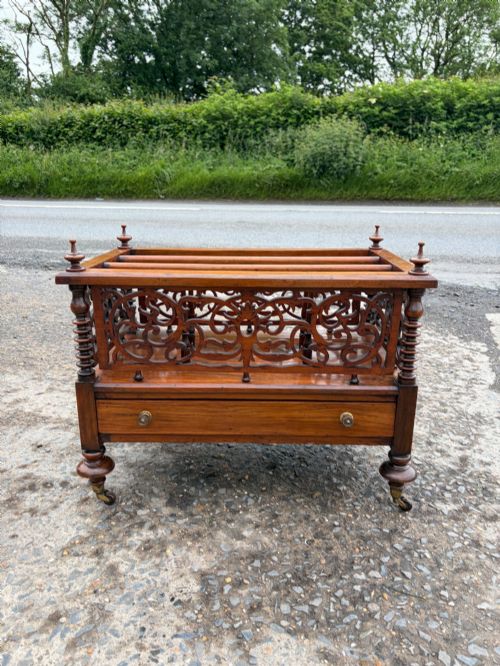


Victorian Music Paper Rack
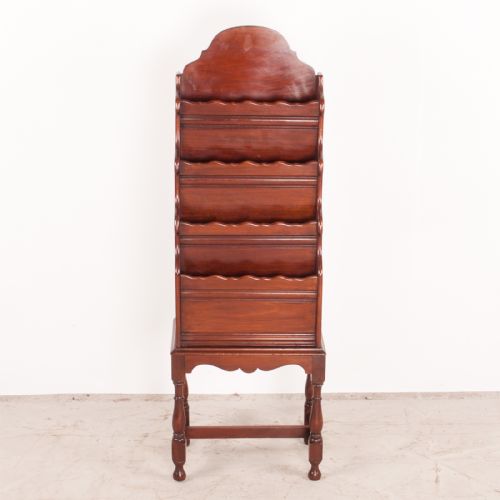
A victorian music paper rack organises folios and sheets, bringing rich timber and clever compartmentalised stands directly beside the pianoforte.
Victorian Music Paper Rack
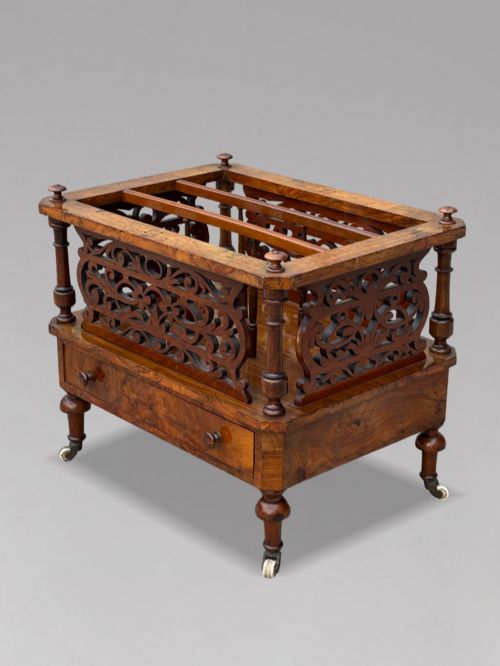
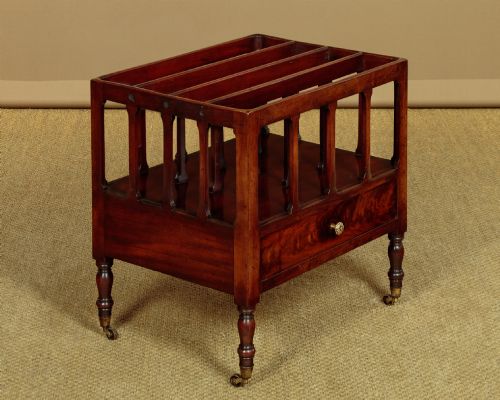
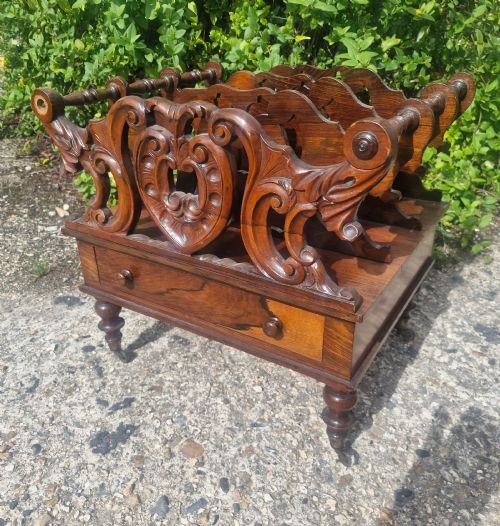
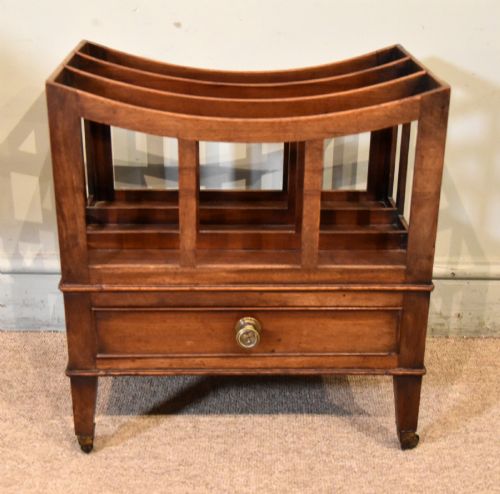
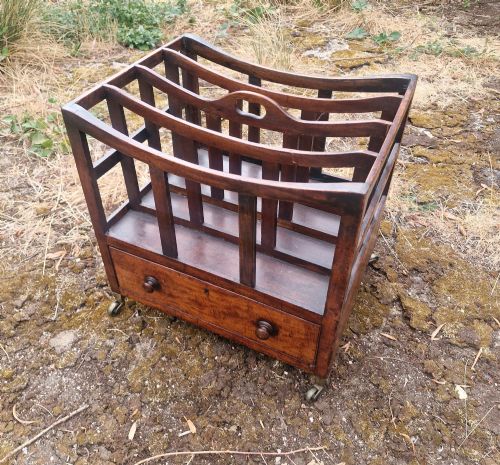
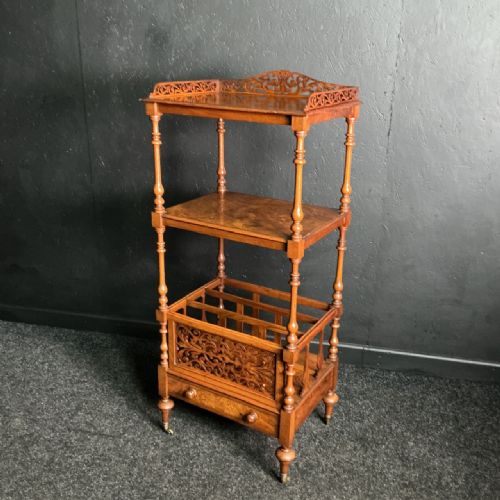
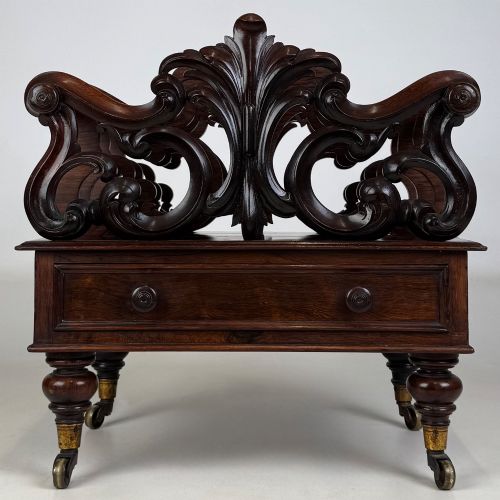
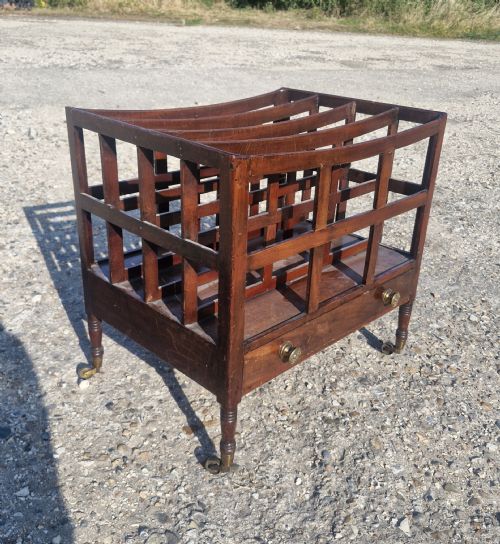
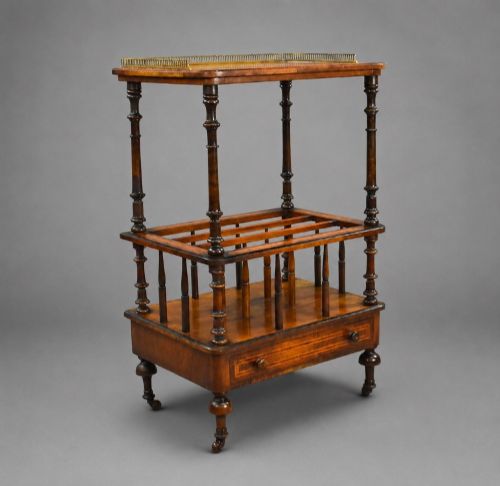
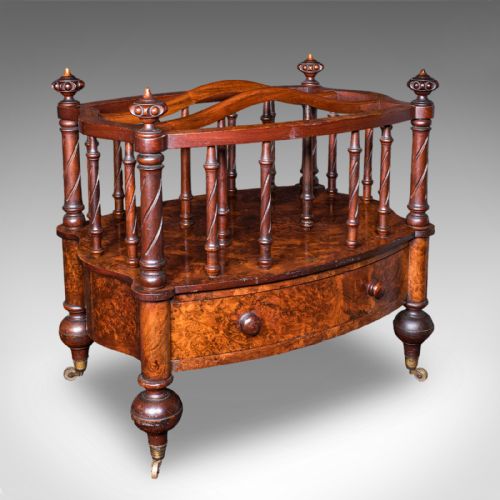
A victorian music paper rack primarily takes the form of a Canterbury, a dedicated stand designed to hold sheet music, folios and periodicals near a piano or seating area. These pieces appear frequently in walnut, burr walnut, mahogany and rosewood across the nineteenth century, often combining vertical partitions with a low drawer or a lower shelf.
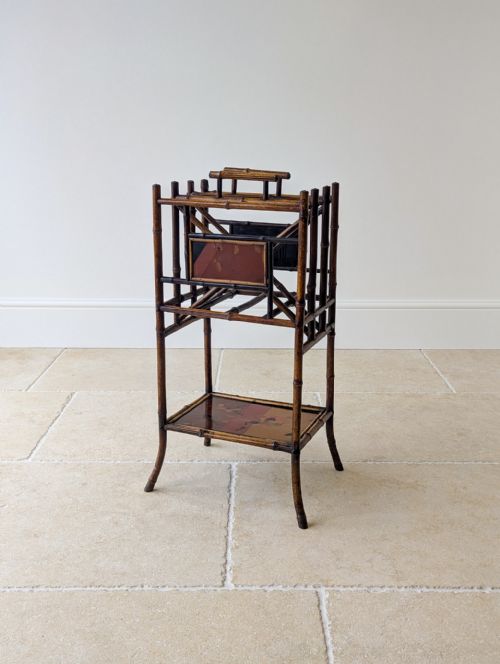
Beyond the standard Canterbury, the selection includes revolving metal stands in brass and tiered whatnots that serve similar domestic functions for paper storage. Styles span from Regency and William IV pieces through to Victorian, Aesthetic Movement bamboo and early twentieth century examples, reflecting changing drawing room tastes.
How they were made
Cabinet makers utilised choice hardwoods like mahogany, rosewood and burr walnut, frequently applying fine marquetry inlay, ebony stringing or boxwood details to the main body and drawer fronts. Structural divisions often feature pierced, shaped or turned wooden slats, while revolving alternatives employ robust brass uprights and central stems.
Joinery techniques focus on stability and accessibility, integrating low castors for mobility across carpets and combining open vertical slots for paper storage with enclosed lower drawers for smaller accessories.
Even the sheet music has long since vanished, leaving these timber racks ready to tame modern post and periodicals.
What varies in quality
Quality rests heavily on the choice of timber figure, particularly the richness of burr walnut grain or the depth of polish on rosewood and mahogany surfaces. Finely turned uprights, crisp fretwork divisions and subtle marquetry inlay elevate an ordinary stand into a sophisticated piece of drawing room furniture.
Construction details such as dovetailed drawer construction, original castors and harmonious proportions distinguish finer cabinet work from utilitarian pieces.
Howard and Sons of London
The Victorian Music Paper Rack Glossary
- Canterbury
- A low stand with vertical divisions used for holding sheet music, newspapers and magazines. It often includes a single drawer below.
- Whatnot
- An open set of multi-tiered shelves used for displaying or storing household items and papers.
- Marquetry
- Decorative patterns formed by inserting pieces of contrasting wood into a veneered surface.
- Stringing
- Thin inlaid lines of contrasting timber used to outline panels, drawers and tabletops.
- Pierced scroll
- Cut-out decorative woodwork curving into ornamental scroll shapes along the partitions.
Victorian Music Paper Rack: Frequently Asked Questions
What is a Canterbury music stand?
A Canterbury is a compartmentalised piece of furniture designed specifically to hold sheet music, folios and magazines close to a piano or in a drawing room.
Originating in the late eighteenth century and remaining popular throughout the Victorian period, these stands keep unbound paper organised and upright.
How were these racks used?
Musicians and households used them to store daily newspapers, weekly periodicals and sheet music near seating areas or instruments for easy access.
The lower drawer, when present, provided space for smaller items like tuning keys, manuscripts or writing accessories.
What woods are most common?
Mahogany, rosewood and burr walnut dominate the selection, often complemented by lighter stringing in boxwood or ebony.
Some unusual examples incorporate materials like brass for revolving metal stands or bamboo for Aesthetic Movement pieces.
How do I date a piece?
Dating relies on stylistic clues such as the heavy classical proportions of Regency and William IV designs versus the intricate marquetry and turned supports typical of Victorian walnut pieces.
Materials and construction methods also help place an item, moving from early nineteenth-century mahogany into late Victorian burr walnut and early twentieth-century formats.