



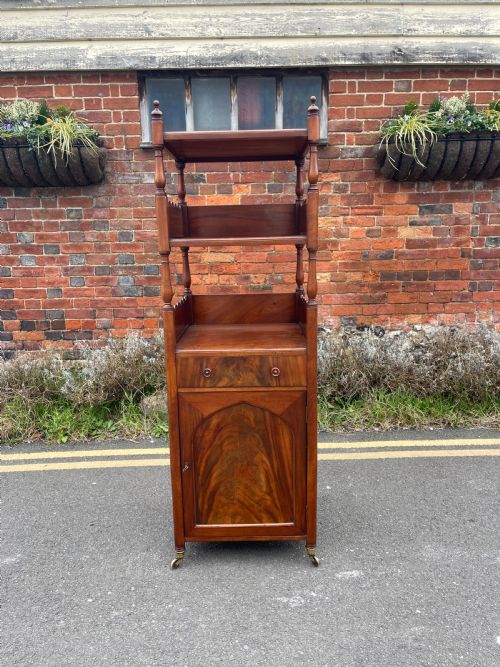


Victorian Turned Spindle Rack
These Victorian turned spindle rack selections bring practical nineteenth century storage and display directly to your interior spaces.
Victorian Turned Spindle Rack
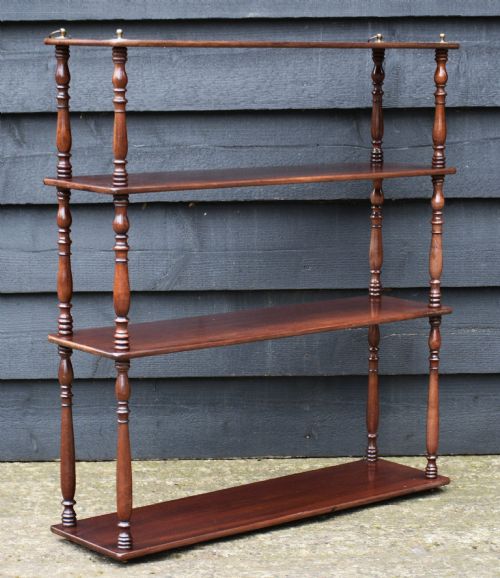
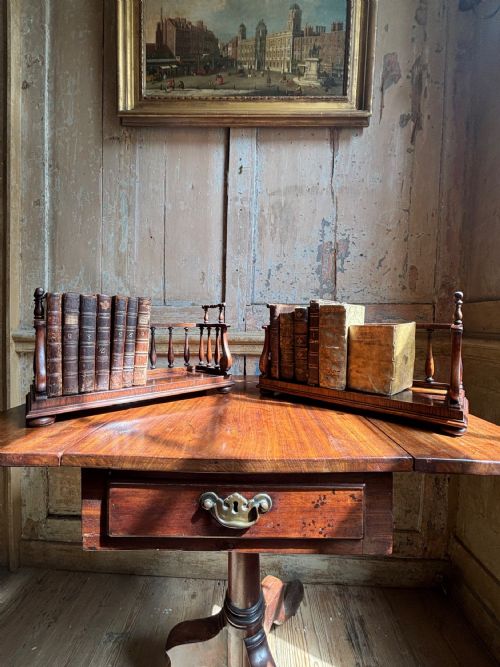
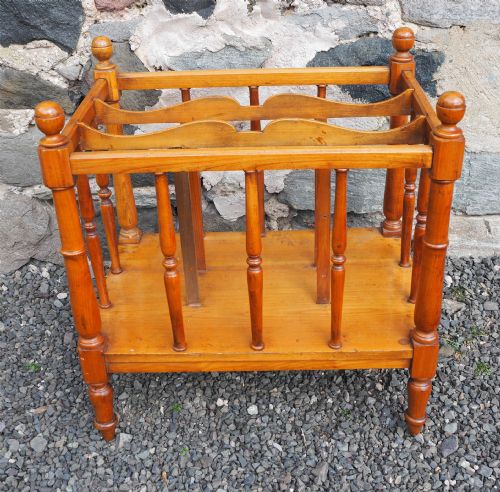
When you search for a victorian turned spindle rack, you are looking at nineteenth century pieces designed for holding books, sheet music, magazines, and displaying decorative items. The forms span wall hanging shelves, floor standing canterburys, whatnots, and magazine stands.
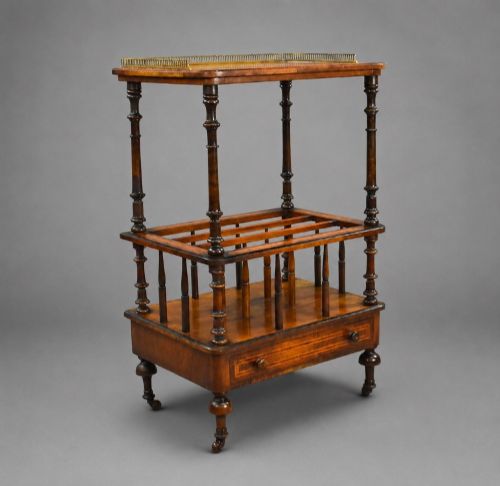
The version you are most likely to meet on this page is the Victorian walnut or rosewood canterbury featuring characteristic turned woodwork. These nineteenth century examples often incorporate drawers or tiered shelving constructed from dense timbers like mahogany, cherry wood, and fruitwood.
Originating predominantly from the Victorian era alongside occasional Regency and William IV pieces, these items serve functional roles in modern homes just as they did historically. The selection covers diverse regional styles from English country house designs to French walnut variations.
How they were made
Cabinet makers utilised dense hardwoods such as mahogany, walnut, burr walnut, rosewood, cherry wood, and fruitwood to construct these frames. Artisans turned individual spindles on lathes to create the characteristic open partition rails and supports.
Construction techniques include traditional joinery for the shelf platforms and drawer boxes, complemented by delicate inlaid details on select walnut and rosewood surfaces. Brass fittings occasionally appear on castors or handles across nineteenth century canterburys and whatnots.
Musicians once relied on these sturdy stands to keep their heavy sheet music organised beside the piano without losing a single page.
What varies in quality
The choice of primary timber sets the baseline, with figured walnut, burr walnut, and rosewood commanding attention over simpler cherry wood or fruitwood. The complexity of the turned spindle work and the integration of drawers or multiple tiers indicate the maker's ambition.
Design attribution adds another dimension, particularly when pieces reflect the manner of known makers like Gillows, Edwards & Roberts, or Shoolbred. Surface finishing and the crispness of inlaid decoration further separate standard utility items from finer examples.
Edwards & Roberts·Shoolbred
The Victorian Turned Spindle Rack Glossary
- Canterbury
- A low multi-partitioned stand designed for holding sheet music, books, or magazines. It frequently includes a drawer at the base and stands on castors.
- Whatnot
- An open set of tiered shelves used for displaying ornaments and small objects. It dates principally from the nineteenth century.
- Spindle
- A cylindrical turned wooden rod used as a vertical structural or decorative member. These form the distinctive open dividers on racks and canterburys.
- Etagere
- A piece of furniture consisting of a series of open shelves for displaying small articles. This term is often used interchangeably with a whatnot.
- Rosewood
- A dense, dark timber with distinct figuring utilised extensively during the nineteenth century. It provides a heavy and durable foundation for finer pieces.
Victorian Turned Spindle Rack: Frequently Asked Questions
What is a nineteenth century canterbury used for?
A canterbury served historically as a portable stand for sheet music, books, and periodicals near a piano or seating area. The partitioned sections kept volumes upright and accessible for daily use.
Today, these pieces function effectively beside a sofa or armchair for storing modern magazines and books. Their open wooden frameworks bring traditional nineteenth century character into contemporary rooms.
How do I identify wall hanging shelves from this period?
Nineteenth century wall hanging shelves employ timbers such as mahogany, walnut, and cherry wood with fixed or tiered platforms. Their side panels often feature turned spindles or carved brackets characteristic of Victorian and English country house styles.
These shelves attach directly to walls to provide display space for small decorative objects or books. They require secure wall fixings to support the weight of dense hardwoods.
What distinguishes a whatnot from a magazine stand?
A whatnot consists of multiple stacked shelves designed primarily for display rather than active storage. They stand vertically on slender supports, occasionally featuring a small cupboard base.
Magazine stands and canterburys prioritise partitioned vertical compartments for holding reading materials. They sit lower to the ground and frequently incorporate castors for mobility across floor surfaces.
Which woods are most common in these pieces?
Walnut, mahogany, and rosewood dominate nineteenth century examples, often selected for their rich grain patterns. Burr walnut and figured walnut appear on more decorative iterations from the Victorian decades.
Cherry wood, fruitwood, and ebonised finishes also occur within the selection. Brass accents appear selectively on handles and castors.