
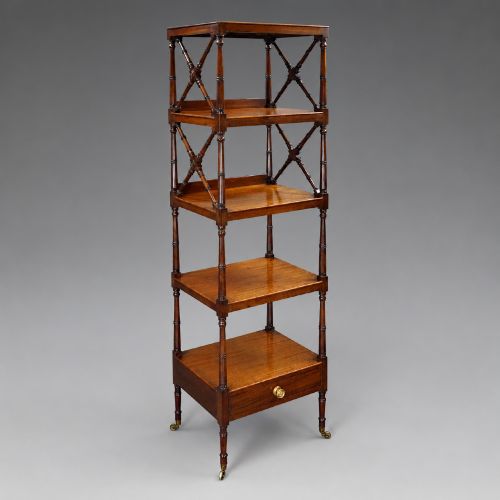
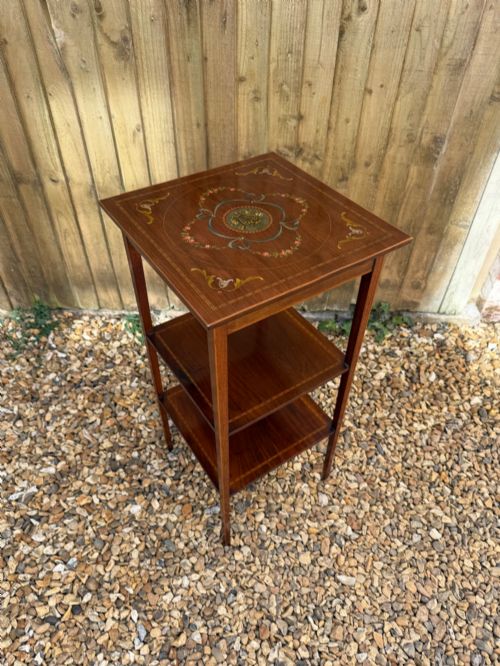
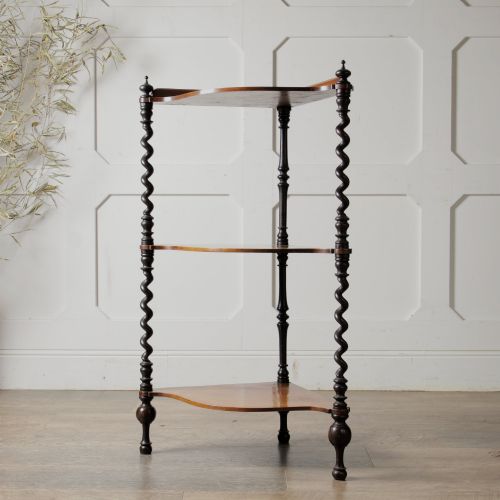
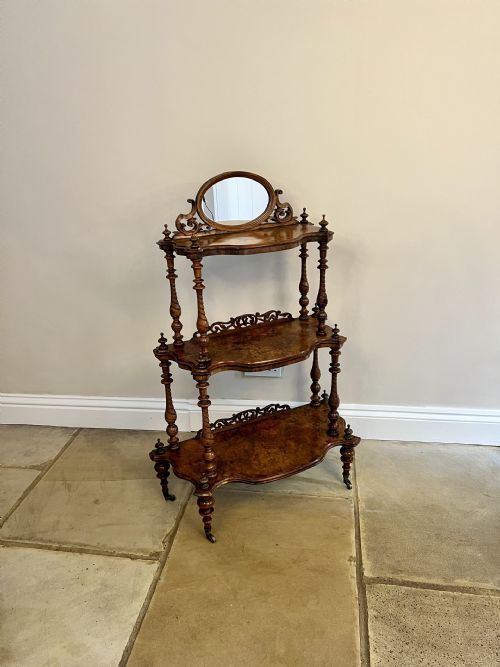
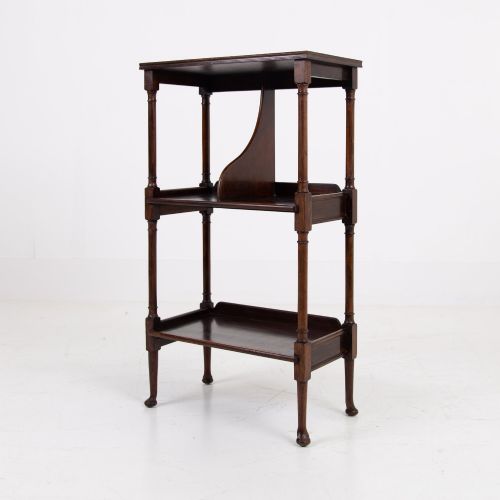
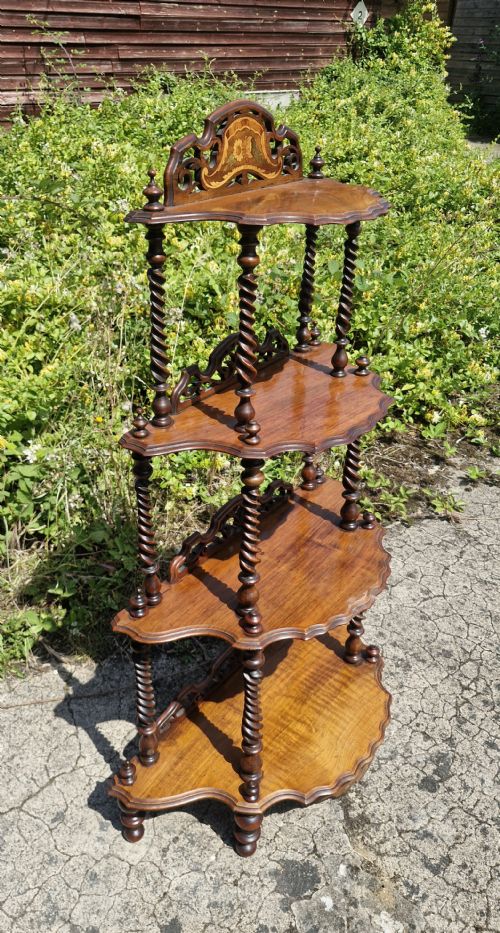
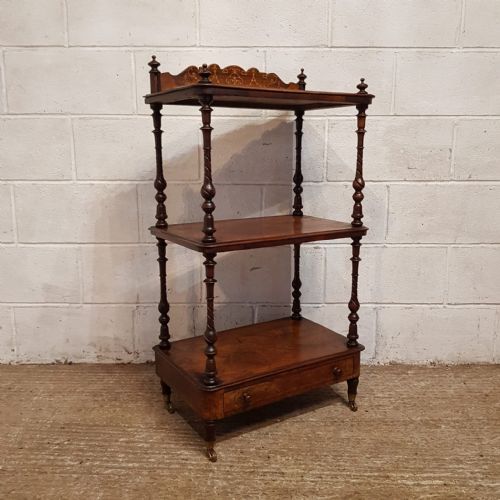


Brown Wood Whatnot
A brown wood whatnot is a tiered shelving piece designed for display and storage, bringing vertical elegance and practical surface space to a room.
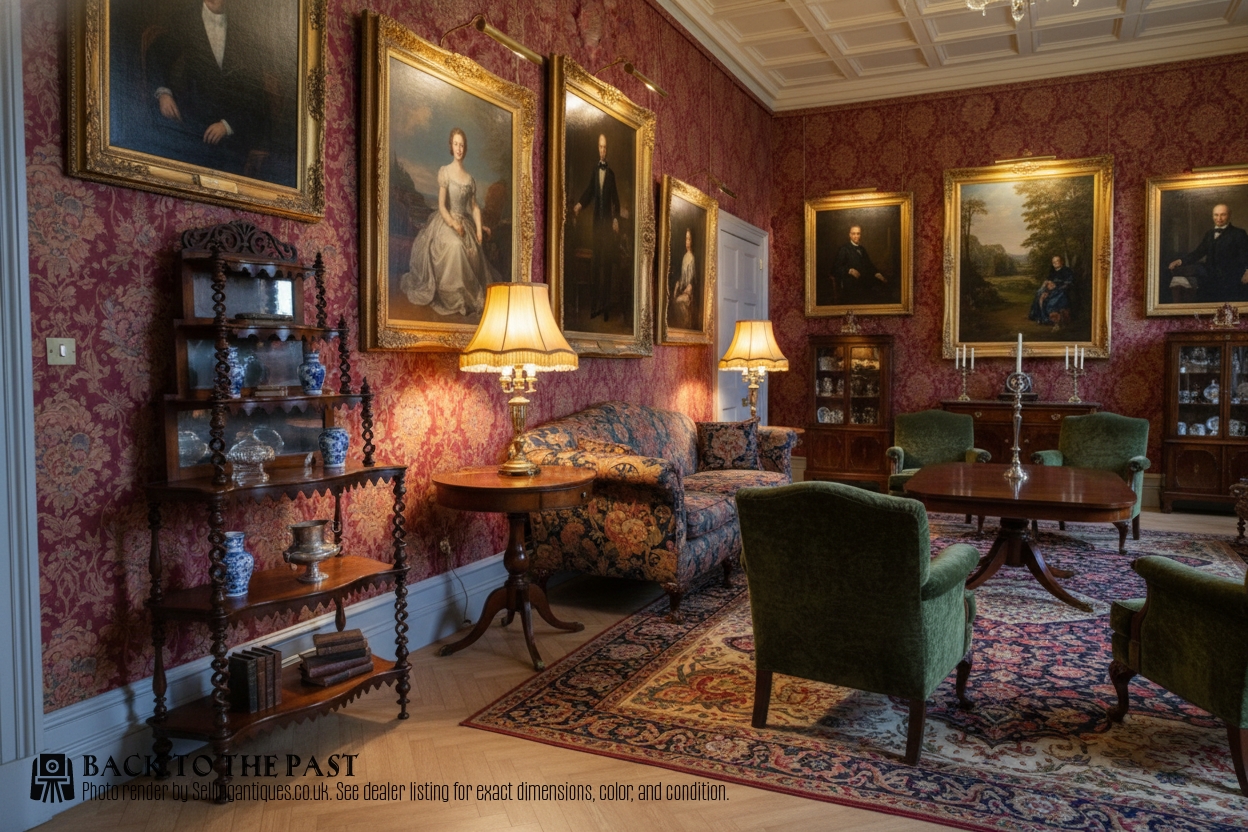
Brown Wood Whatnot
A brown wood whatnot serves as a multi-tiered stand for displaying decorative objects, books, and small household items. These tiered pieces appear in various forms, including corner designs, freestanding multi-shelf structures, and models combined with cupboards or canterburys.
The selections available range across multiple eras, with Victorian and Georgian examples forming a significant portion of the pieces. Makers utilised various woods and decorative formats to create functional furniture for the home parlour or drawing room.
Forms span from three-tier tables to tall six-tier display shelves, alongside related etageres and side tables. Buyers encounter both straightforward mahogany utility stands and highly ornamental burr walnut examples with marquetry inlay.
Factors determining quality
Quality rests upon the choice of timber and the precision of the veneer work, particularly where burr walnut or marquetry inlay is employed. Pieces featuring decorative elements like fine boxwood stringing, barley twist uprights, or substantial brass hardware display superior craftsmanship.
Proportion and structural integrity dictate the standing of a piece within its type, separating straightforward utility furniture from finer salon pieces. The crispness of turned wood components and the careful joining of multiple tiers indicate the skill of the original workshop.
Several pieces arrive equipped with tiny brass castors, suggesting nineteenth-century rooms were constantly reorganised for afternoon tea.
Gillows
The Brown Wood Whatnot Glossary
- Etagere
- A piece of furniture consisting of a series of open shelves for displaying articles. The term is often used interchangeably with whatnot in historical descriptions.
- Canterbury
- A low stand with partitioned sections for holding sheet music or books, occasionally combined with a whatnot top or drawer. This form provides both surface display and slot storage.
- Marquetry
- The art of applying pieces of veneer to a structure to form decorative patterns and pictures. It appears on the shelf surfaces of finer Victorian examples.
- Barley twist
- A turned wooden furniture leg or support carved in a spiral shape resembling a twisted rope. This decorative turning method appears frequently on Victorian supports.
Brown Wood Whatnot: Frequently Asked Questions
What is a brown wood whatnot used for?
A brown wood whatnot functions primarily as a display stand for ceramics, books, and decorative objects in a reception room. Historically, households utilised these multi-tiered shelves to keep everyday items accessible while saving floor space.
Today, they serve a similar decorative and functional role in domestic interiors. Owners place them in corners or against walls to exhibit collections and hold table lamps.
How do I distinguish a whatnot from an etagere?
Etageres and whatnots share an identical purpose as tiered shelving units for display. The terms frequently overlap in period descriptions and modern cataloguing.
Local terminology and regional preferences often dictated which word a maker used. Both categories feature open shelves supported by uprights designed for ornamental objects.
How do I care for antique wood shelves?
Maintain antique timber surfaces by dusting them regularly with a soft, dry cloth. Avoid placing items in direct sunlight to protect polished mahogany and walnut finishes from fading.
Apply high-quality beeswax sparingly when the wood appears dry. Keep these pieces away from sudden temperature shifts and direct heat sources to prevent timber splitting.
How do I identify a Victorian whatnot?
Victorian examples often feature dark timbers such as walnut, burr walnut, and mahogany. Common indicators include turned supports, barley twist columns, and inlaid marquetry or boxwood decoration.
Many incorporate functional additions like small brass castors on the feet. Corner models and four-tier configurations predominate within nineteenth-century production.