


Vintage Walnut Canterbury Stand
A vintage walnut canterbury stand brings traditional division and display to sheets, newspapers, and volumes.
Vintage Walnut Canterbury Stand
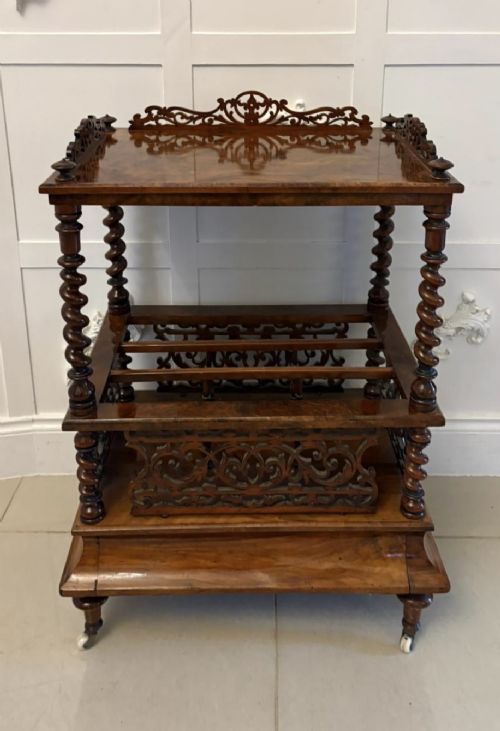
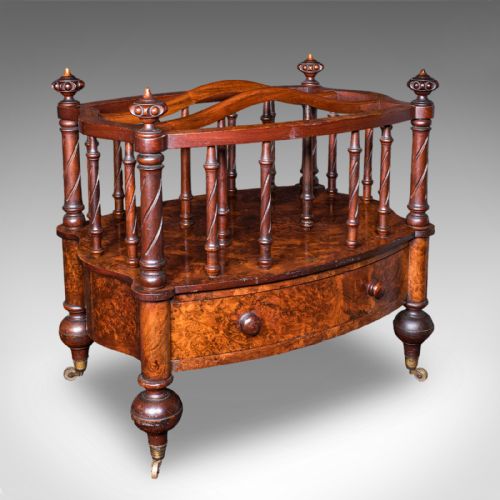
A vintage walnut canterbury stand serves primarily to hold sheet music, newspapers, and periodicals in domestic rooms, combining upright divisions with low storage forms. The examples seen here span the Victorian, Edwardian, and Regency periods, alongside nineteenth-century French pieces.
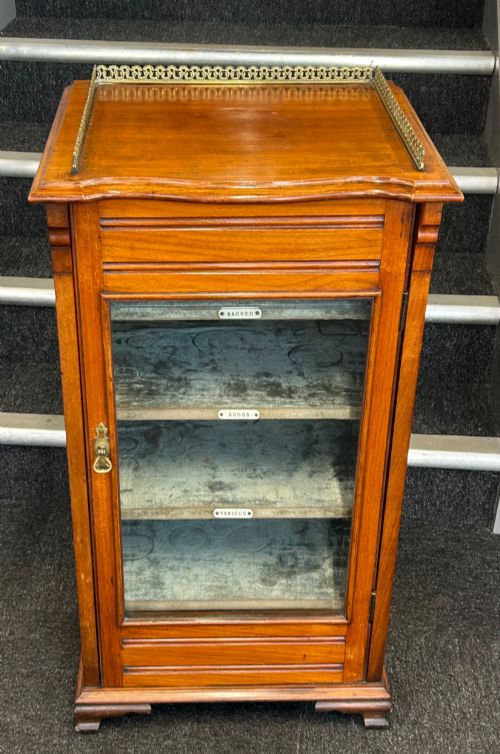
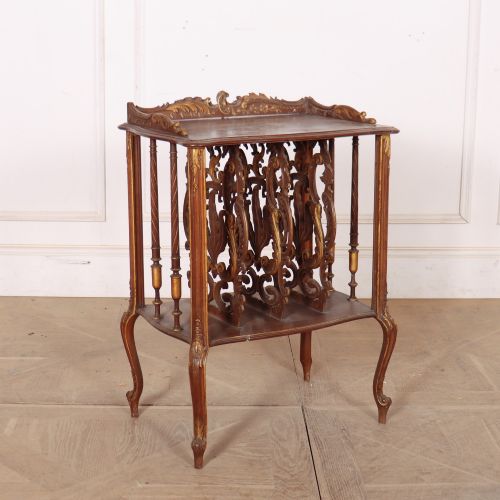
Buyers will encounter various forms across this page, ranging from traditional canterburys with slatted partitions to music cabinets, magazine racks, and occasional lamp tables. Burr walnut and figured walnut dominate the material record, frequently enhanced by inlay and marquetry.
Origins stretch from English workshops to French makers, with dates ranging across the nineteenth and early twentieth centuries. Pieces often integrate drawers or lower tiers, functioning as multi-purpose furniture for the parlour or study.
Materials and construction
Cabinet makers utilised walnut, burr walnut, and black walnut as the primary timbers, often selecting figured veneers to create striking surface patterns across tops and panels. Inlay and marquetry details add linear contrast to the rich brown tones of the wood.
Brass fittings and castors appear regularly on nineteenth-century examples, providing mobility and structural accent to the timber frames. Additional materials such as ceramic, porcelain, glass, fabric, and gilt occasionally supplement the primary woodwork.
Listings feature walnut, burr walnut, and black walnut across Victorian, Edwardian, and Regency periods.
What determines quality
Quality rests in the selection of burr and figured walnut veneers, where intricate grain patterns elevate the visual presence of the furniture. Finer examples display precise marquetry inlay and careful matching of timber across visible surfaces.
Proportion and structural complexity differentiate standard racks from exceptional multifunctional pieces. Integration of drawers, turned supports, and refined carpentry mark out the upper end of the range.
The Vintage Walnut Canterbury Stand Glossary
- Canterbury
- A low stand fitted with upright partitions for holding sheet music or periodicals. It typically includes a low drawer beneath the main tier.
- Burr walnut
- Timber taken from the wart or burl of a walnut tree, yielding swirling grain patterns prized by cabinet makers.
- Marquetry
- Decorative patterns formed by inserting thin pieces of wood, veneer, or other materials into a wooden surface.
- Whatnot
- An open set of multi-tiered shelves used for displaying ornaments and small objects, sometimes combined with a canterbury base.
- Regency
- A style period spanning the early nineteenth century, characterised by classical restraint and polished dark timbers.
Vintage Walnut Canterbury Stand: Frequently Asked Questions
What is a canterbury stand used for?
These pieces were designed to hold sheet music, newspapers, and periodicals near pianos or seating areas in nineteenth-century homes.
Today they function effectively as magazine racks, occasional tables, or bedside stands in contemporary interiors.
How do I date a walnut canterbury?
Dating relies on stylistic markers and timber choices, with Regency pieces showing classical lines and Victorian examples featuring rich burr veneers and marquetry.
Edwardian items tend to present lighter proportions, while specific nineteenth-century dates indicate the decade of manufacture.
Are these stands strong enough for daily use?
Constructed from solid walnut and supportive veneers, these stands were built to hold heavy folios and bound volumes securely.
Careful handling of the timber and avoiding damp environments will keep the structure stable for domestic use.