


Wooden Cake Tier
These wooden cake tier pieces are practical multi-level display stands, offering tiered surfaces for serving and room organisation.
Wooden Cake Tier
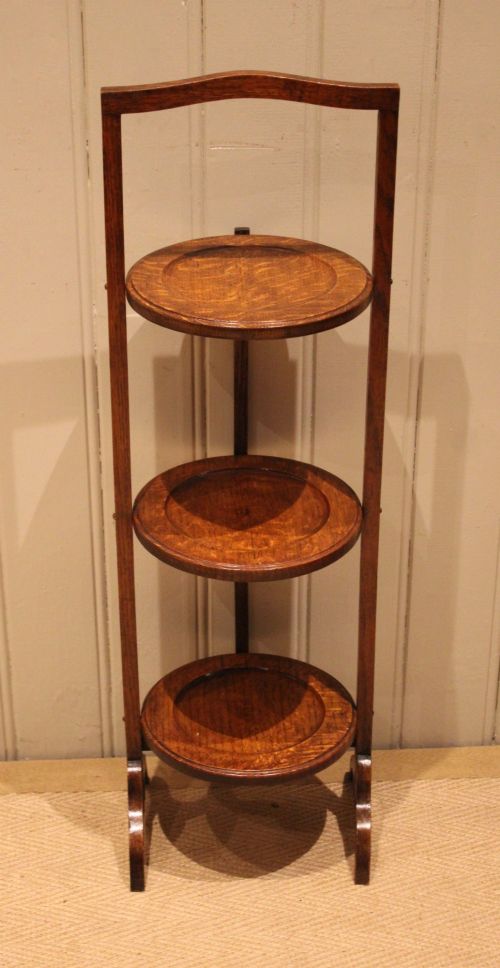
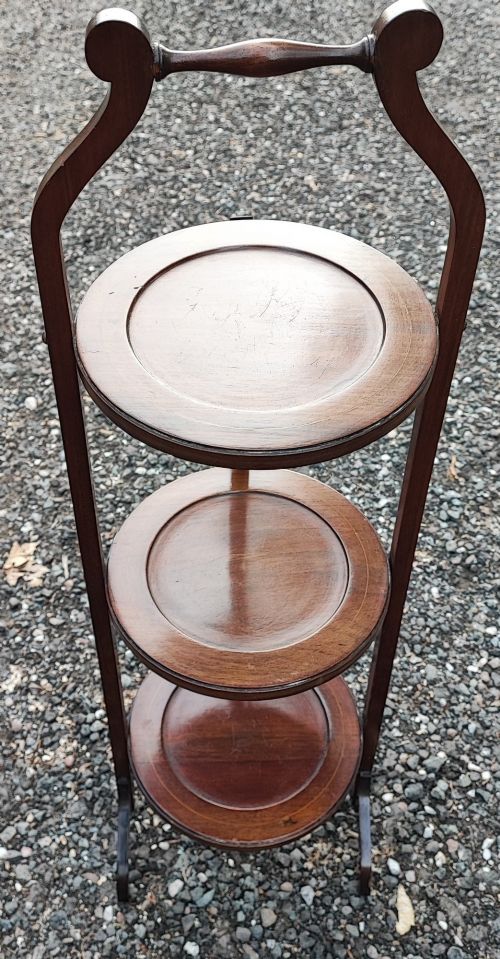
The selection ranges from simple oak stands to fine mahogany pieces featuring multiple tiers. Buyers frequently encounter folding designs from the early twentieth century alongside earlier Georgian dumb waiters.
How they were made
Makers utilised solid timbers including mahogany, oak, and walnut, often pairing the main structure with brass hinges for folding mechanisms and iron fittings. Boxwood inlay appears on Sheraton Revival and Edwardian examples to add geometric decoration along the edges.
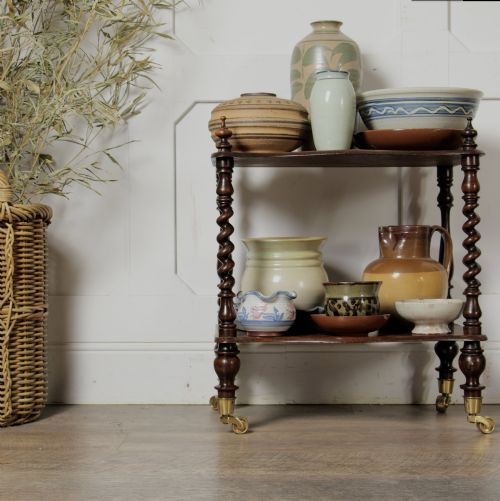
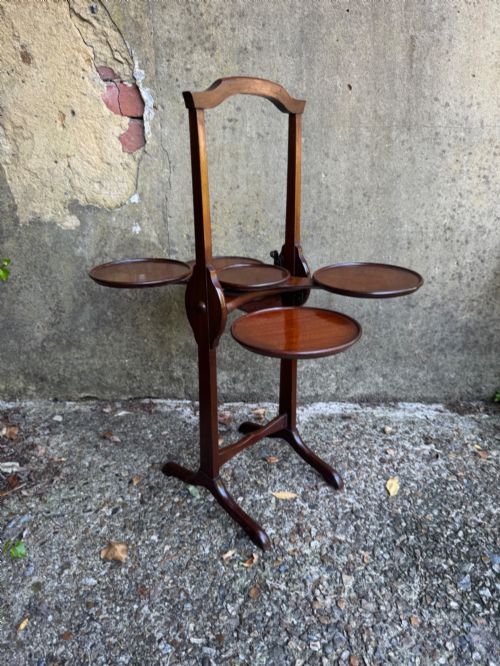
Turned supports and barley twist columns provide the structural strength needed to hold multiple heavy tiers. Joinery methods allow folding variants to collapse flat while maintaining stability when locked into position.
Listings feature mahogany, oak, and walnut timbers spanning the Georgian, Victorian, and Edwardian periods.
What varies in quality
Quality shows in the selection of timber grain and the precision of the boxwood inlay work. Finer pieces display carefully matched veneers or solid mahogany boards with clean turning on the central columns.
The integrity of the folding mechanism marks a clear distinction between standard production and superior craftsmanship. Smooth movement in the hinges and solid locking joints separate better workshop output from utility items.
The Wooden Cake Tier Glossary
- Tier
- A single level or platform on a multi-level stand. Multiple tiers allow items to be displayed across distinct horizontal surfaces.
- Dumb waiter
- A freestanding tiered piece used for serving food without domestic staff present. These heavy pieces often feature rotating circular trays on a central column.
- Sheraton Revival
- A late nineteenth and early twentieth century style drawing on eighteenth century neoclassical designs. Pieces in this style typically feature delicate boxwood inlay and mahogany timbers.
- Barley twist
- A spiral turning technique applied to wooden columns and legs. This decorative form creates a twisted rope effect common on Victorian stands.
Wooden Cake Tier: Frequently Asked Questions
What is a wooden cake tier used for today?
These pieces serve as versatile display surfaces in modern homes, holding plants, books, or decorative items rather than just baked goods. Their vertical design makes them useful for adding levels to a room without taking up much floor space.
Folding versions offer the added convenience of easy storage when not in use. Collectors often place them in living rooms or corners to create height in interior displays.
How do I identify an Edwardian cake stand?
Edwardian stands frequently feature mahogany or oak construction with light boxwood inlay work. They often employ folding scissor mechanisms that allow the tiers to collapse together.
Proportions tend to be lighter than earlier Victorian equivalents. The combination of Sheraton Revival details and collapsible frames points directly to this period.
Are these stands sturdy enough for daily use?
Solid wood construction and tight joints ensure these pieces remain structurally sound for everyday display. Regular use requires checking the brass hinges and folding pivots to keep the frame stable.
Placing heavier objects on the lowest tier helps maintain balance across the structure. Proper care of the wooden surfaces keeps the joints firm over time.
What is the difference between a cake stand and a dumb waiter?
Cake stands are typically lighter, often folding structures designed with three or four tiers for tea service. They use hinged supports that collapse flat for convenience.
Dumb waiters are heavier, rigid pieces originating from the eighteenth and nineteenth centuries with fixed revolving trays on sturdy central pillars. They were built for heavier service in dining rooms rather than portable tea displays.