

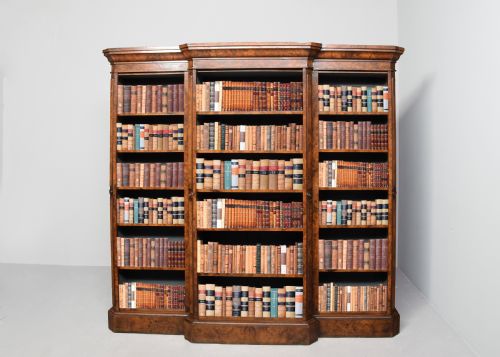
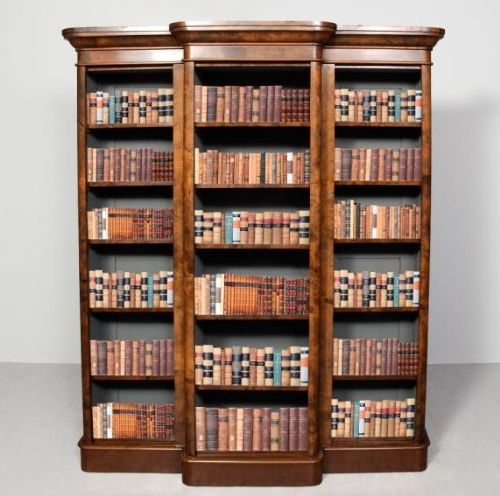


Wooden Breakfront Display Cabinet
A wooden breakfront display cabinet stands out in a room, offering grand proportions and glazed sections for displaying treasured volumes or porcelain.

Wooden Breakfront Display Cabinet
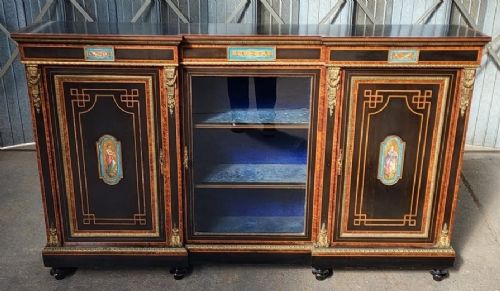
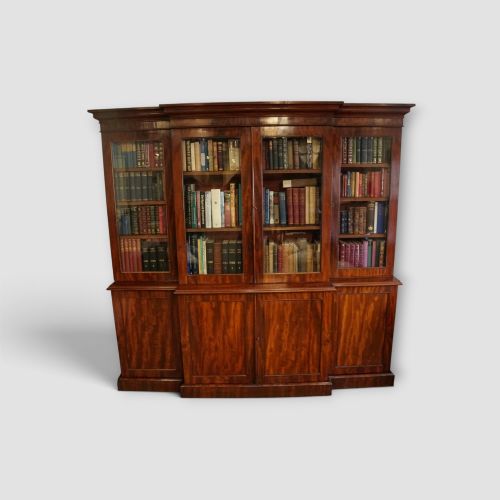
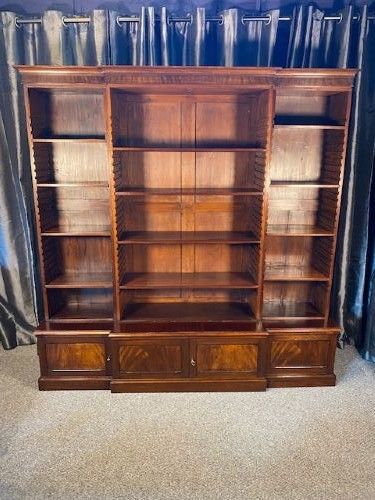
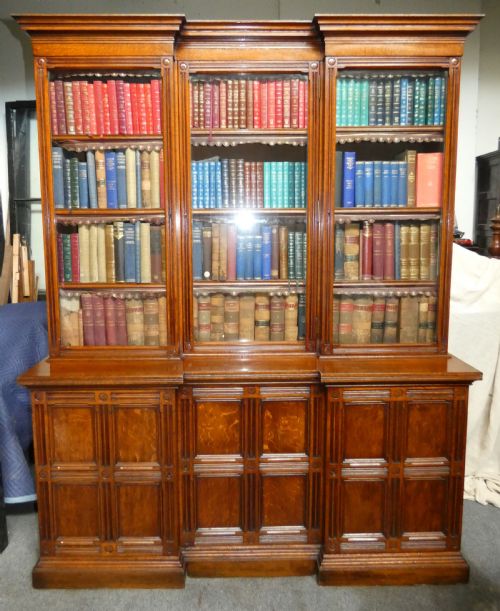
A wooden breakfront display cabinet is a substantial piece of furniture defined by a central section that projects forward from the flanking wings. These items function primarily as bookcases, library bookcases, and display cabinets, often incorporating glazed doors or open shelving.
The pieces appearing here span the nineteenth and early twentieth centuries, including Victorian, Edwardian, and Georgian revival examples. Makers utilised timbers such as mahogany, walnut, oak, and satinwood to construct these architectural storage units.
Forms range from large library bookcases with adjustable shelves to diminutive cabinets and credenzas. Many incorporate specific revival styles, drawing on Chippendale, Sheraton, and Gothic design vocabulary.
How they were made
Cabinet makers constructed the carcass using dense primary hardwoods like mahogany, oak, and walnut, often applying figured veneers such as flame mahogany or burr walnut to the prominent exterior surfaces.
Glazing bars divided the glass door panels into geometric panes, while decorative enrichment relied on satinwood inlay, brass mounts, and carved architectural details.
Interiors typically featured adjustable wooden shelving supported by timber ratchets or brass studs, accommodating varied volumes within the library or display space.
The selection includes open bookcases, glazed library cabinets, and credenzas spanning nineteenth-century revival styles.
What varies in quality
Quality rests upon the selection of timber veneers and the crispness of architectural carving or marquetry inlay. Cabinets displaying well-figured burr walnut or flame mahogany veneer indicate superior material selection.
The refinement of proportion and joinery distinguishes finer examples from standard production. Execution of complex breakfront profiles and well-balanced glazed doors requires advanced carpentry skill.
Provenance and maker attribution elevate certain items, particularly when associated with recorded nineteenth-century workshops producing documented cabinetwork.
Howard and Sons·Edwards and Roberts
The Wooden Breakfront Display Cabinet Glossary
- Breakfront
- A piece of furniture where the central section projects forward past the flanking sides. This architectural arrangement creates visual depth and breaks up a long flat elevation.
- Credenza
- A low cabinet or sideboard, frequently fitted with doors or central shelving. Victorian examples often incorporate mirrors and marquetry inlay.
- Ormolu
- Gilt-bronze mounts applied as decorative ornaments to cabinet surfaces. This technique adds metallic contrast to dark woods such as ebonised timber.
- Marquetry
- Inlaid patterns formed from different coloured wood veneers fitted together. Craftsmen used this technique to create floral or geometric motifs on cabinet doors.
Wooden Breakfront Display Cabinet: Frequently Asked Questions
How do I style a breakfront cabinet?
Position the cabinet against a primary wall in a principal room where its scale can anchor the space. Balance heavy leather-bound volumes with ceramic objects behind the glazed doors.
Ensure adequate clearance in front of the projecting central section for comfortable movement and door operation.
Are the shelves adjustable?
Many examples feature adjustable wooden shelving supported by traditional wooden bearer strips or brass studs. This allows the internal layout to accommodate books of varying heights.
Fixed shelving is less common in library bookcases designed for versatile storage.
What is the difference between a breakfront and a bookcase?
A bookcase simply provides open or enclosed shelving for books without specific constraints on its frontal profile. A breakfront specifically describes a multi-section facade where the central portion steps forward.
Most breakfronts function as bookcases or display cabinets.