


Wooden Bowfront Dressers
These wooden bowfront dressers are curved-front storage pieces built for domestic use, prized for their soft silhouettes and generous proportions.

Wooden Bowfront Dressers
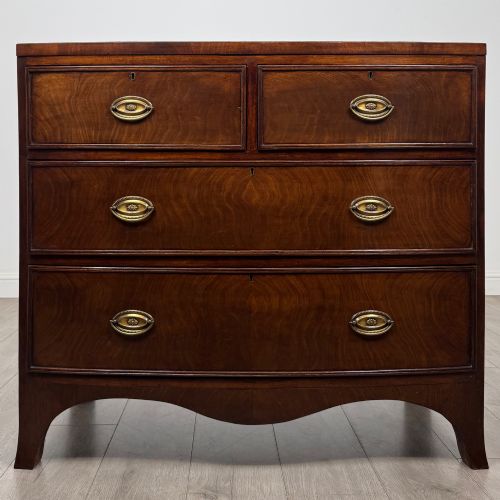
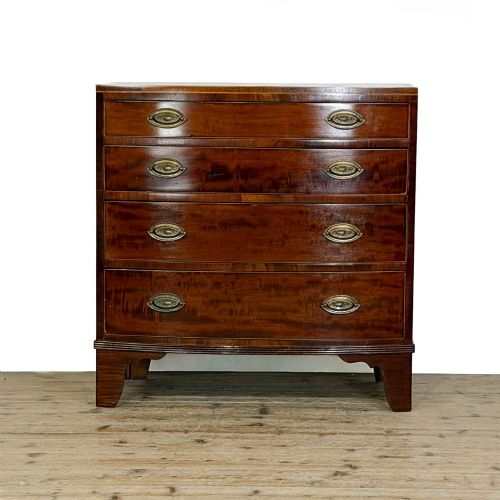
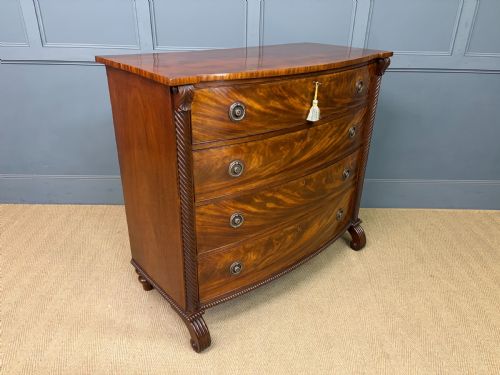
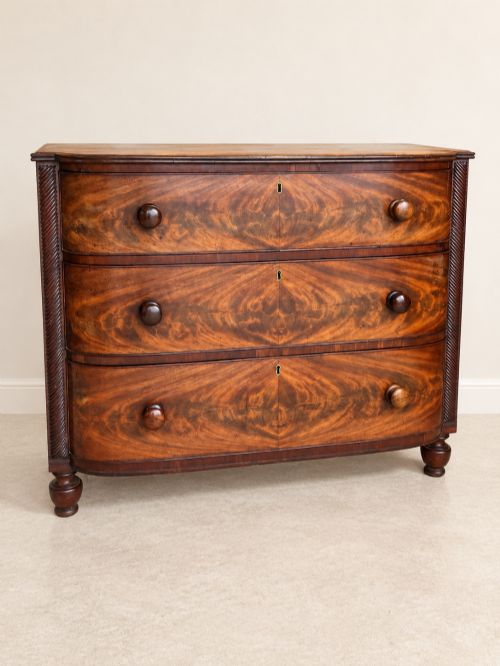
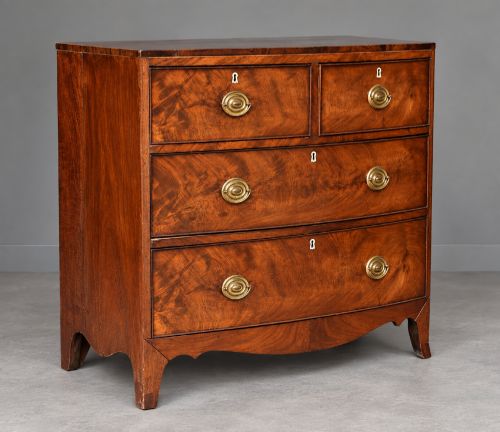
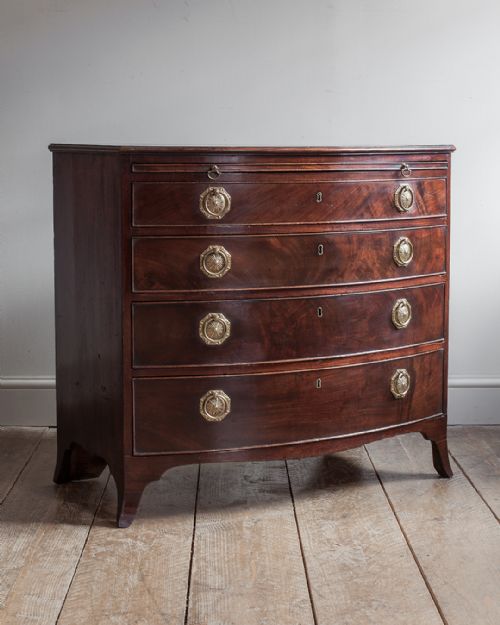
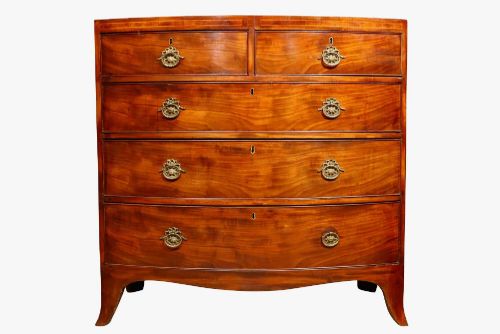
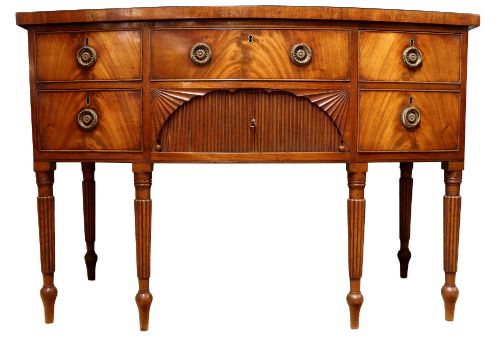
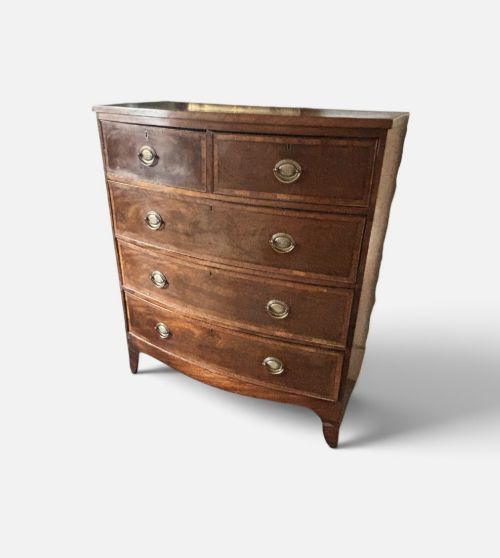
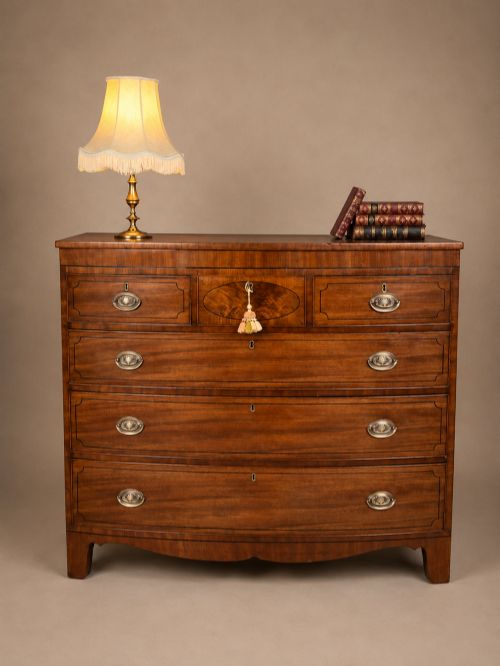
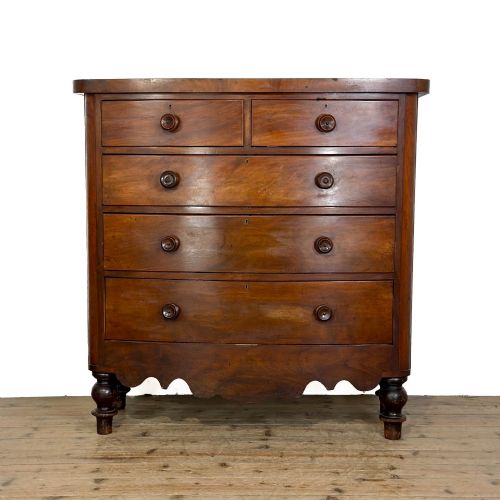
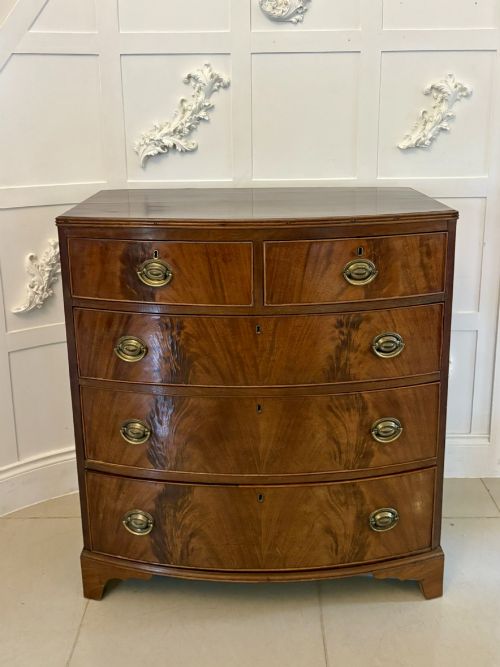
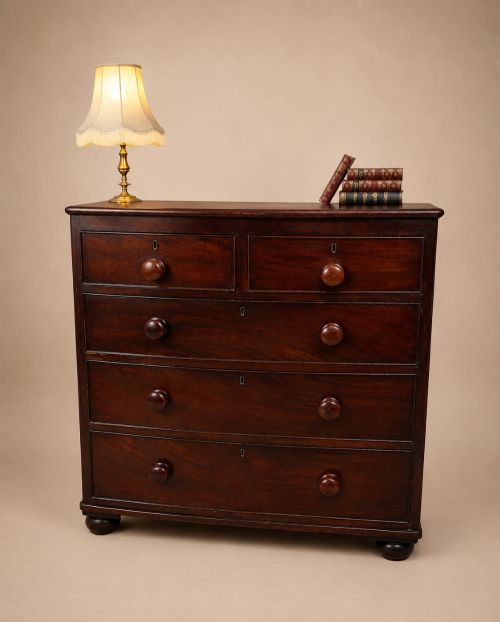
Wooden bowfront dressers appear predominantly as chests of drawers and sideboards originating from the Georgian, Regency, and Victorian periods. The form relies on a convex, rounded front that projects outwards, softening the rigid angles typically found in standard case furniture.
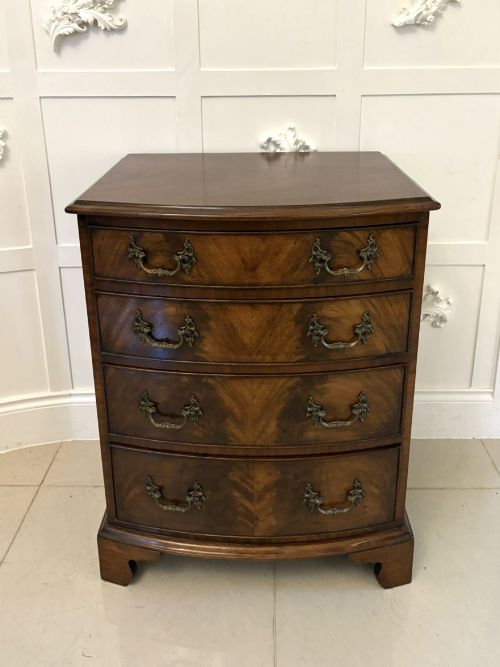
Buyers encountering this selection will frequently find pieces dating through the eighteenth and nineteenth centuries, constructed predominantly in mahogany. Alongside standard multi-drawer chests, occasional variations incorporate fitted interiors and smaller, compact proportions suitable for modest rooms.
Materials and construction techniques
Cabinet makers constructed these pieces primarily using solid mahogany and pine carcasses, often enhanced with flame mahogany veneer or walnut surfaces. Timber selection governed both the durability of the curved front and the visual depth of the grain.
The sweeping front curve required specialised carpentry to shape solid timbers or lay veneers smoothly across rounded drawer fronts. Brass hardware, including drop handles and escutcheons, was fitted to complete the functional facade of each drawer.
The inventory combines traditional chests of drawers with occasional sideboards, demonstrating the versatility of the curved front form.
Evaluating distinction and craftsmanship
Quality in these pieces rests on the precision of the curved joinery and the selection of figured timber veneers. Superior examples display seamless alignment along the convex drawer fronts and careful grain matching across the entire facade.
Proportion and scale also distinguish finer specimens, particularly where cabinet makers maintained delicate framing and slender proportions on narrow or small-scale chests. The integration of secondary woods and the retention of original brass fittings further separate standard utility pieces from high-status items.
The Wooden Bowfront Dressers Glossary
- Bowfront
- A furniture design featuring a convex, outward-curving front facade. This shape softens the profile of chests of drawers and sideboards.
- Flame mahogany
- A veneer cut from timber where the grain creates a flickering, flame-like pattern. Cabinet makers utilised this timber on prominent drawer surfaces for visual impact.
- Crossbanding
- A strip of veneer laid borderwise around the edges of a drawer front or tabletop. The grain runs perpendicular to the surrounding wood to create a contrasting frame.
- Escutcheon
- A protective plate surrounding a keyhole, usually cast in brass. It prevents the surrounding wood from wearing down through repeated use of the key.
- Graduated drawers
- A series of drawers decreasing in depth from bottom to top. This arrangement maintains visual balance on tall storage chests.
Wooden Bowfront Dressers: Frequently Asked Questions
What periods do wooden bowfront dressers come from?
These pieces span the Georgian, Regency, and Victorian eras, with manufacturing dates stretching from the eighteenth century into the early twentieth century.
Most surviving examples date from the Regency and late Georgian periods, reflecting the height of popularity for curved cabinetry.
Are bowfront chests and sideboards the same thing?
While both utilise a convex front, chests of drawers function primarily as bedroom or dressing storage with stacked horizontal drawers.
Sideboards are longer dining room pieces built to hold serving ware and linens, occasionally incorporating fitted cellaret drawers.
Where should I place a bowfront chest?
These chests suit bedrooms, hallways, and living spaces where a curved profile softens room geometry. The protruding front requires adequate clearance from walking paths.
Placing them away from direct sunlight protects the mahogany polish and underlying wood veneers.