


Wooden Base Glass Cloche
A wooden base glass cloche protects and exhibits delicate specimens, taxidermy and timepieces, bringing period charm and quiet focus to any tabletop.
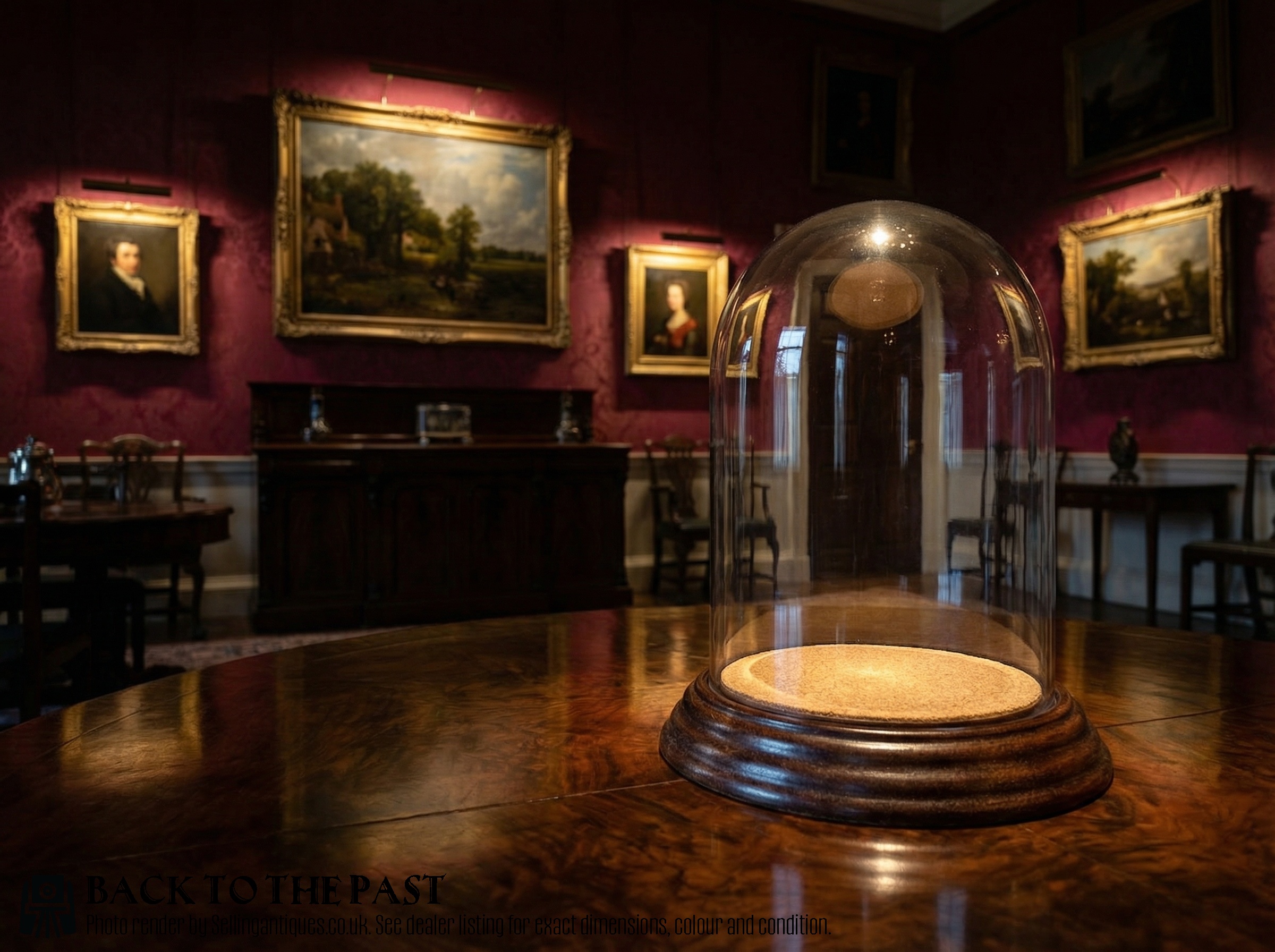
Wooden Base Glass Cloche
A wooden base glass cloche is an object designed for display and preservation, commonly referred to as a display dome or glass dome. These pieces emerge predominantly from the Victorian and Edwardian eras, spanning from the mid-nineteenth century up to around nineteen twenty. Buyers seeking a wooden base glass cloche encounter round and oval glass covers fitted securely to timber bases.
The primary forms found within this selection include taxidermy showcases, botanical specimen domes, and clock cases. Examples range from small mantel clock domes to wide taxidermy showcases and tall specimens designed for professional study. The underlying platforms utilise woods such as beech, oak, ebonised wood, and pine, occasionally accompanied by internal elements like felt or fabric linings.
Specialised variations recorded in the evidence incorporate decorative elements such as French beadwork bouquets, feathers, and organic specimens alongside taxidermy birds like the Greater Bird of Paradise. Makers occasionally fashioned these items to house delicate mantel and carriage clocks, protecting intricate mechanical movements from dust and handling. Every wooden base glass cloche serves as a self-contained stage for curiosities.
How they were made
Makers constructed the protective covers of a wooden base glass cloche using blown or moulded glass, shaping clear bell-shaped or oval vessels to fit tightly against turned or shaped timber foundations. These glass domes required skilled handling while molten to achieve smooth, even walls free from major optical distortion. The resulting transparent covers allowed uninterrupted viewing of the objects housed within.
The bases themselves relied on traditional carpentry techniques, employing woods like oak, beech, pine, and ebonised wood to form stable platforms for heavy glass covers. Many timber plinths feature recessed grooves designed to seat the glass securely and prevent sliding. Additional internal components such as fabric, felt, or organic materials were often incorporated to cushion or back the displayed specimens.
Listings feature items from the Victorian and Edwardian periods, including the years nineteen hundred, nineteen ten, and nineteen twenty.
What varies in quality
Quality in a wooden base glass cloche rests upon the clarity and weight of the glass cover, alongside the selection and finish of the timber foundation. Superior examples display clear, uniform glass with minimal bubbles or striations, paired with finely turned or neatly joined wood bases that show thoughtful grain selection. Finer pieces also maintain tight seals between the glass and the underlying plinth.
The internal contents and secondary materials significantly influence the character and overall standard of the piece. High quality is evident in expertly prepared taxidermy, precise French beadwork bouquets, or well-fitted clock movements housed within the glass. Lesser examples may exhibit clumsy timber construction, cloudy or uneven glass, or poorly preserved interior specimens.
A Pollard·BULLE
The Wooden Base Glass Cloche Glossary
- Cloche
- A bell-shaped glass cover used to protect plants, food, or delicate decorative objects. In this context, it serves as a synonym for a display dome.
- Ebonised wood
- Timber treated with a finish that darkens the surface to resemble ebony. This dark, formal treatment was popular during the Victorian period for display bases.
- Taxidermy
- The art of preparing, stuffing, and mounting the skins of animals for display. Victorian and Edwardian domes frequently house such specimens under glass.
- Specimen dome
- A glass cover and base utilised by scientists and collectors to display botanical, anatomical, or geological finds. These protected fragile natural objects from dust and damage.
- Carriage clock dome
- A specialised glass cover designed to fit over portable spring-driven clocks. They kept intricate brass movements clean while remaining visible on mantels.
Wooden Base Glass Cloche: Frequently Asked Questions
What fits inside a wooden base glass cloche?
These domes house a variety of objects, most notably taxidermy birds, botanical specimens, and delicate clocks such as carriage or mantel timepieces. Some examples contain decorative items like French beadwork bouquets or feathers.
Buyers often select these pieces to display their own collections of small curiosities, fossils, or models, using the glass cover as both a decorative frame and a protective shield against dust.
How do I date a wooden base glass cloche?
Dating relies on observing the materials, construction methods, and the style of the wood base or interior contents. Victorian examples often feature ebonised wood or rich pine plinths paired with elaborate taxidermy or beadwork, while Edwardian pieces lean towards simpler oak or beech mountings.
The manufacturing characteristics of the glass itself, such as weight and slight irregularities from older production techniques, also offer clues to age.
Are the glass covers original to the bases?
Most surviving domes maintain their original pairing of glass and timber base, particularly when designed for specific objects like clock movements or complex taxidermy. The glass was custom-fit or selected to rest snugly within the recessed groove of the matching wooden plinth.
Collectors look for a harmonious fit where the base and the weight of the glass complement one another without excessive wobble or mismatch in proportion.
How should I clean a glass dome?
The glass cover lifts away from the wooden base entirely, allowing you to clean the interior and exterior surfaces separately with a mild glass cleaner and a soft cloth. Care must be taken when lifting heavy or antique glass to avoid accidental bumps against hard surfaces.
The wooden base should be dusted gently with a dry cloth, avoiding harsh chemical polishes that might damage antique finishes or delicate internal linings like felt and fabric.