


Glass Dome Display Case
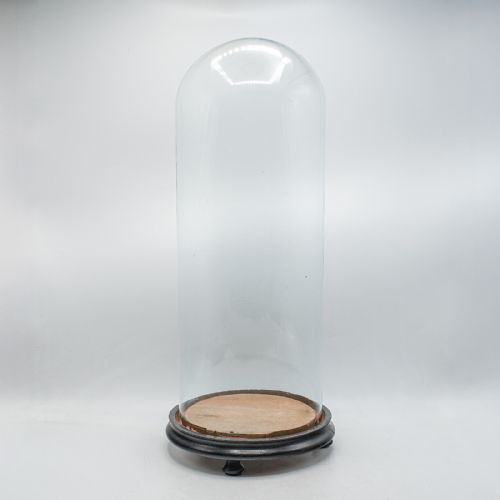
A glass dome display case preserves delicate interior objects under clear blown glass, bringing distinct 19th-century character to any room.
Glass Dome Display Case
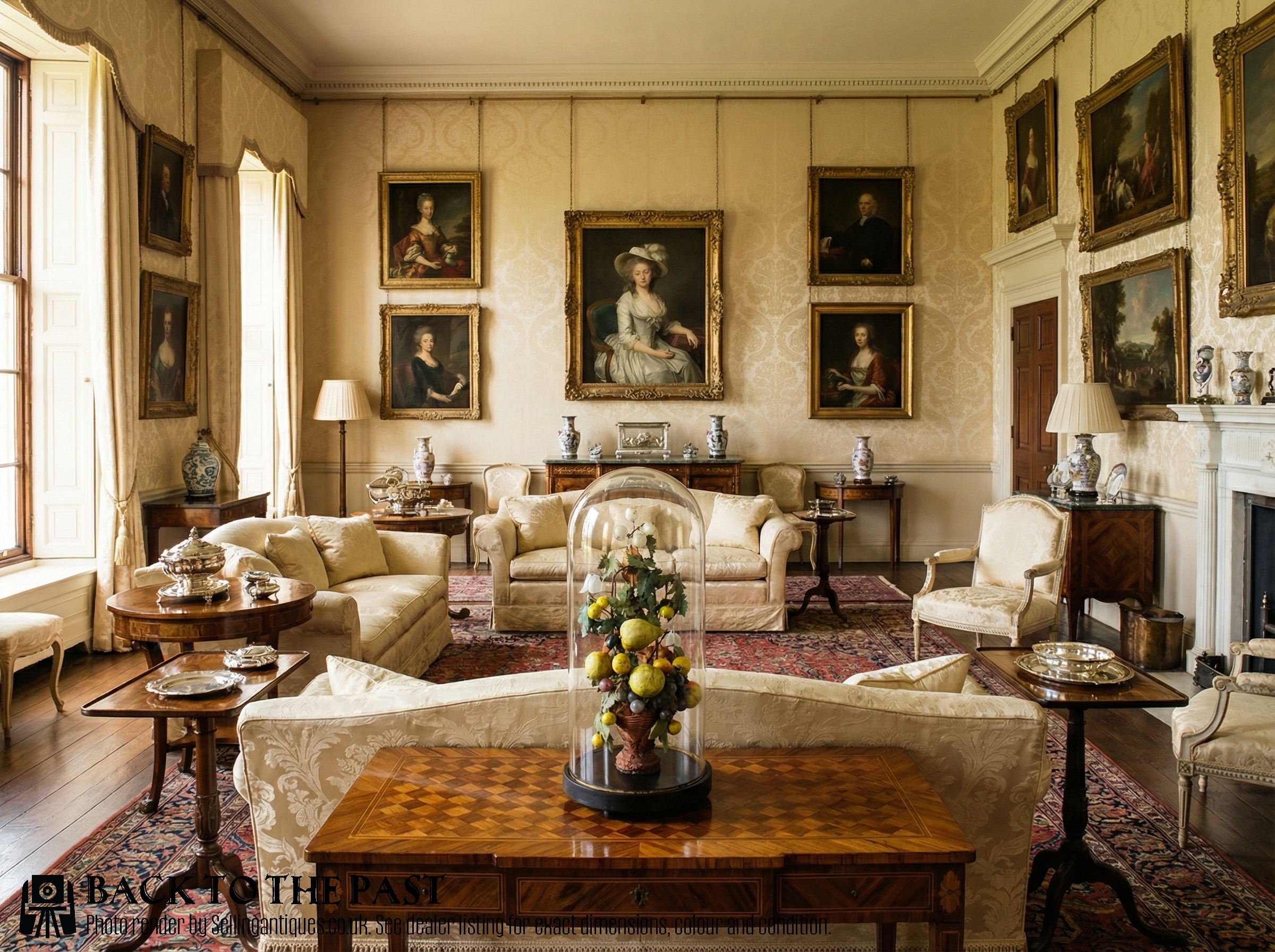
A glass dome display case serves to protect fragile decorative items while keeping them entirely visible from every angle. When searching this phrase, buyers encounter pieces originating primarily from the Victorian and Edwardian eras, spanning the late 19th and early 20th centuries.
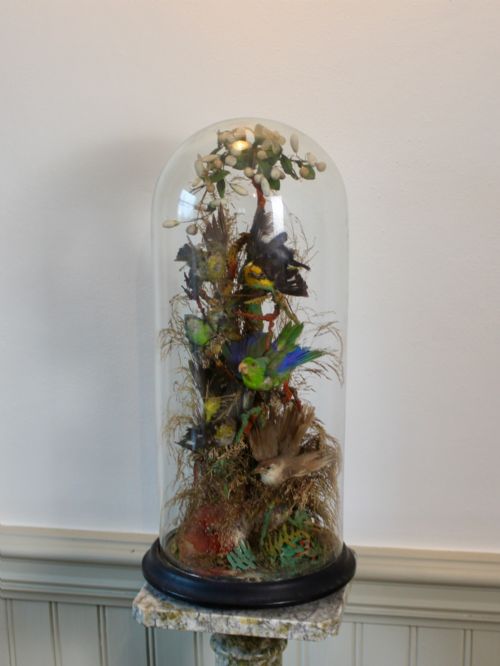
The most common forms on this page include taxidermy showcases featuring birds or butterflies, alongside parlour domes housing beadwork bouquets and botanical specimens. Clock domes and flat-sided variants also appear regularly among the selection.
Originating largely from English workshops, these display pieces range from small table specimens to tall showcases. Their primary purpose historically was the safeguarding of prized indoor ornaments from dust and damage.
Materials and Construction
Makers formed the transparent covers using blown glass, creating smooth ovoid, oval or bell-bottom profiles that sat flush against fitted bases. These bases typically consist of ebonised wood, mahogany, oak or pine, often incorporating internal fabric linings such as velvet, felt or leather.
Interior compositions frequently rely on wire frameworks, moss and paper to support taxidermy birds, botanical specimens or French beadwork bouquets. The combination of turned wooden plinths and hand-blown glass defines the standard construction method seen across the period.
Snow buntings and colourful exotic birds peer out from beneath their glass roofs, keeping perpetual winter and summer at bay.
Quality and Proportion
The clarity and thickness of the blown glass set the baseline for quality, where heavier, distortion-free covers represent superior manufacturing. Bases constructed from dense timbers like mahogany or burr walnut demonstrate greater craftsmanship than simpler softwood alternatives.
Proportion and scale dictate the visual success of a piece, particularly in how the dome relates to its wooden plinth. Original bases and undisturbed interior arrangements command higher regard among collectors than later marriages of mismatched components.
James Gardner·Davis & Co Bristol
The Glass Dome Display Case Glossary
- Cloche
- A bell-shaped glass cover used to shield delicate objects or plants. It derives its name from the French word for bell.
- Ebonised
- Wood treated with a dark finish to imitate ebony. This treatment was common on Victorian display bases to provide high contrast.
- Vitrine
- A glass-panelled cabinet or showcase designed for displaying curiosities. These structures share a similar protective function with large display domes.
- Taxidermy
- The art of preparing, stuffing, and mounting animal skins for permanent display. Victorian specimens under glass frequently depict birds or butterflies in naturalistic poses.
- Diorama
- A three-dimensional scene depicting wildlife or still life within a miniature setting. These compositions are often housed securely beneath glass domes.
Glass Dome Display Case: Frequently Asked Questions
What fits inside a glass dome display case?
Historical contents typically include taxidermy birds, butterfly specimens, botanical arrangements, and beadwork bouquets. Collectors today also utilise them for minerals, pocket watches, and small sculptures.
Ensuring the internal height and diameter match the intended object remains essential before placing items beneath the glass.
How do I clean a antique glass dome?
The glass cover lifts away from its wooden base to allow careful washing with warm soapy water and a soft cloth. Harsh abrasives should be avoided to prevent scratching the historic surface.
The fragile interior contents, particularly taxidermy or paper elements, require dusting only with a very soft dry brush.
Are these domes and bases original to each other?
Most period pieces retain their matching turned wood plinth and blown glass cover as a unified set. Minor variations in fit can occur due to the hand-blown nature of 19th-century glass.
Examining the base for matching wear patterns and indentation rings helps confirm whether the components belong together.
How do I date a glass dome display case?
Dating relies on the manufacturing traits of the glass, such as pontil marks, bubbles, and thickness, alongside the timber choice for the base. Ebonised pine and mahogany plinths are characteristic of Victorian production.
Edwardian examples often feature lighter oak bases and slightly more uniform industrial glass-blowing techniques.