


Edwardian Taxidermy Display Case
An edwardian taxidermy display case brings natural history indoors, protecting preserved specimens behind glass for domestic study.
Edwardian Taxidermy Display Case
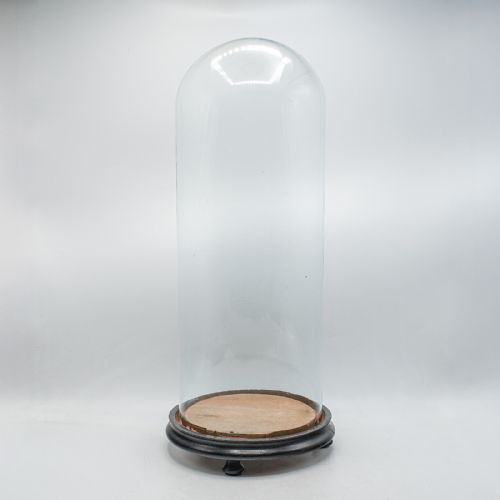
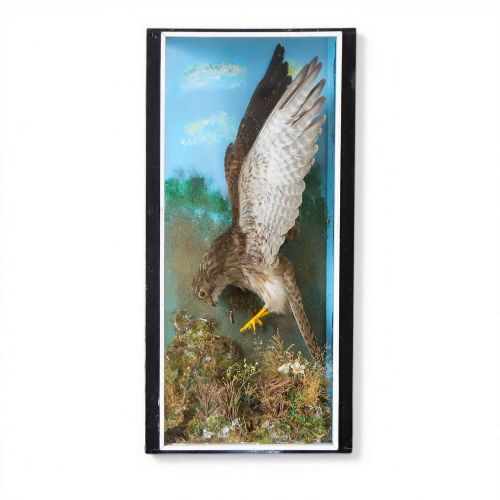
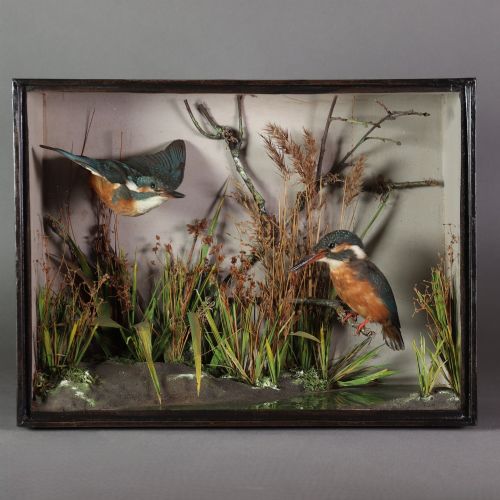
An edwardian taxidermy display case combines timber framing and curved or flat glass panels to shelter preserved birds, fish and mammals. These enclosures protect delicate specimens from dust and handling while allowing clear visibility from multiple angles.
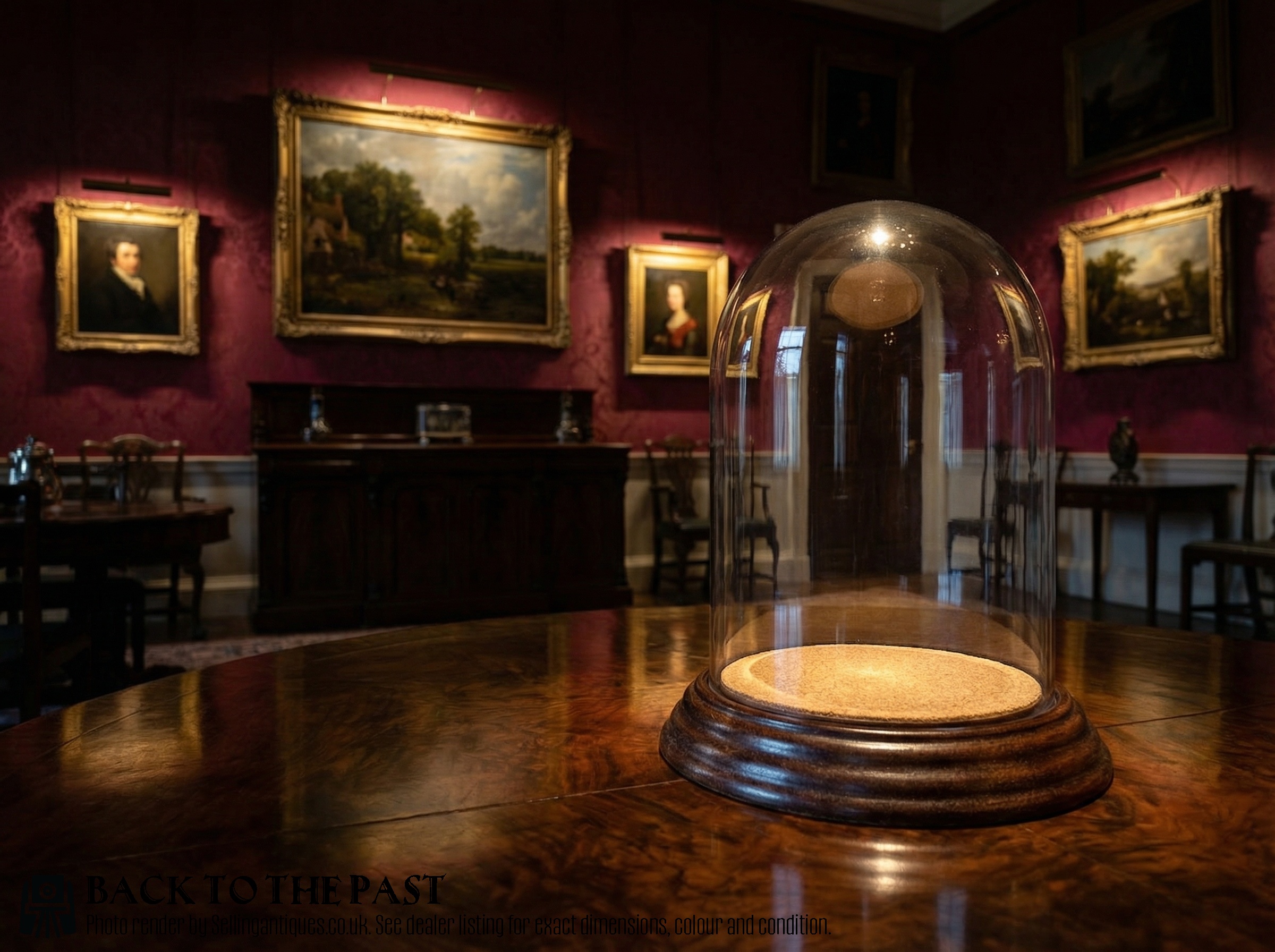
The selections available here range from tall glass domes on wooden bases to wall-mounted timber cabinets and painted dioramas. The most frequent forms reflect domestic parlour tastes, housing single birds or small groups in simulated natural habitats.
Materials and construction
Makers utilised timber such as oak, mahogany and ebonised wood to build the structural bases and frames. Glass formed the protective barrier, shaped either as blown domes or fitted into rectilinear cabinet doors and walls.
Internal settings often incorporated painted paper backgrounds, dried grasses, feathers and simulated snow scenes to give context to the preserved specimen. Joinery relied on traditional cabinet-making techniques to ensure the enclosures remained dustproof.
Several examples capture British waterbirds and game standing resolutely amidst surprisingly convincing painted snow scenes.
Distinctions in quality
The skill of the taxidermist dictates the natural posture and anatomical preservation of the specimen within. Superior pieces display lifelike positioning and careful feather or fur arrangement that withstands close inspection.
The joinery of the timber case and the clarity of the glass demonstrate the maker's proficiency. Fine timber frames with tight mitres and unblemished, blown glass domes elevate the overall standard of the display.
T. E. Gunn·Hutchings of Aberystwyth·James Jones of London·W.F. Homer London·J Cooper & Sons
The Edwardian Taxidermy Display Case Glossary
- Taxidermy
- The art of preparing, stuffing, and mounting the skins of animals for display. This practice preserves creatures for scientific study and domestic decoration.
- Cloche
- A bell-shaped glass cover used to protect delicate objects. In this context, it sits over preserved specimens and wooden bases.
- Diorama
- A three-dimensional scene featuring wildlife within a painted or naturalistic setting. These enclosures create the illusion of an animal in its native habitat.
- Ebonised wood
- Timber treated to resemble ebony through staining and polishing. This dark finish provides a formal contrast to the lighter colours of preserved specimens.
Edwardian Taxidermy Display Case: Frequently Asked Questions
Where should I place the case?
Position the enclosure away from direct sunlight to prevent the fading of feathers, fur and painted paper backgrounds.
Keep the display in a room with stable temperature and humidity levels to protect both the timber frame and the taxidermy.
Are the specimens removable?
The preserved animals and birds are securely fixed to internal bases or dioramas and are not intended to be handled.
Opening or dismantling the enclosure risks damaging the delicate taxidermy and breaking the original seals.
How do I identify the period?
Examine the timber construction, hardware and style of the framing to determine the era of manufacture.
Maker signatures on the base or trade labels pasted inside the cabinet offer definitive proof of the workshop and date.