

Wood Inlay Side Table
A wood inlay side table brings centuries of cabinet-making skill into a room, offering surface space alongside detailed marquetry and contrasting timber work.
Wood Inlay Side Table
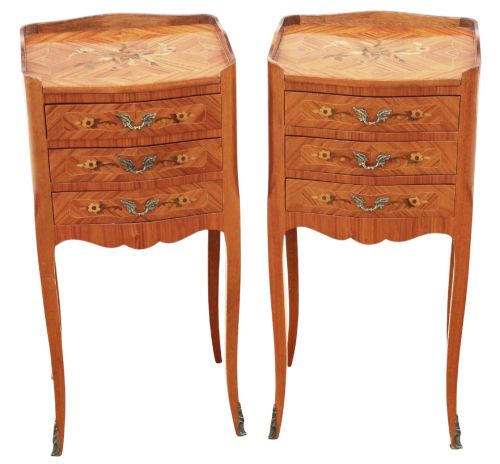
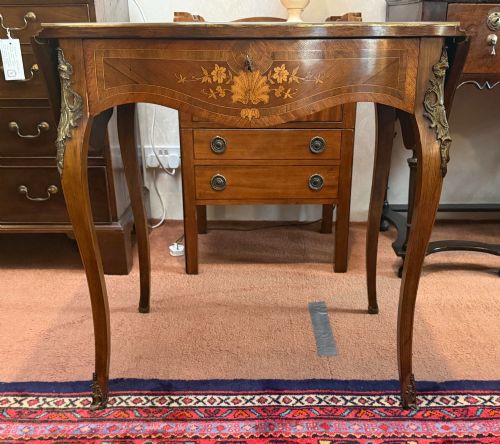
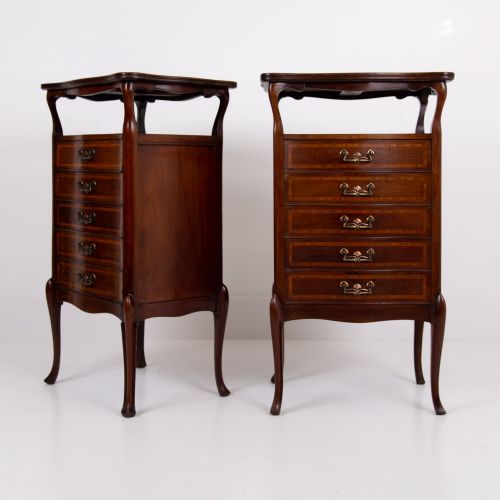
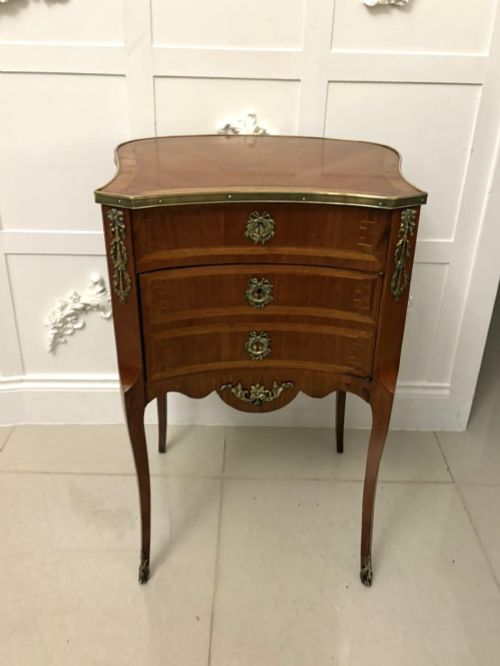
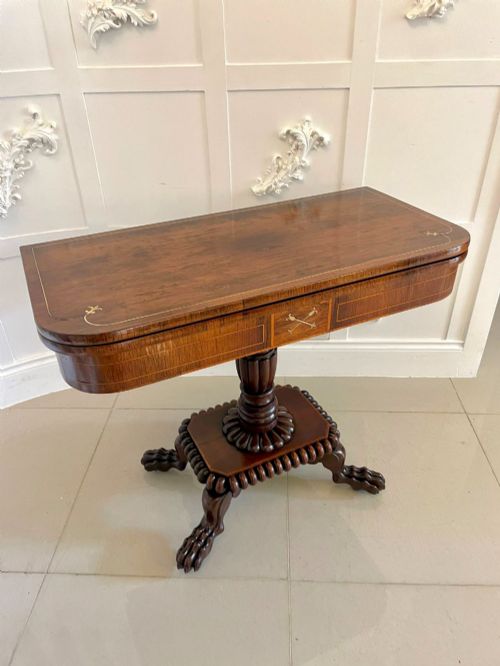
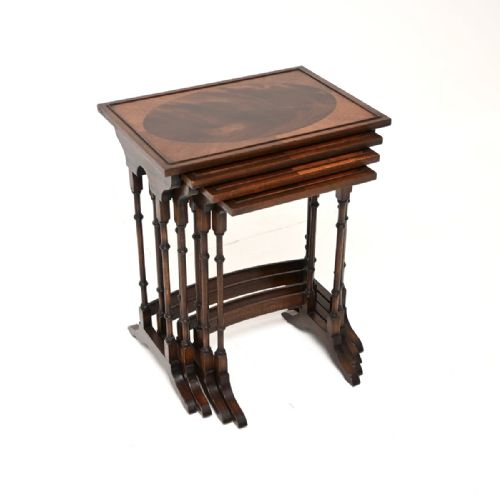
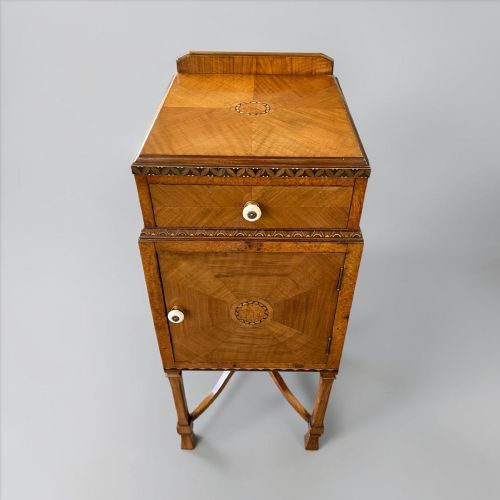
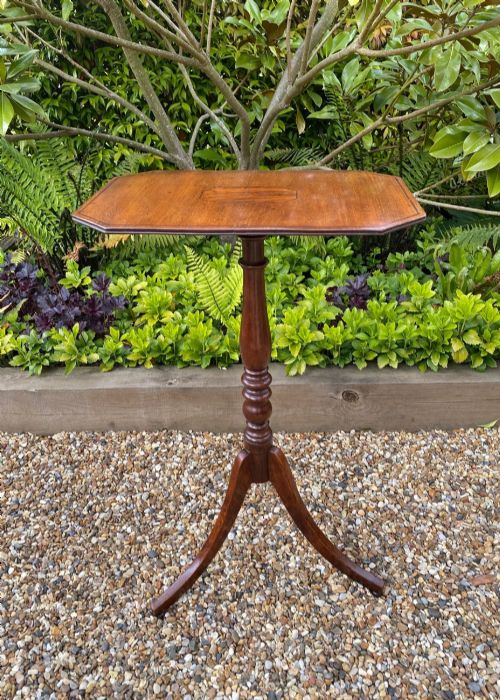
When you search for a wood inlay side table, you encounter diverse forms ranging from Edwardian occasional tables and card tables to French marquetry bedside cabinets and Anglo-Indian octagonal tables.
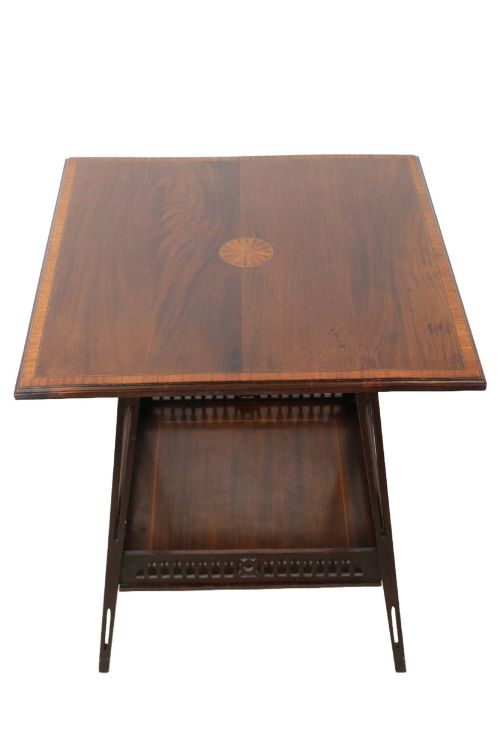
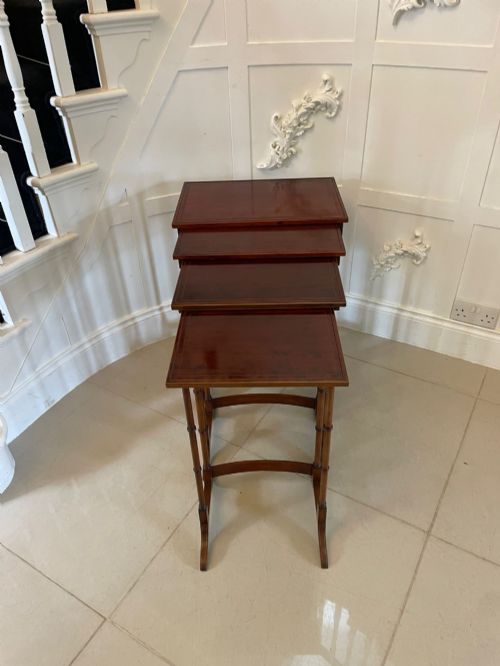
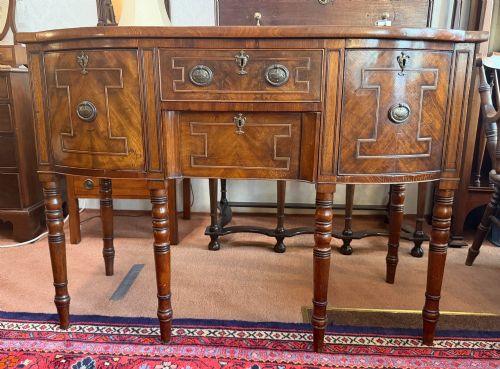
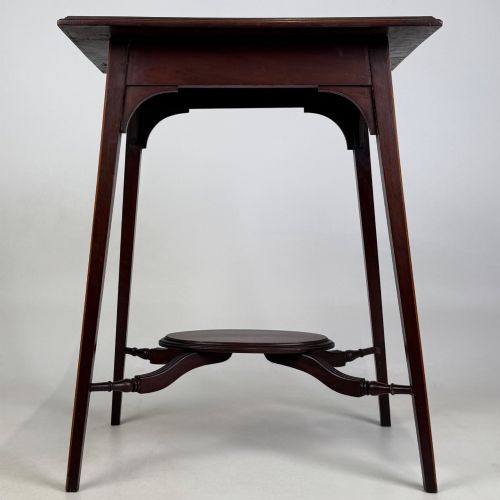
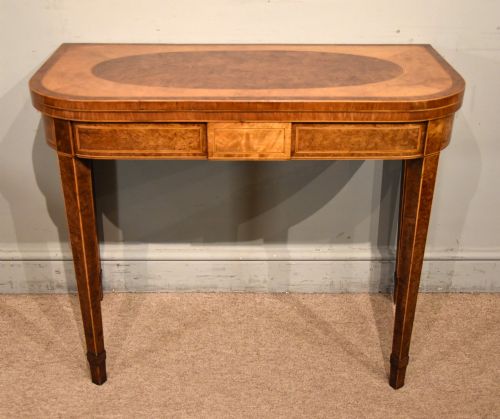
The version you are most likely to meet on this page is the Edwardian mahogany occasional or side table, frequently featuring delicate stringing and inlaid motifs.
Earlier examples span the Georgian, George III, and Regency periods, often built in mahogany or walnut with satinwood crossbanding and boxwood or brass inlay.
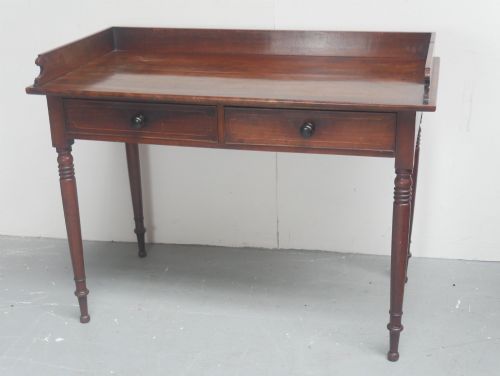
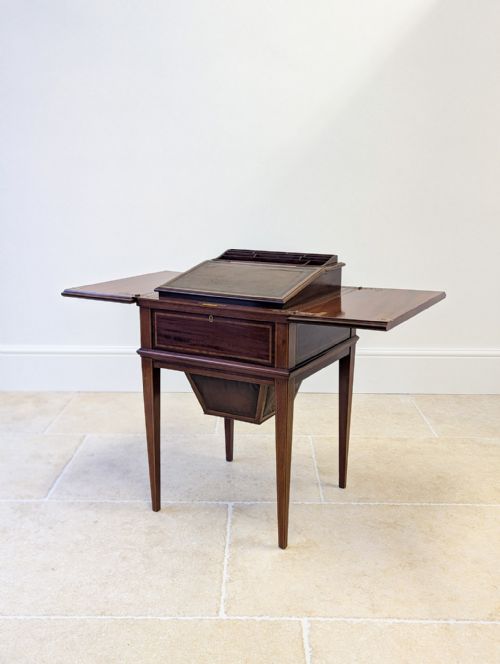
Makers and workshops across Britain, France, and Sweden produced these pieces to function as writing tables, lamp stands, sewing tables, and compact bedside units.
Materials and construction
Cabinet-makers relied on solid foundation timbers such as mahogany, walnut, and kingswood, overlaid with fine veneers of satinwood, burr birch, and rosewood.
Inlay and marquetry required precise hand-cutting of contrasting woods including boxwood, alongside bone and brass wire, which were fitted flush into channeled recesses.
Structural joints utilised traditional techniques, while decorative surfaces depended on careful grain matching, crossbanding, and hand-applied finishes.
The selection includes pieces spanning the Georgian, Regency, Victorian, and Edwardian eras, utilising mahogany, satinwood, rosewood, walnut, and brass inlay.
Judging quality
The standard of a piece rests upon the crispness of the cutting within the inlay work and the harmonious choice of contrasting timbers.
Superior examples demonstrate refined proportions and meticulous attention to secondary woods, drawer linings, and original hardware.
Mass-produced or later revived items often exhibit mechanical regularity in the surface pattern, lacking the organic variation and hand-cut precision found in period work.
Trevor Page And Co
The Wood Inlay Side Table Glossary
- Crossbanding
- A border veneer applied around the edge of a table top with the grain running perpendicular to the centre. This technique frames the primary timber and provides a neat decorative boundary.
- Marquetry
- An elaborate assembly of veneer pieces cut to form pictorial or geometric designs. Artisans fit these coloured woods together like a puzzle before gluing them to the table surface.
- Stringing
- A thin, narrow strip of contrasting wood or bone embedded into a channel in the table surface. It creates delicate linear borders around drawers and panel edges.
- Satinwood
- A pale, lustrous timber native to the tropics, prized for its golden sheen and reflective grain. It appears frequently as a contrasting veneer in Georgian and Edwardian inlay work.
Wood Inlay Side Table: Frequently Asked Questions
How do I date a wood inlay table?
Dating relies on examining the underlying construction timber, the style of the legs, and the complexity of the veneer work. Regency and Georgian pieces typically display heavier structural forms, whereas Edwardian tables lean towards slender frames and lighter satinwood banding.
Secondary wood choices inside drawers and the ageing of the polish offer further clues to the decade of manufacture. Comparing the hardware and joinery methods helps narrow the timeline between eighteenth-century origins and twentieth-century revivals.
Where were these tables placed originally?
These versatile pieces served multiple functions across the home, appearing beside upholstery in drawing rooms, flanking beds as nightstands, or standing in hallways for correspondence.
Card and games tables sat folded against walls until needed for evening entertainment, while smaller Pembroke and wine tables moved easily around the room as required.
How should I care for an inlaid surface?
Maintenance requires keeping timber away from direct heat sources and strong sunlight to prevent the delicate veneer from lifting or fading. Regular dusting with a soft, dry cloth preserves the polish without chemical buildup.
Occasional application of appropriate wax nourishes the wood and protects the fine boxwood or brass stringing embedded in the surface.
What is the difference between inlay and marquetry?
Inlay involves recessing pieces of wood, bone, or metal into a solid or veneered background, often creating geometric lines or simple borders. It defines linear patterns like stringing.
Marquetry covers a broader surface with assembled pictorial veneers, creating floral arrangements or elaborate scenes using various coloured timbers.