





Wood Gallery Tray
When you handle a wood gallery tray, you hold a piece designed for practical service and finished with precise cabinetmaking.
Wood Gallery Tray
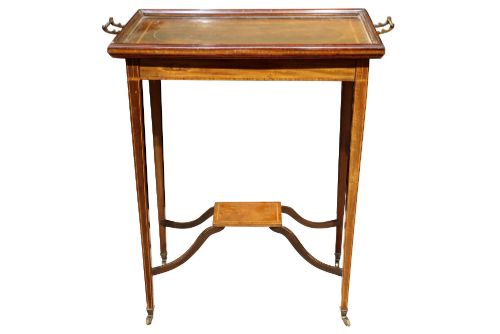
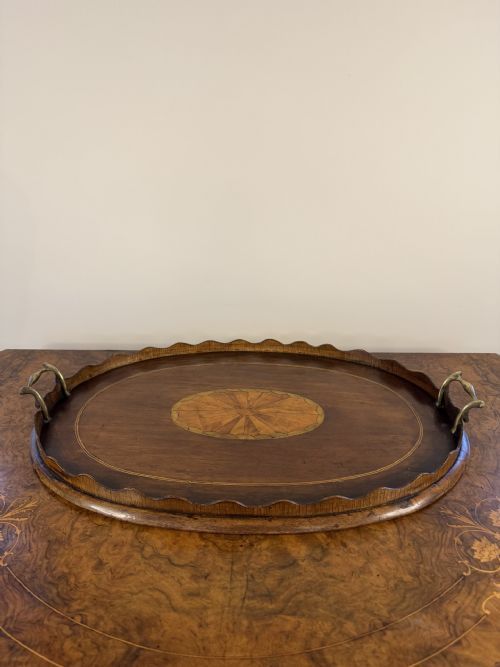
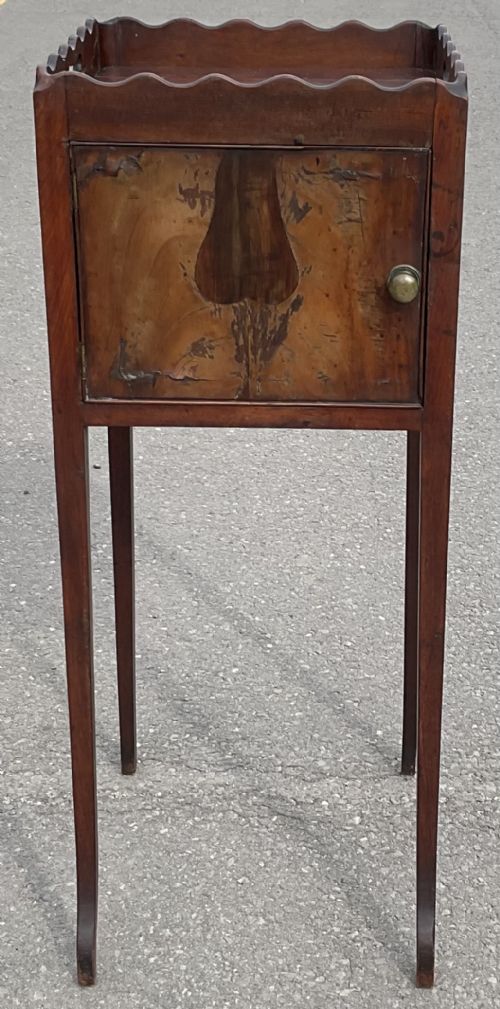
A wood gallery tray is a portable serving piece or a fixed tabletop designed with a raised border to secure items in transit or display. The examples on this page span from the eighteenth century through the Edwardian period, encompassing both serving trays and elevated tray-top tables.
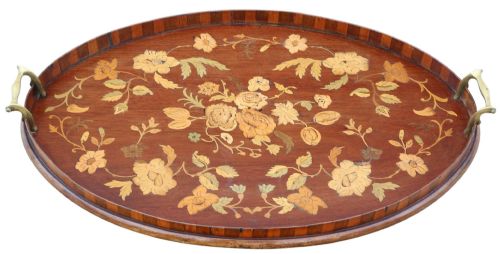
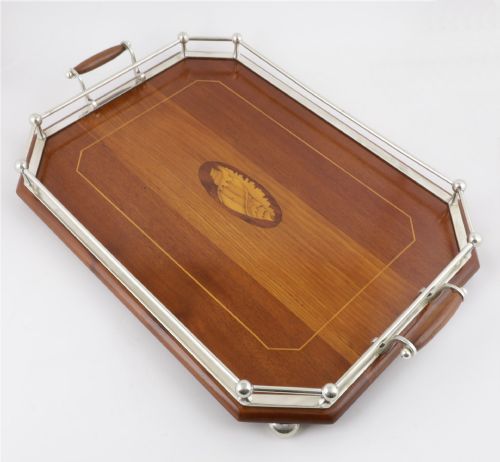
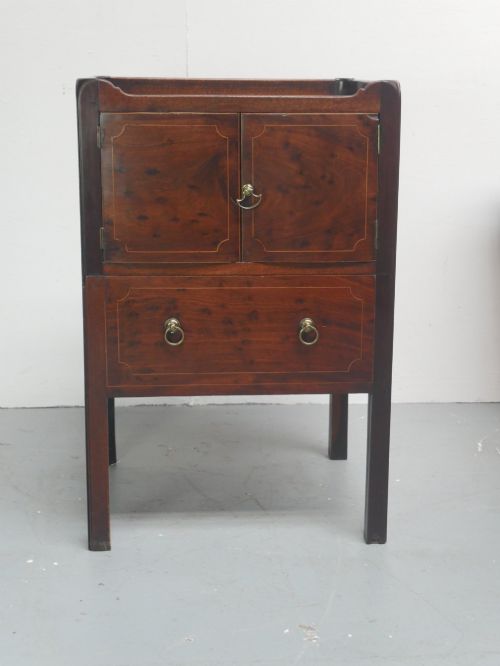
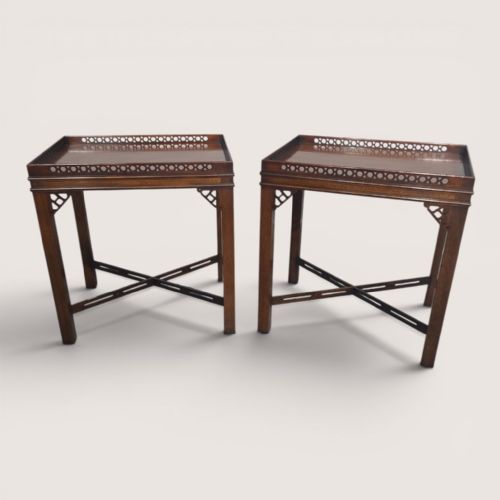
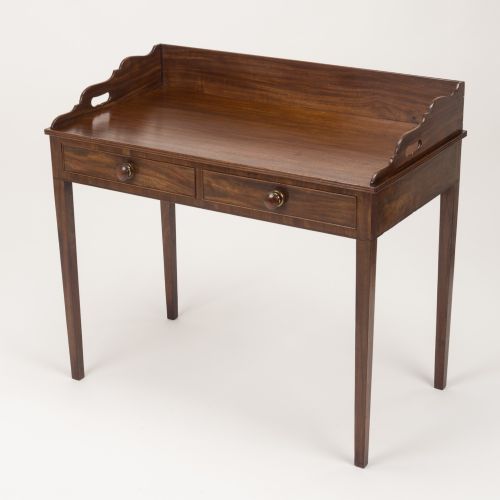
The most frequent form you will encounter here is the mahogany serving tray, often featuring inlaid details such as boxwood or satinwood and raised on stands or used independently. Alongside these, the inventory includes occasional tables, side tables, and bedside cabinets incorporating tray tops into their construction.
Materials and construction
Mahogany serves as the primary structural wood across the majority of these pieces, selected for its stability and rich grain. Cabinetmakers frequently paired this with contrasting timbers like satinwood and boxwood for inlaid stringing and marquetry motifs.
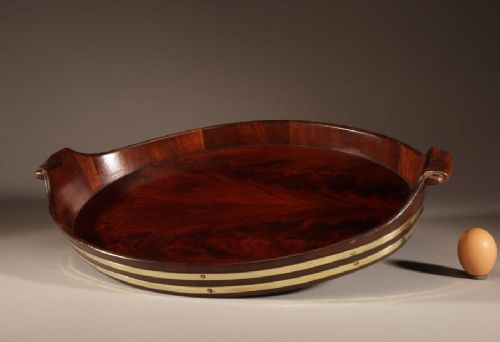
Many trays incorporate brass handles, hinges, or galleries, while others integrate silver plate mounts and scalloped wooden edges. Coopered construction techniques appear in circular vessels, alongside fine inlay work and delicate fret-cut galleries.
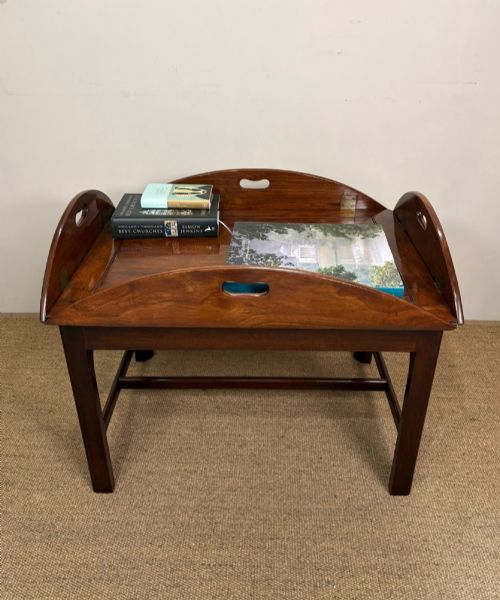
Some trays feature clever brass hinges that allow the edges to fold down flat, transforming a serving surface into a compact tray.
Distinguishing quality
Quality in a wood gallery tray rests upon the crispness of the joinery and the precision of the inlay work. Finer examples display tightly fitted dovetails, cleanly pierced gallery rails, and secure joints where the raised border meets the base.
The selection of the timber also dictates the tier of the piece, with figured flame mahogany and well-matched satinwood banding indicating superior workshop output. Secondary woods and the retention of original brass hardware further separate standard utilitarian items from exceptional commissions.
The Wood Gallery Tray Glossary
- Gallery
- A raised miniature balustrade or railing running around the edge of a tray or table top. It prevents items from sliding off during service.
- Inlay
- A technique where pieces of contrasting timber, such as boxwood or satinwood, are inserted into recesses within the primary wood to form a pattern.
- Butler's tray
- A removable wooden tray, often featuring folding sides or hinged handles, designed to sit upon a dedicated folding stand.
- Coopered
- Constructed from vertical wooden staves fitted together and bound with metal hoops, traditionally used for round buckets or specialised trays.
- Marquetry
- Elaborate decorative veneer work assembled into pictorial or geometric designs using various coloured woods.
Wood Gallery Tray: Frequently Asked Questions
What is a wood gallery tray?
A wood gallery tray is a flat serving surface enclosed by a raised wooden or metal border to prevent items from falling. These pieces range from portable tabletop trays to fixed surfaces integrated into small tables.
Historically used for serving drinks or displaying silverware, they combine structural utility with decorative cabinetwork.
How do I date a wood tray?
Dating relies on identifying the primary timber, the style of inlay, and the construction methods used in the gallery and base. Eighteenth-century pieces often show simpler, robust joinery with hand-cut dovetails and subtle mahogany figuring.
Later Victorian and Edwardian revivals frequently incorporate machine-sawn components, more complex satinwood banding, or silver-plated mounts characteristic of those decades.
How were these trays used historically?
These trays served primarily for carrying tea sets, wine decanters, and silver items between rooms within large households. Portable versions were placed onto folding stands when needed for service.
Tray-top tables served as permanent furniture items in drawing rooms and bedrooms, holding lamps, writing materials, or personal accessories.
How do I care for antique wood?
Maintain antique wood surfaces by keeping them away from direct sunlight and sudden changes in room temperature. Dust regularly with a dry, soft cloth and avoid commercial silicone polishes.
Apply a traditional beeswax sparingly to nourish the timber and preserve the natural sheen of the grain.