


Wood Bedside Cabinets
Wood bedside cabinets bring practical surface space and enclosed storage to the bedroom, grounding the room with period character.
Wood Bedside Cabinets
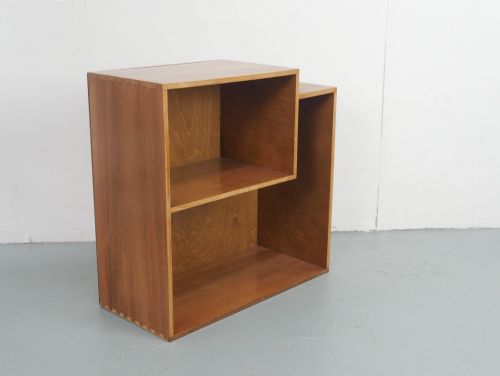
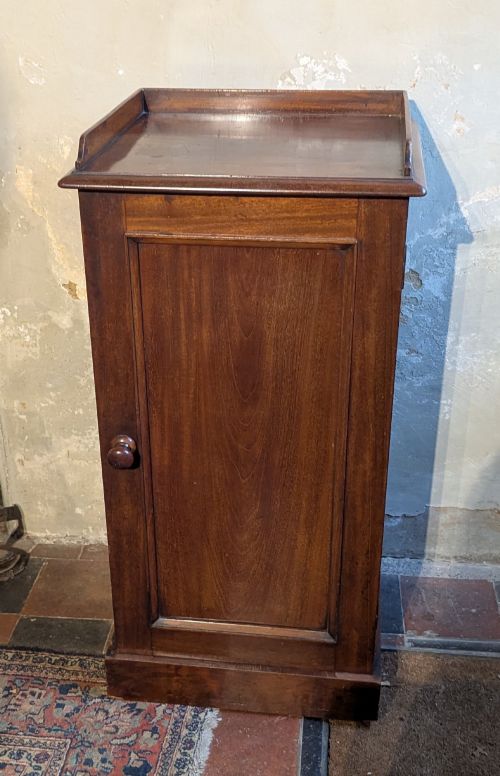
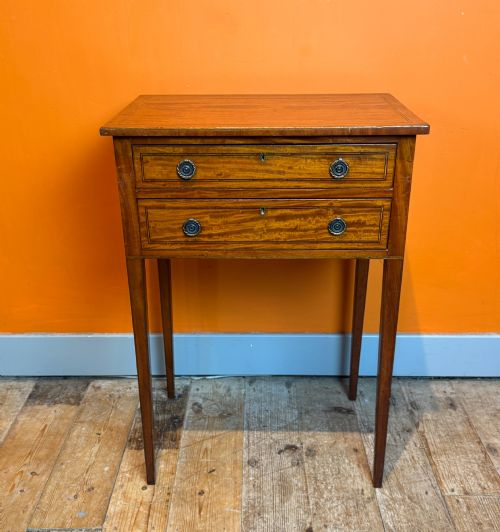
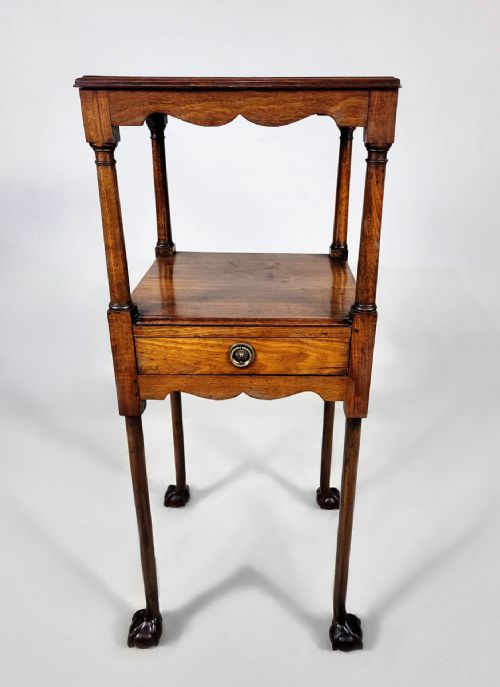
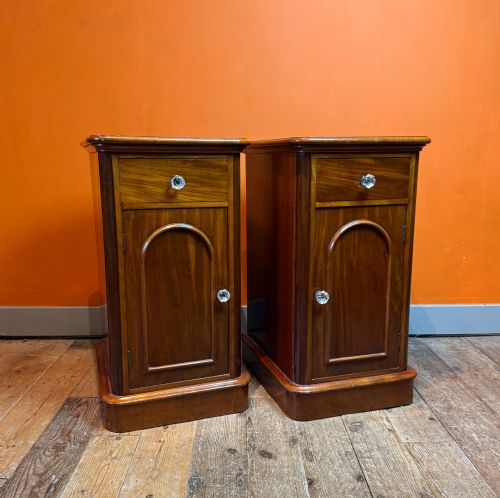
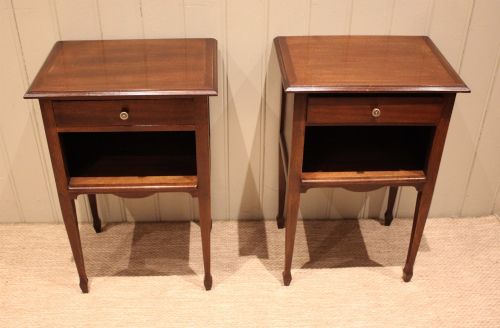
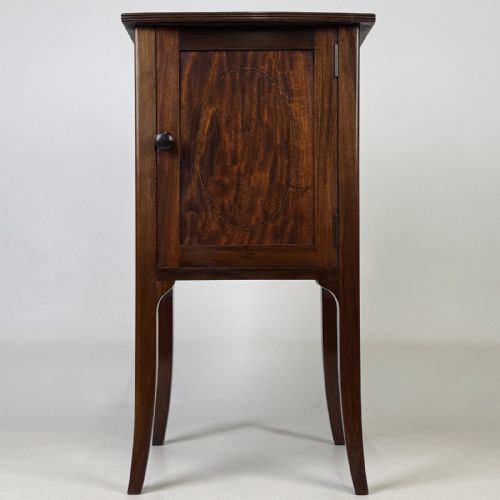
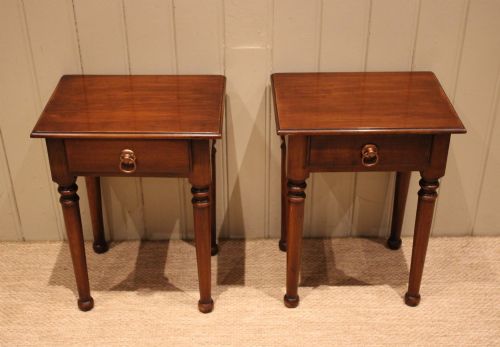
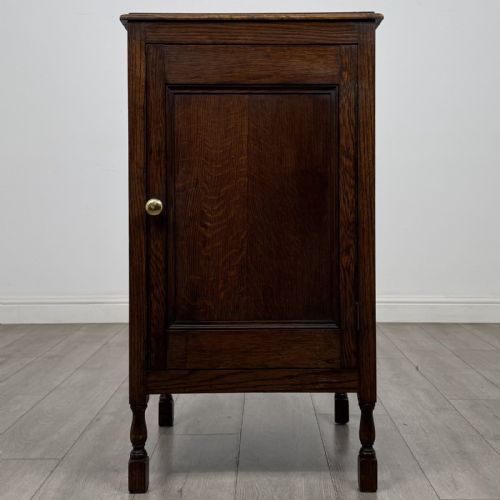
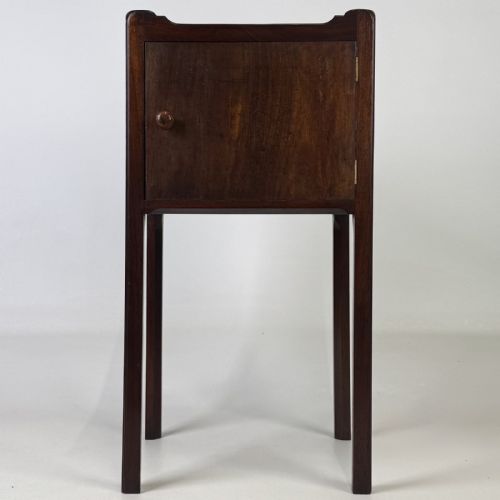
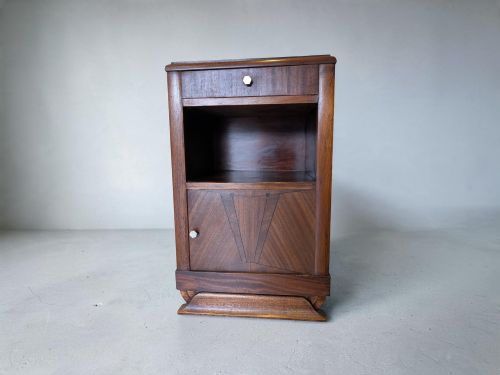
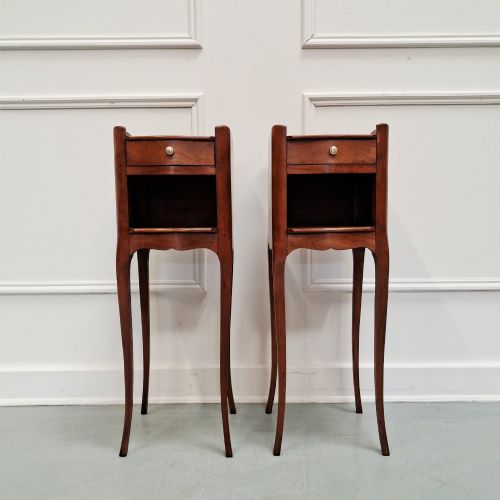
Wood bedside cabinets comprise a compact family of bedroom furniture designed to hold bedside lighting and small personal items. When you examine wood bedside cabinets on this page, you encounter forms ranging from simple cupboards and tray top pot cupboards to small chests of drawers and bedside tables.
The selection draws heavily on pieces originating from the Georgian, Victorian, Edwardian, and Art Deco periods, alongside French and Swedish regional styles. Cabinets featuring mahogany dominate the available choices, frequently appearing alongside walnut, satinwood, oak, ash, and cherry.
Construction and Materials
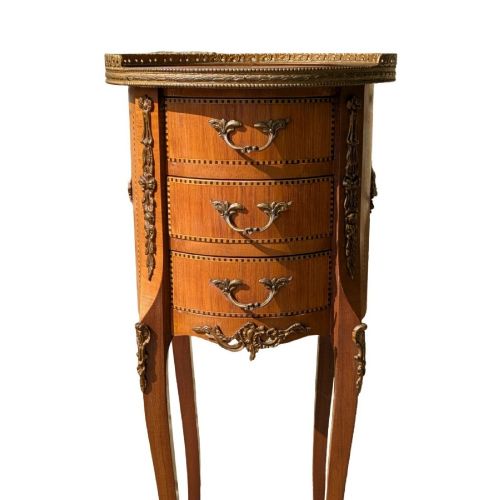
Cabinet makers utilised solid hardwoods and fine veneers, building carcases in mahogany, walnut, oak, and ash. Surface decoration often incorporates marquetry, inlay, and wood veneers, supported by structural elements like turned legs, bracket feet, and baluster supports.
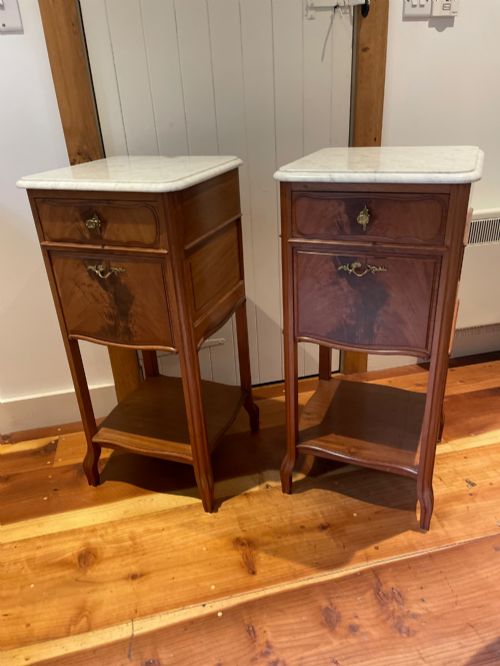
Workmanship spans traditional joinery methods, such as dovetailed drawer construction and pegged joints, paired with hardware in brass. Marble tops also feature on select pieces, adding a durable stone surface above the wooden structure.
Wood Bedside Cabinets Retail Price Guide 2026
Typical asking prices for wood bedside cabinets among the pieces listed under this phrase on Sellingantiques today, from the lower quarter to the upper quarter. They describe what is for sale here now, not the wider market.
The listings show wood bedside cabinets spanning from the 18th century through to the Art Deco era, constructed in mahogany, walnut, satinwood, oak, and ash.
Distinctions in Quality
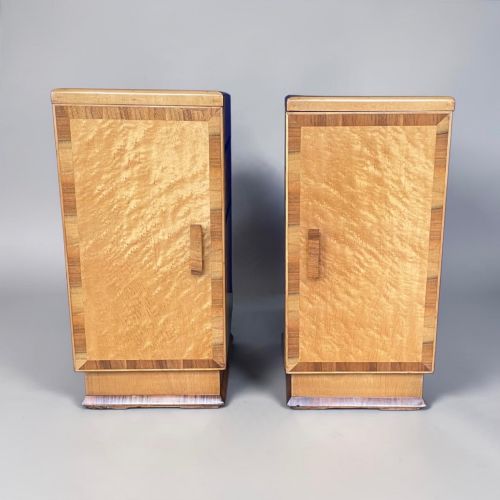
Quality rests upon the selection of timber figures, such as flame mahogany or figured satin birch, and the precision of the underlying joinery. Superior examples display crisp marquetry, well-fitted drawers that run smoothly, and intact original hardware without clumsy restoration.
Proportion and scale also separate standard items from finer works, as cabinets with balanced dimensions and thoughtful details like tray tops or finely turned supports command greater attention.
The Wood Bedside Cabinets Glossary
- Tray top
- A raised rim around the upper surface of a cabinet, designed to prevent items from rolling off. This feature often appears on Georgian and 19th-century night commodes.
- Marquetry
- Decorative patterns created by fitting different wood veneers together onto a structural carcase. This technique appears frequently on French and 20th-century pieces.
- Pot cupboard
- A small bedside cabinet originally built to enclose a chamber pot. These often take the form of a single-door cupboard or a bedside chest.
- Chevet
- A French term for a small bedside table or nightstand. These pieces frequently originate from the Art Deco period and French provincial workshops.
- Baluster turned
- A column-shaped leg or support turned on a lathe with a swelling profile. This detail provides sturdy elevation for small side cabinets.
Wood Bedside Cabinets: Frequently Asked Questions
What is the difference between a bedside cupboard and a chest?
A bedside cupboard generally encloses space behind one or two hinged doors, sometimes concealing a shelf or interior compartment. They descend from older pot cupboards and night commodes.
In contrast, a bedside chest consists primarily of stacked drawers. Both forms serve the same function beside a bed, but offer different internal layouts for personal storage.
How do I identify an Art Deco cabinet?
Art Deco cabinets, typically dating around 1930, display streamlined geometric forms and symmetrical designs. They often utilise exotic timbers and pale veneers like satin birch.
Ornaments remain minimal compared to earlier Victorian or Edwardian iterations, prioritising clean lines and smooth polished surfaces.
Were bedside cabinets originally made in pairs?
Many historical bedside cabinets were manufactured as single pieces rather than matching pairs, as bedroom layouts varied. Single cabinets often served individual washstands or commodes.
Matching pairs found on the market frequently represent pieces originally placed on either side of a larger double bed during the Edwardian period or later.
How do I care for a waxed wood surface?
Waxed wood surfaces require gentle dusting with a soft, dry cloth to prevent dust accumulation. Avoid using modern silicone sprays, which can degrade historical wax finishes.
Periodic application of a quality beeswax helps nourish the timber and maintain a soft sheen without building up a heavy residue.