




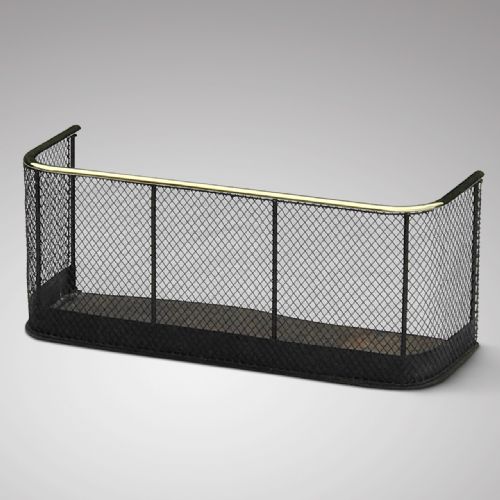
Wire Mesh Fireguard
These wire mesh fireguards protect interiors from stray sparks while keeping an authentic period character by the hearth.
Wire Mesh Fireguard
A wire mesh fireguard provides a protective barrier in front of an open hearth to stop hot coals and sparks from reaching the room. Buyers browsing this selection encounter various historical configurations designed for domestic safety and hearth management.
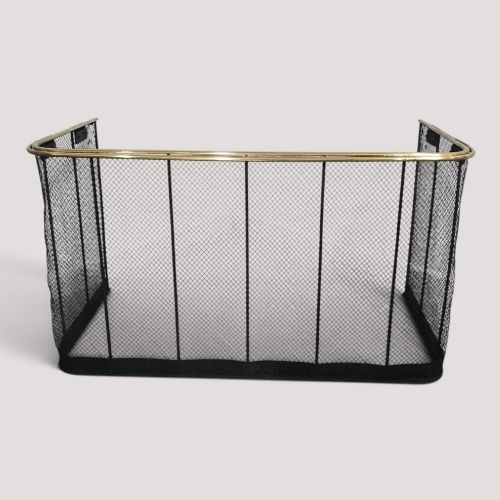
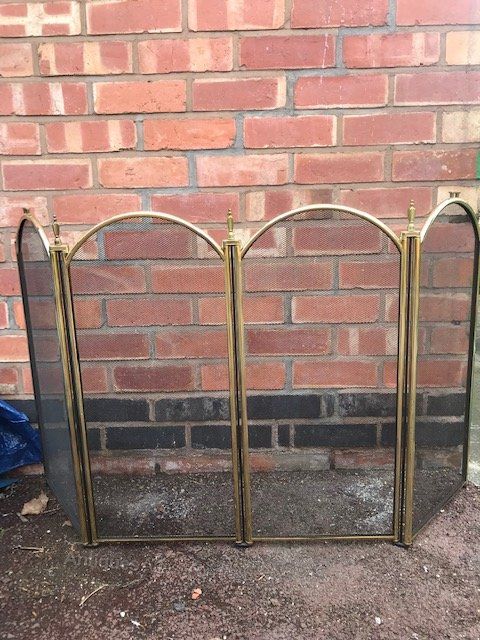
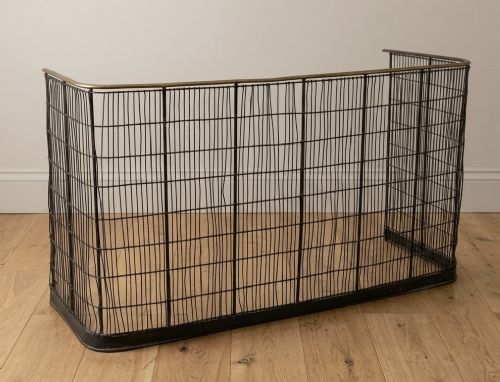
Most examples found on this page date from the nineteenth century, the Edwardian era, and around nineteen twenty. These pieces range from simple nursery fenders to folding screens and bowed designs fitted with brass top rails.
How they were made
Construction relies primarily on durable metals such as iron, wrought iron, and steel wire to form the protective mesh and structural frames. Artisans combined these utilitarian materials with polished brass rims, top rails, and embossed brass accents.
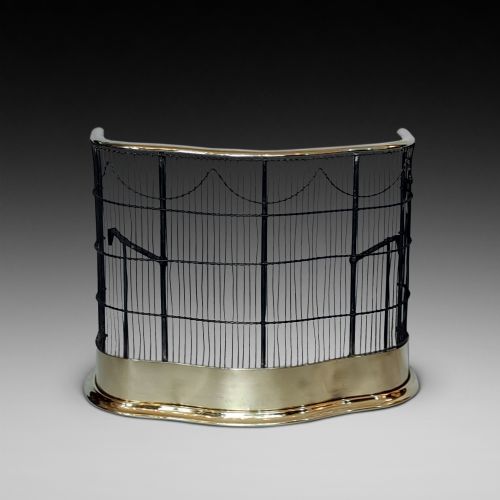
Makers shaped the metal into straight, bowed, or serpentine profiles, occasionally incorporating folding sections or integrated clothes rails into the nursery fender designs.
Listings feature items spanning the nineteenth century, Victorian period, Edwardian era, and nineteen twenty, constructed from brass, iron, and steel wire.
What varies in quality
Quality differences emerge in the weight of the metal framework and the neatness of the wire mesh construction. Heavier brass top rails and robust frames indicate sturdier domestic utility.
Design sophistication also distinguishes standard utilitarian guards from finer examples, particularly where makers employed serpentine curves, embossed brass detailing, or multi-panel folding sections.
The Wire Mesh Fireguard Glossary
- Nursery fender
- A low protective barrier placed around a fireplace to keep young children at a safe distance from the fire. These guards often feature a solid brass top rail and substantial wire mesh panels.
- Fire screen
- A movable panel placed before an open fireplace to deflect excessive heat or hide an unlit hearth. Examples here include folding sections and embossed brass decoration.
- Serpentine
- A gently undulating curved shape resembling a snake's movement. This outline appears on the rims and frames of finer period fire guards.
- Fender
- A low metal frame or guard that encloses the hearth area. Period versions frequently combine iron wire with polished brass rims.
Wire Mesh Fireguard: Frequently Asked Questions
What is a wire mesh fireguard used for?
These guards serve to contain sparks and glowing embers thrown out by open coal or wood fires. They provide an essential layer of safety for domestic interiors.
Historically, nursery versions also created a physical boundary to keep children and pets away from hot hearth stones during the winter months.
How do I date a period fire guard?
Dating relies upon examining the materials, construction methods, and stylistic cues present in the metalwork. Nineteenth-century examples often feature heavy iron frames and simple brass rims.
Later Edwardian and nineteen-twenty pieces sometimes incorporate lighter steel wire or more decorative embossed brass panels typical of those decades.
What is the difference between a fender and a screen?
A fender sits directly on the hearth floor as a low perimeter barrier around the fireplace opening. Many period nursery fenders incorporate high wire mesh walls above the base.
A fire screen stands upright to cover the hearth opening directly, and certain variations include folding sections or attached companion sets.
Can I use these with a modern fireplace?
These antique guards fit appropriately in front of standard hearths to provide functional spark protection. Their traditional brass and iron construction complements period and eclectic interiors alike.
Buyers should measure their hearth opening and floor space carefully to ensure the chosen bowed, serpentine, or folding guard fits the area securely.