




Curved Brass Fender
A curved brass fender frames the hearth with a sweeping line, offering both safety and a polished accent to the fireplace.
Curved Brass Fender
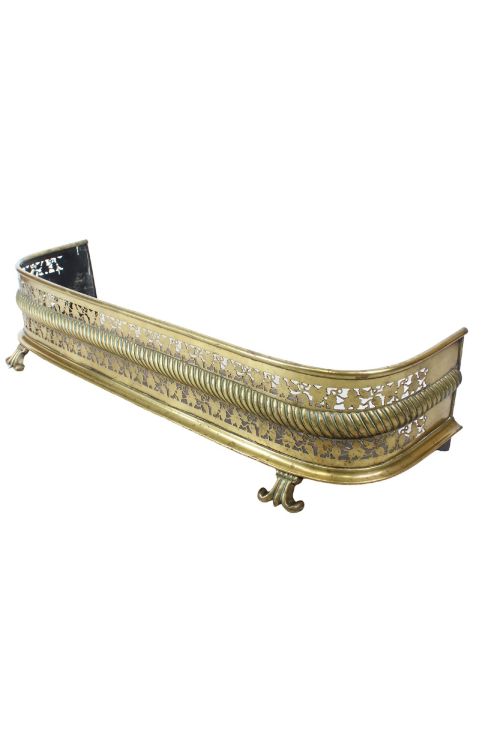
A curved brass fender defines the hearth space with a distinct arc, matching the basket grates and fire surrounds of period rooms. These pieces originate from the 19th Century, encompassing Regency, William IV, and Victorian eras.
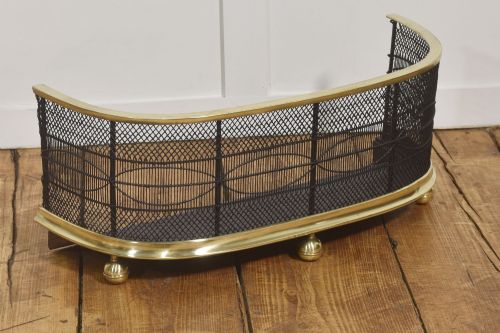
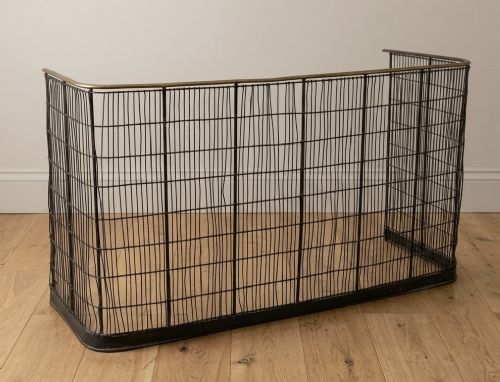
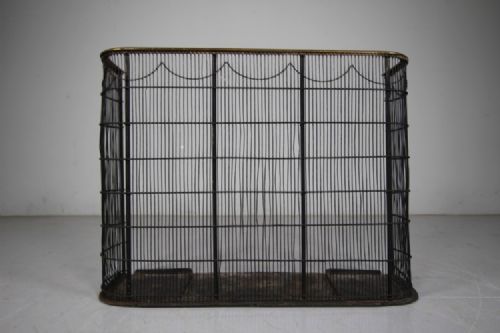
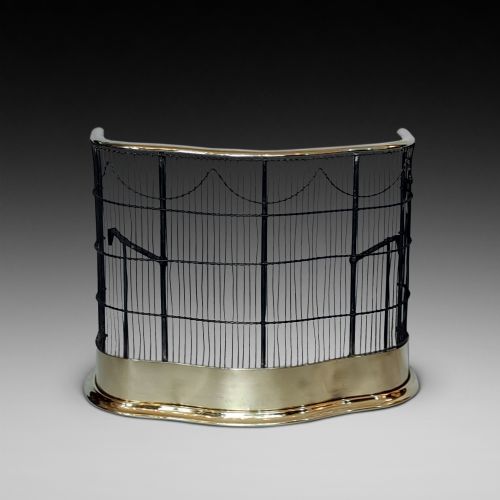
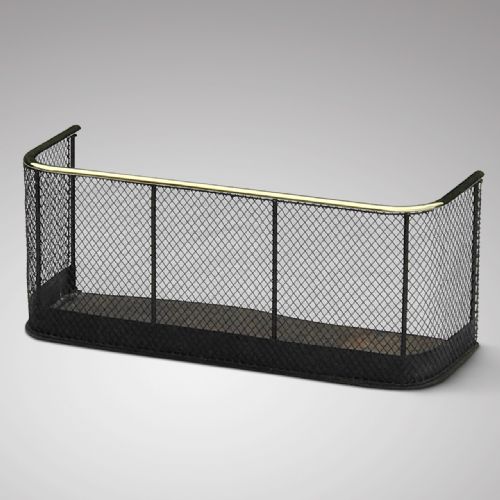
The selection ranges from low kerb fenders in solid brass and bronze to taller nursery guards combining brass frames with iron wire mesh. Forms include bowed, half-moon, and serpentine designs created to contain embers or protect children from the fire.
How they were made
Maker's workshops combined sheet and cast brass with iron and steel elements, utilising woven iron wire and wire mesh for the protective screens. Frames were shaped into sweeping curves, often topped with a distinct brass rail or pierced gallery.
Materials such as wrought iron and cast iron provided structural strength to the base, while bronze and brass offered a bright or patinated metal finish visible at the front of the hearth.
The listings span the 19th Century, Victorian, Regency, and William IV periods, utilising brass, iron, wire mesh, bronze, and wrought iron.
What varies in quality
Quality rests in the weight of the metal and the precision of the curves, with heavier cast components and thick gauge wire showing greater substance. Simpler rolled sheets contrast with finely pierced galleries and well-finished joints.
The integration of mixed metals, such as brass frames paired with woven iron wire or steel bases, determines the structural integrity and visual balance of each piece.
The Curved Brass Fender Glossary
- Kerb fender
- A low metal barrier placed on the floor around the hearth to contain ash and embers. It sits directly on the rug or stone.
- Nursery fender
- A tall protective guard designed to keep children at a safe distance from the open fire. These typically feature wire mesh panels held within a metal frame.
- Serpentine
- A gentle undulating curve shaped like a snake, forming a symmetrical wave across the front of the fender. This style appeared frequently during the Victorian period.
- Wire mesh
- A woven metal grid used in fire guards to allow heat to pass through while stopping sparks. It is commonly paired with a brass top rail.
Curved Brass Fender: Frequently Asked Questions
What is a curved brass fender used for?
These pieces enclose the hearth to keep stray coals and sparks contained within the fireplace area. They also provide a visual boundary between the fire and the room.
Taller versions with mesh panels function specifically as nursery guards to protect children and pets from open flames.
How do I date a brass fender?
Dating relies on stylistic details, construction methods, and materials recorded in the piece. Regency and William IV examples often feature clean lines and specific metalworking techniques.
Victorian pieces frequently incorporate pierced galleries, iron wire mesh, and serpentine or half-moon shapes.
Are these fenders made of solid brass?
Many examples combine brass with other metals like iron, steel, and bronze. The frame or top rail is typically brass, while internal or base components use iron and wire mesh.
This mixed construction provided both the decorative appearance of brass and the structural strength of iron.
How do I fit a curved fender to my fireplace?
Measurement of the hearth space ensures the arc of the fender matches the projection of the fireplace surround or grate. Clearance is needed for the depth of the curve and the return ends.
Low kerb versions sit flat on the floor, while taller guards require stable placement around the hearth opening.