



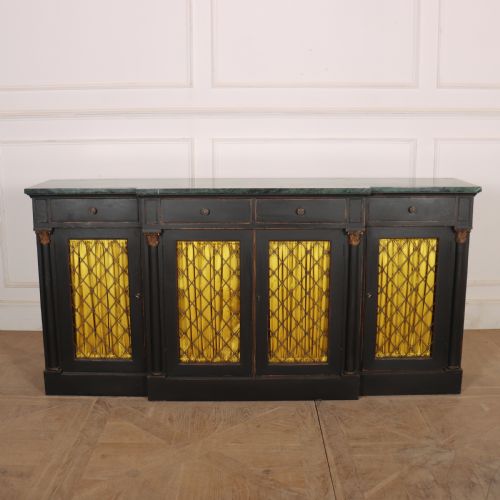


Wire Grille Bookcase
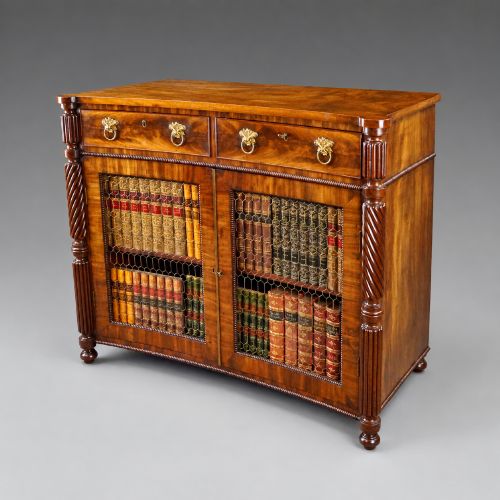
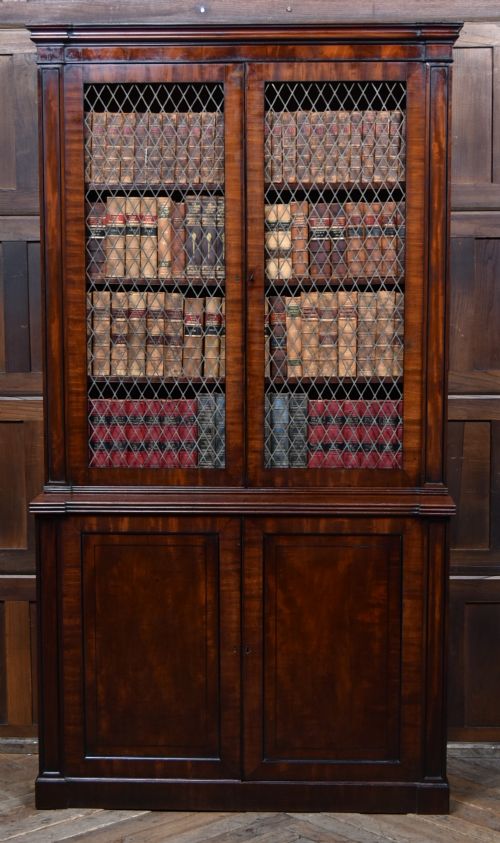
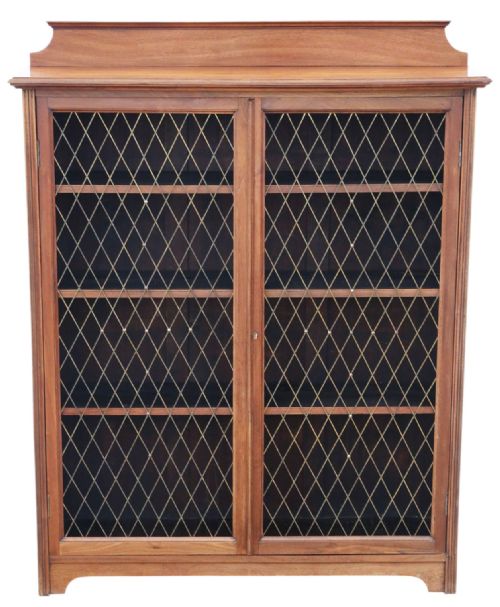
These wire grille bookcase examples combine timber construction with fine mesh doors to protect volumes while keeping titles visible.
Wire Grille Bookcase
A wire grille bookcase serves as a functional storage piece that protects books behind woven metal mesh rather than plain glass panes. The pieces collected here span the Georgian, Regency, and William IV periods, alongside later nineteenth and early twentieth century interpretations.
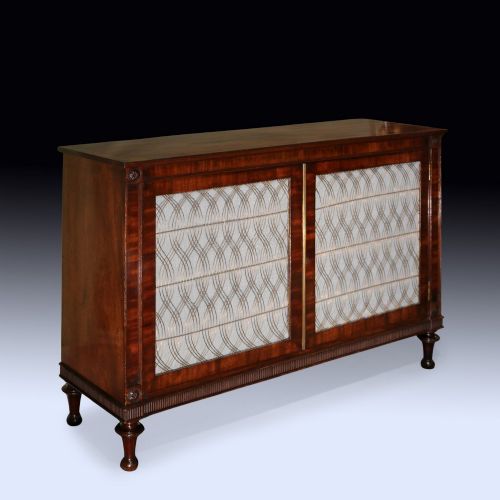
Most examples take the form of low cabinets, side cabinets, or chiffoniers fitted with adjustable display shelves. Buyers will find mahogany predominating alongside walnut, rosewood, and satinwood, frequently paired with brass inlay or architectural details.
Originating as practical library furniture, these pieces bridge the gap between closed storage and open shelving. The inclusion of French styles and country house variants broadens the selection beyond formal British cabinet-making.
Materials and Construction
Makers utilised dense timbers such as mahogany, walnut, and kingwood for the primary carcasses, often selecting veneers with pronounced grain patterns. Solid timber forms the structural frames, cornices, and base plinths.
Fine wire mesh or brass grille work is set into timber or metal door frames to allow ventilation and visibility. Brass inlay, mounts, and delicate fabric linings frequently accent the doors and upper sections.
Listings feature eighteenth and nineteenth-century pieces alongside early twentieth-century examples, constructed in mahogany, walnut, rosewood, and satinwood.
Factors of Quality
The sophistication of the timber selection and the precision of the brass inlay distinguish standard cabinet-making from exhibition quality pieces. Fine examples feature matched veneers and well-proportioned architectural cornices.
The integrity of the wire mesh and the smoothness of adjustable shelf mechanisms indicate the original standard of manufacture. Well-executed joinery in the door frames and drawer linings ensures longevity.
Paul Sormani
The Wire Grille Bookcase Glossary
- Chiffonier
- A low cabinet featuring shelving or enclosed storage, popular during the Regency and William IV periods. It typically includes cupboard doors mounted with wire mesh or fabric.
- Breakfront
- A piece of furniture where the central section projects forward from the flanking wings. This architectural arrangement creates depth and visual interest in larger cabinets.
- Kingwood
- A dense, richly figured exotic timber utilised for fine cabinet-making in French and English pieces. It provides a striking contrast when paired with lighter woods or brass.
- Mesh
- Woven wire forming the distinctive panel inserts on cabinet doors. It offers protection for books while maintaining visibility into the interior.
- Regency
- A stylistic period spanning the early nineteenth century defined by neoclassical lines and classical restraint. Furniture from this era often incorporates brass inlay and rosewood.
Wire Grille Bookcase: Frequently Asked Questions
What is a wire grille bookcase?
A wire grille bookcase is a storage piece featuring doors fitted with metal mesh instead of glass. This design protects the volumes inside while allowing air circulation and visibility.
Such pieces range from compact low cabinets to substantial library bookcases built in mahogany, walnut, and rosewood.
How do I date a wire grille bookcase?
Dating relies on timber selection, structural proportions, and decorative motifs characteristic of periods like the Georgian and Regency eras. Cabinet-making techniques and hardware styles provide further chronological clues.
Earlier pieces often showcase solid mahogany and restrained brass inlay, while later nineteenth-century examples may incorporate French styling or satinwood.
Where were these bookcases used?
These cabinets originally stood in libraries, studies, and drawing rooms of grand houses to store valuable or delicate books. The mesh doors kept dust away while permitting titles to be read from across the room.
Today they function equally well in modern interiors for displaying books, ceramics, and collections.
Are the shelves adjustable?
Many examples feature adjustable display shelves supported by wooden racks or brass pins. This adaptability allowed owners to accommodate books of varying heights.
Checking the interior reveals the mechanism used to alter shelf positions within the cabinet.
What woods were used for these cabinets?
Cabinet-makers primarily utilised mahogany, walnut, and rosewood for their durability and rich grain. Exotic veneers like kingwood and satinwood appear on finer exhibition pieces.
Secondary timbers often include oak or pine for internal elements and drawer linings.