
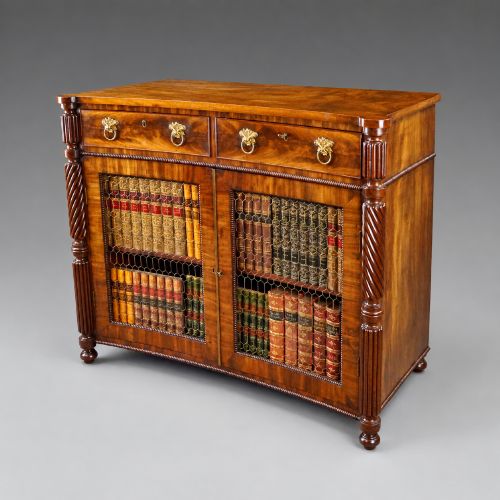
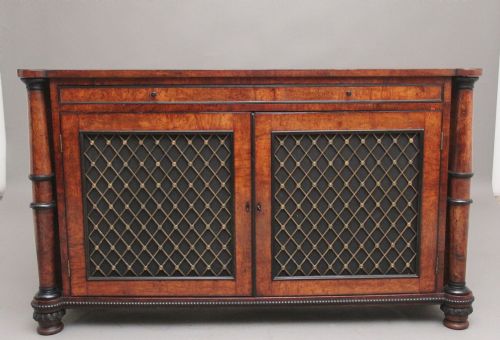
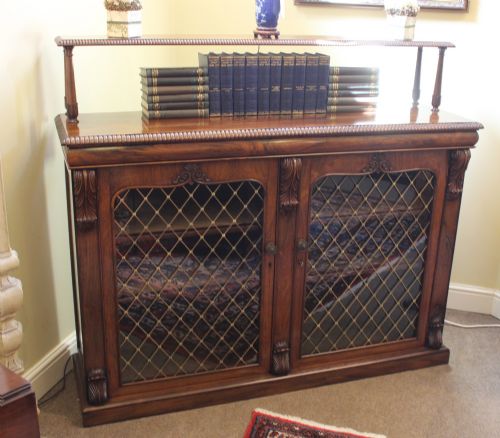
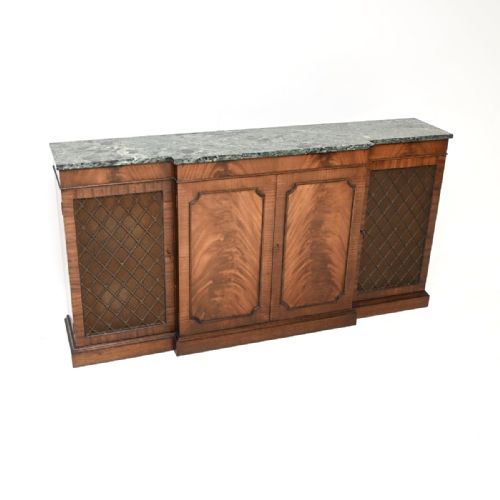
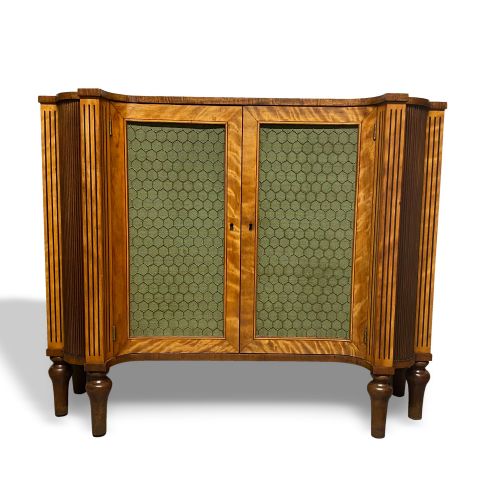
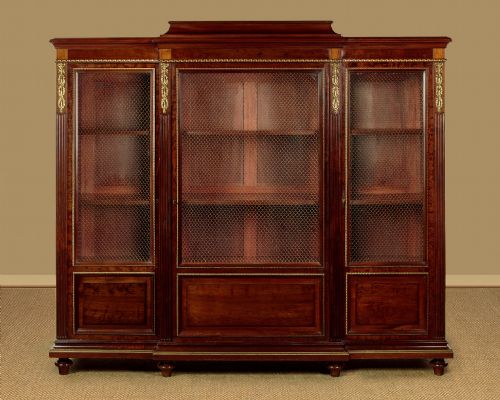
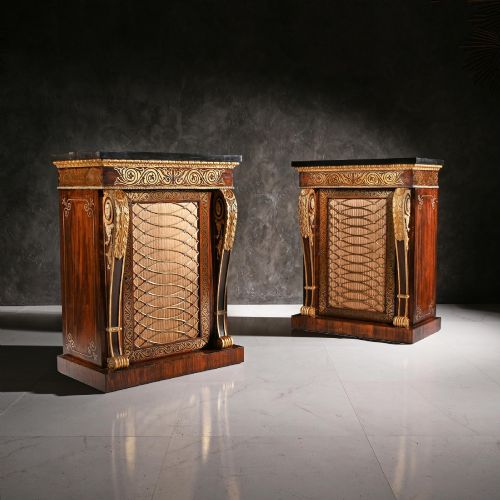
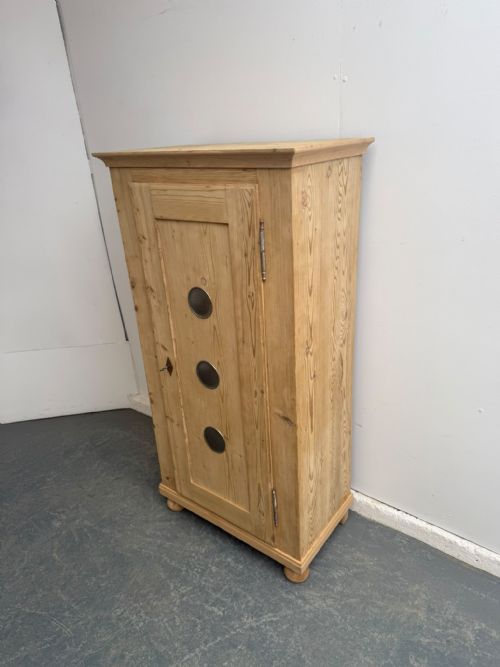
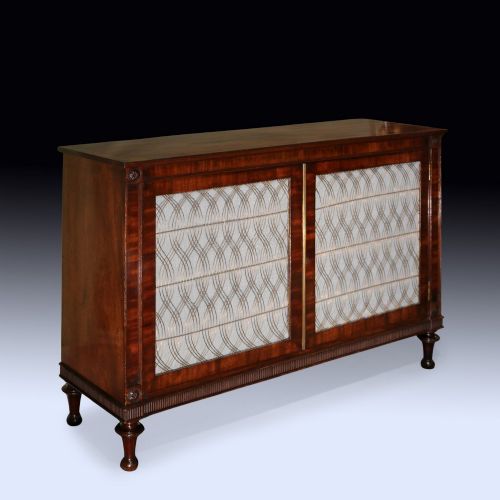


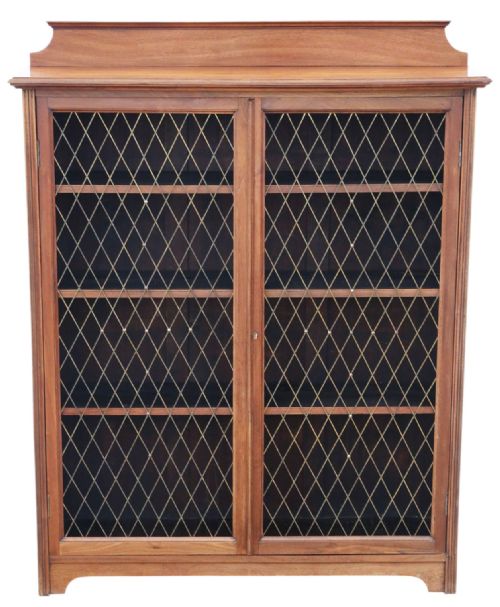

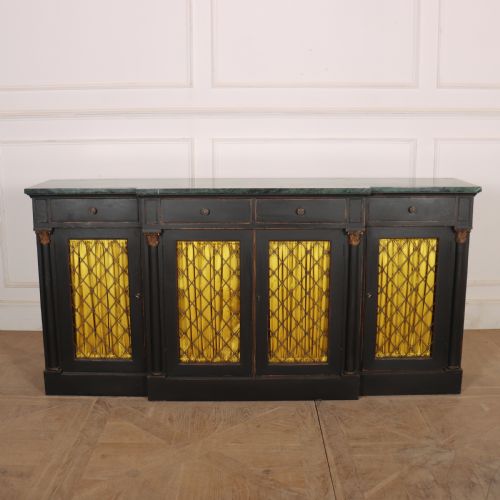

Mesh Door Cabinet
These mesh door cabinet designs combine practical storage with ventilation, offering a refined way to display or house belongings.
Mesh Door Cabinet
A mesh door cabinet provides enclosed storage while allowing visibility and airflow through wire or brass grilles set into the panels. These pieces serve primarily as bookcases, side cabinets, and kitchen cupboards across dining spaces and libraries.
The versions most commonly found here date from the nineteenth century, encompassing Regency, Victorian, and Edwardian periods. Examples range from compact rosewood side pieces to substantial breakfront bookcases in mahogany and walnut.
Originating as functional furniture for libraries or larders, these items now function as display furniture in modern interiors. The integration of wire mesh or brass grilles distinguishes them from standard wooden or glass-fronted cupboards.
How they were made
Construction relies heavily on dense timbers such as mahogany, rosewood, walnut, and oak, often detailed with contrasting satinwood or ebony inlays. Cabinetmakers secured woven wire mesh or perforated brass grilles into wooden door frames to provide the characteristic ventilation.
Surface detailing frequently incorporates brass mounts, marble tops, and painted finishes to elevate the visual appeal of the woodwork. Joinery techniques from the eighteenth and nineteenth centuries ensure structural stability across large breakfront bookcases and smaller side cabinets.
Listings feature mahogany, rosewood, and walnut most frequently, alongside specialised timbers like gonçalo Alves and pollard oak.
What varies in quality
Quality separates pieces through the selection of timber veneers and the precision of the brass or wire mesh integration into the doors. Superior examples display carefully matched grain patterns, such as pollard oak or gonçalo Alves, alongside refined inlay work.
The distinction between standard utility cupboards and fine display furniture lies in the subtlety of the proportions and the execution of Neoclassical or Regency styling details. Finer items feature integrated shelving systems and substantial hardware that remain intact over centuries.
Louis Constantin Le Gaigneur·Ince and Mayhew
The Mesh Door Cabinet Glossary
- Breakfront
- A piece of furniture where the central section projects forward from the flanking sections. This configuration adds architectural depth to large bookcases and sideboards.
- Chiffonier
- A low cabinet or sideboard, popular during the nineteenth century, typically featuring shelves or a small tier on top. They often incorporate enclosed lower storage behind solid or grilled doors.
- Grille
- A lattice or network of metal, such as brass, fitted into cabinet doors in place of glass. It provides secure ventilation for the contents within.
- Gonçalo Alves
- A dense exotic hardwood known for its striking figuring and contrasting dark grain. It was utilised for high-end Regency cabinetry.
- Pollard oak
- Timber taken from trees that were pollarded, resulting in dense, clustered growth rings that create a mottled pattern. It is prized for decorative veneering.
Mesh Door Cabinet: Frequently Asked Questions
What is a mesh door cabinet used for?
These cabinets serve as versatile storage units for books, china, and linens, originally designed to keep contents ventilated while enclosed.
In contemporary spaces, they function as display cases or sideboards where visibility and airflow are desired.
How do I identify a Regency mesh door cabinet?
Regency pieces often feature classical architectural proportions, brass inlay, and exotic veneers such as rosewood or gonçalo Alves.
They rely on clean lines and balanced forms, frequently incorporating brass grilles rather than simple wire mesh.
Are the mesh panels original?
Many cabinets retain their period wire mesh or brass grilles, though replacements do occur due to damage over the centuries.
Inspect the seating of the mesh within the rebate of the door frame to check for consistency with the cabinet's age.
How should I care for a mahogany cabinet?
Keep wooden furniture away from direct sunlight and sudden temperature changes to prevent the timber and veneers from splitting.
Apply traditional wax polish occasionally to nourish the surface and maintain the natural lustre of the mahogany.