

William IV Round Table
A william iv round table combines architectural solidity with rich timber grains, serving as a functional centrepiece for dining or display.
William IV Round Table
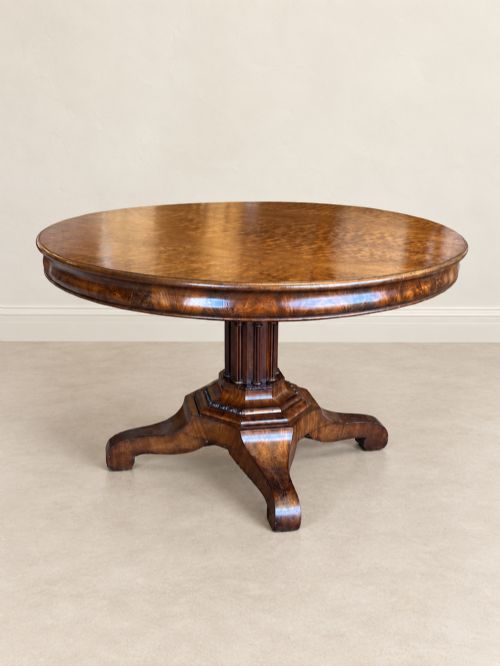
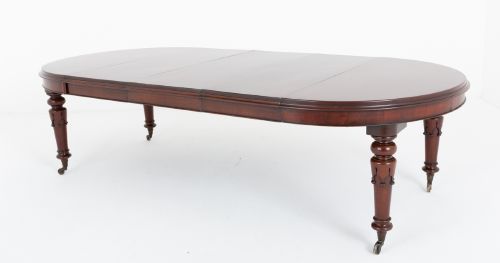
When searching for a william iv round table, buyers encounter circular pedestal forms designed primarily for dining, breakfast, or use as central hall pieces. These items originate predominantly from the nineteenth century, aligning with Georgian, Regency, and early Victorian periods.
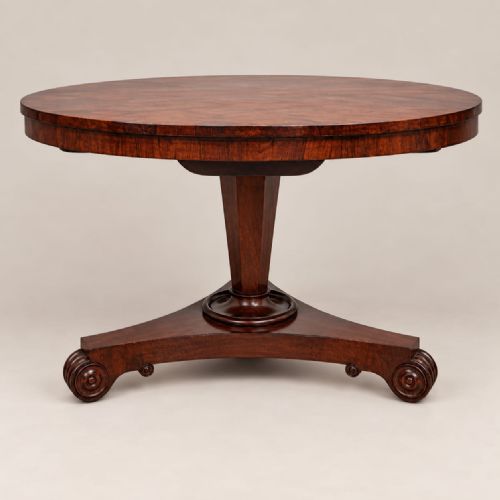
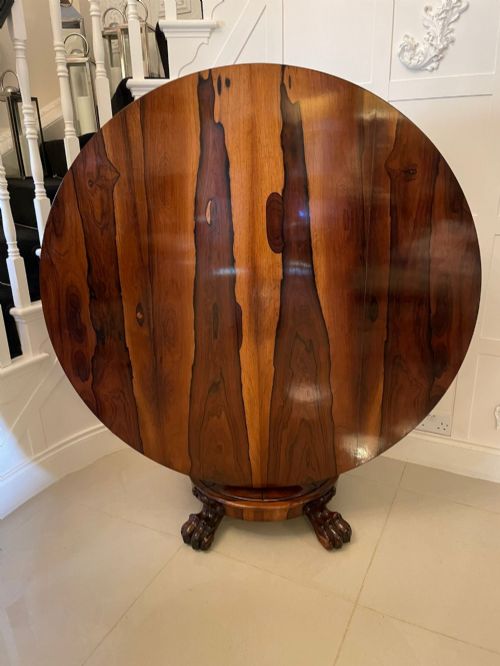
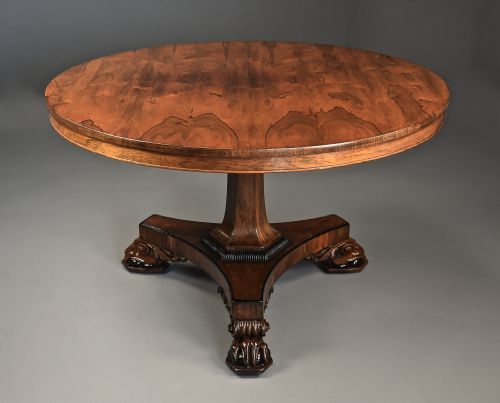
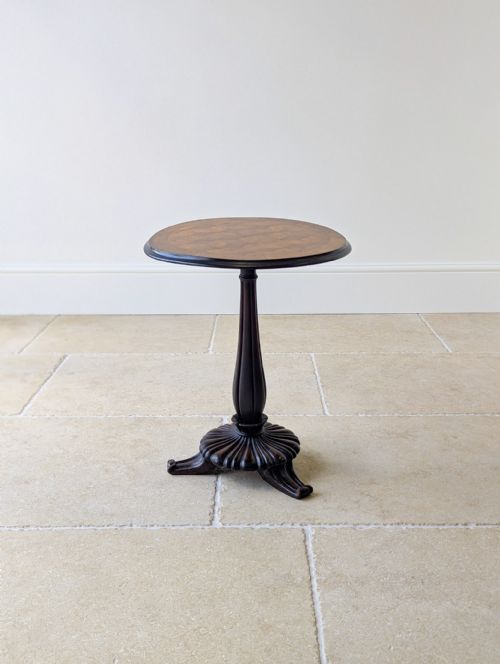
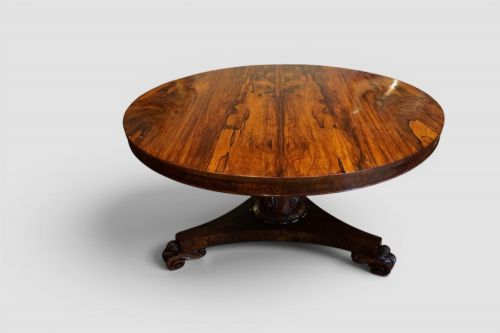
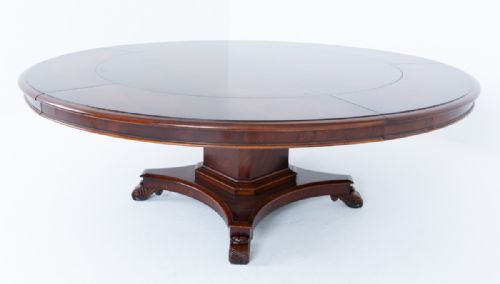
The most common versions met on this page are breakfast tables and centre tables fashioned from dense tropical hardwoods. They typically feature a solid circular top supported by a central pillar and a sturdy platform or tripod base.
Materials and Construction
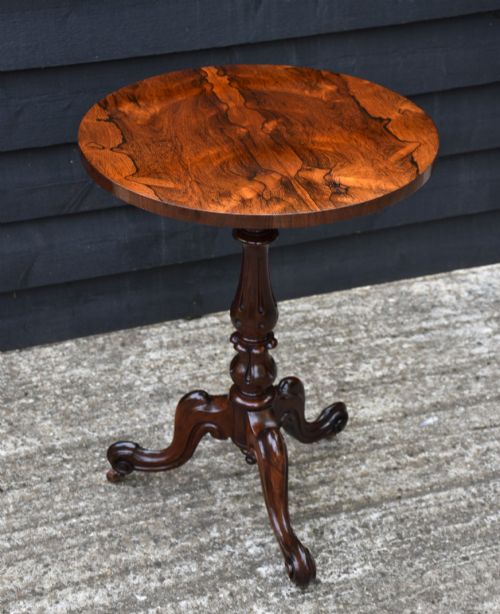
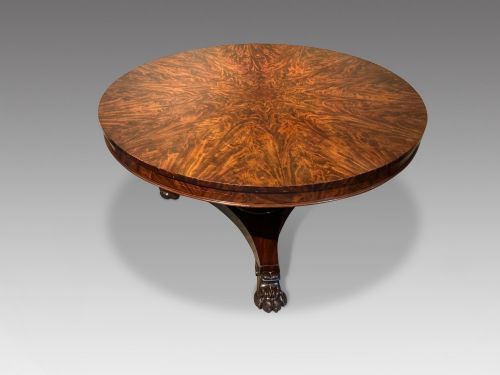
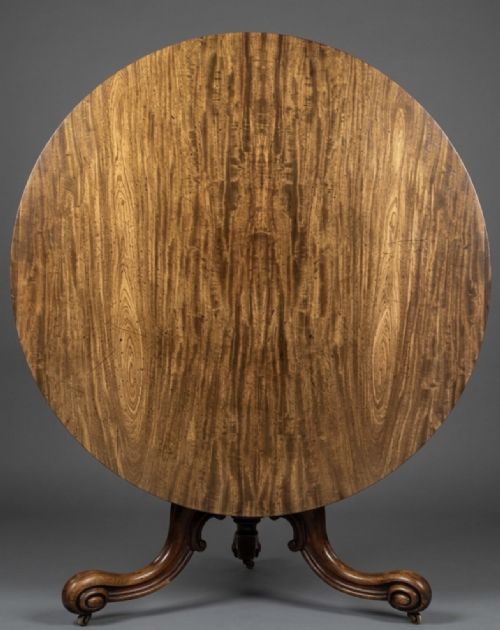
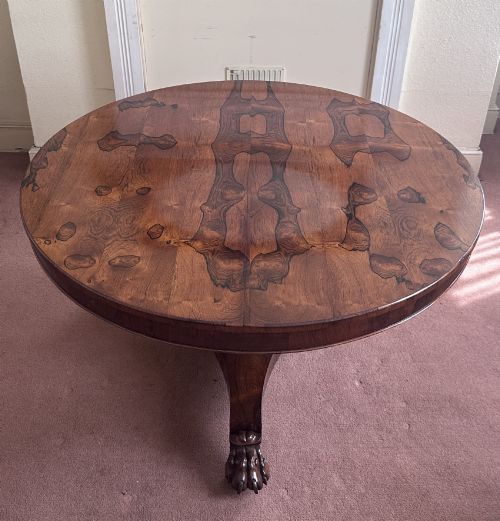
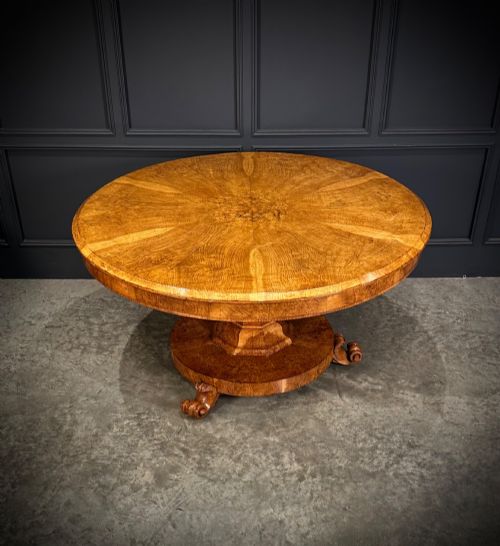
Cabinetmakers utilised dense timbers such as rosewood and mahogany, often applying figured veneer to achieve dramatic grain patterns across the broad circular surfaces. Flame mahogany and burr oak also appear, showing careful selection of decorative wood.
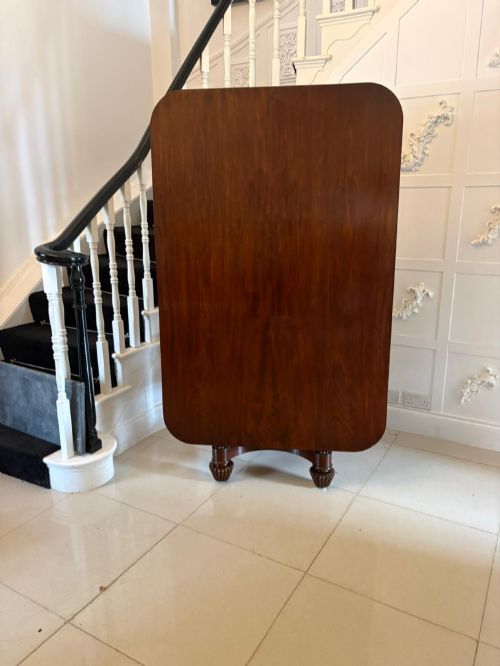
Many examples incorporate a tilt-top mechanism, allowing the circular leaf to pivot vertically for storage against a wall when not in use. Heavy octagonal or triform pedestals provide the necessary counterweight to support these wide timber tops.
The archive demonstrates enduring demand for round pedestal dining tables spanning the nineteenth century.
Quality Variations
The standard of a william iv round table depends heavily on the choice of timber veneer and the crispness of the carved details on the pedestal base. Superior pieces display book-matched grain symmetry across the entire circular top rather than pieced-together sections.
Structural integrity at the pivot joint and the stability of the central pillar dictate daily usability. Tables that maintain smooth tilt-top action without wobble demonstrate higher original craftsmanship.
Gillows·James Winter of Wardour Street
The William IV Round Table Glossary
- Tilt-top
- A hinged tabletop mechanism that allows the surface to rotate ninety degrees into a vertical position. This clever engineering saved valuable floor space in nineteenth-century drawing rooms.
- Triform base
- A three-sided platform support resting on feet, frequently seen on heavy pedestal tables. It provides wide structural stability for large circular tops.
- Veneer
- A thin layer of highly figured wood applied over a stable secondary timber base. This technique displayed rich grain patterns without risking the warping inherent in solid exotic boards.
- Pedestal
- A central vertical column supporting the weight of the table. In this period, they often featured bold octagonal shaping or intricate carving.
- Centre table
- A freestanding piece finished on all sides to stand in the middle of a room rather than against a wall. These items frequently served multiple domestic purposes.
William IV Round Table: Frequently Asked Questions
What is a breakfast table?
A breakfast table is a versatile circular pedestal piece designed originally for informal morning meals in private parlours. These tables frequently feature tilt mechanisms.
Today, buyers utilise them in smaller dining spaces or as striking centrepieces in entrance halls where a round silhouette softens rigid room geometry.
How do I spot a tilt-top table?
A tilt-top table possesses a visible catch or release mechanism beneath the circular surface that frees the pivot joint. This allows the heavy timber leaf to lock upright.
Examining the underside reveals a sturdy block and pivot hinge engineered to bear the substantial weight of rosewood or mahogany.
Are these tables good for daily dining?
These pieces offer remarkable stability and generous knee clearance beneath central pillars, making them highly practical for everyday seating. The absence of four corner legs maximises chair placement.
Careful use of heat mats and protective covers preserves the polished wood surface against daily wear and moisture.
How do I distinguish William IV from Regency?
William IV furniture generally exhibits heavier proportions and bolder architectural elements than earlier Regency designs. Pedestals tend to be massive and vigorously carved.
Timber choices also shift towards darker, heavily figured rosewood and pollard oak, contrasting with the lighter satinwood and simpler lines of the preceding decades.