



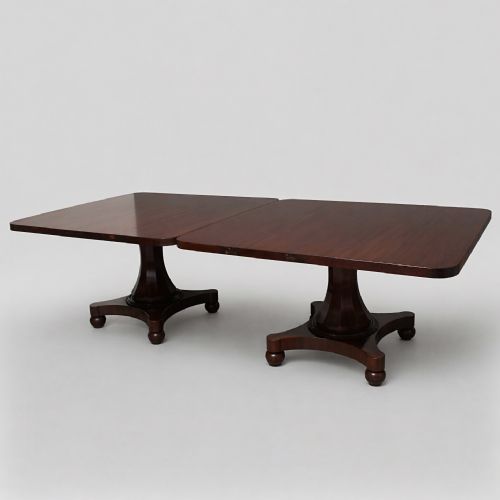


William IV Extending Table
When you need a william iv extending table, you are looking for a substantial dining piece that combines robust nineteenth-century engineering with rich timber.
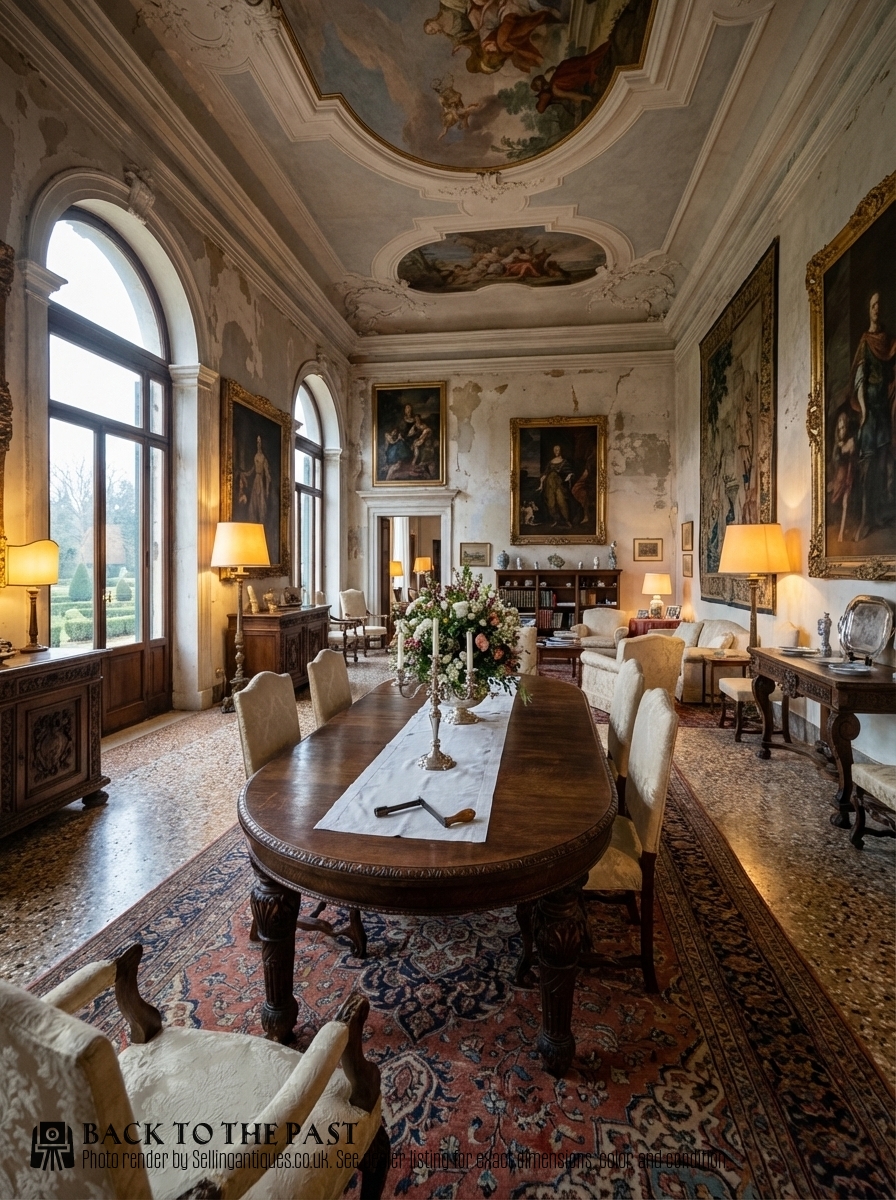
William IV Extending Table
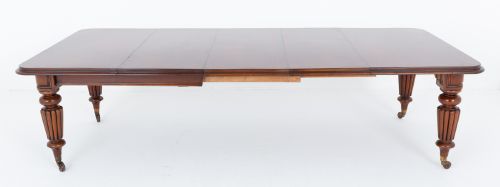
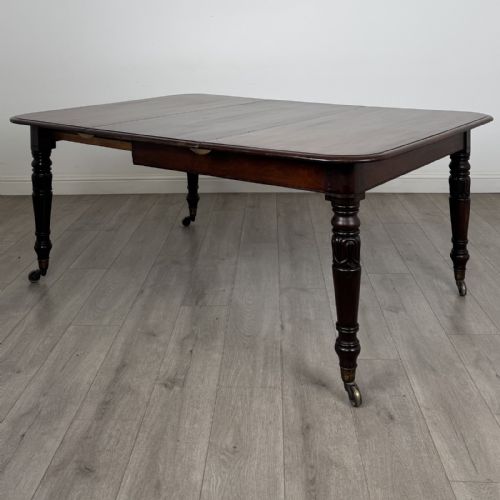
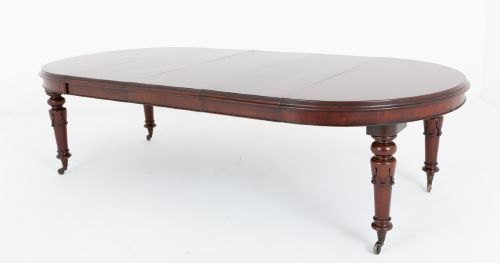
A william iv extending table is a large dining furniture piece designed to seat anywhere from eight to over fourteen people using removable leaves and pull-out mechanisms.
Most examples found in these records date from the nineteenth century, encompassing the Regency period, the William IV reign, and later revival styles up to the nineteen-twenties.
While primarily taking the form of dining tables, related adaptable formats such as libraries, desks, and sofa tables also appear across the inventory.
Materials and construction
The dominant timber across these pieces is mahogany, frequently selected in figured, flame, or plum pudding variations to provide deep grain patterns across large surfaces.
Secondary materials include brass fittings for castors and mechanisms, alongside occasional uses of oak, rosewood, and ceramic components.
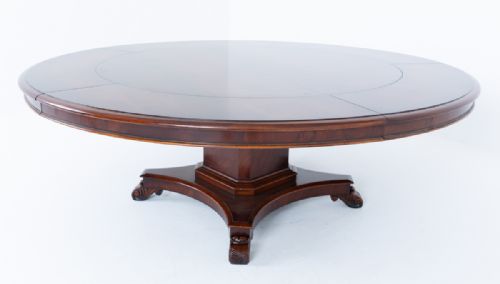
Makers utilised heavy pedestals, multiple leaves, and split bases to support considerable lengths while allowing the table to expand and contract smoothly.
William IV Extending Table Retail Price Guide 2026
Typical asking prices for william iv extending table among the pieces listed under this phrase on Sellingantiques today, from the lower quarter to the upper quarter. They describe what is for sale here now, not the wider market.
Some nineteenth-century dining tables are grand enough to swallow fourteen guests whole, leaving only crumbs and polished flame mahogany in their wake.
Judging quality and proportion
Quality rests in the selection of the timber, where intense flame mahogany figure or uniform plum pudding grain elevates a piece far above standard stock.
The sophistication of the extending mechanism and the stability of multiple pedestals or legs dictate how well the table handles maximum seating capacity without sagging.
Gillows of Lancaster·Thomas Treherne·Mack Williams and Gibton
The William IV Extending Table Glossary
- Flame mahogany
- A veneer cut from the branch junction of the tree, producing a distinctive fire-like flame pattern. It was widely used by cabinet makers on principal table tops.
- Leaf
- A removable section of timber inserted into the table frame to increase its length. Multiple leaves allow these dining tables to accommodate large gatherings.
- Pedestal base
- A central supporting column, often split or multiplied in larger tables to bear the weight of extended leaves. These bases typically stand on robust, brass-castored feet.
- Sofa table
- A small, elegant table featuring drop leaves on either side, designed to stand before a sofa. Some Regency examples incorporate extending capabilities.
William IV Extending Table: Frequently Asked Questions
How many people do these tables seat?
These dining pieces vary significantly in length, with standard configurations accommodating eight to ten guests comfortably.
Larger banquet versions utilising three or more additional leaves can extend to seat fourteen or more people for formal dining.
What timber was used?
Mahogany is the primary wood found across these listings, prized for its strength and deep reddish-brown tone.
Cabinet makers frequently selected figured, flame, or plum pudding varieties for the top surfaces to display decorative grain patterns.
How do the extension mechanisms work?
Many examples utilise a pull-out pedestal frame where the main structure separates to receive loose timber leaves.
Additional internal legs or split bases provide extra support when the table is fully opened to its maximum length.
Are these tables suitable for daily use?
Built during the nineteenth century for heavy domestic dining, these pieces possess sturdy frames and durable timber construction.
Their adaptable nature allows modern owners to shorten or lengthen the surface depending on daily requirements.