


William IV Drop Leaf
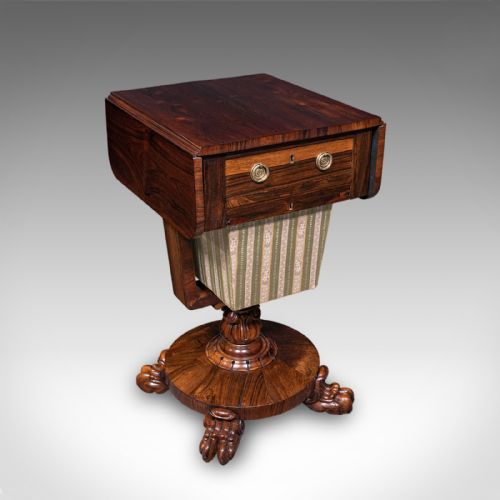
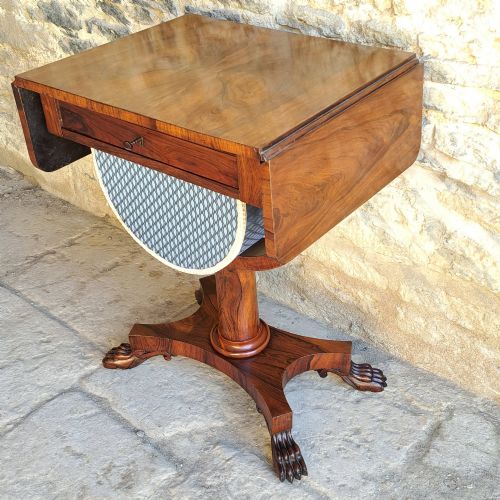
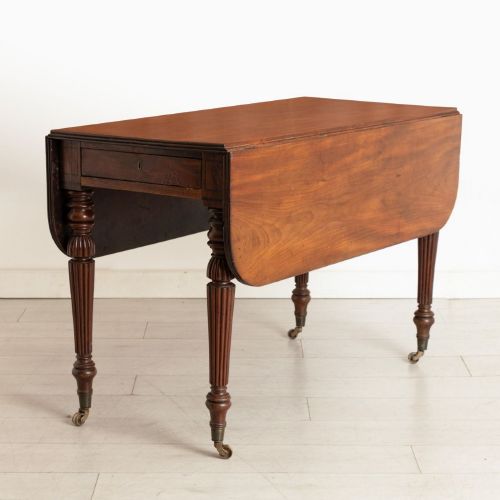
These william iv drop leaf tables bring steady architectural grace and folding versatility to a room, led by mahogany and rosewood examples.
William IV Drop Leaf
When you search for william iv drop leaf, you encounter tables designed to extend surface area through hinged flaps while remaining compact when folded. The pieces listed here span occasional, pembroke, sofa, dining, and work or sewing formats from the nineteenth century.
Mahogany and rosewood dominate the selection, appearing alongside flame mahogany, goncalo alves, and simulated rosewood. These timbers provide the structural depth characteristic of the period.
Most entries align with the William IV style or overlapping Regency and early Victorian periods. Side, lamp, and writing configurations recur frequently among the offerings.
Materials and construction
Cabinet makers built these drop-leaf tables using solid timbers and decorative veneers such as flame mahogany and figured rosewood over stable secondary woods. Brass fittings, including castors and hinges, supplied both mobility and functional strength to folding leaves.
Pedestal supports and pillar bases provided the central weight distribution necessary for extending tables, while delicate turned or carved legs defined the smaller work and sewing variants.
Listings feature mahogany, rosewood, goncalo alves, and brass across work tables, sofa tables, and pembroke tables spanning the nineteenth century.
Markers of distinction
The choice of timber grain separates standard production from exceptional examples, with highly figured flame mahogany or rich rosewood commanding attention. Crispness in the carving of pedestal bases and the precision of the joinery on drop-leaf hinges indicate superior workshop execution.
Versatility in function, such as fitted interiors for sewing drawers or clever mechanisms for writing and games surfaces, elevates certain pieces above simple occasional tables.
Gillows of Lancaster·Mack Williams and Gibton
The William IV Drop Leaf Glossary
- Pembroke table
- A small rectangular table featuring two hinged drop leaves on opposing sides. It often includes one or two drawers.
- Sofa table
- A long, narrow table traditionally placed before a sofa, featuring drop leaves and frequently supported by trestle ends or a central pillar.
- Sutherland table
- A narrow drop-leaf table with exceptionally wide leaves that fold down almost vertically. This design minimises floor space usage when closed.
- Goncalo Alves
- A dense exotic hardwood with striking contrasting dark brown and golden-brown figuring. Makers utilised it for high-status nineteenth-century occasional furniture.
- Work table
- A small multifunctional table equipped with drawers or fabric bags for sewing and needlework accessories. These pieces often doubled as lamp or occasional tables.
William IV Drop Leaf: Frequently Asked Questions
What is a drop-leaf table?
A drop-leaf table has a fixed central section and hinged flaps on the sides that lift to enlarge the surface area. Brackets or swing legs support the flaps when raised.
These tables adapt easily to smaller rooms because the leaves drop down when extra space is required.
How do I identify a William IV table?
William IV furniture typically displays robust classical proportions, heavy scrollwork, and circular or polygonal pillars on platform bases. Dark dense timbers like mahogany and rosewood are standard.
硬件 and secondary woods help confirm the nineteenth-century origin when stylistic details overlap with Regency or early Victorian design.
Where should I place a sewing table?
A nineteenth-century sewing or work table works well beside an armchair or sofa as an occasional surface. The internal compartments store small items neatly out of sight.
Their compact proportions also suit hallways or corners where larger furniture would overwhelm the space.
Can I use a pembroke table for dining?
Smaller pembroke tables provide surface area for casual tea or light meals when both leaves are raised. Their drop leaves make them practical for flexible seating arrangements.
Larger formats designed specifically as dining tables offer sturdier frames for regular daily meals.